

Steam Controller automatically finds its charging dock like a robot vacuum cleaner thanks to a new web application.
The Steam Controller Auto-Charge application utilizes the vibration motor system and webcam to transform Valve's controller into an autonomous device capable of self-propulsion and precise connection to the charging dock.
The Steam Controller, Valve's unique handheld controller, has surprised everyone with its ability to automatically move across tabletops to find its charging dock, similar to how modern robotic vacuum cleaners operate. This breakthrough doesn't come from a hardware upgrade but through an innovative web application called Steam Controller Auto-Charge.
Transform a vibrating motor into a moving engine.
The core principle of this feature lies in controlling the powerful haptic feedback system inside the Steam Controller. Instead of simply providing haptic feedback to the player, the application programs these motors to generate thrust, allowing the controller to move forward or perform precise directional turns.
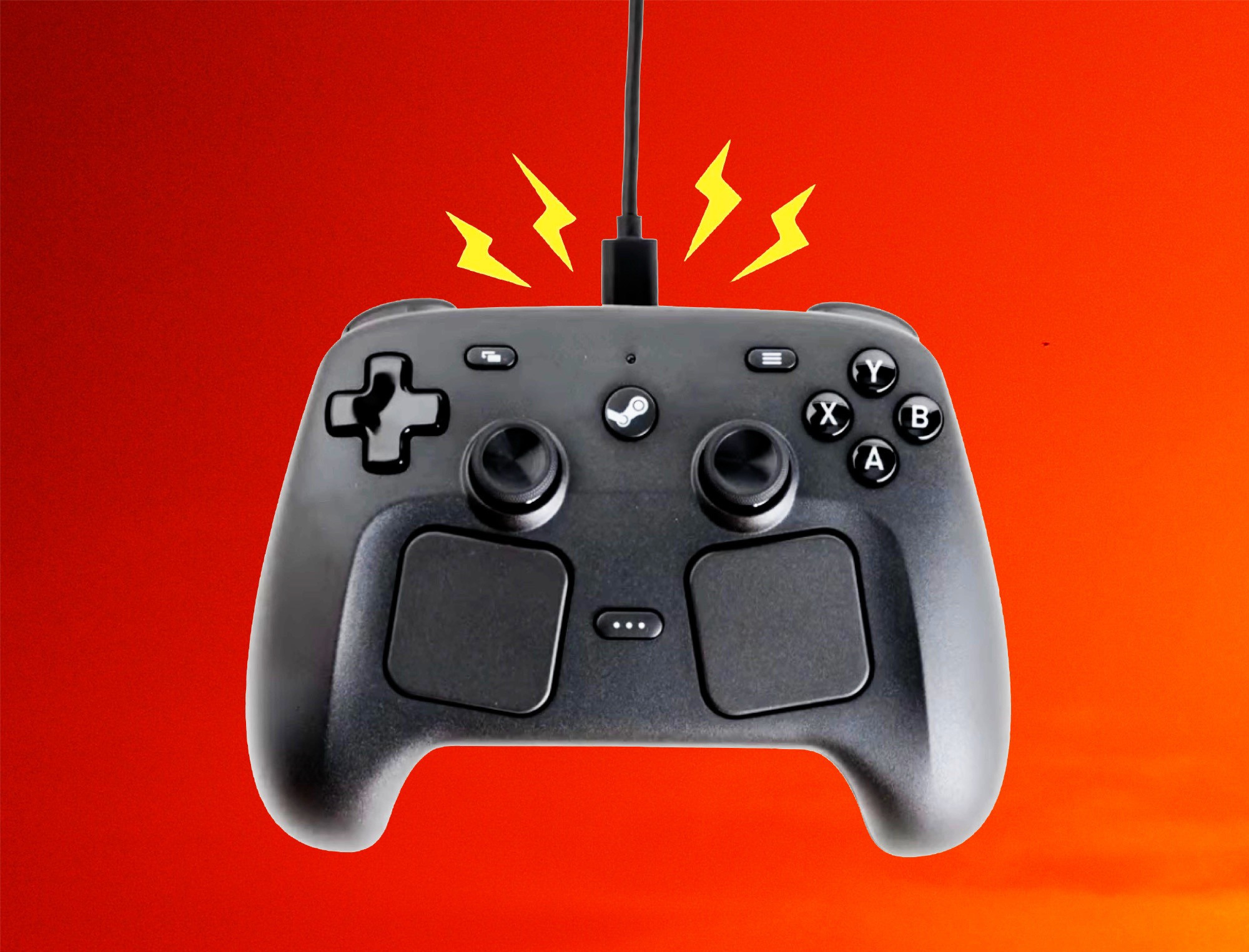
Previously, the tech world had witnessed users controlling this controller like a model car using the WASD keys on a keyboard. However, applying this capability to the automatic charging process has elevated the device's usability to a new level, intelligently solving the problem of battery charging.
Automated charging process via webcam.
For the Steam Controller to locate the charging dock, the Steam Controller Auto-Charge application requires access to the computer's webcam. The webcam acts as a positioning sensor, scanning the entire desk area to simultaneously detect both the controller and the charging dock.
After determining the coordinates of the two objects, the software will automatically guide the controller towards the charging base. When it gets close enough, the charging dock's powerful magnets will firmly attract the controller, ensuring the metal contacts fit together precisely to begin the charging process without human intervention.
Potential and practical applications
Although the application is currently in the testing phase, it has demonstrated a promising direction for automating gaming accessories. In the future, this feature could be integrated more deeply, for example, automatically activating when the controller is in standby mode or via a quick shortcut, ensuring the device is always fully charged.
Notably, amidst the current shortage of Steam Controllers, software solutions that optimize the user experience, such as automatic charging, become even more valuable to the community of users who own this device.