
Criteria for piloting the cultural heritage city model.
The Government issued Decree No. 282/2026/ND-CP dated July 14, 2026, detailing some provisions and guiding the implementation of Resolution No. 28/2026/QH16 dated April 24, 2026, of the National Assembly on the development of Vietnamese culture.
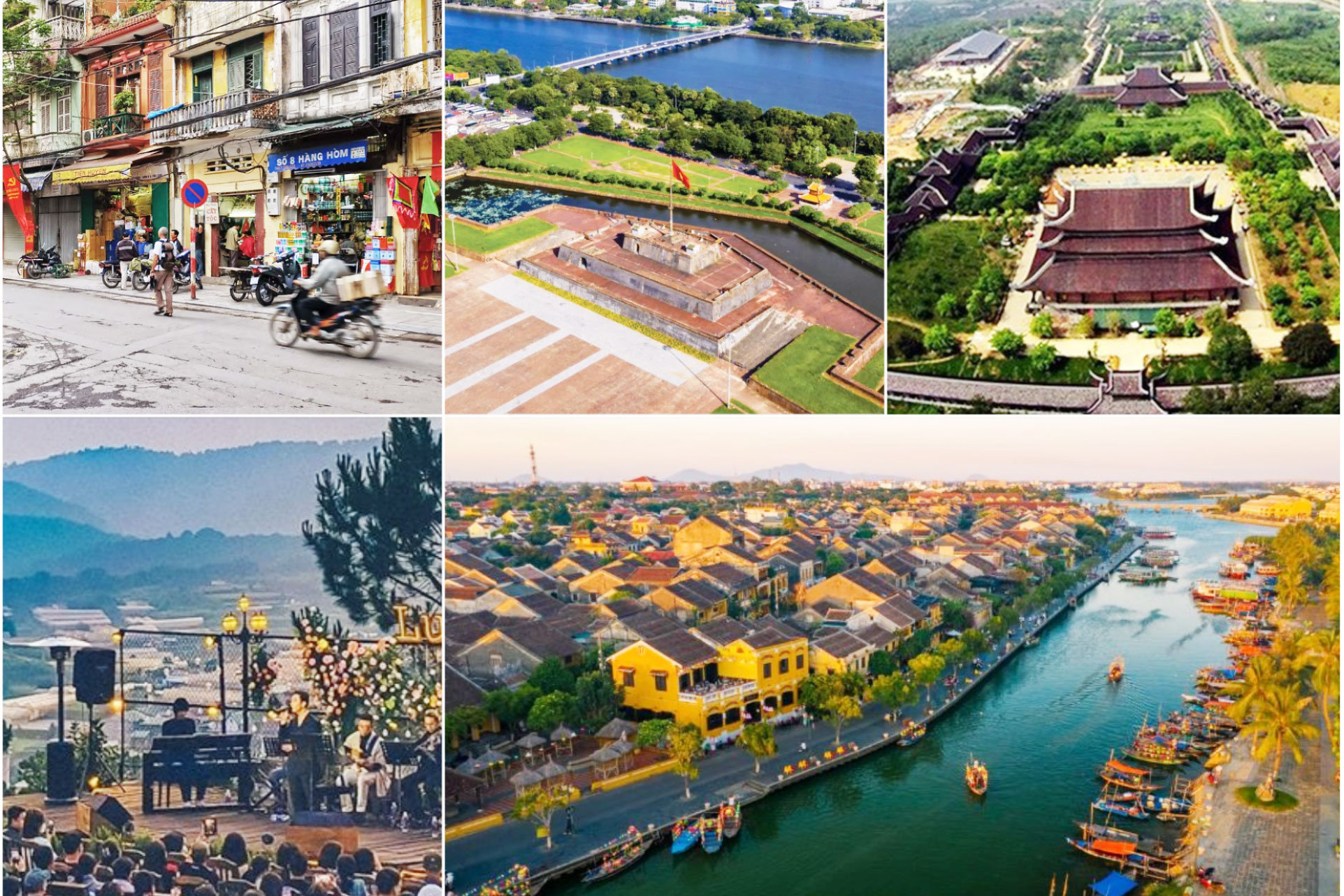
Criteria for piloting the cultural heritage city model.
Specifically, the Decree clearly stipulates the criteria for piloting the cultural heritage city model:
1. Localities selected to pilot the cultural heritage city model must meet the following criteria:
a) Urban areas possess cultural heritage formed during the process of the local area's formation and development;
b) There is a close relationship between urban areas and cultural heritage, and the value of cultural heritage must create the value of the urban area;
c) Having at least two tangible or intangible cultural heritage sites, or documentary heritage sites in the area that have been recognized, ranked, or inscribed by Vietnam or the United Nations Educational, Scientific and Cultural Organization (UNESCO); effectively carrying out the work of protecting and promoting the value associated with traditional education, serving as a foundation for socio-economic development, tourism development, and cultural industry development, contributing to the local economic growth; disseminating, promoting, and introducing the value of cultural heritage domestically and internationally;
d) Regulations on the management, protection, and promotion of cultural heritage values in the area have been issued and effectively implemented, ensuring the principles of managing, protecting, and promoting cultural heritage values, preserving the related cultural space of the community practicing intangible cultural heritage; ensuring the preservation of original elements constituting cultural heritage values, spatial structure, cultural landscape, architecture, controlling building density, height, architectural forms, public spaces, technical infrastructure, and service exploitation activities in the heritage area in accordance with the law on cultural heritage and other relevant legal regulations. Programs, schemes, and projects on the management, protection, and promotion of cultural heritage values have been effectively implemented in the area; other policies and regulations in accordance with the law on cultural heritage for artisans have been issued and effectively implemented;
d) Possess practical experience in investment, conservation, restoration, management, protection, and promotion of cultural heritage values in accordance with the law on cultural heritage; sustainably conserve cultural heritage and sustainably develop cultural, economic, social, and environmental factors; have a world heritage site whose overall economic value has been assessed and internationally announced; have a museum that meets the standards of Class II or higher according to the law on cultural heritage.
2. The pilot model of cultural heritage cities in localities that receive investment and support for the preservation, restoration, and rehabilitation of relics, implement programs, schemes, and projects for the conservation and promotion of cultural heritage values, and apply the preferential mechanisms and policies stipulated in Articles 12 and 13 of this Decree, shall ensure the following criteria:
There are urban and rural architectural complexes, residential sites, urban and rural areas, industrial buildings containing architectural works, historical and cultural spaces that are representative of one or more stages of development of history, architecture, art and tangible cultural heritage as stipulated by law on cultural heritage, along with intangible cultural heritage spaces of the subject community or a human cultural tradition that currently exists or has existed in the past.
There are groups of buildings, groups of interconnected structures that have architectural and landscape uniformity or outstanding cultural, scientific, or historical value as stipulated by the law on cultural heritage.
Sites and areas underground and underwater where relics, artifacts, or signs of relics and artifacts have been discovered, and where traces related to human activities have been found, possessing historical, cultural, and scientific value, shall be protected and their value promoted in accordance with the law on cultural heritage.
Natural landscapes, ecological environments, and physical natural landscape spaces containing historical, cultural, scientific, and aesthetic values, along with related tangible and intangible cultural heritage spaces, are crucial in shaping the value of cultural heritage. These values are preserved and promoted in a way that connects tangible cultural heritage spaces, intangible cultural heritage, and spaces for practicing intangible cultural heritage with the local community.
3. The Chairman of the Provincial People's Committee shall decide on the scope and location for the pilot implementation of heritage urban areas within their jurisdiction, ensuring compliance with the prescribed criteria.
4. Cultural heritage cities are identified in planning in accordance with the law on urban and rural planning and approved by the competent authority.
Land incentive mechanisms and policies
According to the Decree, the localities implementing the pilot model of cultural heritage cities will decide:
The provincial People's Council decides: Land use quotas beyond those already allocated according to the national land use plan, under the local authority's management, for investment projects in the fields of cultural heritage and cultural industry; supplementary land use quotas shall be updated in the land use plan and schedule for the next period as prescribed.
The Provincial People's Committee, after obtaining the unanimous opinion of the Provincial People's Council, shall decide on the level of preferential land lease rates applicable to specific areas, ensuring that the maximum rate does not exceed 50% of the current prescribed rate, for the implementation of investment projects in service and tourism businesses, public-private partnership projects, and projects under the public-private partnership method in the field of cultural heritage; the implementation of schemes for the economic exploitation of heritage; and the development of cultural industries according to plans and schemes approved by competent authorities, within historical and cultural relics, scenic spots, and world heritage sites (collectively referred to as relics), provided that it does not affect the original constituent elements and cultural landscape of the relics as stipulated by the law on cultural heritage and is consistent with planning, regulations on planning management, architecture, requirements for protecting the landscape and architectural space, and the carrying capacity of urban infrastructure as stipulated by relevant laws. Related.
Mechanisms and policies for preferential treatment regarding fees and charges.
Localities implementing the heritage city pilot model are given the authority to determine the mechanisms and policies regarding preferential fees and charges.
Accordingly, the Provincial People's Council is authorized to decide on and issue service fees at historical sites, as well as fees not included in the list of fees and charges as stipulated by law.
Local budgets are entitled to all revenue from fees and charges issued by the People's Council, in addition to the list of fees and charges stipulated by law on fees and charges.
Entrance fees for scenic spots, historical and cultural relics, cultural works, and museums within heritage urban areas, after deducting expenses, shall be retained by the public service unit to cover operating costs of providing fee-collecting services as stipulated by law on fees and charges. The full amount collected shall be remitted to the state budget for the restoration, preservation, enhancement, and promotion of cultural heritage values in the area, or to the local budget for investment corresponding to the amount of entrance fees remitted to the state budget for investment in the preservation, repair, and restoration of relics in the area.
PV