

The message is 'don't do things for others, don't hoard work'.
The third plenary session of the 14th Central Committee of the Communist Party of Vietnam concluded with many decisions of strategic significance for the country's development.
But more than the resolutions passed, what remains is a very clear message: after the apparatus has been streamlined and the two-tiered local government model has initially operated stably, the focus of the new development phase must shift from formulating policies to organizing implementation; from perfecting institutions to enhancing implementation capacity.
This is not just an adjustment in leadership style, but also a significant shift in national governance thinking.
The central government does not do the work of local authorities, and the provincial government does not take over the work of the commune level.
Years of experience have shown that many correct policies and reasonable guidelines have failed to bring about the desired changes because the implementation phase remains a "weak link." Looking directly at this reality, General Secretary and President To Lam pointed out that the biggest bottleneck today is the capacity for implementation.
In some areas, authority is not coupled with responsibility; decentralization is not linked to resources, data, tools, staff capacity, and control mechanisms; and many fields lack synchronized coordination. Identifying the bottlenecks correctly also means determining the right breakthrough direction to bring the Party's policies into practice.
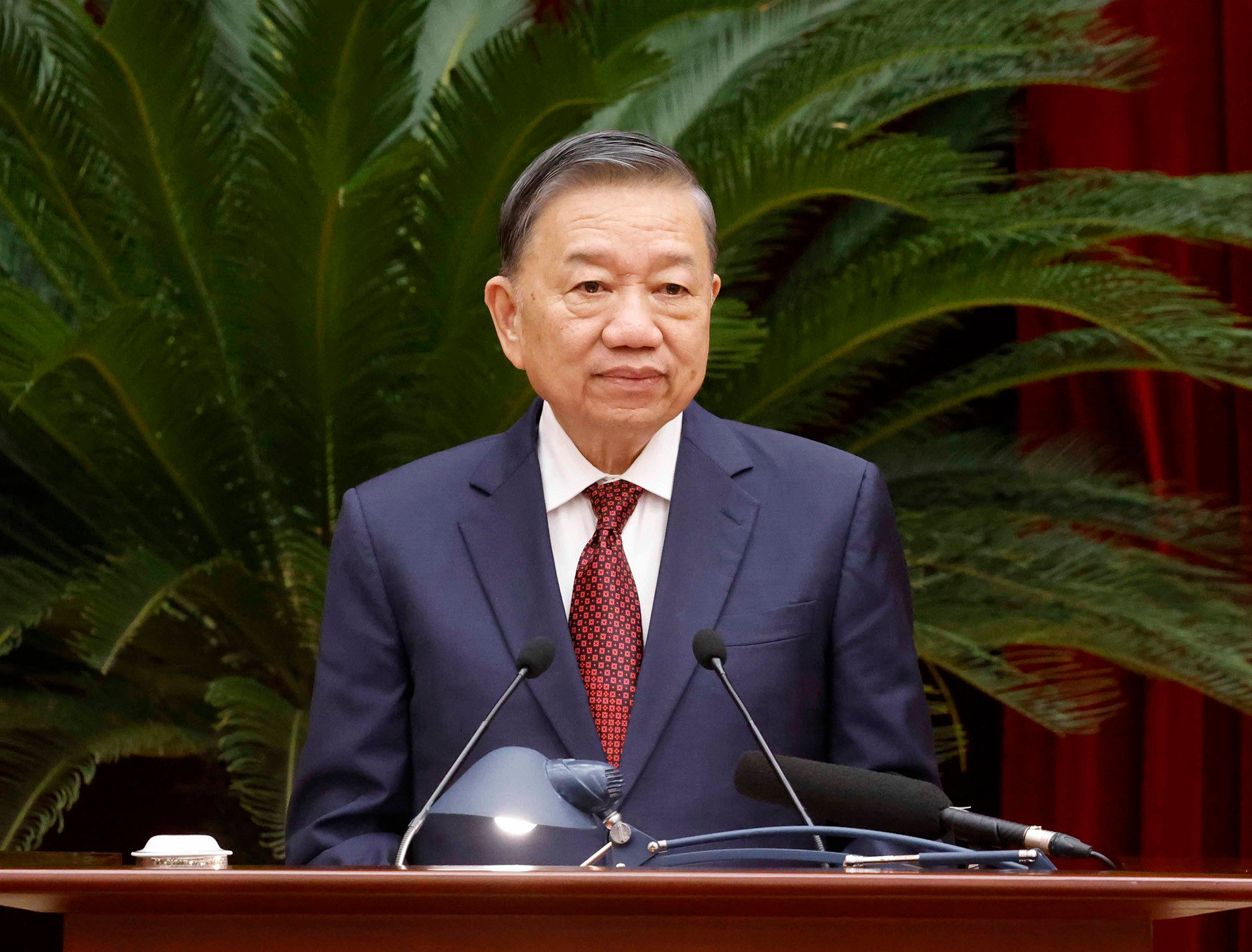
This assessment is particularly significant in the context of the nationwide implementation of a two-tiered local government model. After a period of reorganizing the administrative apparatus, what needs to be done now is not to continue discussing the model extensively, but to make it operate effectively. A streamlined administrative apparatus only truly delivers value when each level of government is given the right authority, has the necessary conditions to act, and is fully accountable for the results of its tasks.
Therefore, decentralization and delegation of power continue to be identified by the Central Committee as one of the important driving forces of national governance reform.
However, decentralization in the new way of thinking is not simply a matter of transferring tasks in an administrative manner, nor is it about pushing responsibility down to lower levels. Decentralization means clearly defining the functions of each level of government so that each level can focus on doing its part of the work best.
The message conveyed by the General Secretary was very clear: The Central Committee focuses on strategic planning, institutional improvement, building common platforms, allocating large resources, and monitoring implementation; the provincial level focuses on coordinating development, concretizing policies, and ensuring conditions for the grassroots; and the commune level becomes the frontline of public administration, directly serving the people and businesses. The Central Committee does not replace the local level; the provincial level does not monopolize tasks that the commune level can perform well.
This is not just about the division of labor, but also about innovation in the way power is organized. When the central government devotes more time to strategic planning and institutional reform, local authorities will have more room for initiative in implementation; and the commune level will truly become the place to resolve issues arising from real-life situations.
Each level fulfilling its role correctly will create a more seamless, flexible, and effective governance system.
Notably, along with the request to "not do things for others," the General Secretary also emphasized the responsibility of higher levels in ensuring the conditions for implementation by lower levels. If the commune level lacks sufficient authority, personnel, finances, data, tools, or guidance, the provincial level must proactively resolve the issues and prevent work from being left unresolved.
This affirms a very important principle: decentralization does not mean lax management; empowerment must go hand in hand with ensuring the conditions for that power to be exercised effectively.
More broadly, this is the requirement for building a development-oriented administration. Development doesn't mean replacing the market or local authorities, but rather creating institutions, resources, and an environment where stakeholders can exercise initiative and creativity.
Superiors should not monopolize their subordinates' work, but they should also not remain indifferent to their subordinates' difficulties. The responsibility of superiors is to support, guide, monitor, and promptly resolve any problems that arise during implementation.
If decentralization is a necessary condition, then implementation capacity is the sufficient condition for any policy to be effective. Therefore, the Third Central Committee Plenum set forth a very new requirement: implementation capacity must be designed right into each policy decision.
Each task must clearly define the lead agency, the person responsible, the implementation conditions, the completion deadline, and the output; tasks should not be assigned without clearly defined implementation conditions; decentralization should be avoided without a control mechanism; and responsibilities should not be mixed up in the coordination process.
This represents a crucial shift from process-based management to results-based governance. What citizens and businesses care about is not the number of meetings or documents issued, but whether procedures are more streamlined, processing times are shortened, the investment environment is more open, and the quality of service provided by the government apparatus is improved.
Therefore, one of the notable new points of this Central Committee meeting is the requirement to use actual results and the satisfaction of the people and businesses as the main basis for evaluating organizations and officials, especially those in leadership positions.
At the same time, it is necessary to strengthen inspection and supervision through data, products, and work efficiency; promptly commend places that perform well, protect officials who dare to think, dare to act, and dare to take responsibility for the common good, while strictly dealing with situations of avoidance, shirking responsibility, half-hearted work, or superficiality.
Establishing a new management mindset.
It can be said that the highlight of the Third Central Committee Conference lies not only in the continued promotion of decentralization and delegation of power, but also in the establishment of a new governance mindset: every decision must be linked to the ability to implement it; every authority must be accompanied by responsibility; and every result must be measured by its effectiveness in serving the people and the development of the country. This is precisely the requirement placed on the entire political system in the current period.
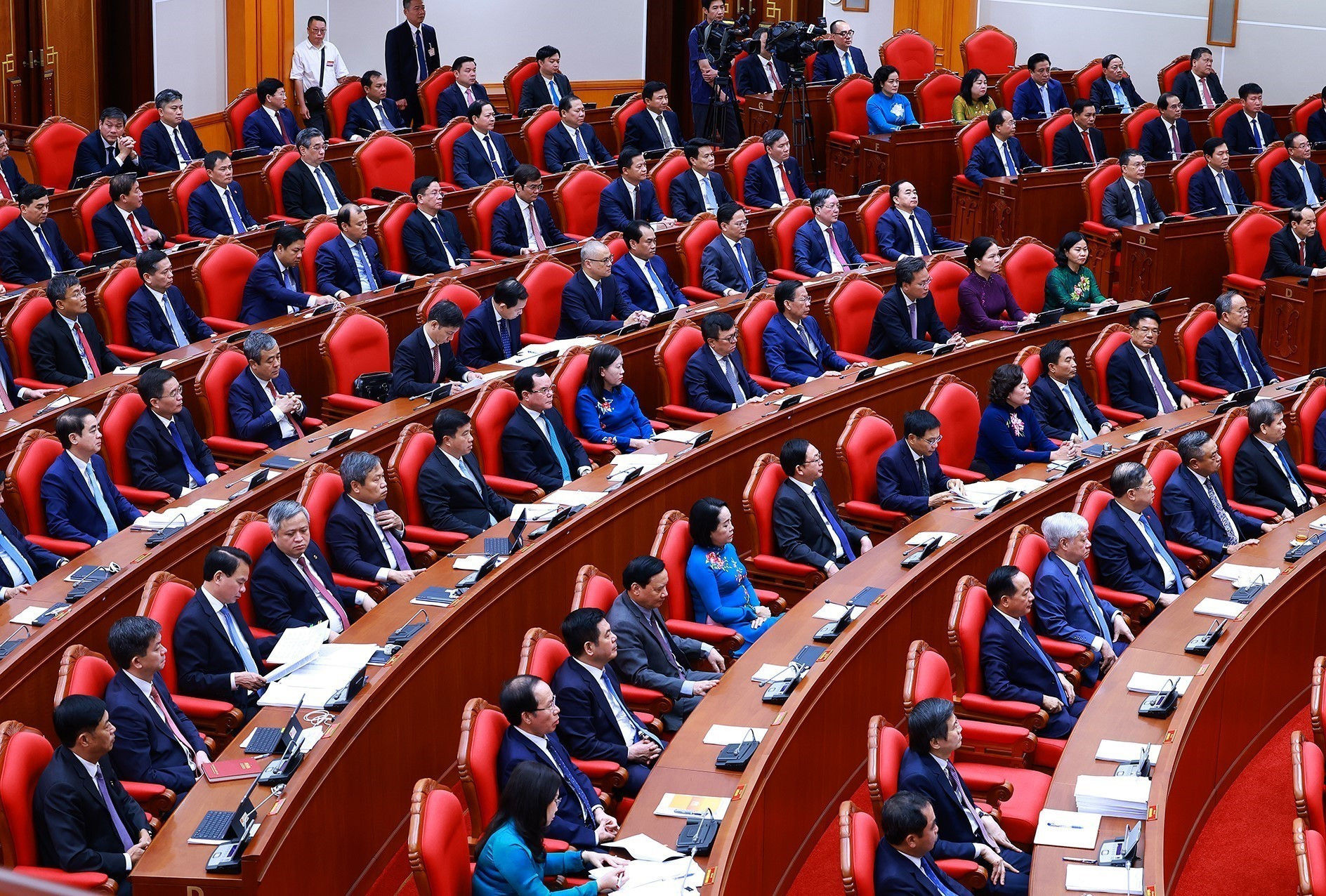
The path from resolution to reality always requires immense political will. But willfulness will only become a reality when it is transformed into concrete action programs, accountable officials, smoothly functioning mechanisms, and results verifiable in practice.
That is also why the General Secretary demanded that the speed of issuing resolutions be transformed into the speed of implementation, and that political determination be translated into substantive change.
The message of the Third Central Committee Conference is therefore not only for policy-making bodies but also a requirement for every level of government, every agency, and every official and civil servant throughout the entire system.
When the central government focuses on strategy, local authorities proactively create development, the commune level truly becomes the foundation of public administration, and all policies are evaluated by actual results, then the strength of the system will not lie in the number of documents issued but in the concrete changes in people's lives.
That is also the profound meaning of the spirit of "decentralization for creation, implementation for development" set forth by the 3rd Plenum of the 14th Central Committee.
* Dr. Dinh Van Minh - former Director of the Legal Department, Government Inspectorate