

India successfully tests an interceptor missile from the Kusha air defense project.
India has successfully tested an interceptor missile from the Kusha project, a significant step in its efforts to achieve self-sufficiency in a multi-layered, long-range air defense system.
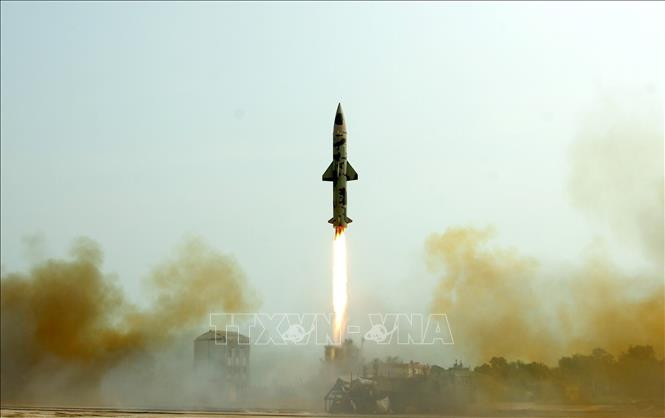
The Indian Ministry of Defence announced the successful testing of the Kusha long-range surface-to-air interceptor missile on July 23rd at APJ Abdul Kalam Island off the coast of Odisha state. The weapon successfully intercepted a simulated target moving at high speed and altitude, fulfilling all technical objectives.
Scale and specifications of the Kusha project
The Kusha project was designed to develop a modern long-range air defense system, comprising three missile variants with ranges of 150 km, 250 km, and 350-400 km respectively. All components of the system, including the missile, control radar, and command center, were researched and manufactured by the Defence Research and Development Organization (DRDO) in collaboration with domestic enterprises.
Indian Defence Minister Rajnath Singh hailed the test as a significant milestone, bringing the South Asian nation closer to the select group of countries capable of independently developing long-range air defense systems.
Role in a multi-layered air defense network
Once completed and operational, the Kusha system will fill the tactical gap between the Barak-8 medium-range system (range approximately 70 km) and the Russian-made S-400 Triumf long-range air defense system (range 400 km) – which currently forms the mainstay of India's air defense network.
According to military experts, the Kusha missile variant with a range of 350-400 km will significantly enhance the ability to destroy airborne targets at long distances, especially in responding to threats in border areas.
Strategic context and roadmap for completion
The Kusha missile development program is taking place against the backdrop of the New Delhi government's push for India's Atmanirbhar Bharat (Self-Reliance India) strategy aimed at achieving self-sufficiency in defense capabilities. The increasing threats from unmanned aerial vehicles (UAVs), cruise missiles, and long-range missiles have made multi-layered air defense a top priority for the Indian military.
Previously, the Indian Defence Procurement Council approved a $5.4 billion procurement package, prioritizing the purchase of air defense systems and anti-UAV complexes. However, the Indian Ministry of Defence stated that the Kusha system still requires approximately 3-4 years of testing before being officially put into service. During this period, the Indian military continues to rely on S-400 systems imported from Russia to maintain its air defense capabilities.