

Safe mooring of boats and ships during the rainy and stormy season.
Whenever the rainy and stormy season arrives, finding a safe place to anchor is always a top priority for fishermen along the coast of Nghe An province. For those who are deeply involved in the fishing industry, their boats are both a means of livelihood and a significant asset for many fishing families. Therefore, developing and preparing plans for safely sheltering boats is crucial, ensuring readiness to respond to unpredictable weather conditions.
The mooring points still have many shortcomings.
At Lach Quen fishing port in Quynh Phu commune – the largest Class II fishing port in Nghe An province – hundreds of large fishing vessels dock daily. This is one of the areas with a high concentration of offshore fishing vessels, many of which are valuable assets. However, the reality here shows that securing safe mooring locations for these vessels during storms still faces many obstacles.
Narrow channels and prolonged siltation make it difficult for large steel-hulled vessels to enter and leave the port. When the weather turns bad and many vessels return simultaneously, the need for strategically located mooring positions becomes even more critical.
.png)
Mr. Pham Huu Tien, a boat owner in Quynh Phu commune, believes that to improve the safety of fishing boats during the rainy and stormy season, attention should be paid to the conditions of the waterways and the arrangement of vessels in the mooring area: "I hope the waterways will be dredged deeper. The storm shelters should separate smaller boats to avoid collisions, because when iron and wooden boats collide in the wind, the wooden boats are damaged, not the iron ones. People still follow the traditional way of mooring wherever is available. Last year, during a big storm, a whole group of boats broke their mooring ropes and drifted to the other side, colliding with each other."
The silting of the waterways is also affecting the operation of fishing vessels at Quynh Phuong fishing port, Quynh Mai ward. Because entry and exit to the port depend heavily on the tides, vessels face difficulties in navigating at certain times. During storms or tropical depressions, early regulation, guidance, and arrangement of vessels are necessary to minimize safety risks.
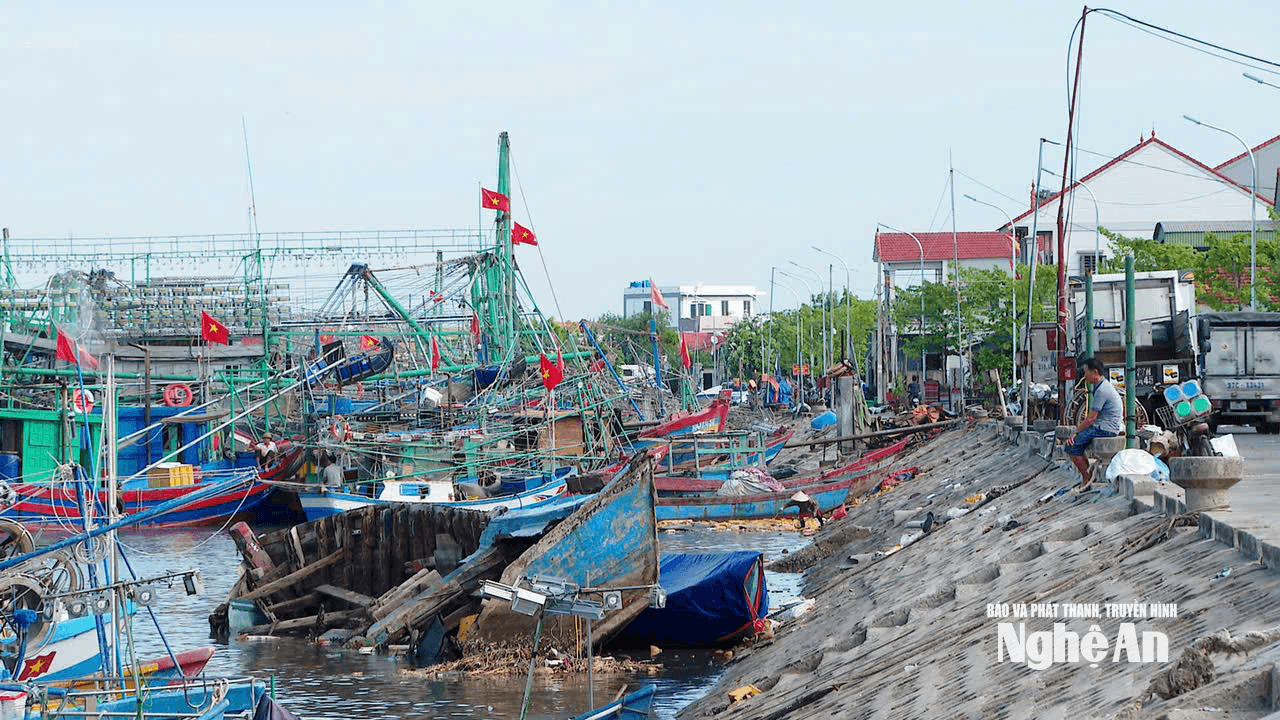
According to Mr. Dau Ngoc Lam, in charge of Quynh Phuong Fishing Port, in dangerous weather conditions, the diversion and relocation of boats to suitable locations is carried out to protect the vessels. “In case of strong winds and storms, fishing boats will be required to move to the local storm shelter system, anchoring outside the fishing port. The old Hoang Mai area also had a storm shelter, now located in Tan Mai, where most small boats will anchor. Inside this area, 30 to 40 boats can be safely anchored without needing to be moved,” Mr. Lam added.
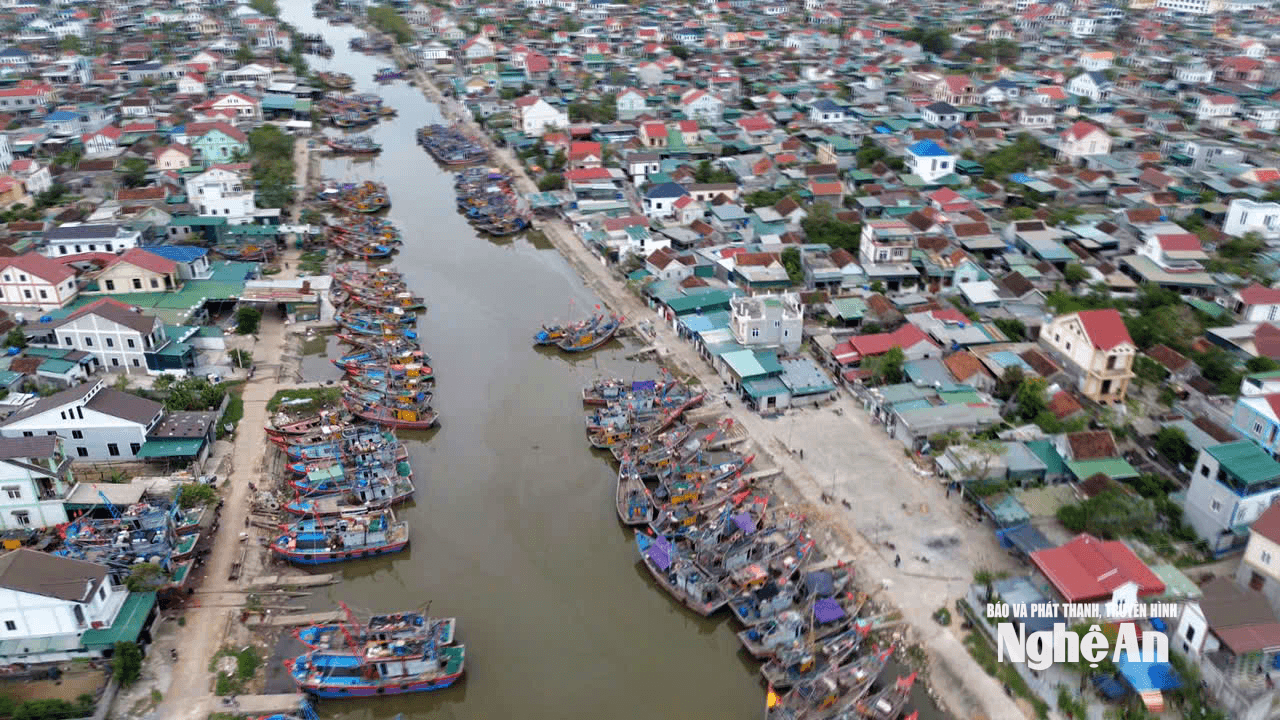
Nghe An currently has over 3,500 fishing vessels of various sizes operating in both inshore and offshore waters. Whenever a storm or tropical depression approaches, the need for these vessels to return to land for shelter increases significantly, putting considerable pressure on the system of estuaries, fishing ports, and mooring points. Years of experience at sea have helped fishermen cope with adverse weather conditions. However, during periods when many vessels return simultaneously, finding suitable mooring locations remains challenging. In some areas, shallow waterways and limited mooring space make the process of bringing vessels ashore more complicated. A fisherman from Dien Chau commune shared: “We’ve always moored near the Dien Kim bridge, which is sheltered from the wind, but the only concern is that our channel is shallow now, making it difficult to navigate.”
Make plans for ships and boats to take shelter.
Along the coastal line of Nghe An province, there are many fishing ports and mooring points to serve fishing vessels. However, the conditions for receiving vessels vary in each area. Therefore, reviewing the actual situation in each locality and developing plans for regulating and arranging vessels suitable to the characteristics of each area is an important task to improve the effectiveness of responding to storms and floods.
.png)
Lieutenant Colonel Nguyen Xuan Kien, acting head of the Quynh Thuan Border Guard Station in Nghe An province, said: "The unit has proactively developed a plan for flood and storm prevention, coordinating with local authorities to count vessels in the area. When storm warnings are received, the unit will contact ship owners, urge vessels to seek shelter, and coordinate with fishing ports to arrange safe mooring and anchoring."
Not only the authorities, but each ship owner themselves also needs to proactively monitor weather developments closely, strictly comply with announcements and instructions from relevant agencies, and bring their vessels to safe shelters immediately when required. Close coordination between fishermen and local authorities, border guards, and port management units will contribute to improving the effectiveness of disaster prevention and control.
Storms and heavy rains always carry the potential for unpredictable developments. Given that some mooring areas do not fully meet actual needs, proactively developing response plans early on, reviewing the capacity of suitable shelters for vessels, and raising fishermen's awareness of disaster prevention will contribute to minimizing risks, protecting property, and ensuring the safety of people and vessels when natural disasters occur.