

These services are quietly "ceding the stage" in the digital age.
There are jobs that once provided livelihoods for thousands of workers, linked to the memories of many generations, but are gradually fading into the past due to the rapid development of digital technology and changes in consumer behavior. This decline is an irreversible trend, requiring not only individual workers but also businesses to proactively adapt and innovate their operating models to avoid being left behind in the digital age.
Professions that were once very popular
There was a time when simply strolling through the central streets of the old Vinh city or popular tourist spots would easily reveal familiar sights: rows of record stores, photographers with cameras inviting customers to capture memorable moments, and internet cafes always brightly lit until late at night. Each profession had its own unique characteristics, but all were once vibrant services that provided stable income and were closely intertwined with the lives of many people for decades.

However, in just over a decade, the rapid development of high-speed internet, smartphones, digital platforms, and artificial intelligence has almost completely changed how people access information, entertain themselves, and preserve memories. Once lucrative professions are now shrinking, or even disappearing.
Mr. Nguyen Van Minh, who has over 20 years of experience copying and selling CDs and DVDs in Truong Vinh ward, still clearly remembers the period from the early 2000s to around 2010 as its most prosperous time. Before the internet became widespread, if people wanted to listen to a new album or watch a newly released movie, they almost only had one option: buying or renting CDs and DVDs.
In those days, his shop was always bustling. Whenever a famous singer released an album or a hit movie came out, customers would line up to get CDs copied. At times, he had to stay up late to make copies to meet demand.

"Back then, this job was enough to support the whole family. Music CDs, movies, cartoons... people wanted to buy everything. Some days we couldn't make enough to sell," Mr. Minh recalled.
But with the rise of smartphones and the emergence of YouTube, Netflix, and a host of other online music and movie streaming platforms, the demand for physical CDs virtually disappeared. By 2020, after months of business losses, he decided to close the store.
It's not just Mr. Minh; at Vinh Market – once the city's "capital" of CDs and DVDs with many familiar shops like Phuc Thiet and Chau Sinh – all the stalls selling these items have gradually disappeared. The stalls that were once bustling with customers have now switched to selling other products or have returned their premises.
If the traditional CD and DVD business is declining due to the digitization of content, then the street photography profession is also directly impacted by the explosion of smartphone cameras.
.jpg)
Having worked as a photographer at Cua Lo beach for over 30 years, Mr. Tran Van Toan said there was a time when he took hundreds of photos for tourists every day. These photos, developed on the same day, became indispensable souvenirs after each trip. However, nowadays, almost everyone owns a high-quality camera phone. With just a few simple steps, tourists can take, edit, and share photos on social media instantly.
"There were mornings when I walked along the beach, inviting dozens of tourist groups, but nobody hired me. Many people even asked me to hold my phone and take a few photos for them. I happily took the pictures, but I also felt a pang of sadness because my profession is no longer as needed as before," Mr. Toan shared.
Nevertheless, he hasn't put away the camera that has been with him for over three decades. According to him, there is still a segment of customers who appreciate photos taken with professional cameras and printed on paper. That's also the reason why the remaining photographers continue to stick with the profession.
Public internet cafes share a similar story. About ten years ago, the computer rooms in the Truong Vinh, Thanh Vinh areas, or near universities, were always packed every afternoon and evening. They weren't just places to play games, but also spaces to meet friends, study in groups, and access the internet.
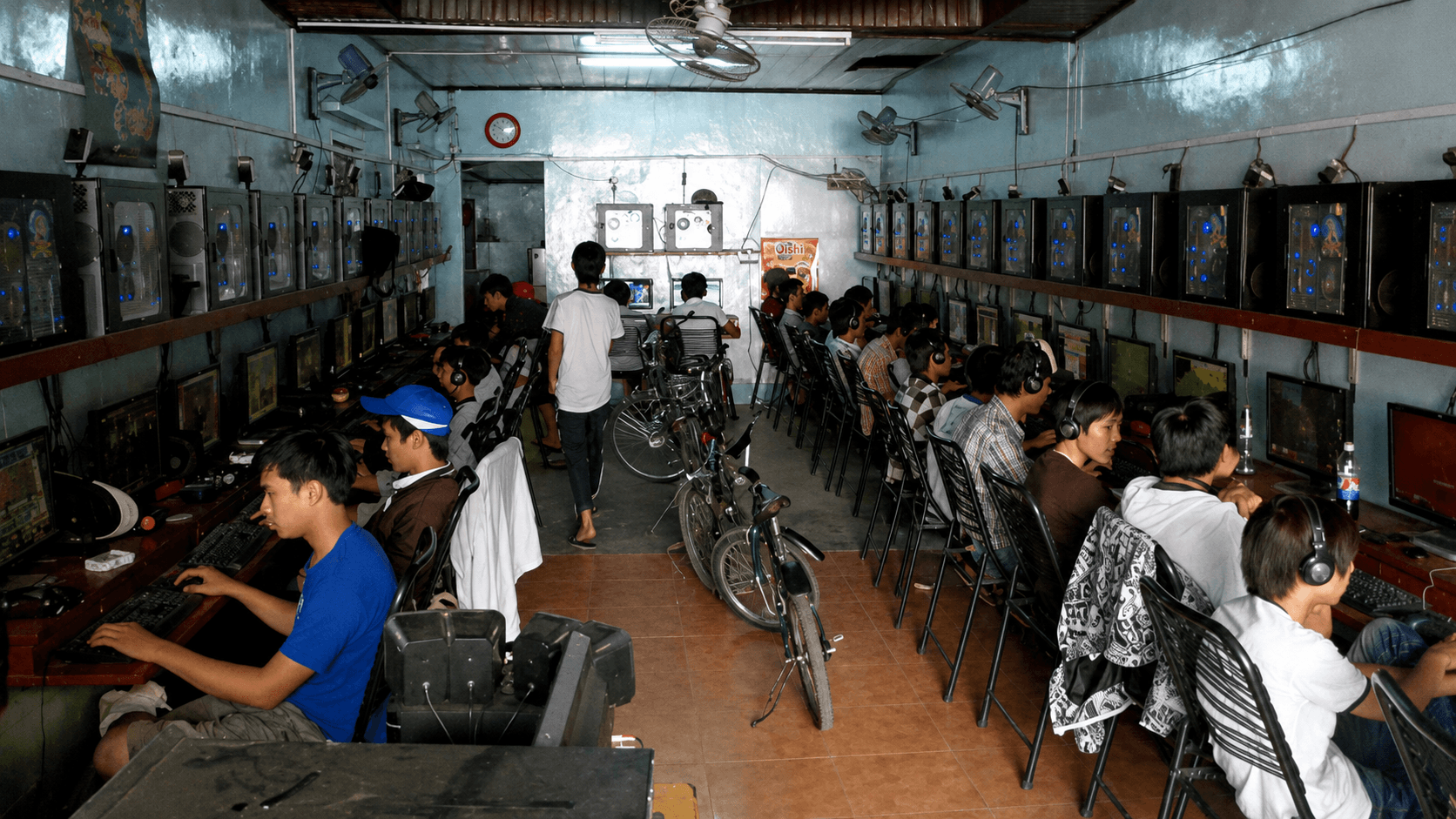
Mr. Nguyen Van Nam, the owner of a computer lab in Truong Vinh ward, said that the period from 2010 to 2018 was the period of strongest growth. Confident in the potential of this model, in 2020 he continued to invest nearly 1 billion VND to upgrade the entire computer system.
But just a few years later, the popularity of smartphones, mobile games, and personal computers caused a rapid decline in customers. "Now many people play games on their phones, and those who are truly passionate invest in their own computers at home. Nobody goes to internet cafes to look up information or documents anymore. The cafe is empty, but the costs of electricity, rent, and equipment upgrades are still increasing," Nam said.
Three professions, three different stories, yet all reflecting a common principle: As technology changes the way services are accessed, business models based on old advantages will gradually lose their foothold. What disappears is not just a profession, but also an entire way of consuming that was once very familiar to society.
Adapt so you don't get left behind.
The shrinking of record stores, street photography businesses, and internet cafes is not an isolated phenomenon, but rather reflects the inevitable shift of the economy in the digital age. As technology develops faster than the innovation cycles of many industries, jobs that do not create differentiated value are easily replaced by digital platforms, artificial intelligence, and automation.
In reality, many other professions are facing similar pressure, such as data entry clerks, cashiers, translators, and those collecting electricity and water bills at home. If they only maintain the old ways of doing things, the risk of shrinking markets is unavoidable.

However, technology not only takes away opportunities but also opens up new avenues for development. In the photography profession, instead of simply taking souvenir photos, photographers can offer packages for artistic photography, experiential photography, drone photography, short video recording, post-production editing, or content production for social media. The value of a photographer now lies not in simply pressing the shutter button, but in their creativity and ability to produce content that is difficult for smartphones to replicate.
For internet cafes, many have transformed into modern Cyber Game models with upgraded graphics, combined with organizing esports tournaments, technology experience spaces, or digital skills training services. Meanwhile, traditional businesses also need to strengthen their application of e-commerce, cashless payments, digital advertising, and leveraging customer data to enhance competitiveness.

Digital transformation is an irreversible trend. Within this trend, many industries will continue to change, or even disappear. The deciding factor is not how quickly technology develops, but the ability of each worker and each business to adapt. Proactively innovating, improving skills, and seeking differentiating value are the ways to avoid falling behind and to transform the challenges of the digital age into new opportunities for growth.