

France and the challenge of independently developing its 6th-generation fighter jet.
Following setbacks in the FCAS project, France is considering developing its own sixth-generation fighter jet. Despite its strong industrial base, the challenges regarding budget and microelectronics are significant.
Against the backdrop of Europe's Future Combat Air Systems (FCAS) program facing numerous obstacles and the UK pursuing its Global Combat Air Systems (GCAP) program, France is facing the possibility of continuing its tradition of independently developing its next-generation fighter aircraft. Its independent defense industry is a significant advantage, but the cost and advanced microelectronics technologies present considerable challenges for Paris.
France's technological foundation and tradition of self-reliance.
France has long asserted its position as a leading defense industrial power in Europe with its ability to design and manufacture top-of-the-line fighter jets such as the Mirage and Dassault Rafale. To date, 505 Rafale aircraft have been assembled for both the French Air Force and Navy, and exported to nine countries worldwide.
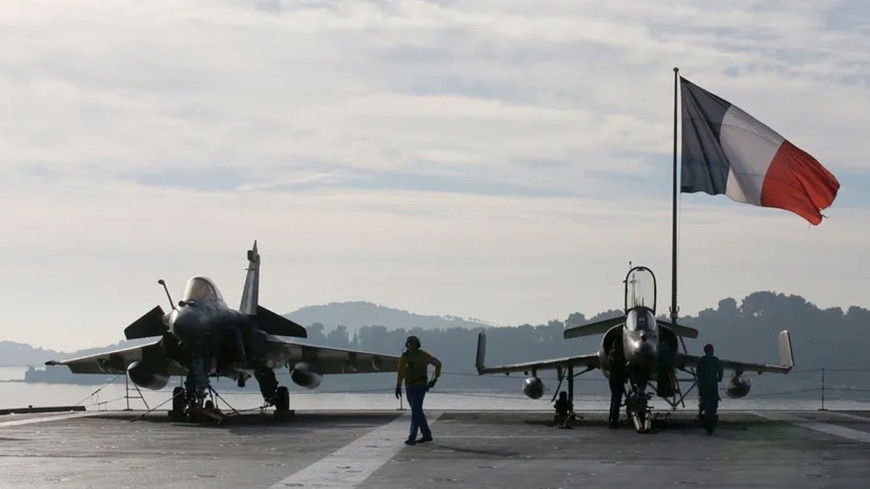
Notably, the decision to develop the Rafale independently was made after France withdrew from the European joint Eurofighter Typhoon project. History shows that Paris has always maintained technological self-reliance thanks to its ecosystem of leading defense corporations such as Dassault Aviation, Thales Group, Safran Electronics & Defense, and MBDA. These entities handle everything from airframe design, stealth technology, avionics, nuclear deterrence systems to carrier-based aircraft.
In this context, the Safran Group plays a core role in aircraft engines and propulsion systems following the restructuring and merger between Snecma and Sagem in 2005. Proof of this technological superiority is that the Rafale fighter jet has been equipped with active electronically scanned array (AESA) radar since 2013, while the Eurofighter Typhoon only began integrating this technology in the early 2020s. The military magazine Topwar estimates that the Rafale is about 5 years ahead of other modern European fighter jets in terms of overall technology.
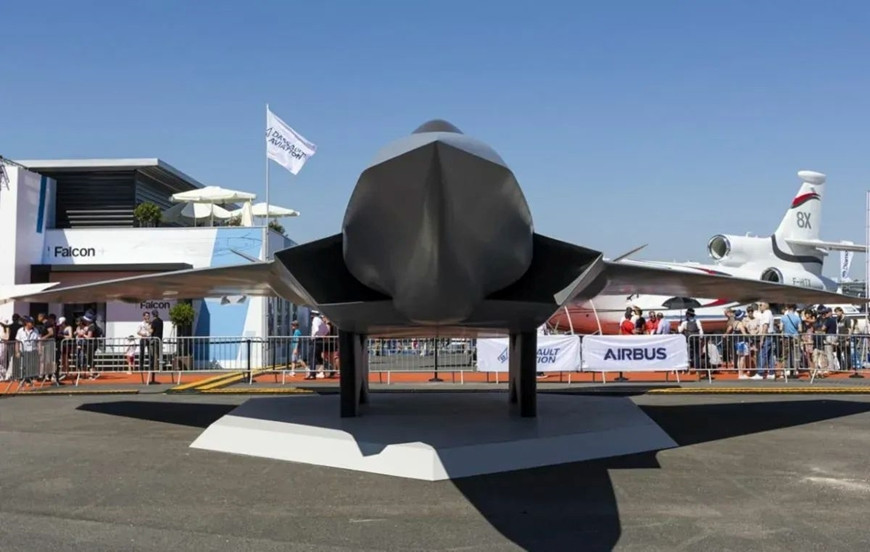
Budgetary and microelectronics technology barriers
Despite possessing impressive technical capabilities, developing a sixth-generation fighter jet alone requires enormous financial resources. For comparison, the US F-35 Joint Venture program has cost approximately $100 billion, with collaborative funding from numerous allied nations. Furthermore, the US already has technological leverage from the fifth-generation F-22 Raptor fighter jet to apply to the F-35.
In contrast, France lacks the necessary foundation for a fifth-generation fighter jet to serve as a stepping stone. The estimated cost for a French-funded new-generation fighter program could reach 50-80 billion euros. The absence of partners to share the financial burden would place significant pressure on the country's defense budget.

Besides financial factors, the French defense industry also faces skepticism regarding its ability to produce microelectronics – a key component for advanced radar systems, communications networks, and integrated artificial intelligence (AI) on sixth-generation fighter jets. In this respect, France is considered unable to compete directly with the United States and China.
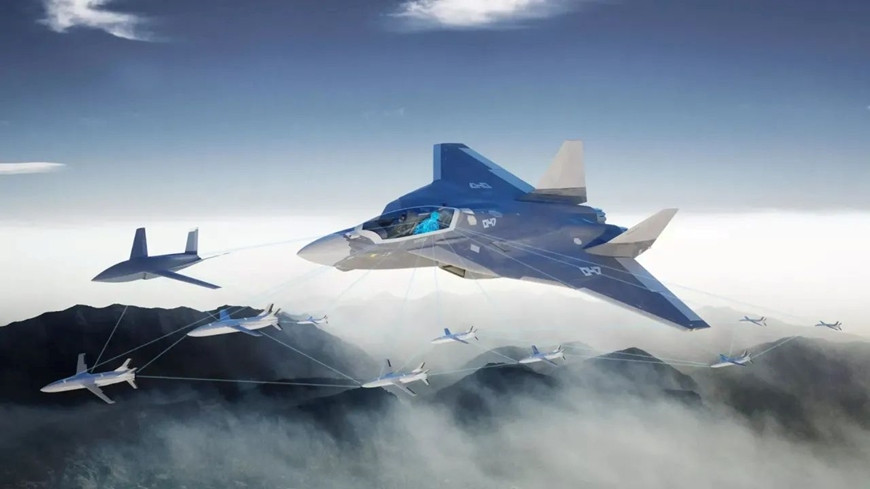
Competitive prospects in the international market
International military analysts believe that it is entirely feasible for France to independently develop a new aircraft model based on the capabilities of Dassault, Safran, and Thales. However, if the microelectronics and production scale issues cannot be fully resolved, this aircraft model risks remaining at the 5th+ generation standard instead of a complete 6th generation.
In summary, the overall combat capability and competitiveness of the new product in the export market may struggle when compared to comparable aircraft from the United States or China. The development of France's future fighter aircraft will depend entirely on the level of budget allocation and the ability to optimize the core technologies that the country possesses.