

Free periodic health check-ups in Nghe An: A policy that reaches every citizen.
Some policies are not only measured by numbers or targets, but also felt through the reassuring eyes of the elderly after a medical examination, and the smiles of workers knowing their health is being regularly monitored... Nghe An province's plan for free periodic health check-ups and screenings for the people from 2026 to 2030 is gradually realizing this goal, bringing healthcare services closer to the people and creating a foundation for a healthy community in the future.
Bringing healthcare services closer to the people.
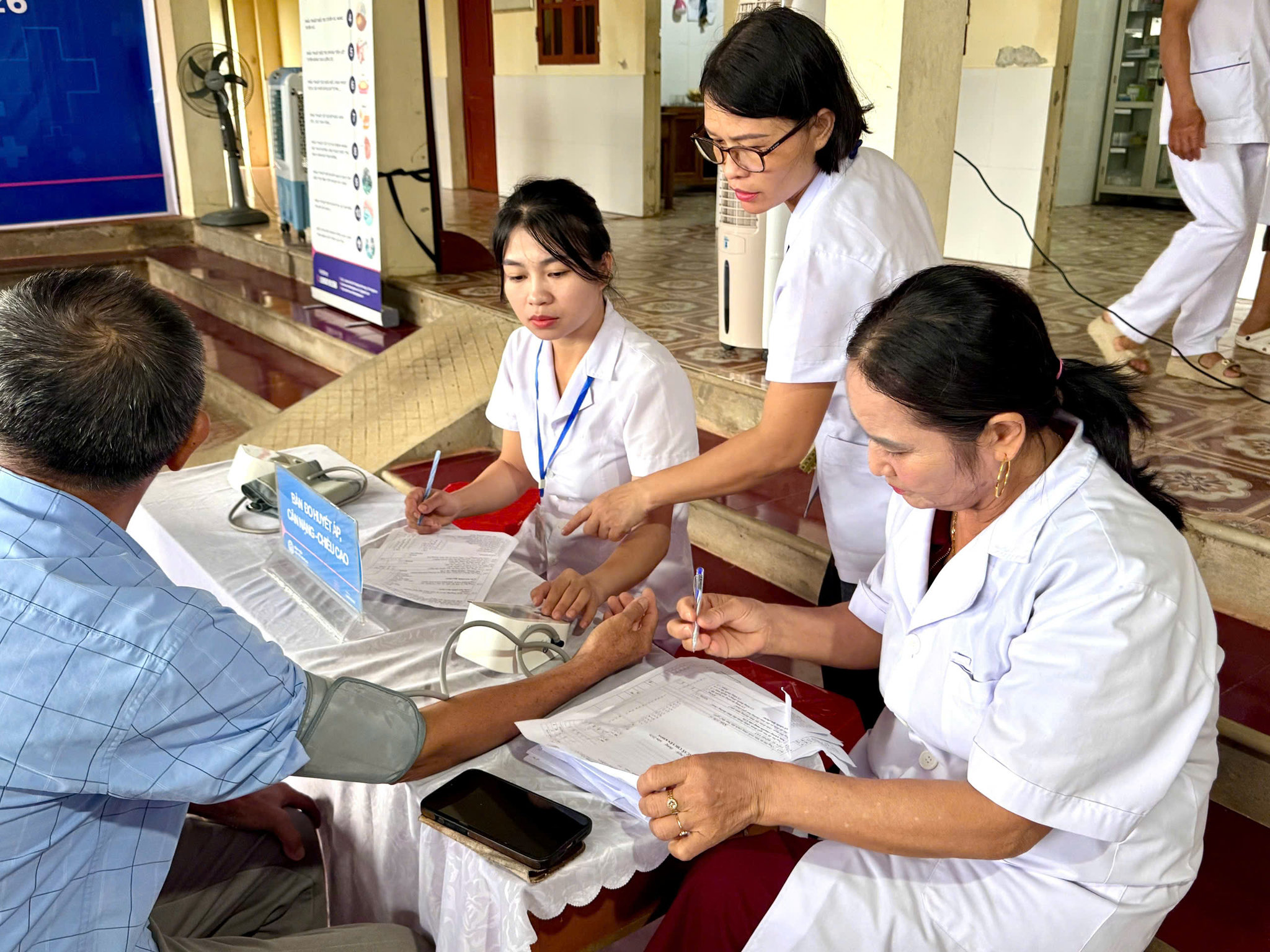
It was just past 6 a.m., and groups of elderly people, carefully holding their personal documents, lined up to wait for their turn to be examined at the Thanh Long Health Station. Some arrived with canes, others were brought by their children or grandchildren, but everyone's face shone with excitement. For many, this was not simply a health check-up; it was their first time accessing specialized medical services right in their local area, without having to travel dozens of kilometers to the provincial level.
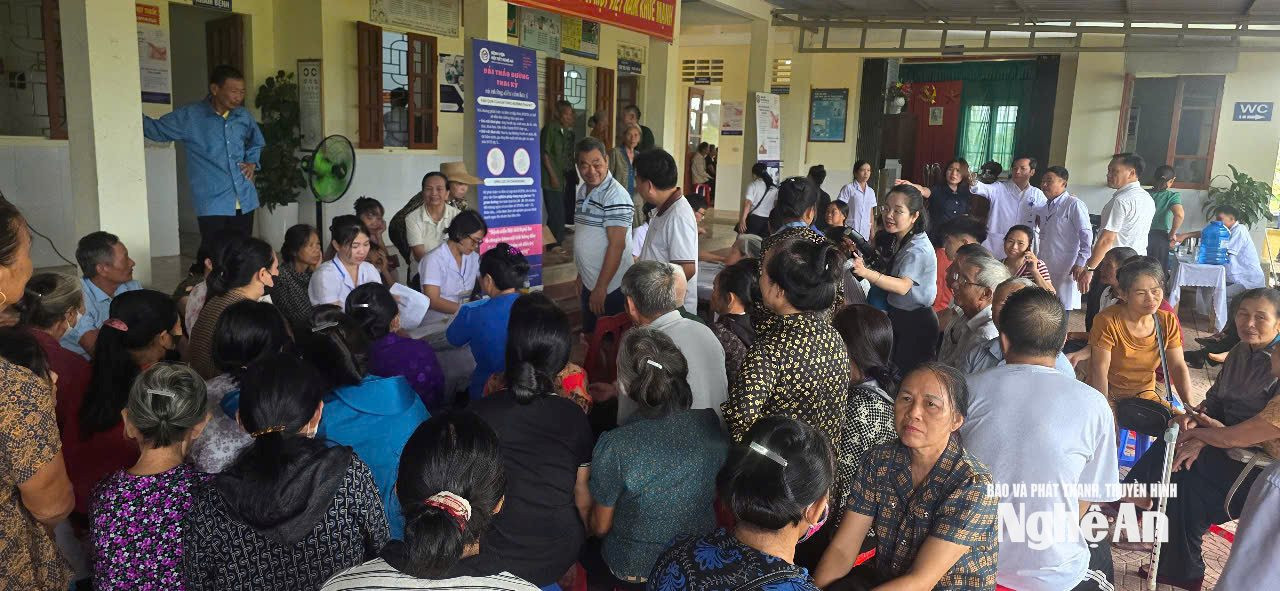
Mr. Tran Thanh Tam (75 years old) shared that for many years, he had never had the opportunity to have a thorough examination for endocrine diseases. His advanced age, the long distance, and the travel costs meant that he kept postponing his visits. Only when the free health check-up program was organized right in his commune did he have the chance to receive a full examination and consultation from doctors.
His enthusiasm reflects the general sentiment of many elderly people in the community. It's no coincidence that in many localities, the largest group of participants are the elderly. They are the group at high risk of chronic diseases but also the ones who face the most difficulties in accessing specialized medical services.
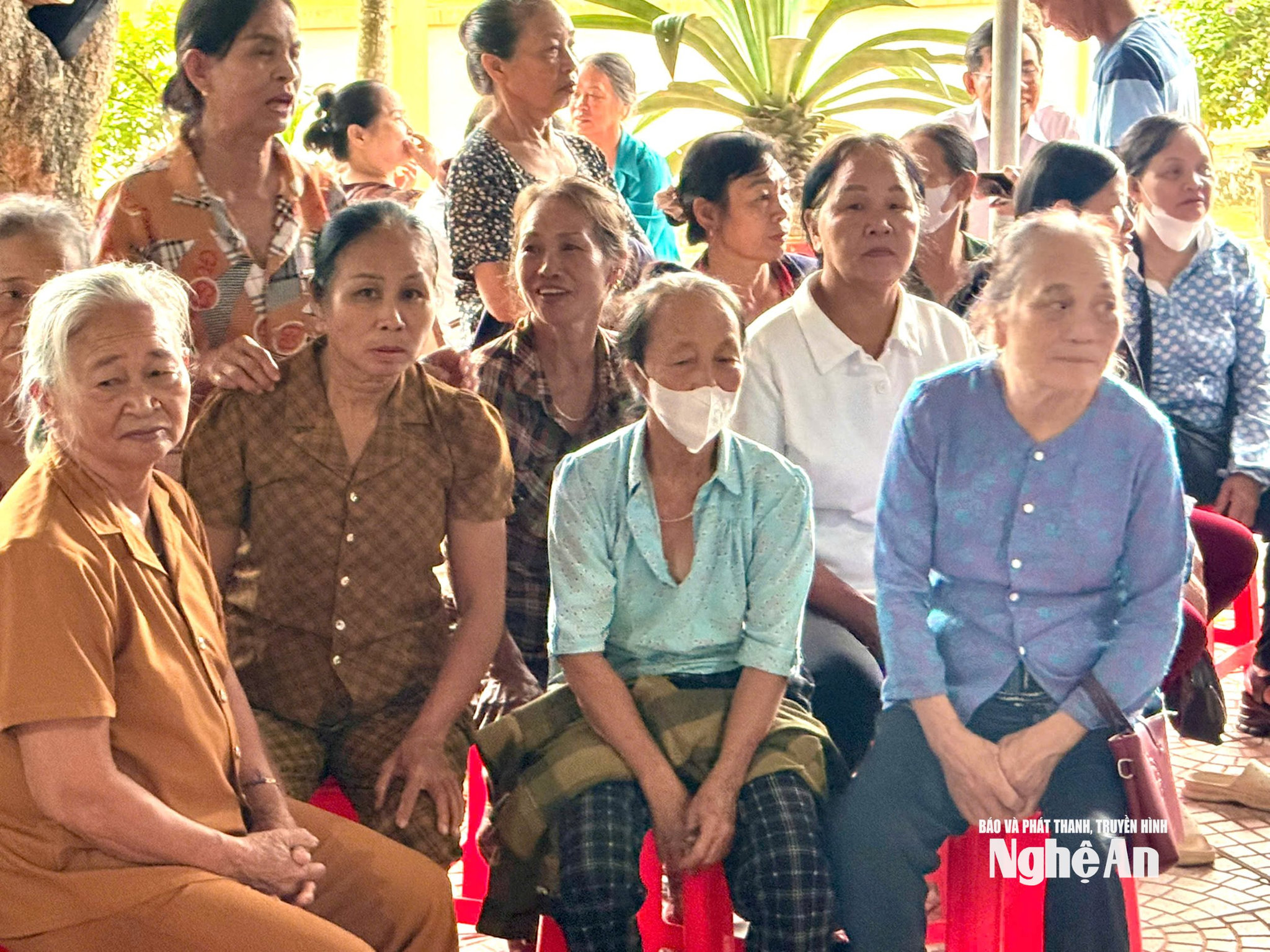
According to Mr. Dang Van Lap, acting Chairman of the People's Committee of Kim Bang commune, geographical distance has always been one of the major obstacles to healthcare at the grassroots level. For many people, especially the elderly, a trip to a provincial hospital for a check-up means a whole day of travel, accommodation costs, and the hardship of accompanying family members. Therefore, hospitals bringing doctors and equipment to the local area not only helps people save time and money but also creates conditions for many people to receive comprehensive screening for the first time.
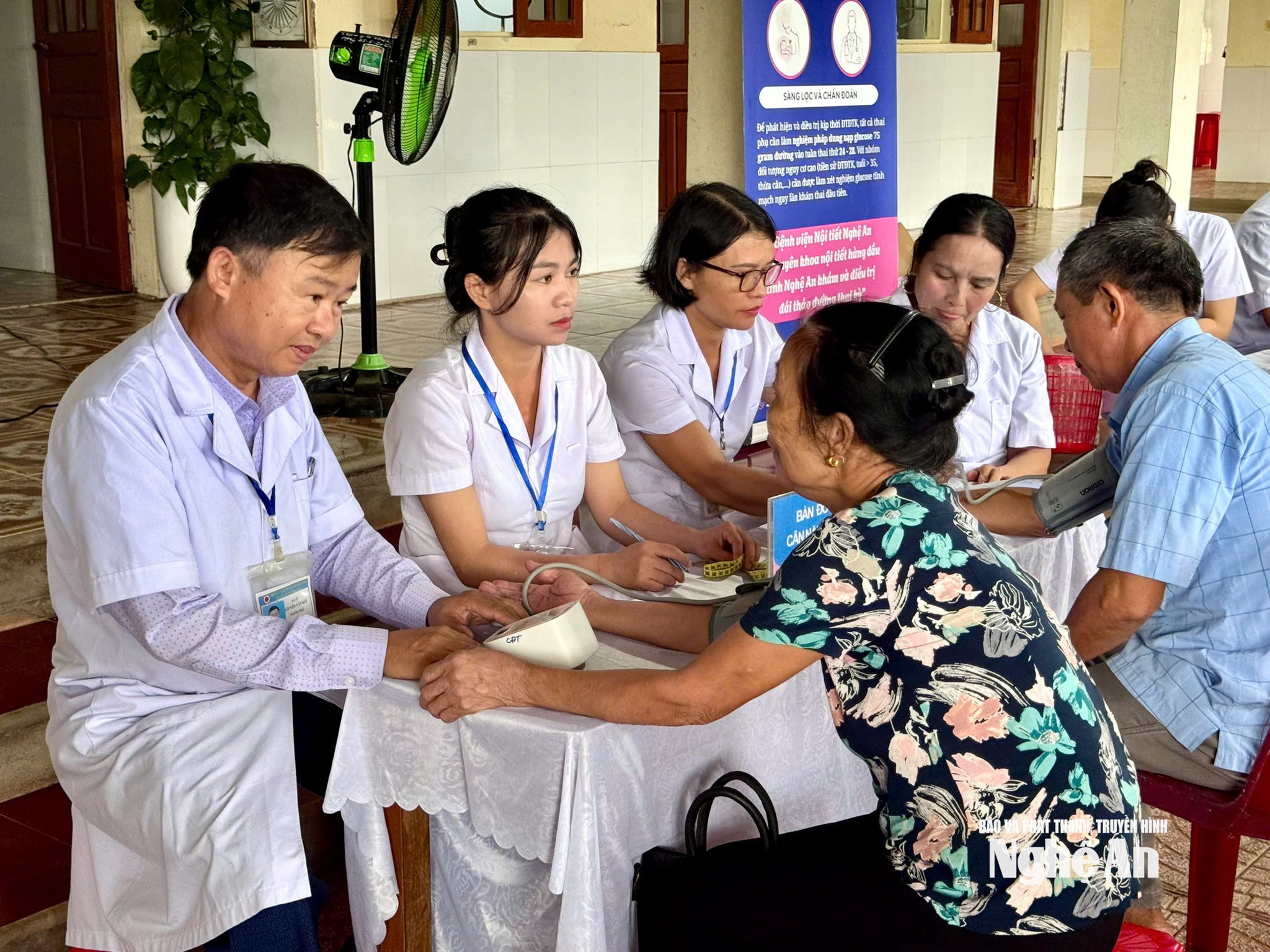
It's worth noting that the program doesn't just stop at "perfunctory check-ups." Each check-up aims to detect risk factors early for long-term health management. That's also why Nghe An Endocrinology Hospital - the unit directly implementing the diabetes and thyroid screening program - has mobilized its strongest professional force for the program.
In addition to the direct guidance of the hospital's Board of Directors, 20 medical staff members participated in the program, including 10 doctors, many of whom held postgraduate degrees; along with a team of technicians, nurses, and the communications department who provided continuous support throughout.
Không chỉ mang con người, bệnh viện còn "mang theo" cả phòng khám thu nhỏ với hệ thống máy siêu âm tuyến giáp, máy đo huyết áp, máy đo đường huyết, dụng cụ thực hiện nghiệm pháp dung nạp glucose cùng đầy đủ vật tư y tế để bảo đảm việc khám sàng lọc đạt chất lượng tương đương tại bệnh viện.
Những con số sau gần 2 tháng triển khai đã cho thấy giá trị thực sự của việc chủ động khám sàng lọc. Tại 17 xã, phường đã tổ chức khám, có 8.392 lượt người được sàng lọc bệnh đái tháo đường. Qua đó, các bác sĩ phát hiện 660 trường hợp mắc đái tháo đường mới, chiếm gần 8% số người được khám; đồng thời, ghi nhận 1.151 trường hợp tiền đái tháo đường - nhóm đối tượng có nguy cơ rất cao nếu không được can thiệp kịp thời.
Song song với đó, hơn 9.500 lượt siêu âm tuyến giáp đã được thực hiện, phát hiện 236 trường hợp có nhân tuyến giáp nghi ngờ ác tính (TIRADS 4-5), giúp người bệnh được chuyển tuyến theo dõi và điều trị sớm. Đằng sau những con số ấy là hàng trăm người dân đã biết mình mắc bệnh trước khi xuất hiện biến chứng.
Tiến sĩ, bác sĩ Phan Thế Dũng - Giám đốc Bệnh viện Nội tiết Nghệ An cho biết, mục tiêu lớn nhất của chương trình là phát hiện sớm, quản lý sớm và theo dõi lâu dài các bệnh lý mạn tính. Khi người dân được tiếp cận dịch vụ sàng lọc ngay từ cộng đồng, cơ hội điều trị hiệu quả sẽ cao hơn rất nhiều, đồng thời giảm gánh nặng cho hệ thống y tế trong tương lai.
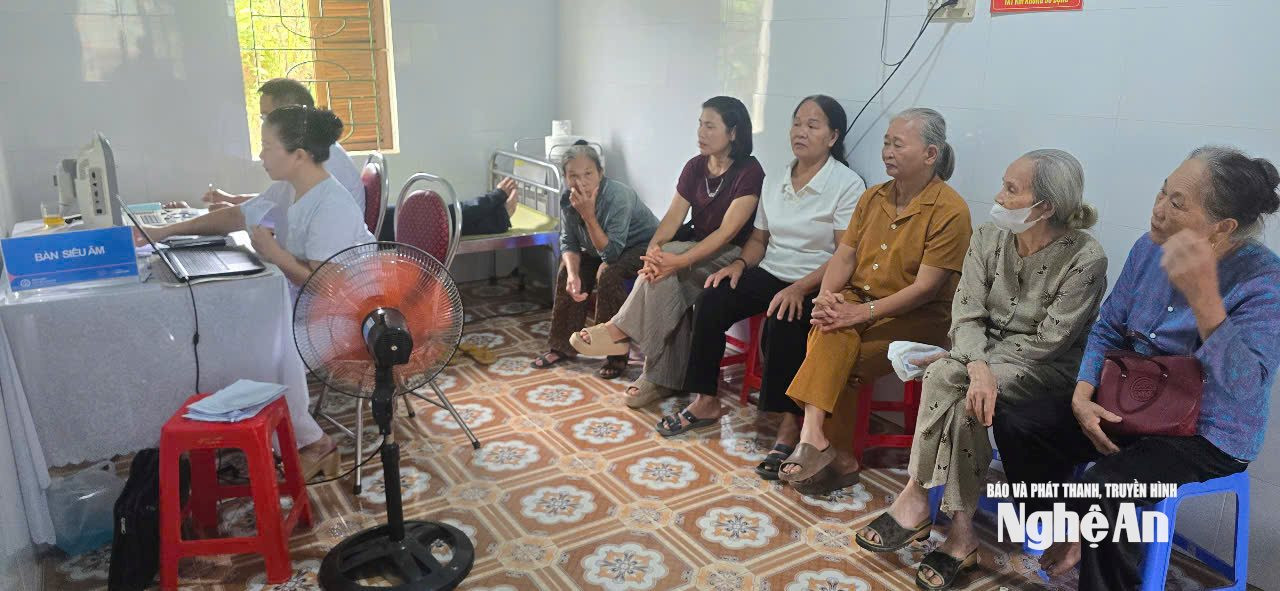
Nếu như trước đây, phần lớn người dân chỉ tìm đến bệnh viện khi cơ thể đã xuất hiện triệu chứng rõ rệt thì giờ đây, việc khám sức khỏe định kỳ đang từng bước xây dựng thói quen mới: Thay vì "chữa khi đã bệnh", người dân được khuyến khích "kiểm tra khi còn khỏe", để phát hiện nguy cơ trước khi bệnh tật thực sự xuất hiện.
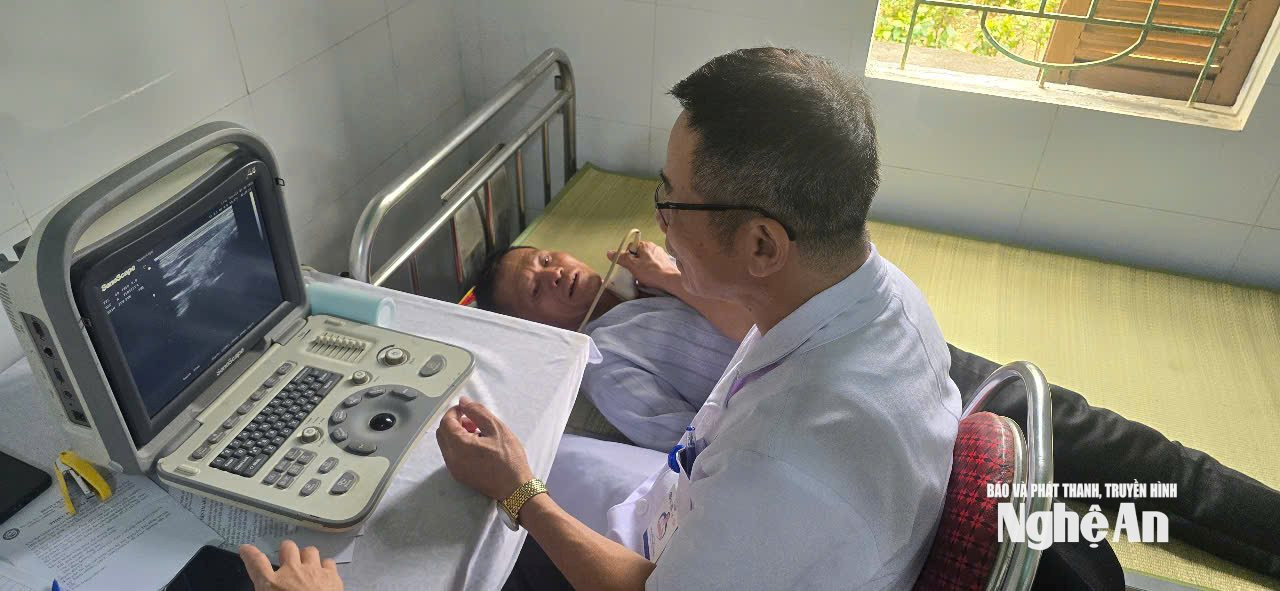
Nhìn rộng hơn, mỗi buổi khám lưu động tại cơ sở còn mang một ý nghĩa đặc biệt. Đó là hình ảnh của ngành Y tế chủ động bước ra khỏi cổng bệnh viện để đến với người dân; là sự thay đổi trong cách tiếp cận dịch vụ công, lấy sự thuận tiện của người dân làm trung tâm. Khi bác sĩ đến gần người dân hơn, khoảng cách giữa chính sách và cuộc sống cũng được rút ngắn, để quyền được chăm sóc sức khỏe không còn phụ thuộc vào điều kiện kinh tế hay vị trí địa lý của mỗi người.
Từ một chương trình y tế
to human development strategy
In rural and mountainous areas, mobile medical examination vehicles help people avoid traveling tens of kilometers to hospitals, while in industrial zones and factories, medical services are brought directly to the workplaces of workers. This is how the free health check-up program is being implemented in Nghe An province with a flexible approach, putting the people at the center.
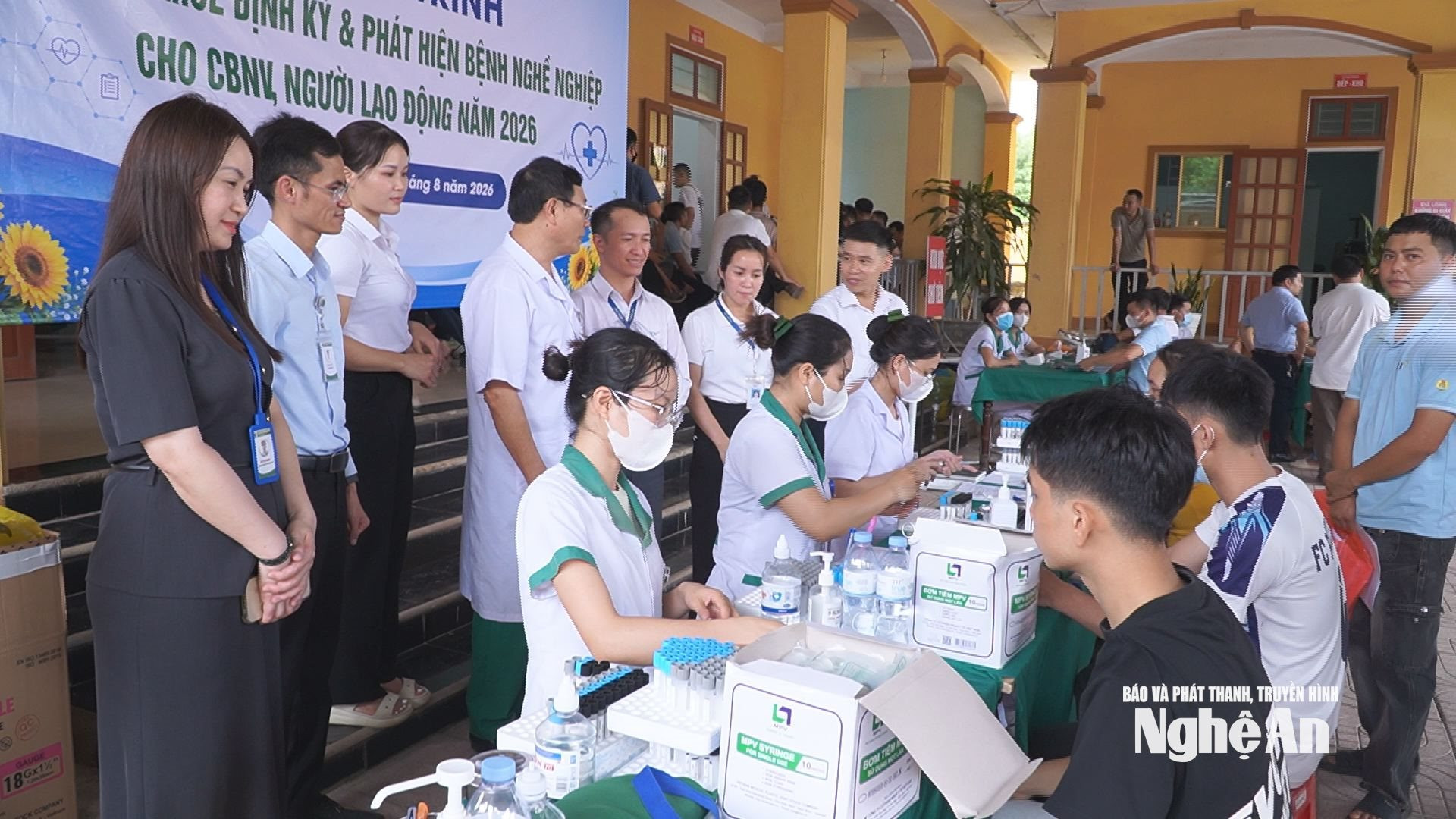
At Nghia Trung Health Station, hundreds of workers from TH Milk Joint Stock Company received general health check-ups, occupational disease screenings, and health care advice right near their workplace. Ms. Pham Thi Nguyet, a worker at the company, shared her wish for the program to be maintained annually, helping workers like her receive specific advice from doctors on nutrition, rest, and prevention of occupational diseases.
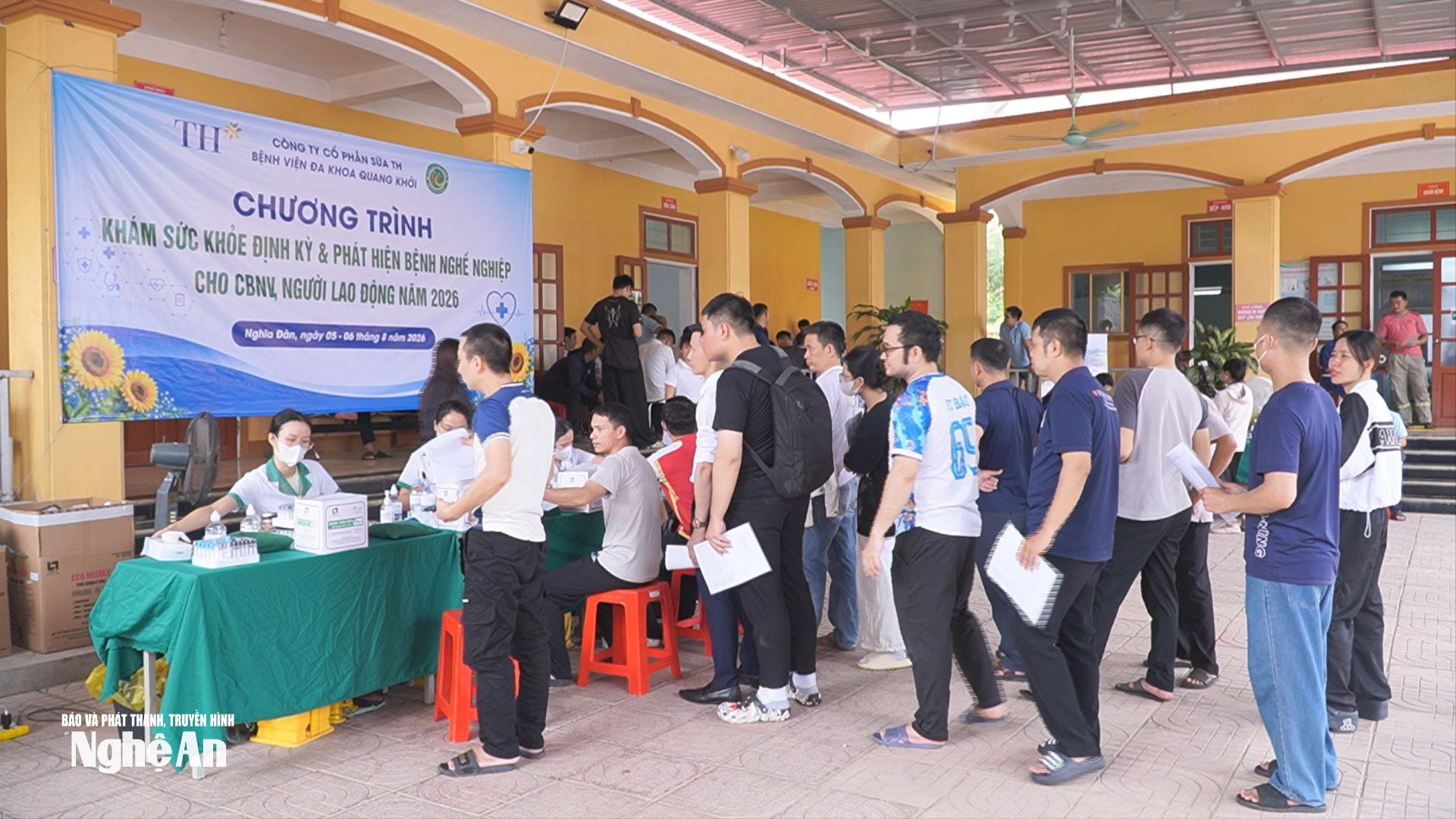
According to Dr. Nguyen Hai Linh, Director of Quang Khoi General Hospital, bringing medical services to businesses not only saves time for employees but also contributes to early detection of risk factors, limiting the situation of discovering diseases at a late stage. A healthy workforce is a crucial foundation for the stable and sustainable development of businesses.
From examination points in rural areas to factories and enterprises, it is clear that the program is designed to suit each target group. The elderly receive examinations right in their communities. Workers are examined at their workplaces. Students are examined at school. People in remote areas are prioritized with mobile examination sessions. This approach helps the policy truly "reach people's lives."
To realize the set goals, the Nghe An Health sector has implemented many comprehensive solutions since the early months of 2026. Following the Politburo's Resolution No. 72-NQ/TW and the Prime Minister's Directive No. 17 on free periodic health check-ups or screenings for the people, the Nghe An Provincial People's Committee issued Plan No. 587/KH-UBND, identifying this as a key, ongoing, and long-term task, linked to socio-economic development and ensuring social security. The Nghe An Department of Health quickly advised on the establishment of a provincial-level Steering Committee, built specialized teams, issued numerous professional guidance documents, and coordinated resources throughout the province.
On May 16, 2026, a provincial-level launch ceremony was held in Minh Chau commune with the participation of Minister of Health Dao Hong Lan, marking the beginning of a large-scale health check-up campaign throughout the province. Simultaneously, 22 centralized check-up points and 457 check-up points at commune and ward health stations were put into operation. In just the first two days, more than 28,000 people received health check-ups.
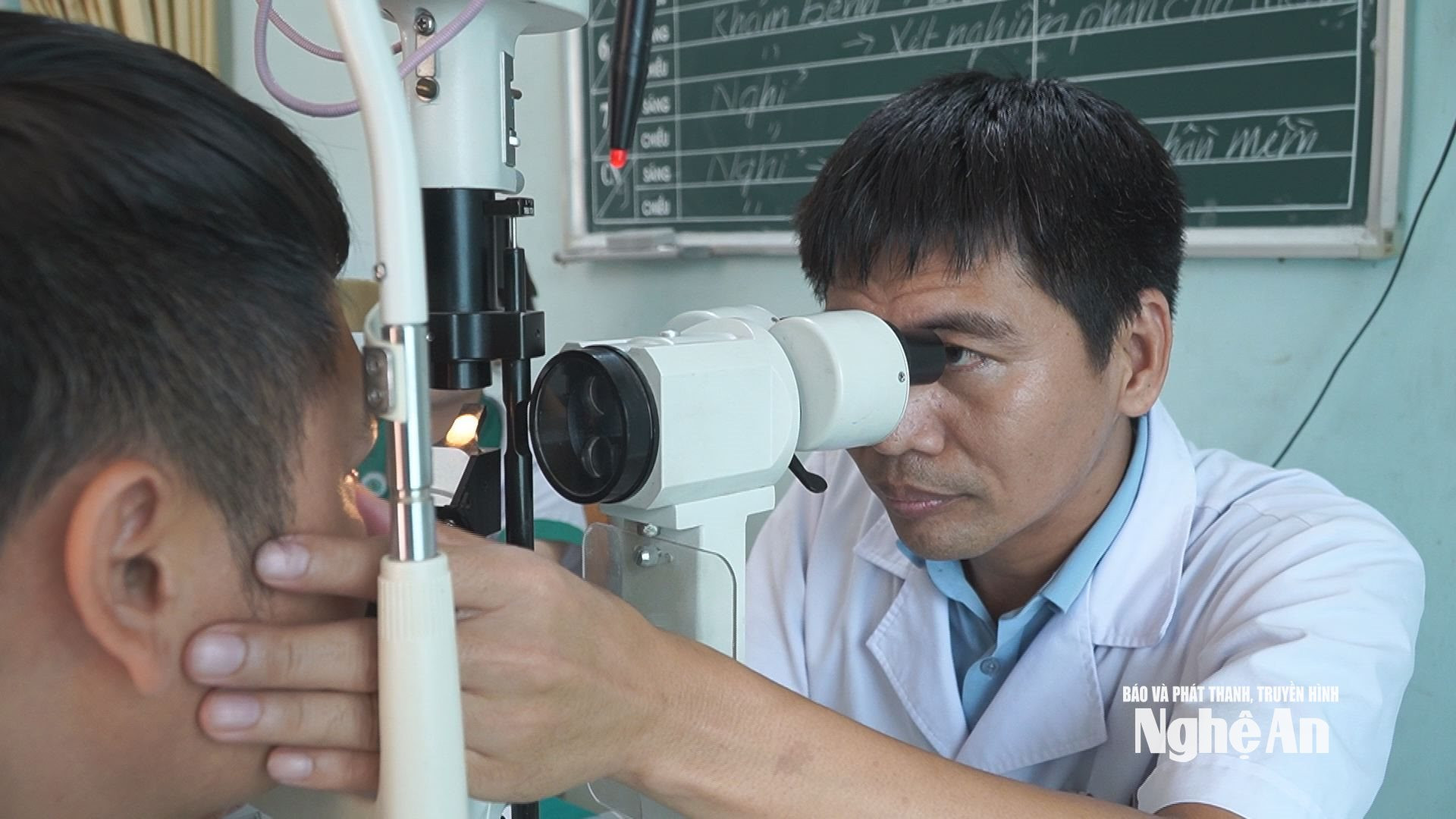
As of the end of June 2026, 1,624,356 people in the province had received free routine health check-ups or screenings, reaching 44.61% of the population. In June alone, over 156,000 people received check-ups. In addition, more than 1.15 million people received medical examinations and treatment through health insurance, contributing to the expansion of the universal healthcare network.
Behind those figures lies the close coordination of all levels of government, the health sector, the police force, organizations, associations, businesses, and grassroots medical staff. From identifying eligible individuals, compiling lists, scheduling examinations, preparing locations, to updating data into electronic health records, everything was implemented synchronously.
A notable new feature of the program is the integration of health check-ups with digital transformation in healthcare. Citizens' check-up results will be updated to an electronic health record integrated into the VNeID application, and simultaneously linked to the healthcare management system. This allows each citizen to have a "digital health record" that is tracked throughout their life, enabling doctors to manage illnesses throughout their lifecycle instead of just treating individual illnesses. This is considered a significant step in building a smart healthcare system, aiming for proactive, continuous, and comprehensive health management.
However, this journey has not been without difficulties. The Nghe An Health Department frankly acknowledges that healthcare personnel, especially at the commune level, are still insufficient and weak while having to handle many tasks simultaneously. The information technology system in some localities is not yet synchronized, and connecting data to electronic health records still faces obstacles. Some regulations on statistics, finance, and settlement for items outside the scope of health insurance also need to be finalized soon.
Furthermore, in many remote areas, a segment of the population still lacks the habit of regular health check-ups. The notion that "if there's no pain, there's no need for a check-up" persists, requiring persistent and sustained public awareness campaigns.
However, it is precisely from these difficulties that the determination of the health sector has become even clearer. The Nghe An Department of Health has proposed to the Ministry of Health and relevant ministries and sectors to soon standardize statistical criteria, complete the data connection software, issue appropriate financial mechanisms, and continue investing in the grassroots health system. At the same time, the sector continues to strengthen human resource training, improve the professional capacity of frontline medical staff, and promote communication to encourage people to develop the habit of regular health check-ups.
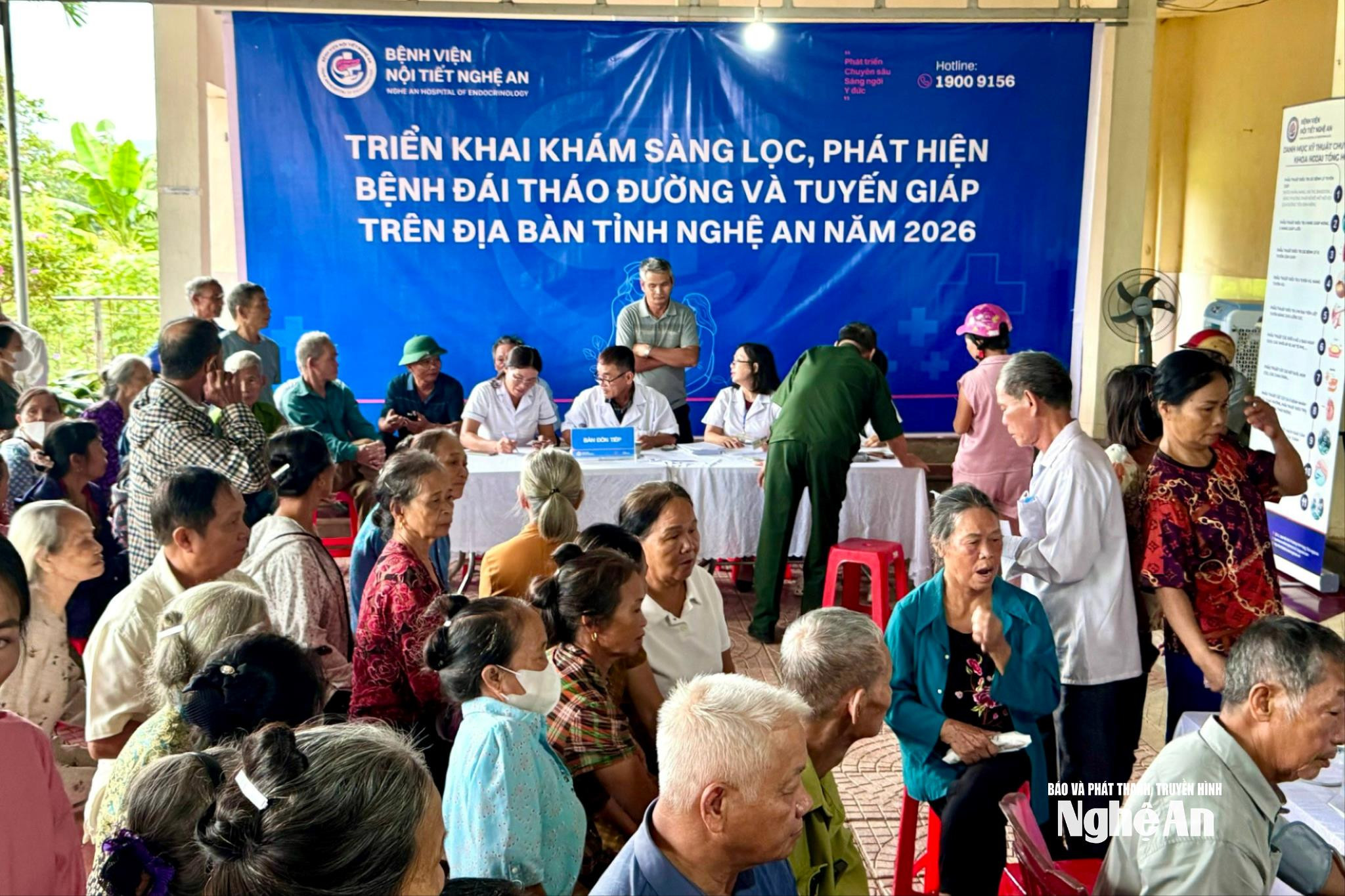
There is still much work to be done between now and 2030. The goal of 100% of the population receiving at least one health check-up per year is a major undertaking, requiring the concerted efforts of the entire political system and the proactive participation of every citizen. However, initial results have shown that Nghe An's direction is correct. The greatest value of the program lies not only in the number of people examined or the number of cases detected, but also in the change in the community's mindset regarding healthcare; in the fact that preventive medicine is gradually becoming a "shield" protecting health from an early age; and in the trust of the people as the policy goes beyond written directives and is now manifested through mobile health check-up vehicles, examination tables set up in village cultural centers, schools, factories, and residential areas.
Therefore, Nghe An's plan for free periodic health check-ups and screenings from 2026 to 2030 is not just a health program, but also a human development strategy. From these first steps today, the province is building the foundation for a healthier community, a more proactive society in the face of disease, for a sustainable future where no one is left behind on the journey of health care and protection.