

Yen Hoa resolves obstacles and stabilizes the growing area.pineapple
Surveys indicate that pineapple cultivation is suitable for the local soil conditions and has the potential to increase production value per unit area in Yen Hoa commune. However, to establish a stable raw material supply area, the locality still needs to address obstacles related to support policies, investment resources, and production organization.
From abandoned land to new production methods.
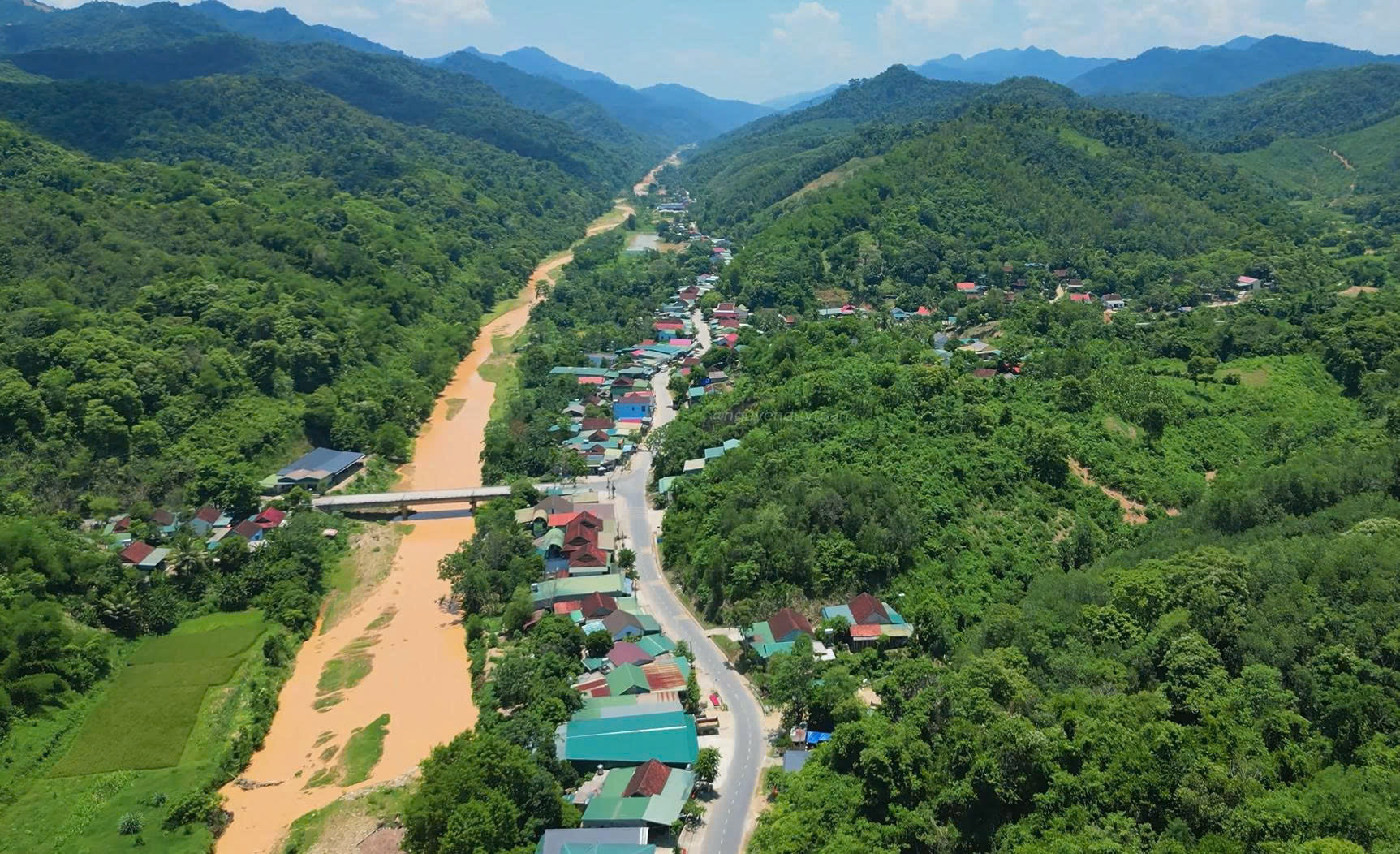
Yen Hoa is a mountainous commune in Nghe An province, established by merging the former Yen Thang and Yen Hoa communes, which were previously part of Tuong Duong district. The commune has a natural area of approximately 211.01 km² and a population of over 8,418 people, mainly Thai, Khmu, and Kinh ethnic groups.
Agriculture and forestry have long been the main livelihoods of the people. Acacia trees and some traditional crops are maintained on many areas, but their economic value is not high. Meanwhile, a portion of the agricultural land has been left fallow for a long time, not being exploited effectively.
Finding suitable crops that can generate higher value on the same area of land has become a priority for local Party committees and authorities. In early 2026, the People's Committee of Yen Hoa commune organized a delegation including commune leaders, secretaries, and village heads to visit Quynh Thang commune to learn about the model of developing a pineapple raw material area.
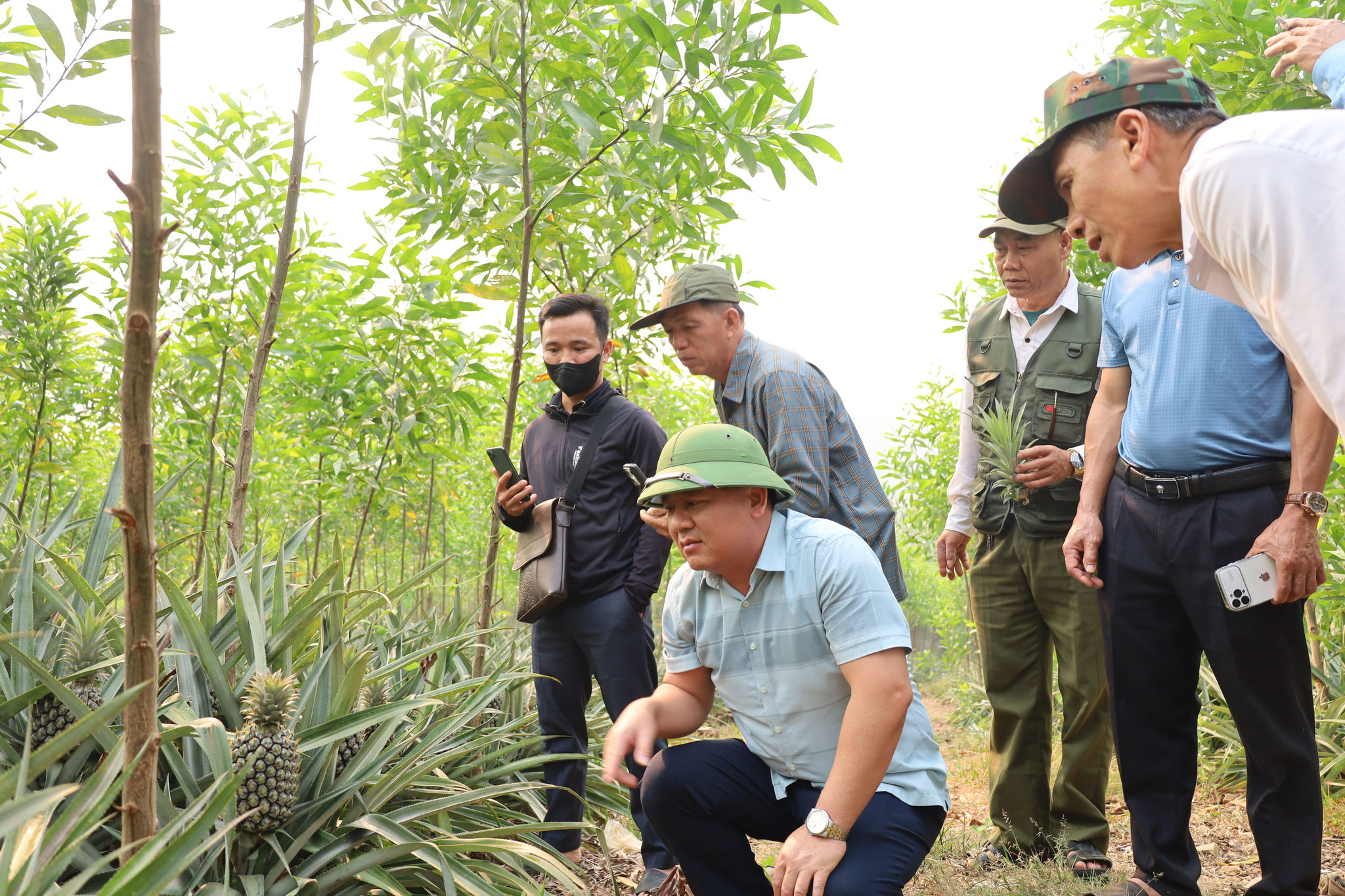
Based on practical experience, Yen Hoa continues to connect with businesses involved in pineapple production, processing, and consumption. Nafoods Group Joint Stock Company and Tuan An Agricultural Products Co., Ltd. were invited to conduct surveys in the area, assisting in assessing land conditions, techniques, and the potential for developing the raw material region.
Soil samples from several areas slated for pineapple cultivation were collected for analysis. Initial results indicate suitable soil conditions for this crop. This provides a basis for the local authorities to consider introducing pineapple cultivation to replace abandoned or low-yielding land.
Notably, businesses were connected right from the survey stage, not only receiving technical advice but also participating in discussions on production and product distribution linkages. For a crop that is still new to the local people, identifying a market outlet from the outset is considered crucial to mitigating risks.
The People's Committee of Yen Hoa commune also organized three conferences for the secretaries and heads of villages to understand the plan, support mechanisms, and development methods for pineapple cultivation, and then disseminate this information to the people. Initial assessments show that households have registered to plant pineapples on approximately 81 hectares.
One participating household stated that the biggest concerns for farmers when switching to a new crop are investment costs and product output. With support in terms of seeds, technical guidance, and a company's commitment to purchasing the produce, the family feels more confident in experimenting with pineapple cultivation before considering expanding the planted area.
According to Mr. Dau Duc Truyen, Chairman of the Yen Hoa Commune People's Committee, the initial registered area shows that people have begun to show interest in a new production method. However, there is still a gap between registration and actual planting, due to difficulties regarding soil type and support policies.
Removing obstacles to establish raw material zones.
According to Resolution No. 34/NQ-HĐND of the Provincial People's Council, for areas meeting the policy's eligibility criteria, the State provides 80% of the cost of purchasing seedlings; 5 million VND/ha for land preparation costs; and 3.5 million VND/ha for purchasing plastic sheeting for mulching. Farmers are responsible for the matching funds, including some supplies, fertilizers, and labor for planting, caring for, and harvesting.
This support significantly reduces initial costs for people switching to new crops. However, a review in Yen Hoa revealed that many areas registered for pineapple cultivation are located on production forest land, which is not eligible for the aforementioned support policy.
This obstacle has significantly reduced the area that can actually be implemented compared to the initial registered figure of approximately 81 hectares. For households in the highlands, bearing all the costs of seeds, land preparation, fertilizers, supplies, and labor for a crop that has never been grown on a large scale in the area is a considerable challenge.
Based on that reality, Yen Hoa considered establishing a pineapple farming cooperative to bring people together, organize centralized production, and create a link with businesses. However, this plan could not be implemented without someone to organize and manage it. Besides the cautious attitude towards the new model, the requirements for capital, management, and responsibility for organizing production also posed obstacles for the households.
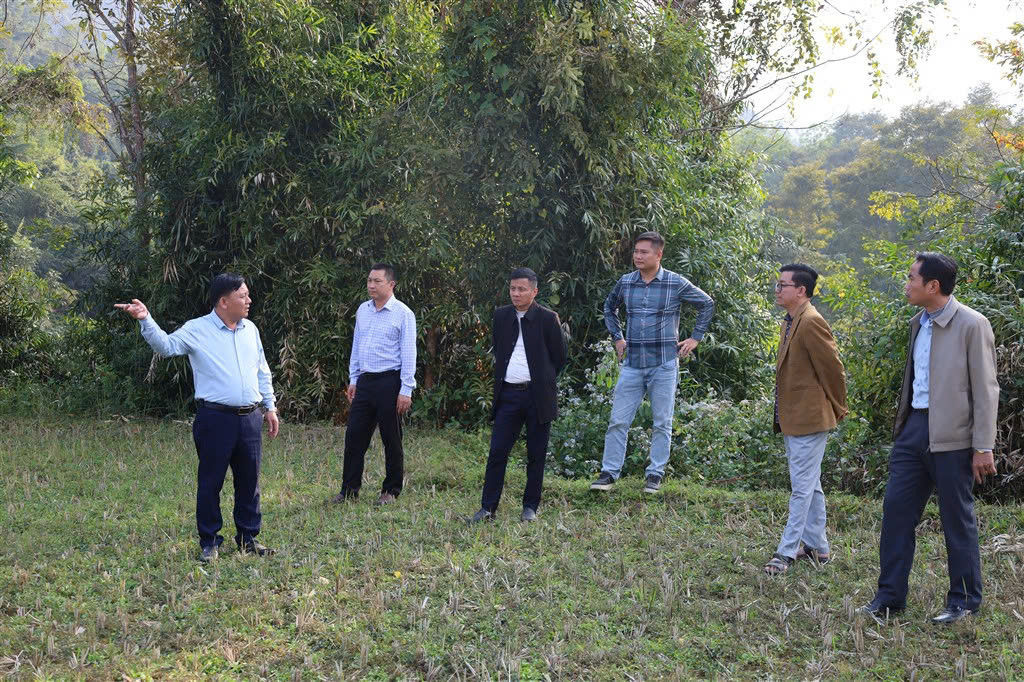
Instead of immediately expanding the cultivated area, the local authorities chose a more cautious approach by creating conditions for businesses to participate in pilot planting. According to the plan being implemented, one business is leased land to grow pineapples for a period of 3 years.
This model will serve as a practical basis for assessing the adaptability of pineapple plants to climatic and soil conditions; and for determining yield, costs, and economic efficiency before considering expanding the growing area. The company also plans to establish linkages and guarantee the purchase of products from participating households, thereby gradually forming a link between producers and consumers.
Along with the pilot model, Yen Hoa is seeking additional resources to support seed provision for areas not eligible under Resolution No. 34/NQ-HĐND. Currently, the People's Committee of the commune has advised the Party Committee to propose the application of other legitimate funding sources to reduce some of the initial investment costs for the people.
According to Mr. Dau Duc Truyen, Chairman of the People's Committee of Yen Hoa commune, the commune's orientation is not to develop pineapple cultivation as a trend, but to do it step by step, based on actual effectiveness and product consumption capacity.
“First, we must prove that pineapple cultivation is suitable, economically viable, and has a stable market. When people see the effectiveness of the model in practice, it will be easier to encourage expansion of the cultivated area. The goal is to better utilize the land currently lying fallow or underutilized, gradually forming a commodity production area and creating additional livelihoods for the people,” said the Chairman of the People's Committee of Yen Hoa commune.
The development of pineapple cultivation areas in Yen Hoa is only in its initial stages. Based on the results of the pilot model, the ability to mobilize support policies, and the participation of businesses and people will determine whether pineapple cultivation can become a stable commodity production area. A step-by-step approach also helps the locality avoid expanding the cultivated area before the economic efficiency and product output have been fully proven.