
Luong Son Temple - Where history resonates forever.
Not only is it an ancient communal house nearly two centuries old on the Lam River, Luong Son communal house (Do Luong commune) is also a cradle of revolution, the place where the Party branch of the Dang Son - Bach Ngoc region was established, and it commemorates the sacrifice of 7 Red Self-Defense Force members. Today, this special national historical site still preserves traces of the origins of the People's Public Security force.
.png)
Thanh Phuc - Hoai Thu/Present:Hong ToaiAugust 16, 2026
*****
Not only is it an ancient communal house nearly two centuries old on the Lam River, Luong Son communal house (Do Luong commune) is also a cradle of revolution, the place where the Party branch of the Dang Son - Bach Ngoc region was established, and it commemorates the sacrifice of 7 Red Self-Defense Force members. Today, this special national historical site still preserves traces of one of the most important revolutionary events.The predecessor organization of the Vietnam People's Public Security Force.

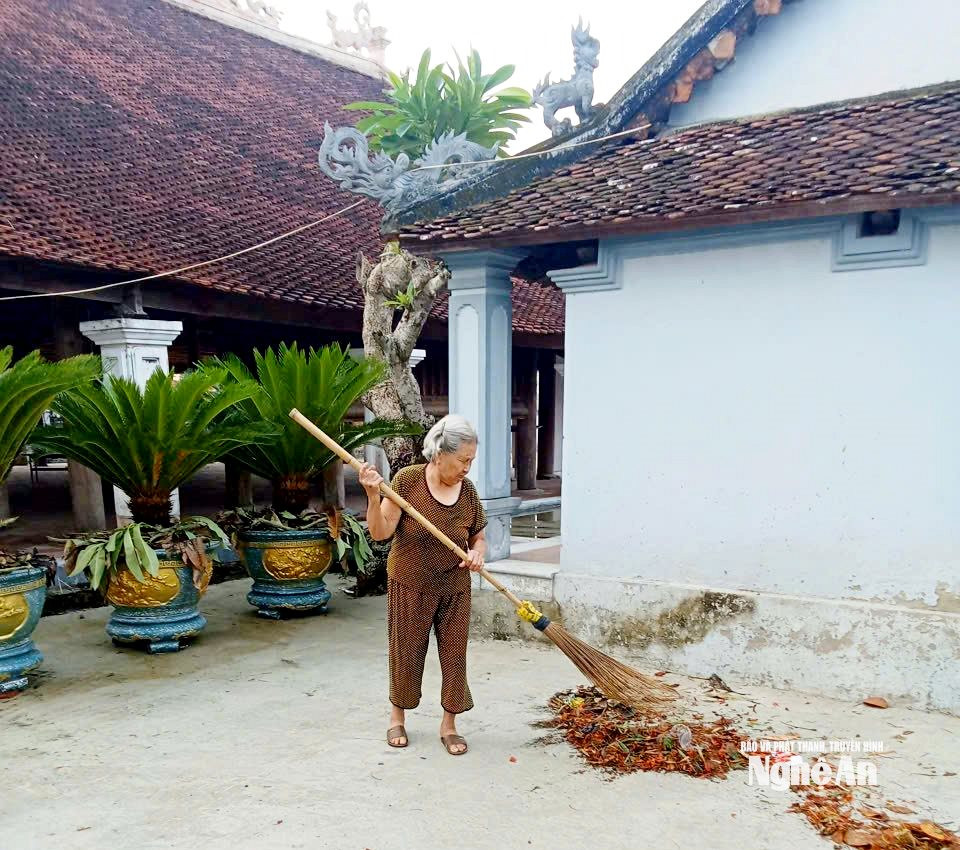
The morning at Luong Son communal house was strangely peaceful. Autumn sunlight filtered through the ancient trees, illuminating the moss-covered tiled roof and the polished brick floor. The rhythmic sound of Mrs. Nguyen Thi Ty's bamboo broom echoed across the spacious courtyard. At eighty years old, her back bent with age, she still maintained the habit of sweeping and caring for the communal house that had been a part of her family for generations. She paused in front of the eastern courtyard, gently pointing to the ground and saying, "Here, the history of the village lies..." Her simple words brought a sense of quietude to the scene. The communal house not only stood there with its ancient appearance but also carried within it memories of a turbulent and tragic revolutionary era.
.jpg)
From the end of 1929, Luong Son communal house became an important location for the revolutionary movement in the Dang Son - Bach Ngoc region. It was where the Indochinese Communist Party of the region was established. Just over a month after the founding of the Communist Party of Vietnam, on March 15, 1930, the Dang Son - Bach Ngoc branch of the Communist Party of Vietnam, named "Branch D," was established right under the communal house's roof. From then on, the communal house became a secret communication point for the Party, a place to hide documents, print leaflets, set up secret mailboxes, receive senior cadres to direct the movement, and gather the masses for struggle.
By November 1930, the Soviet worker-peasant government of the village was established here. From a community gathering place, Luong Son communal house became one of the centers of revolutionary activity in the Dang Son - Bach Ngoc region. The movement intensified, revolutionary forces were increasingly consolidated, and the masses were enlightened and mobilized. From then on, Luong Son was proudly called by the people "The Red Village by the Lam River"; while for the French colonialists and the Southern Dynasty government, it was a revolutionary base that needed to be destroyed at all costs.
It was precisely this strategic location that made Luong Son a target of repression by the enemy. In late 1930 and early 1931, a dense network of spies was planted to hunt down cadres and party members, destroy Party bases, and disrupt the printing of revolutionary documents. Following the Provincial Party Committee's directive, the Red Self-Defense Team of Luong Son village, commanded by Party Branch Secretary Bui The Thuan, was tasked with eliminating the notorious spy leader Dang Son, who had committed numerous crimes against the revolutionary movement. On the night of April 21st and the early morning of April 22nd, 1931, the mission was accomplished. Immediately afterward, the enemy surrounded the village, closed the market and ferry services, and hunted down cadres, party members, and members of the Red Self-Defense Team.
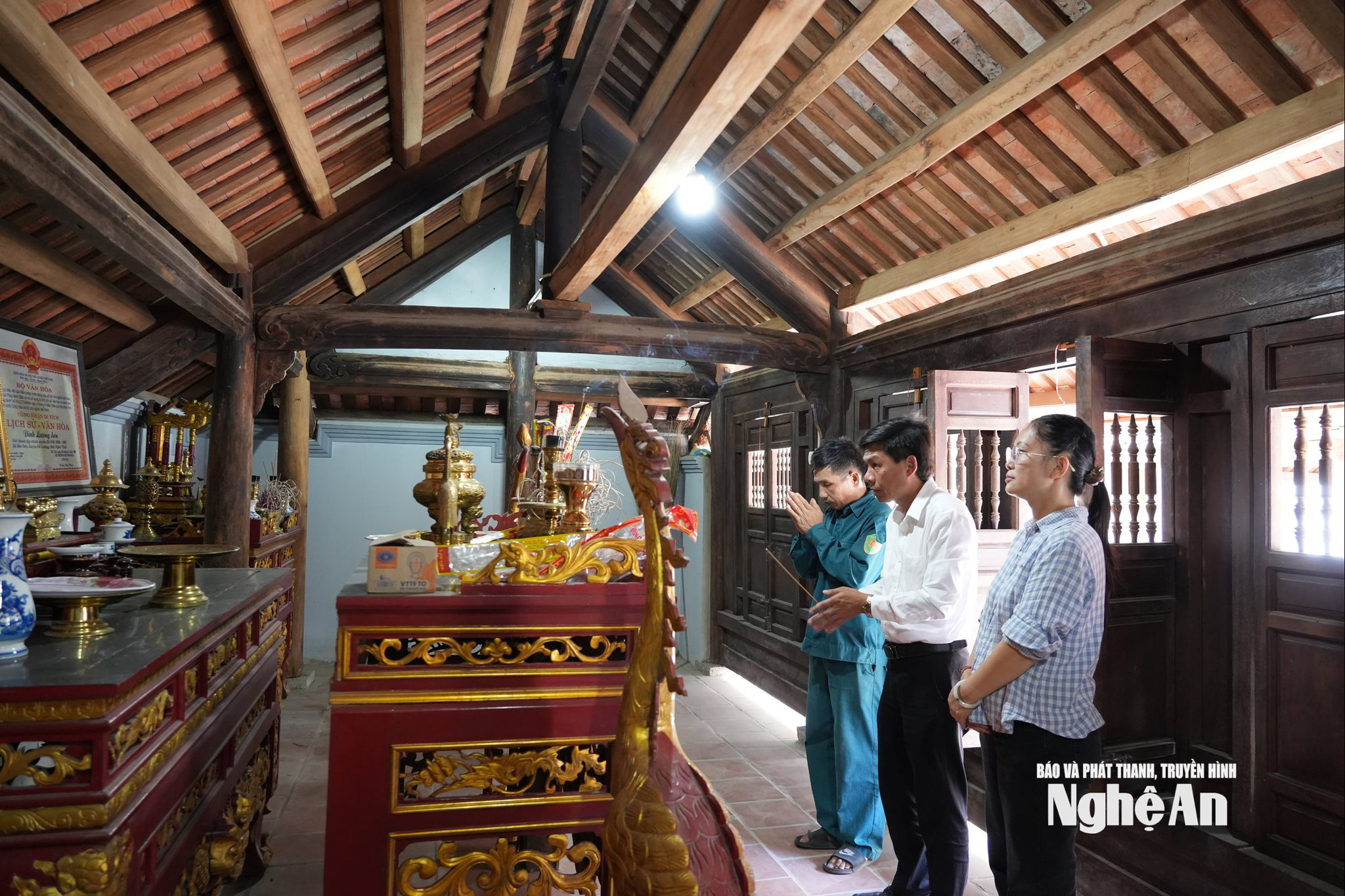
Amidst that harsh siege, Bui The Thuan, despite having the opportunity to leave the village safely, decided to return. He lit incense before the ancestral altar, bid farewell to his family, and then sought to attract the enemy's attention. Finally, he deliberately surrendered himself to the enemy, hoping to save the villagers from a brutal revenge. After many days of torture and coercion, but failing to break the will of the revolutionaries, on the morning of April 25, 1931, the Anh Son district chief, Ha Van Ngoan, brought the captured people to the Luong Son communal courtyard and forced the villagers to identify the communists. The only response was: "I don't know."
Right in the village square, Party Branch Secretary Bui The Thuan and Red Self-Defense Force member Vo Van Thon, who had just turned 20, were murdered by the enemy. Three days later, on April 28, 1931, the remaining five fighters, Bui The Thuc, Bui Van Nanh, Hoang Ba Bien, Hoang Ba Ben, and Dang Duy Lien, also fell in the same place. In just four days, seven sons of Luong Son sacrificed their lives to protect the Party organization, the revolutionary base, the Soviet movement, and to shield their compatriots from the enemy's brutal repression.
.jpg)
.jpeg)
The village courtyard has since become an inseparable part of Luong Son's memory. A memorial plaque commemorating seven revolutionary fighters was erected as a reminder of the sacrifices of those who chose to stand with the revolution during the days of fierce repression. This sacrifice belongs not only to one village, but is linked to a crucial period in the history of Nghe An's revolutionary struggle.
Nearly a century has passed, yet those traces remain present in the space of Luong Son communal house. This place commemorates the sacrifice of seven Red Self-Defense Force members – one of the first revolutionary armed forces, tasked with protecting the Party organization, cadres, Soviet government, and the masses. From organizations like the Red Guard and the Red Self-Defense Force to the revolutionary protection organizations formed in subsequent periods, history has recorded the process of forming the precursor organizations of the Vietnam People's Public Security Force.
The Red Self-Defense Team - The predecessor of the Vietnam People's Public Security Force.
During the Nghệ Tĩnh Soviet Uprising (1930-1931), the Red Guard (Red Self-Defense Team) was the first revolutionary armed force, tasked with protecting the Party organization, the Soviet government, cadres, and the masses; maintaining security and order; and combating terrorism and counter-revolutionary elements. From 1939 to 1945, organizations such as the Anti-Espionage Team, the Viet Minh Honor Guard, and the Security Zone Protection Team continued to be formed and developed. These were the precursors of the Vietnam People's Public Security Force.Source: History of the Vietnam People's Police.
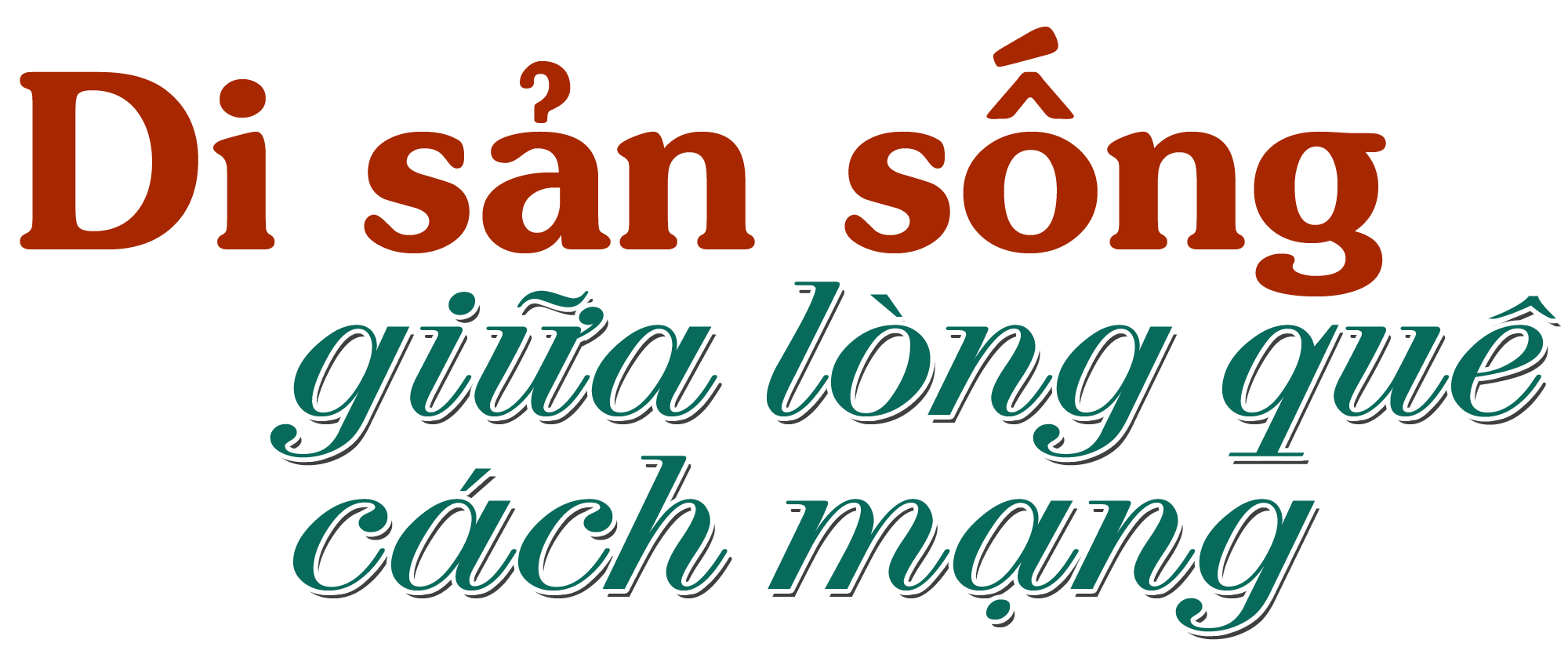
For nearly two centuries, Luong Son communal house has remained in the heart of the village as an inseparable part of the people's lives. From a meeting place and ceremonial site of the ancient village to a revolutionary base during the Nghe Tinh Soviet Uprising, then a location for training cadres and a military supply depot during the resistance against French colonialism, a wounded soldier reception station and an evacuation point for several agencies during the years of the war against America, the communal house has always accompanied the ups and downs of the homeland.
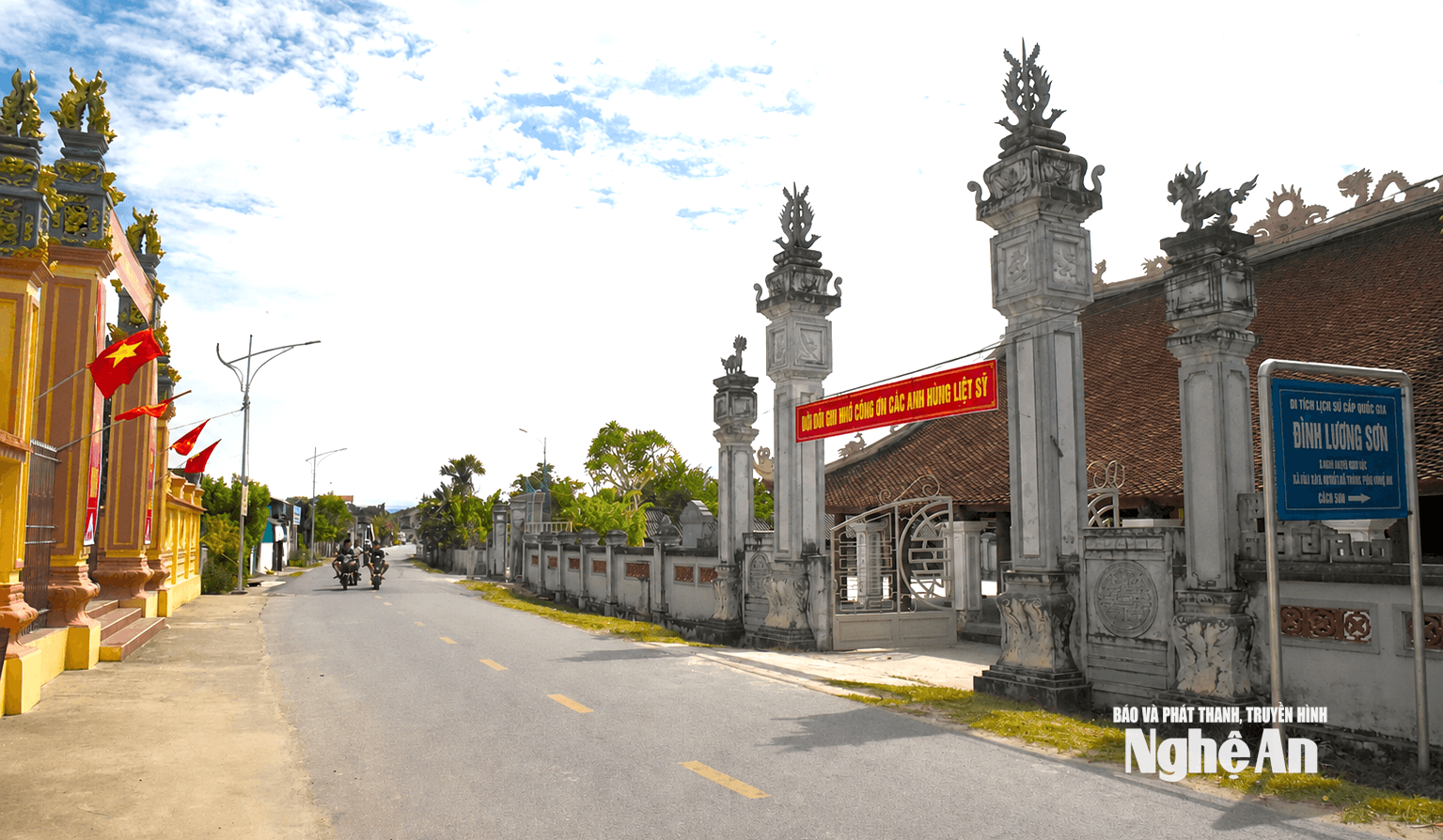
As the war receded, the communal house returned to the tranquil rhythm of a community cultural space. During holidays, festivals, and commemorative occasions, people still return here. The tiled roofs, rows of columns, and courtyard not only evoke the age of the structure but also help present generations visualize a village that has weathered many historical changes.
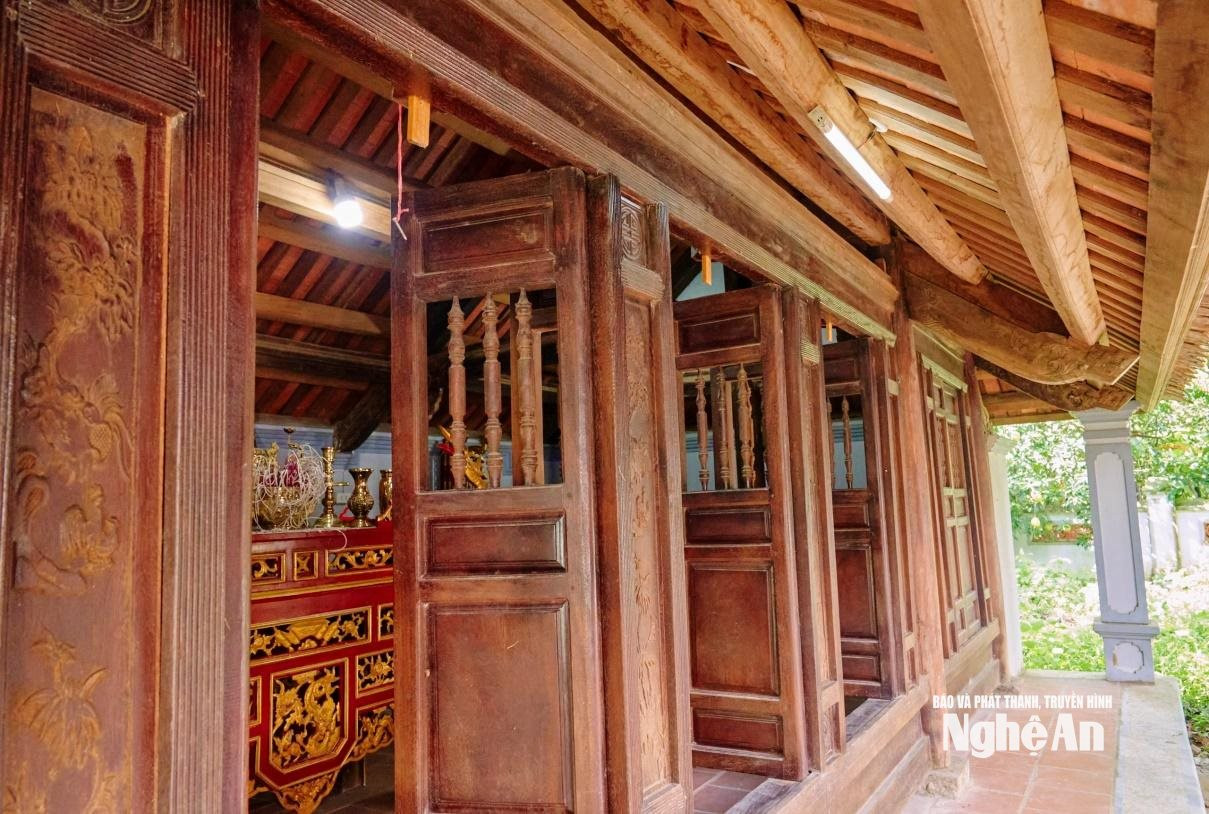
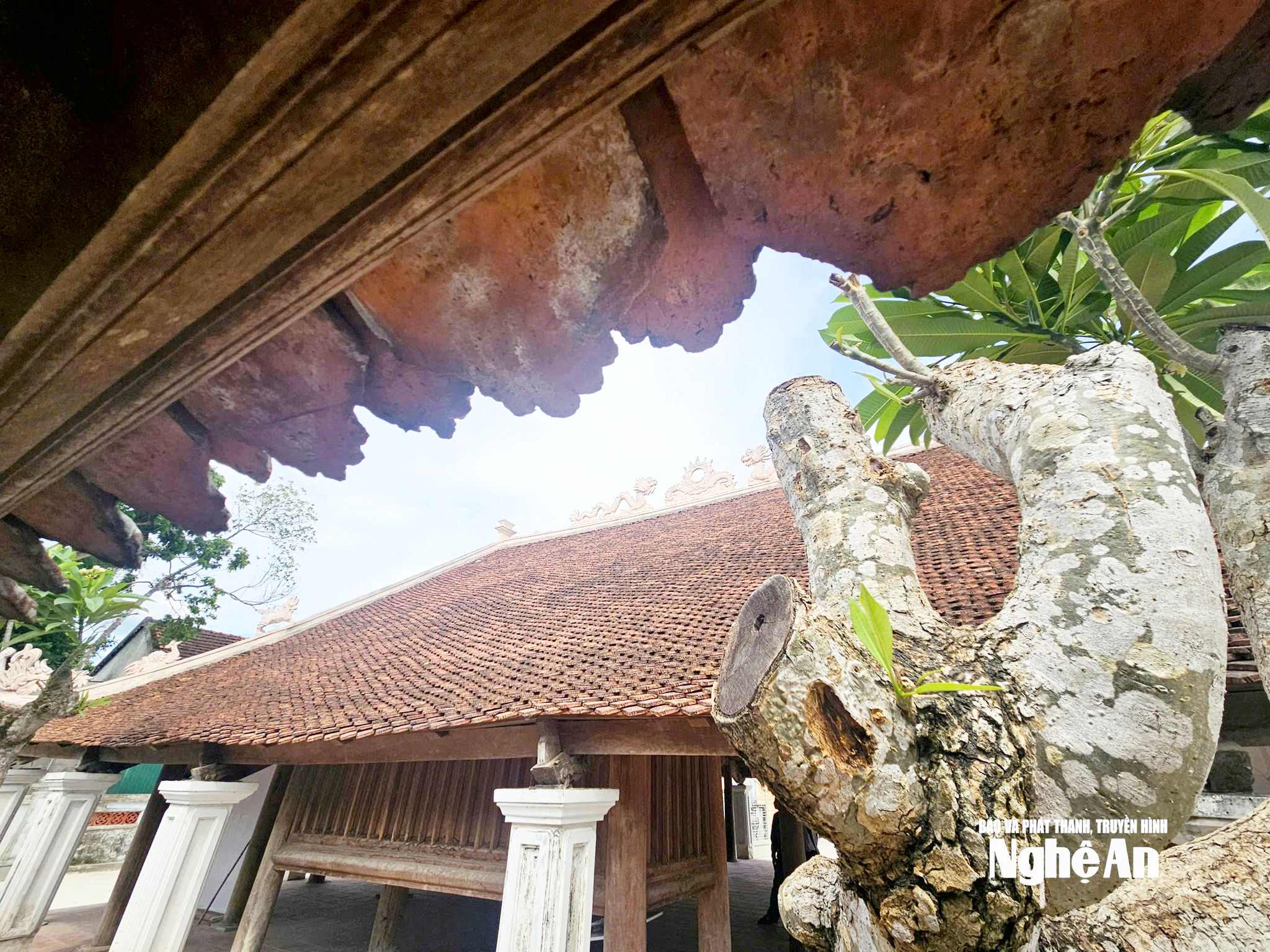
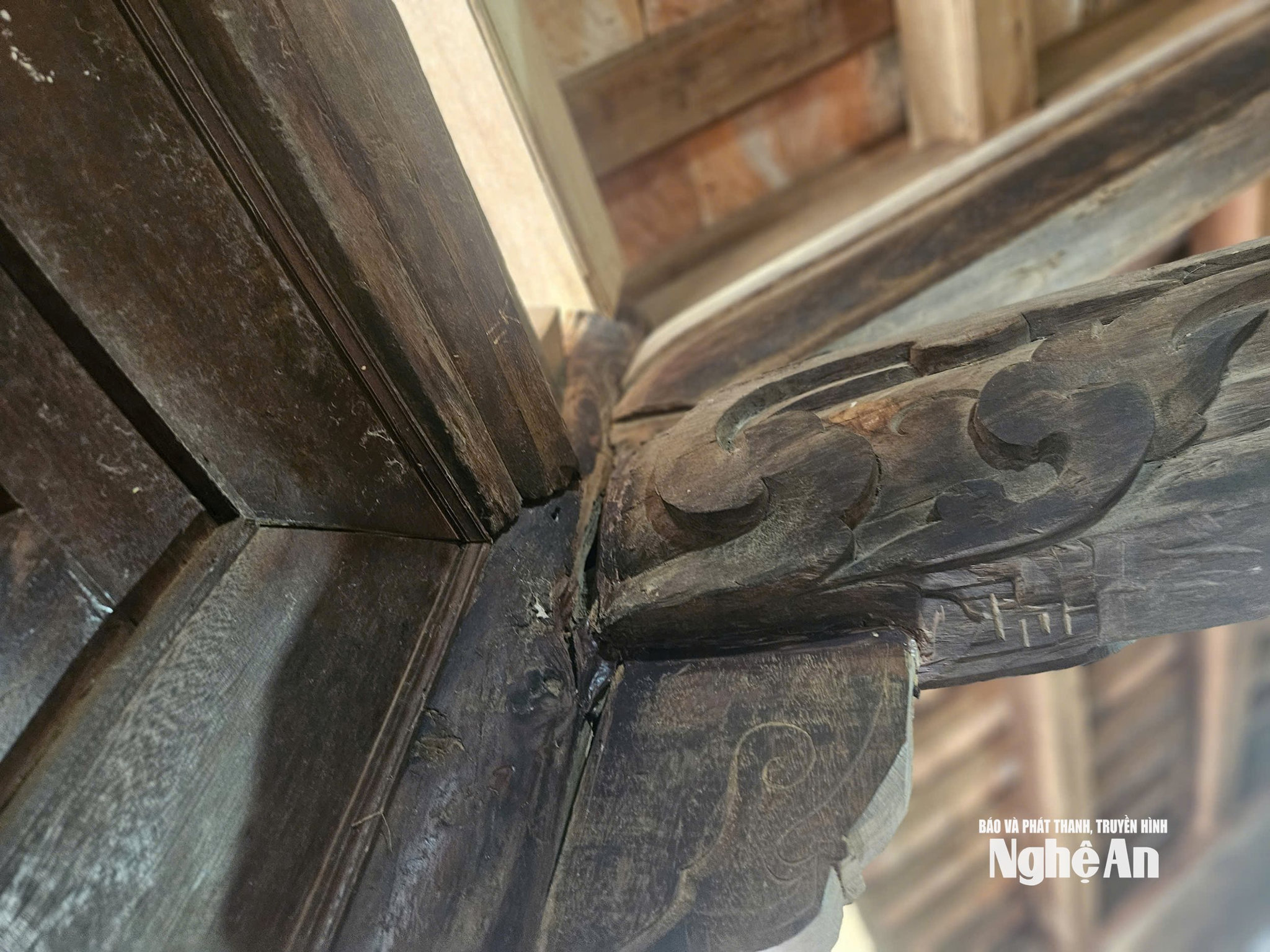
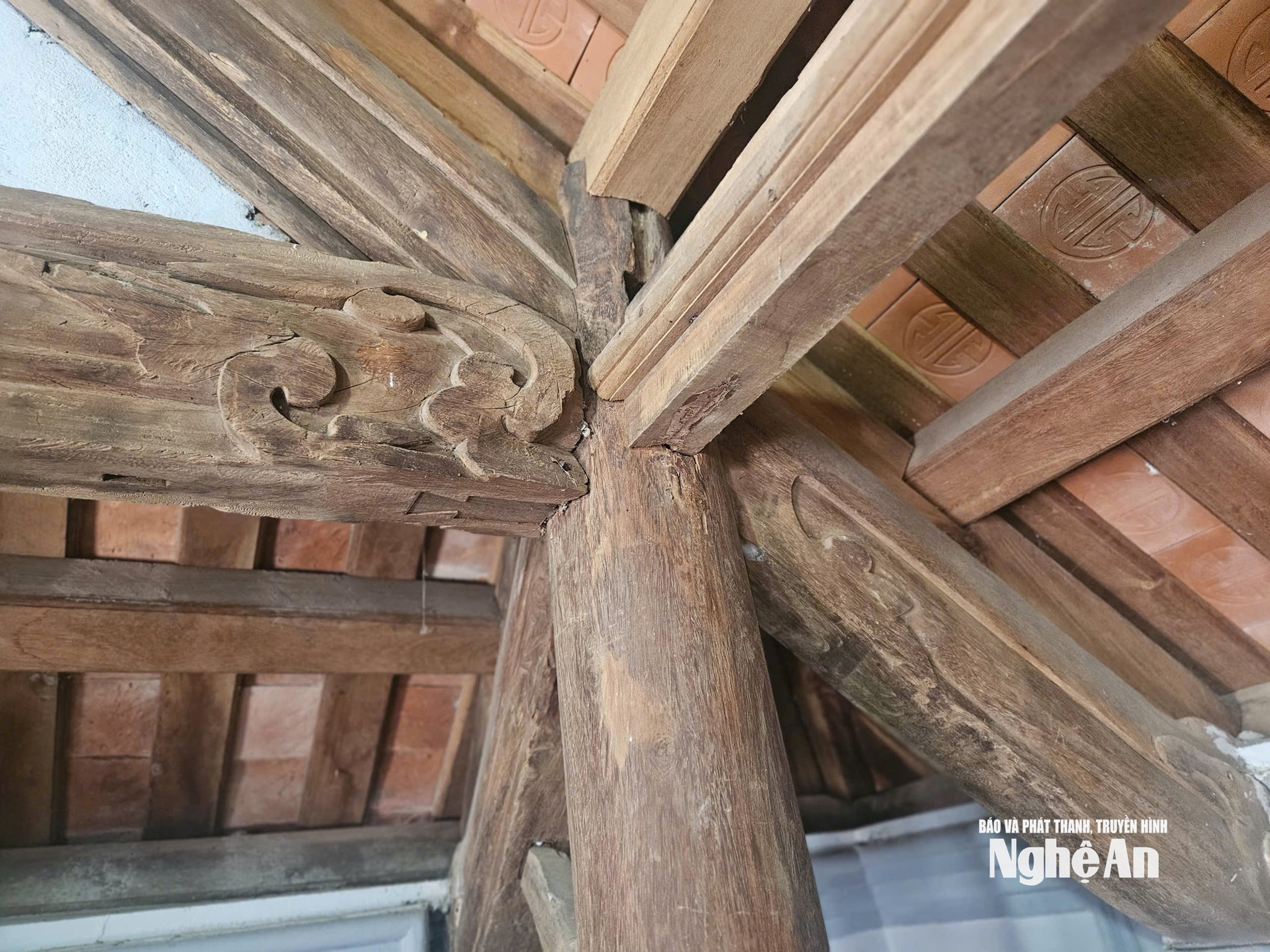
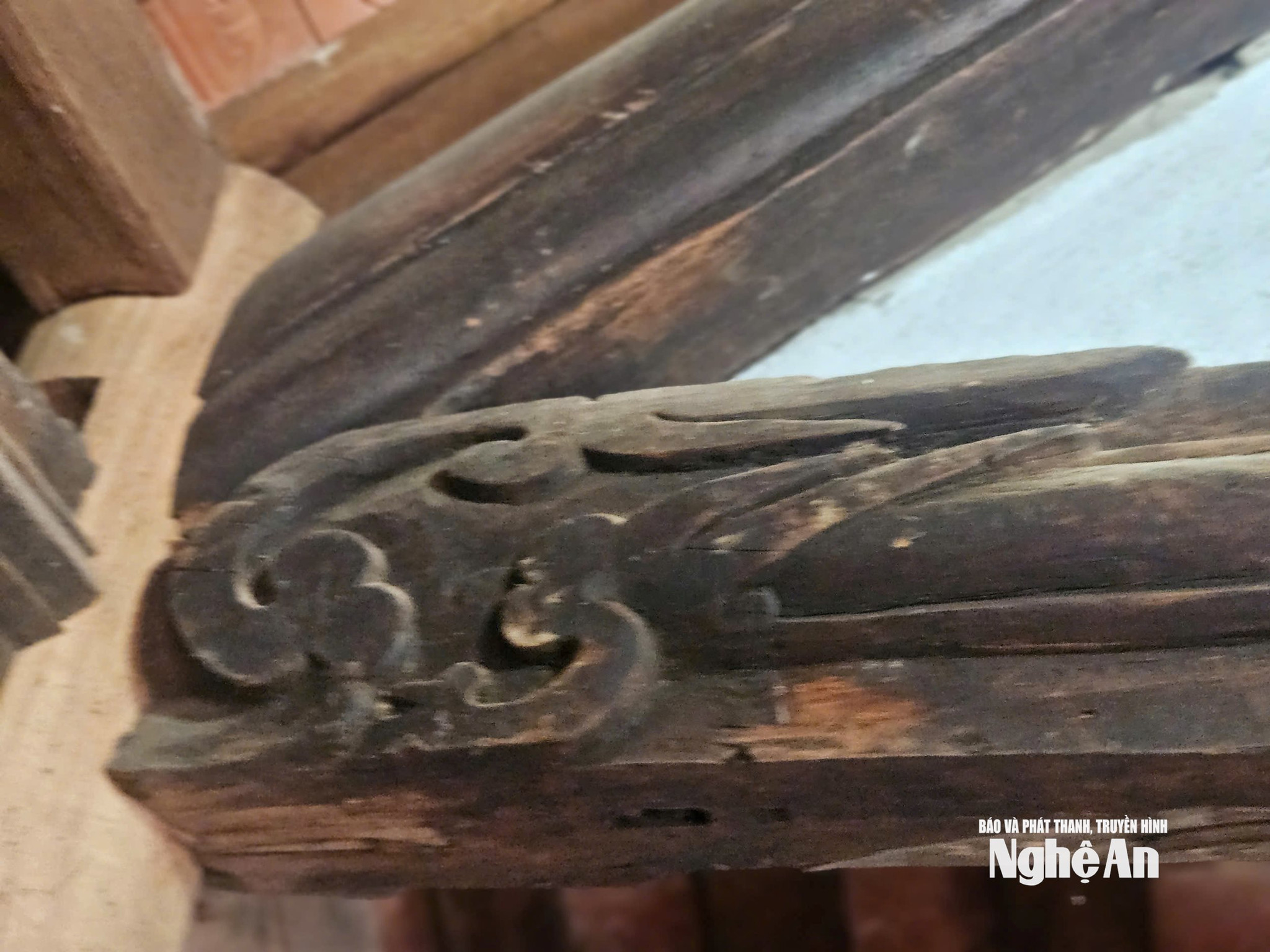
Luong Son Temple is also an architectural work of special value. Construction began around the end of the Minh Menh dynasty, in 1839-1840, and was completed in 1852 during the reign of Emperor Tu Duc. The structure is square-shaped, each side measuring 14.9 meters, covering an area of approximately 222.1 square meters. It comprises 25 bays, supported by 36 ironwood columns. The four columns in the main bay alone are about 5.3 meters high and have a circumference of 1.2 meters. The architectural features, wooden structure, and remaining carvings contribute to the unique beauty of this ancient temple by the Lam River.
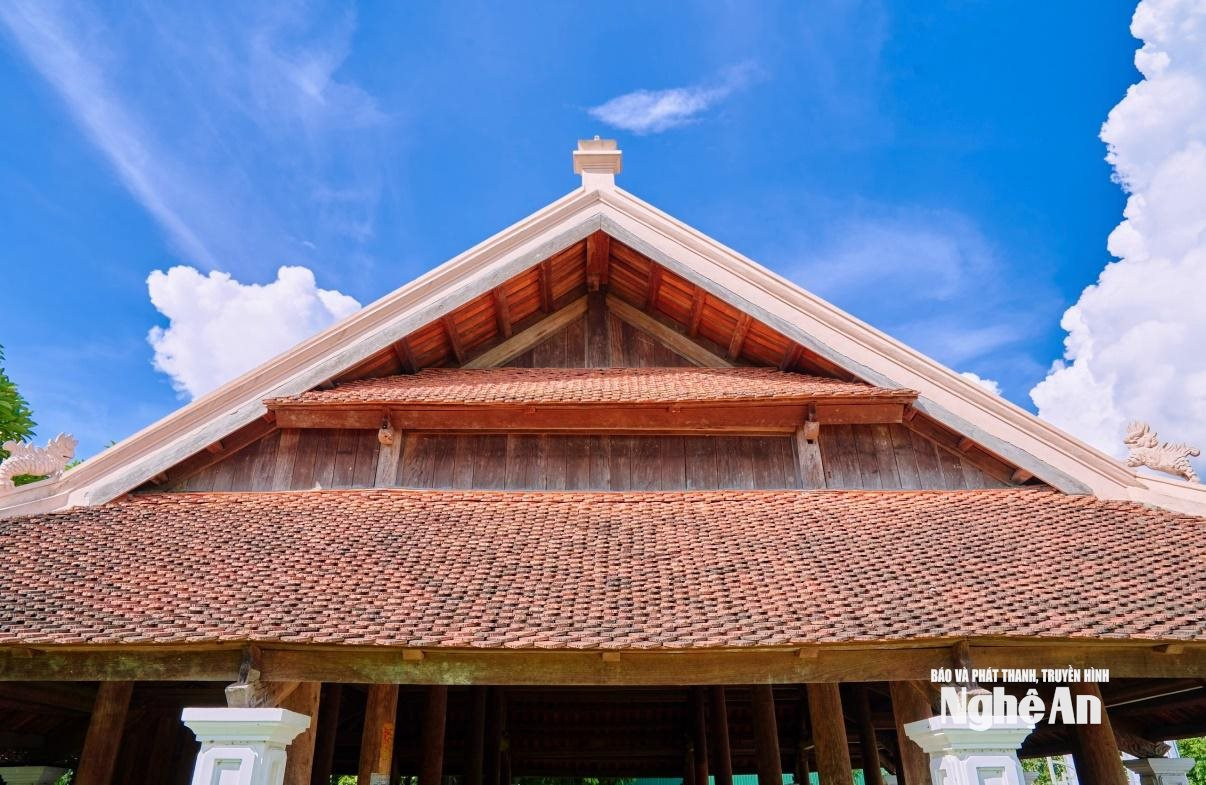
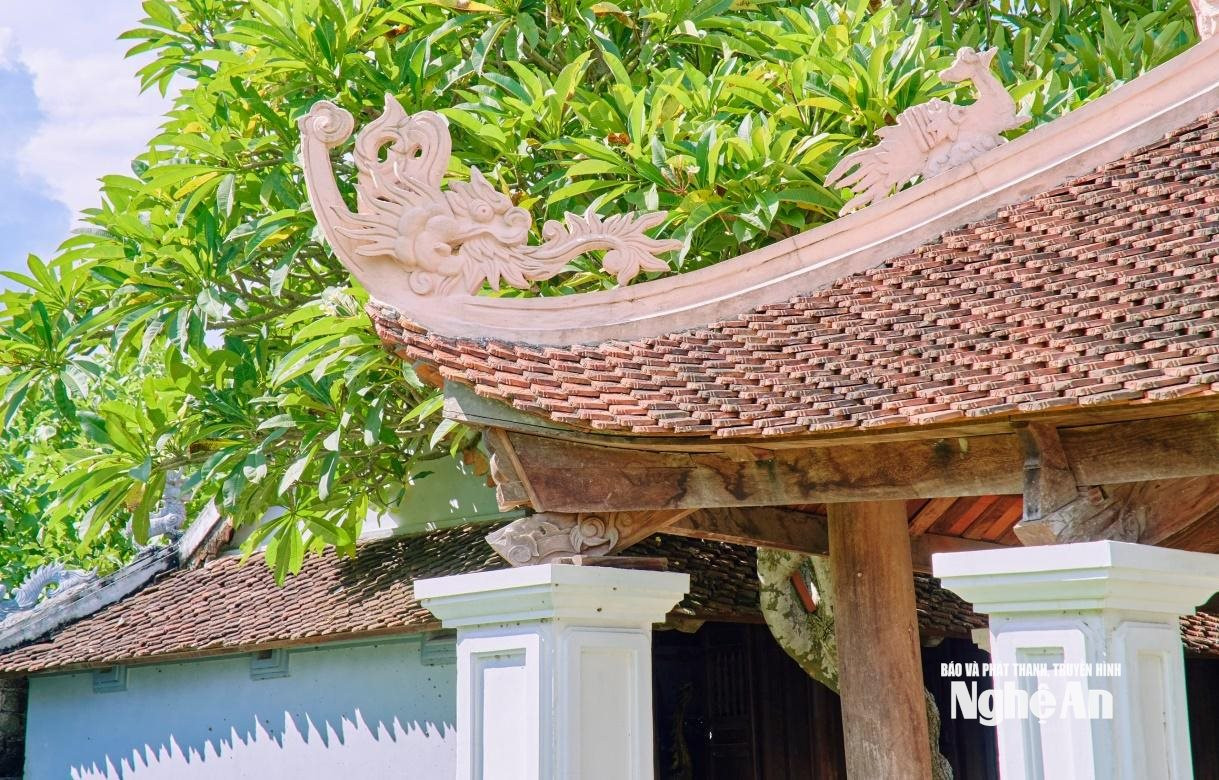
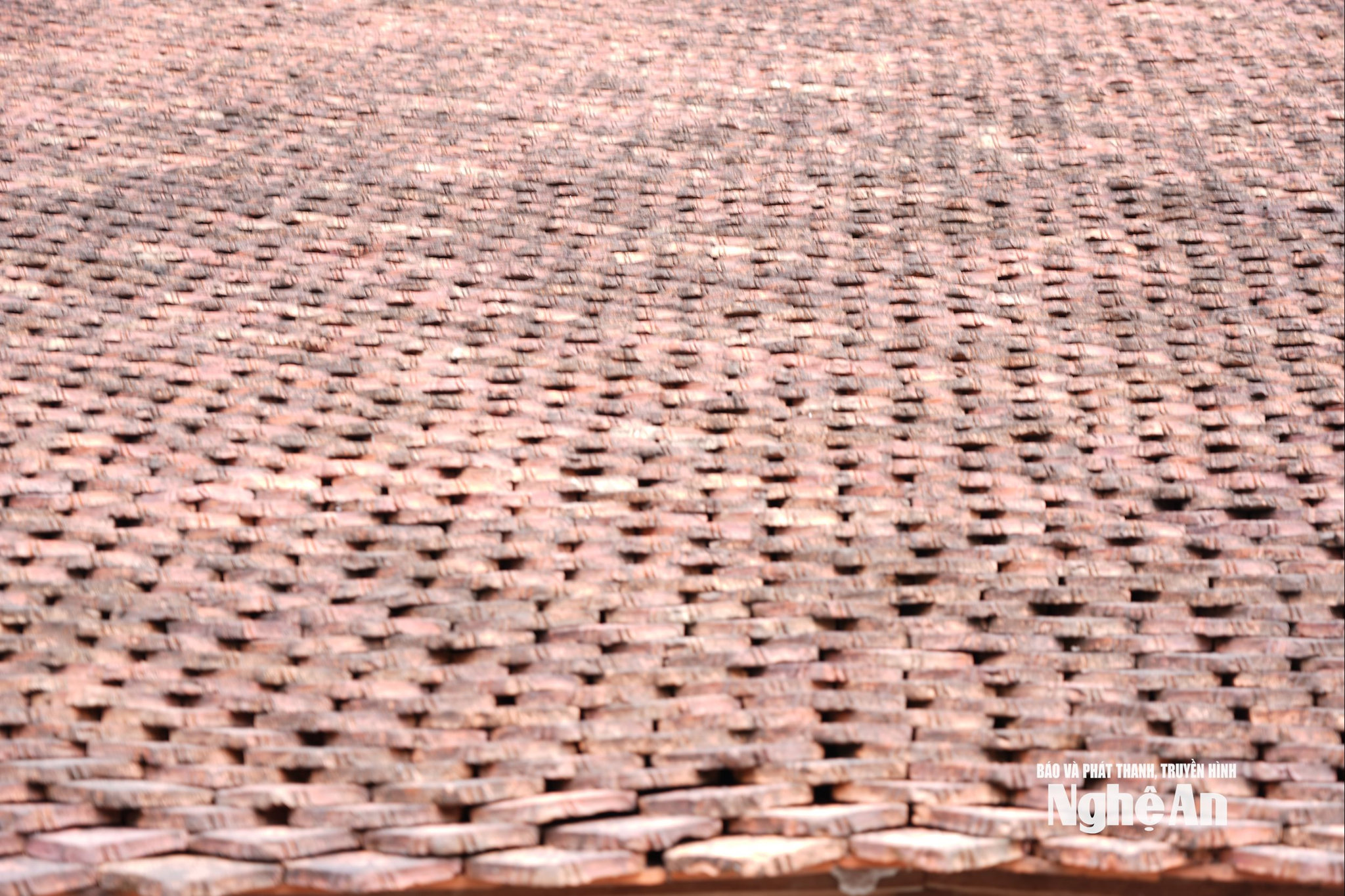
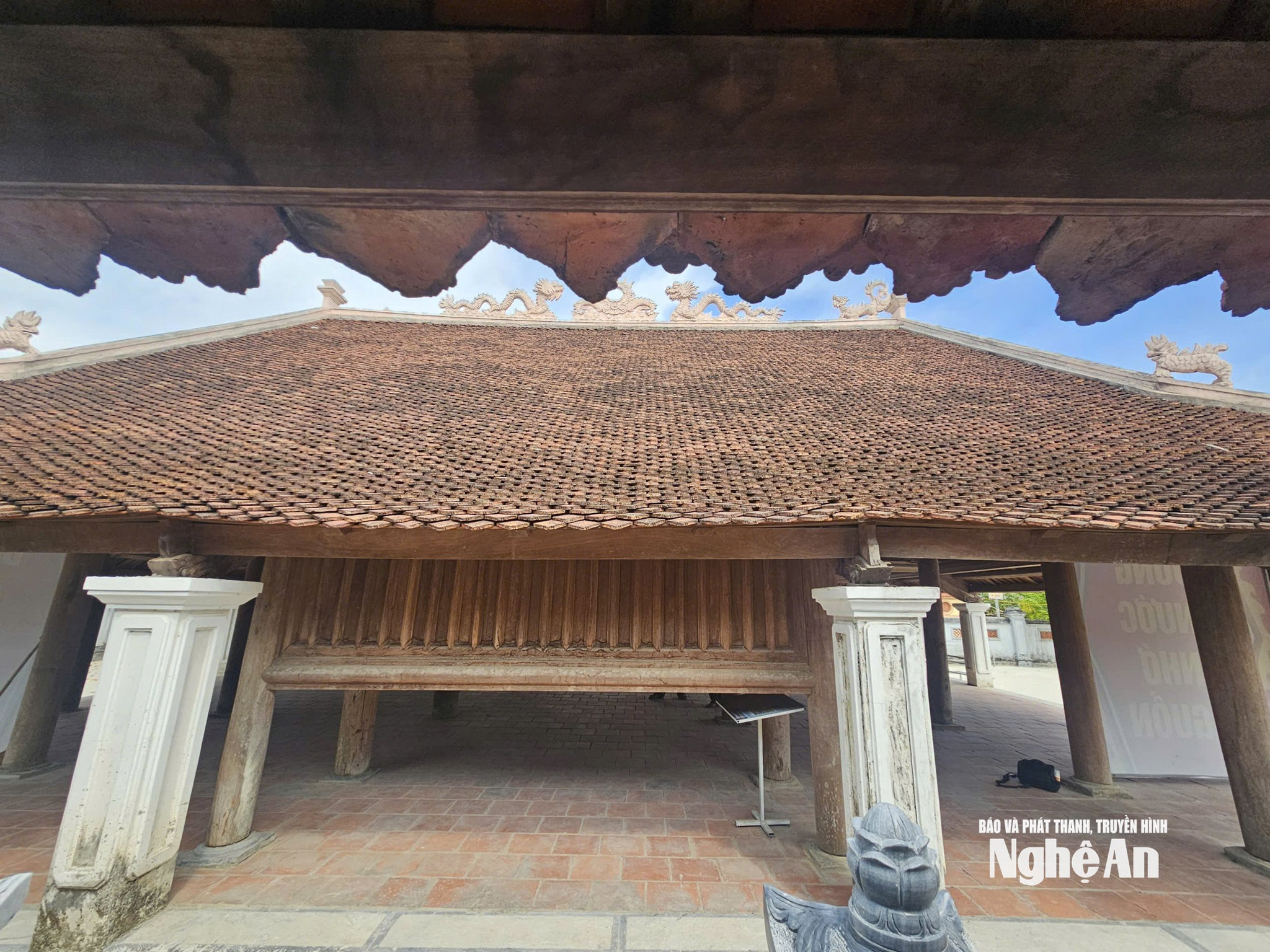
Within the complex is the rear hall, restored in 1980. During the war, the temple was damaged by bombs, and many valuable ritual objects and artifacts were lost. Nevertheless, the remaining values of the structure are sufficient to identify a distinctive architectural and cultural space, and to demonstrate the temple's role in the community life of Luong Son people across generations.
Beyond its architectural value, Luong Son communal house also preserves a rich layer of cultural heritage. Since ancient times, it has been the place where villagers held the "Opening of the Harvest" ceremony on the 7th day of the first lunar month, praying for favorable weather and a bountiful harvest; and on the 15th day of the sixth lunar month, they held the village festival with rituals, folk singing, and call-and-response singing. Therefore, the communal house was once a meeting place, a place for community interaction, where people shared joys and sorrows and preserved village customs.
.jpg)
These activities were interrupted when the resistance war against French colonialism entered its most intense phase. The communal house was repurposed to serve the resistance, opening a training school for military officers led by Hoang Huu Nam, and serving as a military supply depot. During the resistance war against the Americans, it continued to be used as a plant seed depot, ammunition depot, reception station for wounded soldiers and troops returning from Laos for treatment and reorganization, and even as an evacuation site for several provincial-level agencies. Each historical period left a new mark, making the communal house a "history book" written in the very years of the homeland.
In this preservation effort, ordinary people have also become part of the heritage. Mrs. Nguyen Thi Ty, 80 years old, lives near the temple and has regularly swept and cared for the courtyard and the temple itself for many years. Before her, her husband, Mr. Hoang Van Hiu, had participated in the temple's management board for about 20 years, doing volunteer work without receiving any remuneration. When he became old and frail and passed away, she continued the work; and in her old age, she gradually handed over the care to her son, Hoang Van Diep.
.jpg)
.jpg)
.jpg)
For this family, caring for the communal house is not simply a job assigned to them. From a young age, Diep followed his father to the communal house, from his toddler days to his adulthood, participating in village meetings and volunteer work. Now, with graying hair, he continues to preserve the communal house as his family has done for many years. This story shows that the vitality of heritage lies not only in official rankings or age figures, but also in the very ordinary actions of the people.
In 1990, Luong Son communal house was classified as a national historical and cultural relic by the Ministry of Culture. After many years of research and supplementary documentation on the revolutionary events that took place there, the value of the relic has become more fully recognized. In particular, on September 11, 2025, the Prime Minister signed a Decision classifying Luong Son communal house as a special national relic. This is a recognition of the outstanding historical, cultural, and architectural values of the relic.
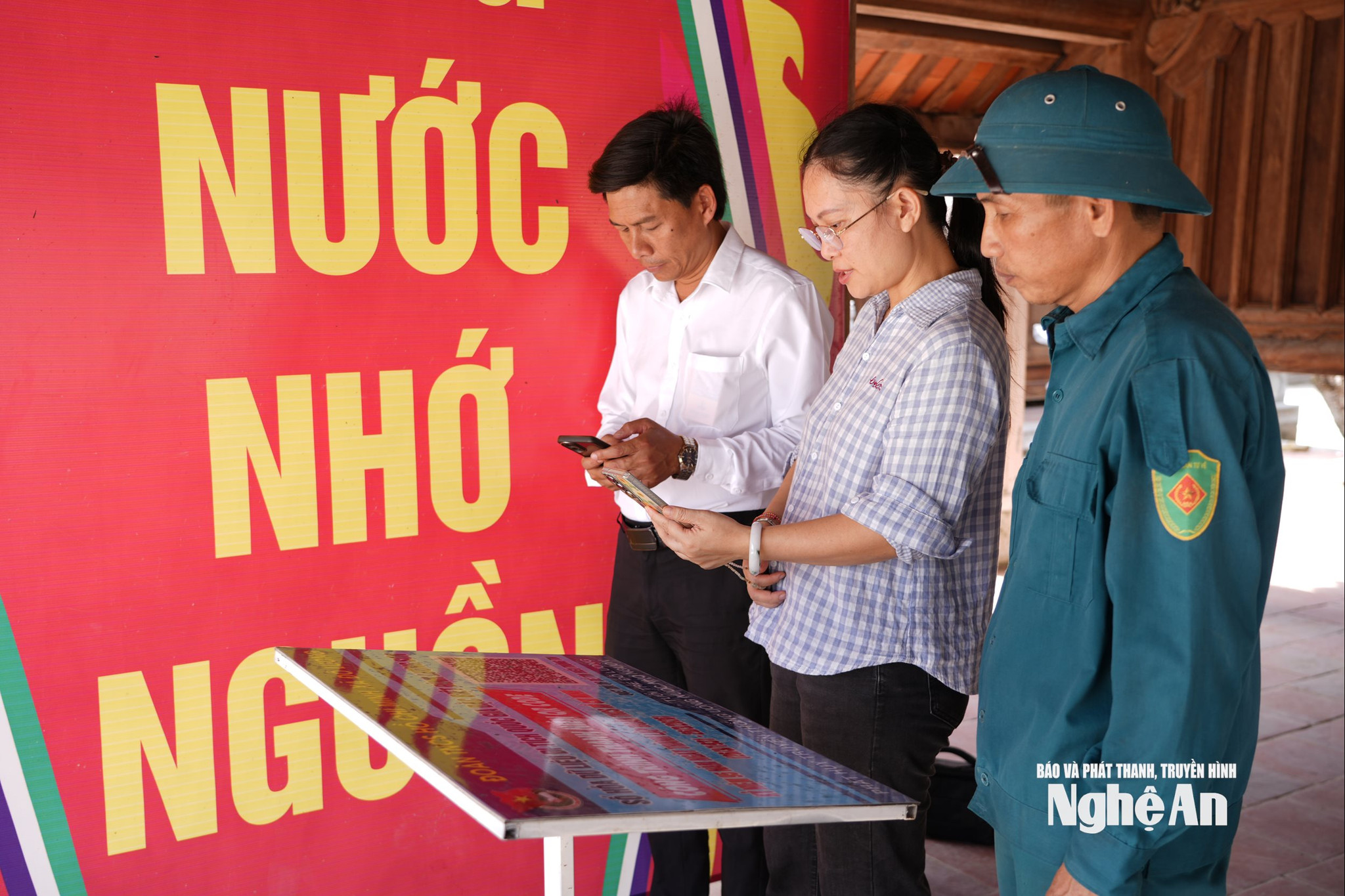
According to Comrade Nguyen Xuan Hiep, Deputy Head of the Culture Department of Do Luong Commune, the ranking of Luong Son communal house as a Special National Monument is not only a source of pride for the locality, but also opens up more opportunities to preserve and promote the historical and cultural values of the monument. More importantly, the communal house continues to be a significant site for traditional education, helping the younger generation better understand the history of their homeland, the revolutionary movement, and the sacrifices of those who came before.
Thanh Phuc - Hoai Thu