

Rice spider mites are hiding and causing damage to summer-autumn rice crops in Nghe An.
The summer-autumn rice fields in Nghe An are entering the tillering, heading, and flowering stages. Hidden beneath the lush green rice paddies are signs of something unusual gradually appearing...
.jpg)
Brown streaks amidst the green rice fields
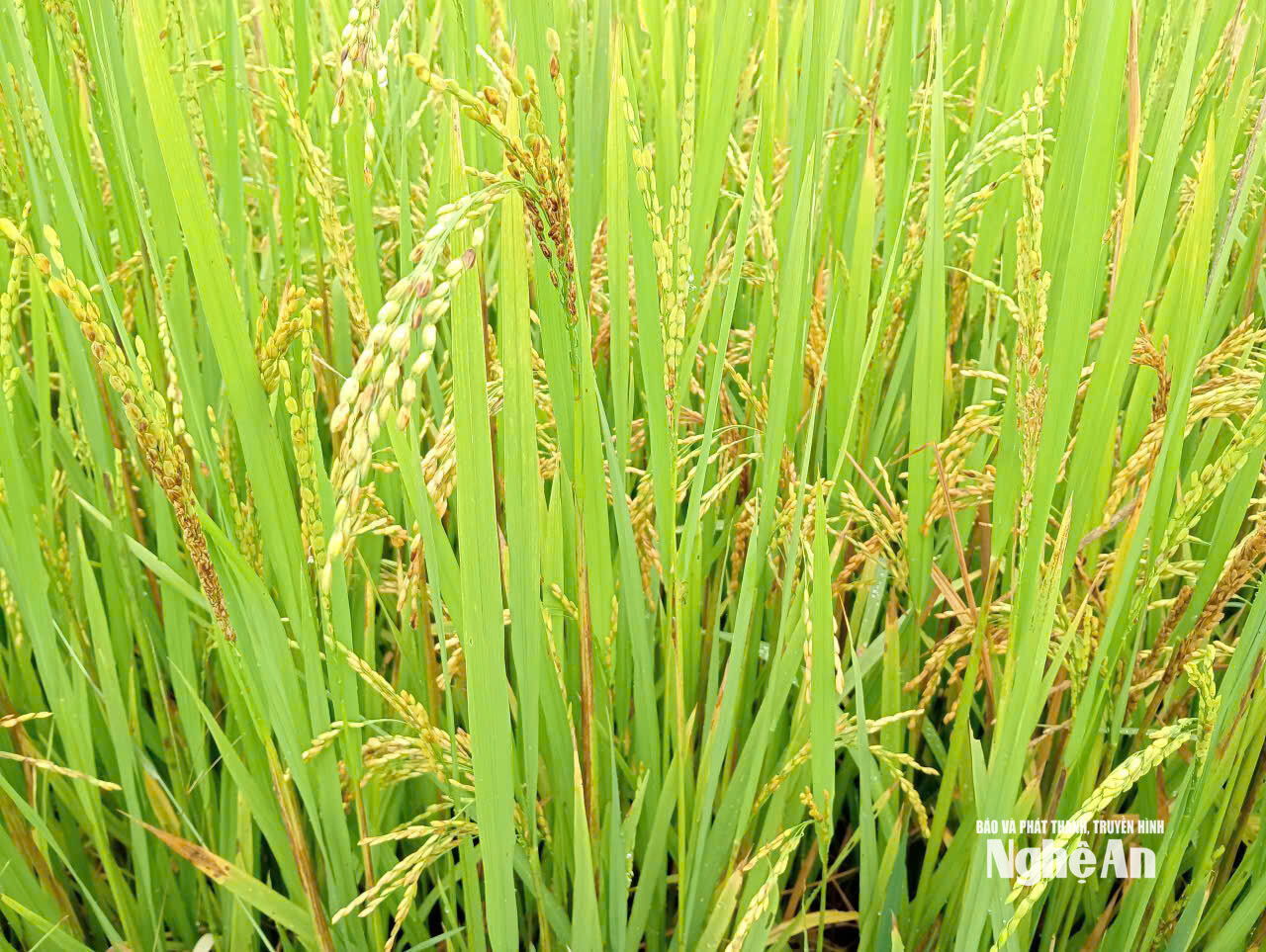
On a morning in the summer-autumn rice fields of Van Hong hamlet, Yen Trung commune, the green color still stretches across the paddies. The rice plants are in their tillering and heading stages, with many areas beginning to flower. The rice ears rise above the foliage, and from the edge of the field, almost no unusual signs are noticeable.
But as you step down into the field and separate the sheaths clinging to the plant stem, streaks of yellowish-brown begin to appear. In some places, the color has darkened, turning purplish-brown and then black.
These marks are hidden within the foliage, making them easy to miss when observed from a distance. Farmers must inspect each rice clump, especially the stem, leaf sheath, and the area near the panicle neck.
In Van Hong hamlet, Mr. Nguyen Van Vuong also has a rice crop of the summer-autumn season that is entering the flowering stage. Going down to the field to check, he separates each leaf sheath, carefully observing the stem and the area near the panicle neck for any signs of abnormality.
According to Mr. Vuong, rice spider mites are causing damage over a relatively large area. Because these pests are small and hidden within the leaf sheaths, they are easily overlooked if not inspected carefully. Given this situation, he proactively monitors his fields and sprays for control.
"At this time, I also regularly go to the fields to check, and if I see any signs, I proceed with spraying to control them. It's important to deal with it early, because if the rice spider mites cause severe damage, it will affect the rice panicles and yield," Mr. Vuong shared.
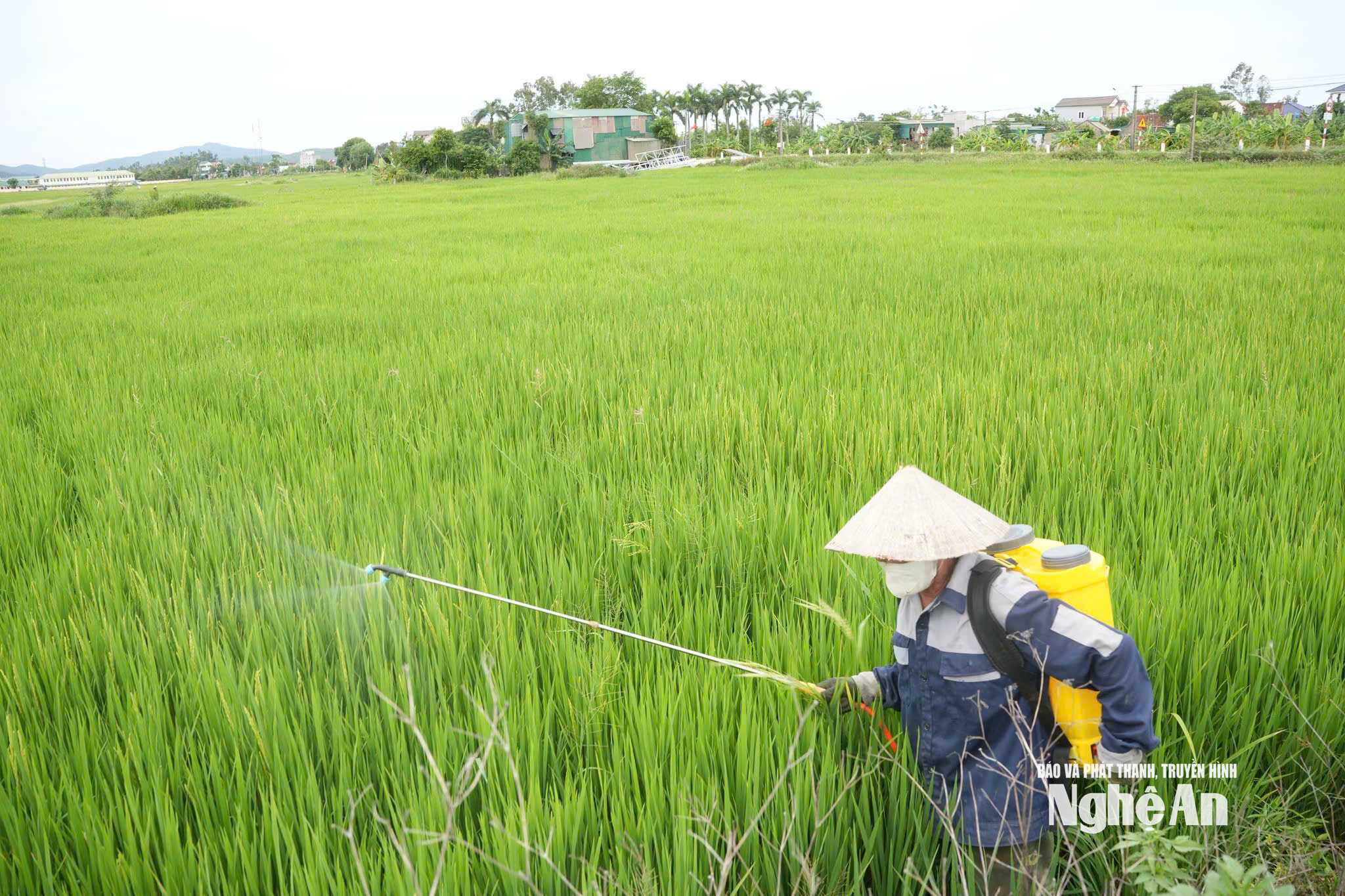
From small marks on the leaf sheath, a risk to the rice panicle may already be forming, especially when the rice plant is entering the yield-determining stage.
Small population, high risk.
In Yen Trung commune, agricultural experts are closely monitoring the rice spider mite situation as the summer-autumn rice crop enters the tillering, heading, and flowering stages.
According to Mr. Bui Quang Hung from the Yen Trung Commune Public Service Center, rice spiders are very small and usually hide in leaf sheaths, stems, and the neck of the flower, making them difficult to detect.
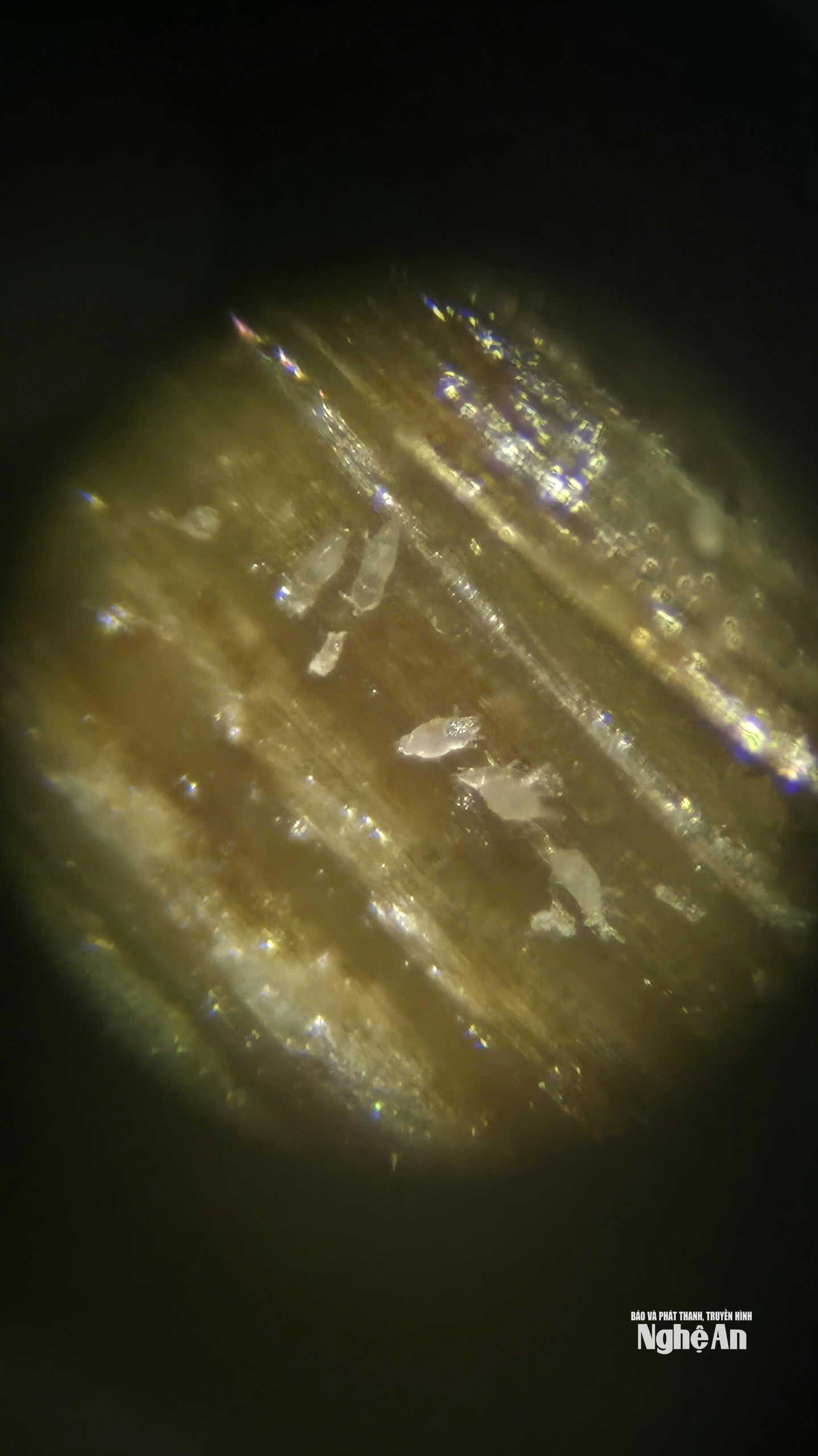
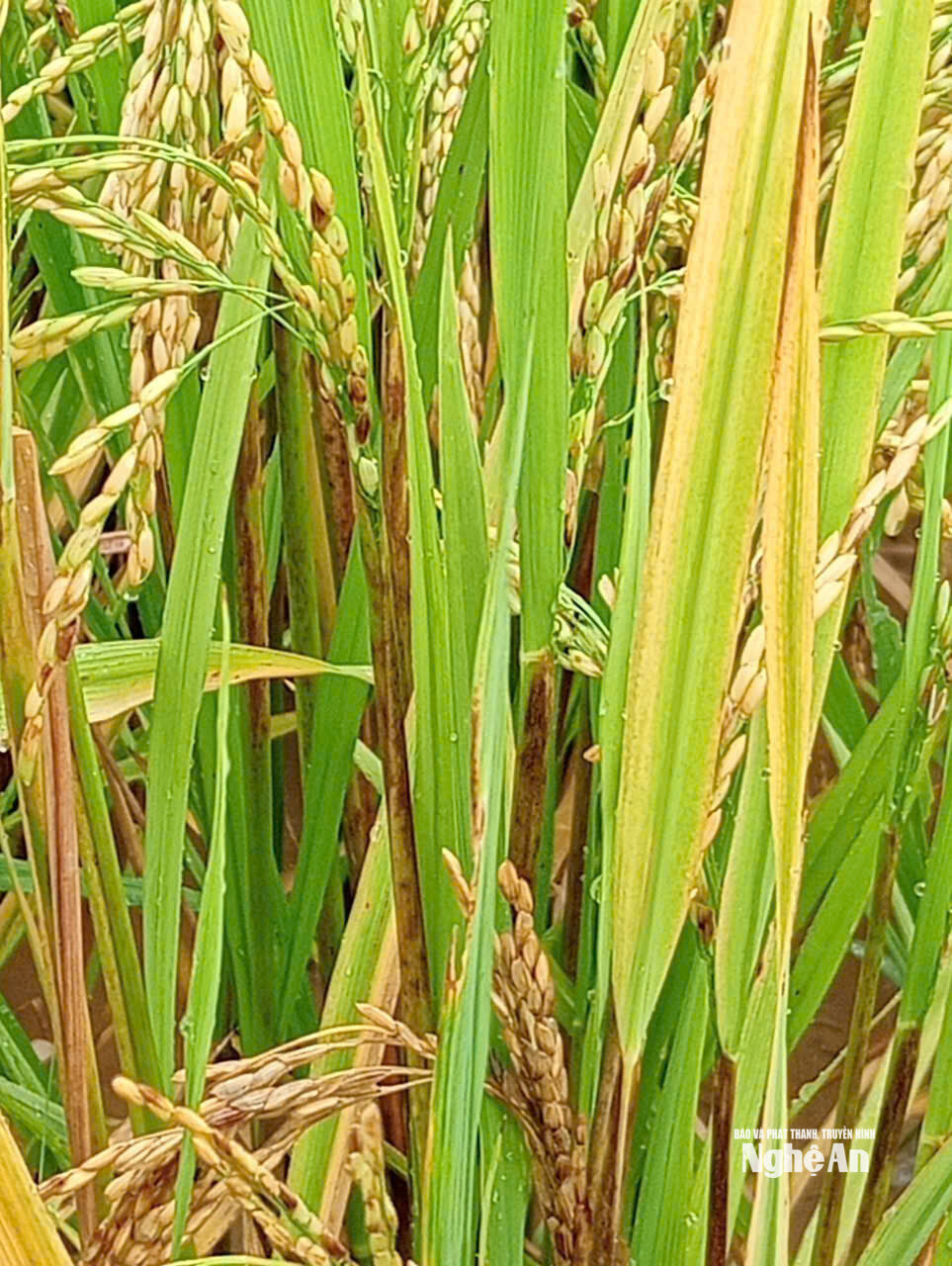
Rice spider mites are only about 0.2-0.3 mm in size. The more noticeable signs are changes in the rice plant: initially, the leaf sheath may turn yellowish-brown, then dark black.
When severely damaged, rice panicles can become shriveled and unable to bend, directly affecting yield. In fact, in Yen Trung commune, the extent of damage varies between fields. In some areas, the percentage of damaged rice fields is around 3-5%, but in some localized areas it has reached 10-20%, and in exceptional cases, over 30%.
Therefore, according to Mr. Hung, inspections should be carried out regularly right from the heading and flowering stages, instead of waiting until the rice panicles show clear symptoms.
"At a level of 3-5%, farmers need to proactively spray pesticides on the stems and leaf sheaths, especially during the flowering period. Early prevention will limit the spread of spider mites and prevent severe damage, contributing to a safe and effective summer-autumn crop," Mr. Hung shared.
In Yen Trung commune, according to information from the Commune Public Service Center, rice spider mites are currently damaging nearly 20 hectares of summer-autumn rice crops.
The rice plants are flowering, but the grains are starting to change color.
In Bach Ha commune, abnormalities in rice plants become more apparent to farmers when the rice has passed the heading stage.
Mrs. Nguyen Thi Quang's family has 4 sao (approximately 0.4 hectares) of summer-autumn rice. According to her, before flowering, the rice plants were developing quite well and were green and healthy. But after flowering, some grains began to turn black and then gradually dried out.
Looking across the entire field, the rice stalks still stand tall amidst the green foliage. Only upon closer inspection of each stalk do the farmers realize that the grains have changed color, dried up, and are not developing normally.
“At first, when we saw the rice grains turning black, then becoming shriveled and drying out, my family thought it was due to mold or a common disease, so we sprayed pesticides. But the situation didn't improve. Hearing people say it might be due to rice mites, my family was quite worried and didn't know exactly what the cause was,” Mrs. Quang shared.
This case also demonstrates the importance of correctly identifying the cause of the damage. Abnormalities in rice plants can originate from various different sources, while control measures are not always the same.
Rice spiders are appearing in many rice-growing areas in the province.
The rice spider mite is not only found in some areas of Yen Trung commune, but has also been recorded in many other summer-autumn rice-growing regions in the province.
According to statistics from the Department of Crop Production and Plant Protection of Nghe An province, rice spider mites have been causing scattered damage in the communes of Van Tu, Van Du, Dai Hue, Xuan Lam, Quan Thanh, etc. To date, the entire province has recorded 898 hectares of rice infected with rice spider mites, of which 61.5 hectares are severely infected. During the period, localities have controlled the infestation on 187 hectares.
The percentage of rice fields infected with rice spider mites is high in some areas, ranging from 5-10%, and locally up to 15-30%. The infected area and the level of damage may still change as the rice crops continue into the heading and flowering stages.
These figures indicate that rice spider mites have appeared in many production areas, with varying degrees of damage. While some areas have seen scattered outbreaks, some regions already have a high percentage of damaged tillers, requiring prompt inspection and treatment.
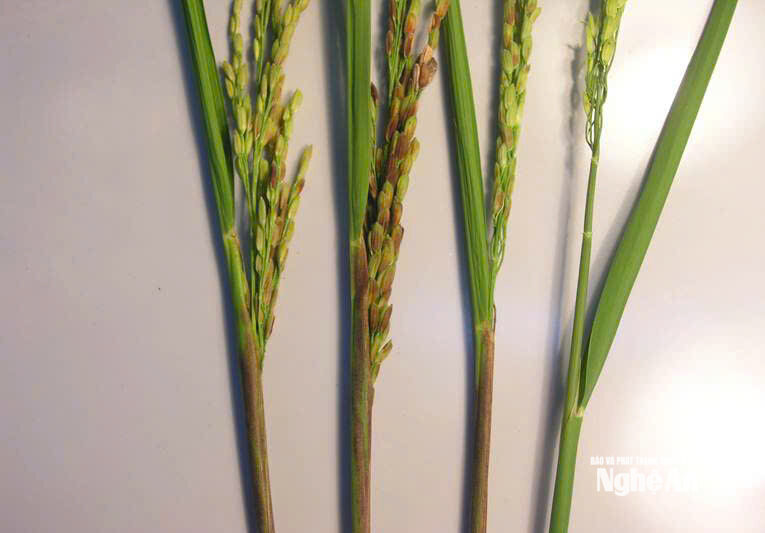
Difficult to detect, easily mistaken for other diseases.
According to Mr. Trinh Thach Lam, Head of the Plant Protection Department of the Nghe An Provincial Department of Crop Production and Plant Protection, the prolonged dry and hot weather during the summer-autumn crop season creates favorable conditions for the emergence and spread of spider mites and some other pests and diseases.
Measuring only about 0.2-0.3 mm in size, rice mites are usually found in the leaf sheath, stem, and panicle neck area. Meanwhile, the yellowish-brown, purplish-brown, or dark spots on rice plants can be caused by many factors.
Notably, the symptoms caused by rice spider mites are quite similar to those of some fungal or bacterial diseases. Therefore, when detecting unusual signs, people should not rely solely on external manifestations to determine the cause but should conduct thorough checks before taking preventative measures.
“To effectively control rice spider mites, it is necessary to focus on two periods: when the rice plants are forming panicles and when they begin to flower. Because rice spider mites have a relatively short life cycle and a rapid population increase, it is necessary to spray twice, about 5 days apart. Spraying at the right time will improve the effectiveness of control and limit the continued emergence and damage caused by rice spider mites,” Mr. Lam said.
Therefore, thorough field inspections are necessary during the rice heading and flowering stages, especially of the stem, leaf sheath, and panicle neck area.
Proactive prevention and control at the right time.
Based on recommendations from specialized agencies, farmers need to intensify field inspections during the rice heading and flowering stages, focusing on the stem, leaf sheath, and panicle neck area to detect early signs of damage.
When rice spider mites are detected, timely control measures are necessary. Because this pest has a relatively short life cycle and a rapid population increase, two sprayings, approximately 5 days apart, are recommended to enhance control effectiveness. After spraying, farmers should continue to inspect the fields to assess the extent of damage and take appropriate remedial measures.
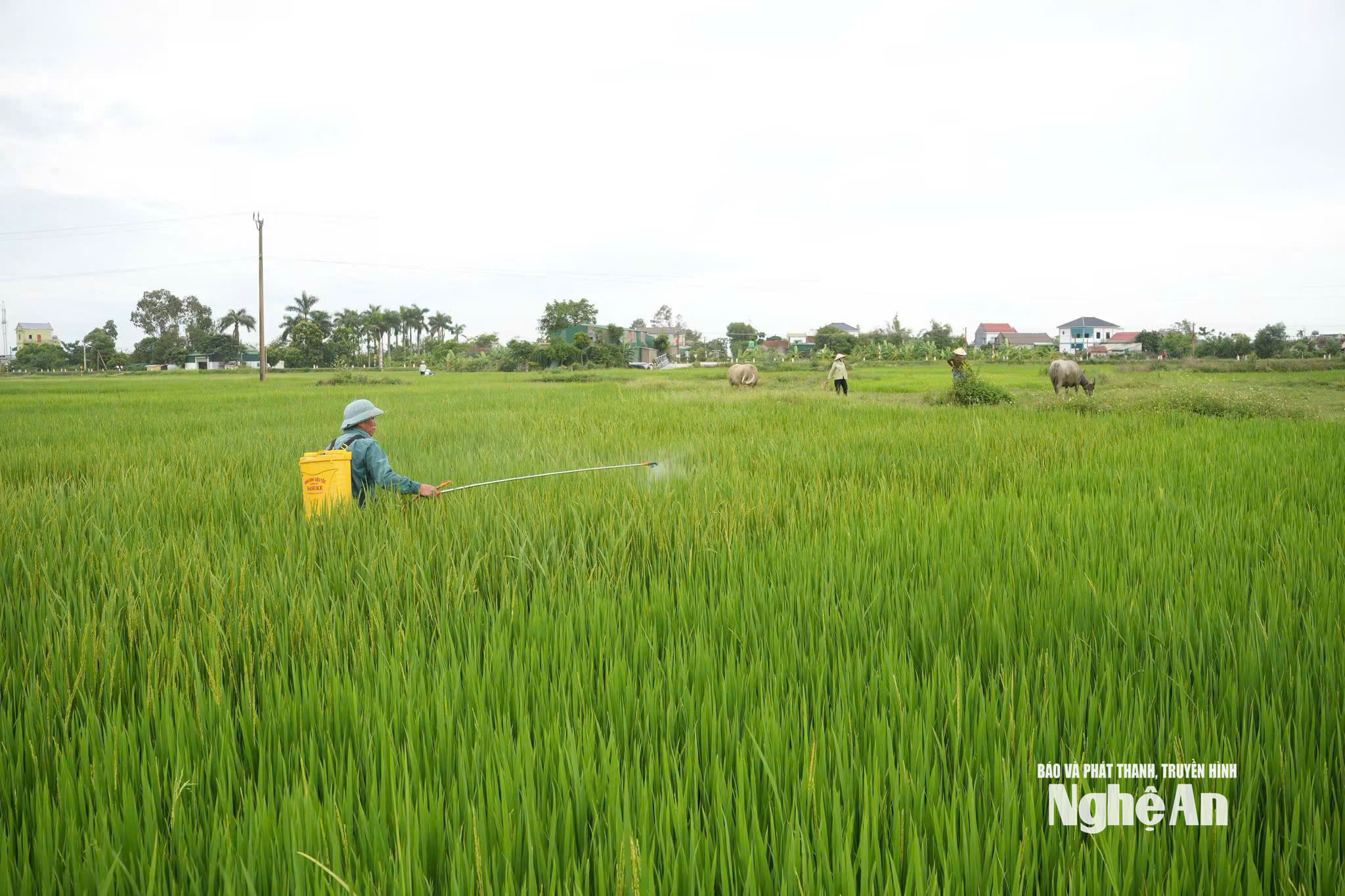
The summer-autumn crop is entering a crucial stage for yield. Amidst fields still lush and green, small marks on the leaf sheaths can easily be overlooked. Early detection, correct identification of the cause, and timely control measures will help limit the risk of severe damage from rice spider mites, affecting flowering and grain formation.