

5 misconceptions about phone batteries when using 5G networks.
5G networks were once blamed for phones draining batteries quickly. However, many common misconceptions about the energy consumption of this technology are no longer true for today's devices.
In the early days of 5G deployment, there were numerous problems due to limited coverage, and first-generation modems that ran hot and consumed more battery power than 4G devices. These limitations have gradually been overcome, but many misconceptions about 5G being a "battery guzzler" still persist today.
In reality, modern 5G networks have been significantly optimized, and power consumption is not drastically different from 4G. Much of the battery drain is related to signal quality, background applications, and screen time.
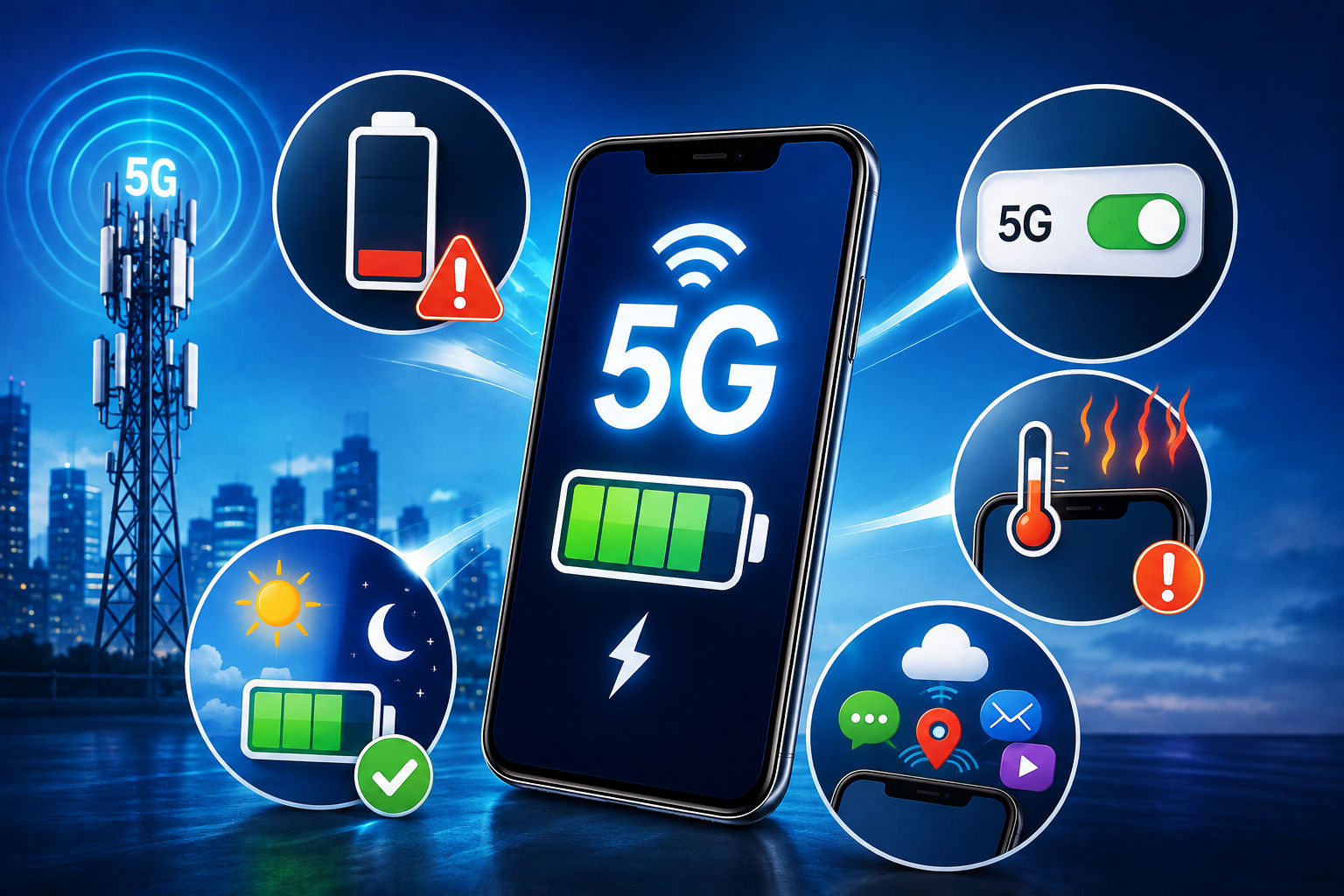
Here are five common misconceptions about phone battery life when using 5G that need clarification.
1. Using 5G always drains the battery faster than 4G.
This is the most common misconception. In reality, 5G battery consumption depends on the frequency band, modem, signal quality, and how the device uses the network.
Studies show that 5G phones can consume about 6-11% more power than 4G under certain conditions. This larger difference is mainly seen in the early stages, especially with 5G using mmWave bands, which require more energy and have limited coverage.
Meanwhile, low- and mid-band 5G, which is more common with users today, has been much better optimized.
2. Enabling 5G will cause your phone's battery to drain faster when in standby mode.
Turning on 5G doesn't mean the modem will constantly operate at high power. When the phone is in standby mode, the modem can switch to power-saving modes.
If your battery drains significantly overnight, the cause is usually due to background apps, data synchronization, notifications, or an unstable network connection, rather than simply having 5G enabled.
3. The faster the 5G network speed, the more battery power it consumes.
Network speed and power consumption are not directly proportional as many people think. A fast connection can even help the device complete data transmission sooner, then put the modem into power-saving mode.
The more significant issue lies in usage habits. Fast internet makes it easy for users to watch high-resolution videos, download large files, play online games, or use social media for longer periods. It is this increased usage time that can cause the battery to drain faster.
4. Prolonged use of 5G will drain the battery faster.
5G is not the direct cause of faster aging of lithium-ion batteries compared to 4G.
Battery lifespan depends primarily on the number of charge cycles, temperature, usage level, and duration. High temperatures can accelerate battery degradation, but this is usually related to device design, environmental conditions, or heavy workloads rather than the 5G technology itself.
Current 5G modems and chipsets have also significantly improved in terms of energy efficiency compared to the first generations.
5. Turning off 5G is the best way to save battery power.
Not necessarily. Modern phones often have an automatic 5G or smart 5G mode, allowing the device to switch between 5G and 4G depending on network conditions and usage needs.
In areas with weak or intermittent 5G signal, temporarily switching to 4G can help reduce battery consumption because the device has to constantly search for and maintain a connection. However, under normal conditions, there's little reason for users to turn off 5G just because they're worried about battery drain.
Instead of blaming 5G, users should pay attention to factors that truly affect battery life, such as signal quality, background apps, screen brightness, temperature, and device usage time.