

Having children - you don't need to wait for life to be perfect.
In recent days, a rather strong viewpoint has emerged on social media: "Don't have children in an unstable society." Behind this statement are expressions of anxiety about the living environment, economic pressure, quality of education, life's uncertainties, and a feeling of unease about an increasingly unpredictable future.
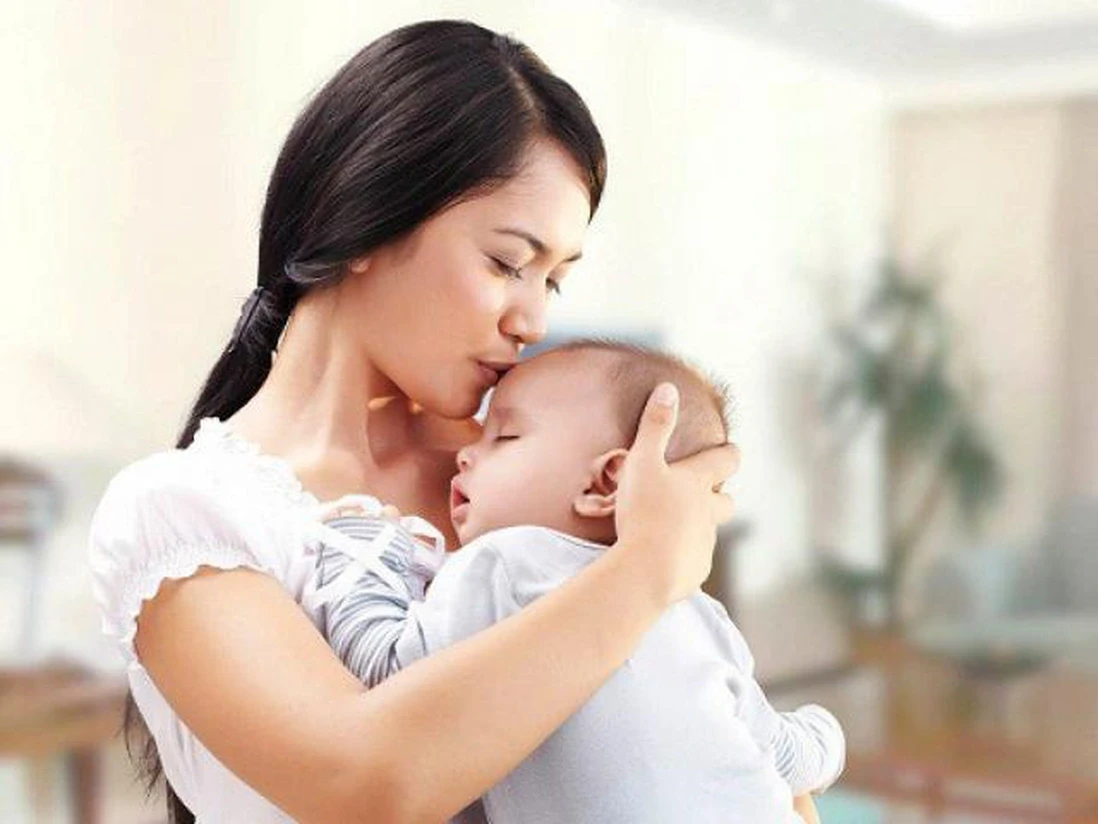
Personally, I completely respect everyone's right to choose. Whether or not to have children is a private matter, and no one has the right to impose their will on others. However, out of respect, I still want to offer another perspective. If a "stable society" is considered a prerequisite for people deciding to have children, perhaps we will have to face a very difficult question: From the time humans first appeared until today, has there ever truly been an era peaceful, safe, and secure enough for people to confidently say that now is the right time to have a new generation?
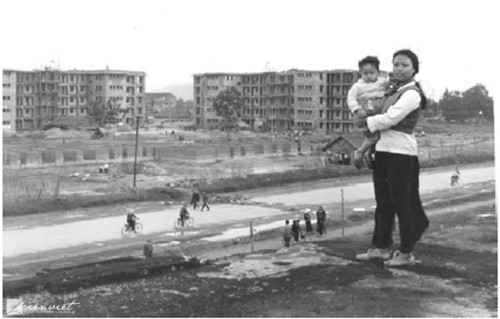
In our grandparents' time, war was an indelible part of their memories. Stories of fleeing, of evacuations, of groups of people carrying their belongings, children, and helping each other escape from places where bombs could fall at any moment—stories that sound like something from a distant world today—were a reality experienced by countless generations. My grandmother recounted how she placed my father on the head of her carrying pole, along with a few meager family possessions, and hurried to evacuate in the night. Many children were born amidst gunfire, growing up in deprivation, never having the chance to experience a peaceful childhood before having to face loss. If we were to stand before those circumstances and ask, with the mindset of today, why people still have children, we would likely receive many different answers. But there is an undeniable truth: it was the children born during those harsh years who went on to live, build families, build the country, and give birth to our generation.
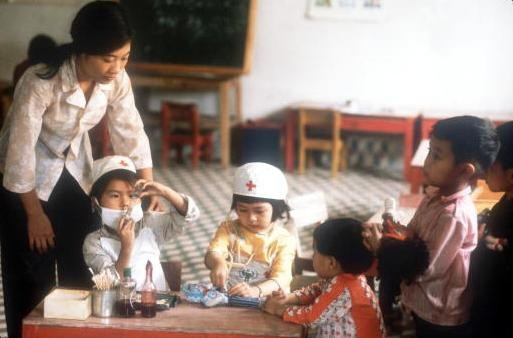
By my parents' time, the war was long over, but poverty was still very much present in every home. I remember meals mixed with potatoes and cassava, the crunchy chewing of corn kernels, the longing for a delicious meal, a new set of clothes without a patch, or a book smelling of fresh paper. My parents were unable to provide my siblings and me with a comfortable life. They certainly couldn't know where their children would end up, whether they would succeed or fail, whether they would live happy lives or face hardships. They only knew to work hard, save every penny, raise their children, send them to school, and hope that their children would have a less difficult life than they did.
Looking back, I am grateful for my parents' choice. If, back then, they had looked at the empty rice bin, felt disheartened by the hardships of life, and decided not to have another child so that the child wouldn't have to suffer, perhaps we wouldn't be who we are today, living a life that previous generations envied.
Of course, saying this doesn't mean that having children is always a good thing, nor can we use the sacrifices of previous generations to encourage having children under any circumstances. A child's birth is not a test of life's luck, nor is it an "investment" that parents can bet on the future. I disagree with the notion that just having children will solve everything on its own. Parenthood is a very heavy responsibility. A child doesn't get to choose where they are born, what kind of family they will be in, or who their parents will be. The decision rests with the adults, and therefore, the responsibility also rests with them. Having children requires love, preparation, the ability to care for them, the conditions for raising and educating them, but above all, the awareness that from the moment a child comes into the world, one's life no longer revolves solely around oneself.
.jpg)
What puzzles me about the viewpoint of "Don't have children in an unstable society" is that we seem to be setting a condition that human history has never met. Every society has its cracks. Today, we have our own anxieties: climate change, environmental pollution, housing pressures, fierce competition, the rapid changes in technology, the dangers of the digital world, the breakdown of many moral norms, and a sense of uncertainty about the future. These anxieties are real, and even very much worth confronting. However, instability is not proof that life has lost its meaning for creating new lives.
Perhaps we should also be cautious about the idea that it is a parent's responsibility to prepare their children for a life free of uncertainties. That is beyond anyone's capabilities. Parents can save money, choose schools for their children, choose housing, and strive to create a good environment, but no one can preemptively clear away all the obstacles in life for their children. Every child will have their own failures, sorrows that parents cannot bear for them, and choices that parents cannot decide for them. What parents can do, and what is far more important, is to prepare their children to live in an imperfect world. This includes the ability to be independent, to love and be loved, to work hard, to protect themselves, to distinguish right from wrong, to take responsibility for their own choices, and to have the resilience to not collapse after a failure.

In fact, if we look more closely, it is the presence of future generations that is a driving force preventing society from standing still. A person might be indifferent to the trash-strewn street in front of their house, to a flawed educational environment, to the ugliness happening elsewhere in society. But since having children, many things suddenly become directly relevant to them. Where will that child go to school, what kind of air will they breathe, what standards will they grow up under, and what kind of society will they learn to behave in? These questions force adults to pay more attention to the world outside their doors. Perhaps that's why many people change. They want a cleaner environment, better schools, stricter laws, and a more compassionate society, because their children are growing up in that society. The love for a child can sometimes awaken a sense of civic responsibility.
I don't want to romanticize having children. Having children doesn't automatically make a person a better person. Nor is a child a task assigned to save a troubled society. But I believe that society cannot improve on its own if people simply stand outside of it and wait.
Our generation today has inherited so much from those who came before us. It's the peace that some sacrificed their youth and lives for. It's the schools, hospitals, roads, scientific achievements, career opportunities, and the spiritual values accumulated over generations. We inherited an imperfect world from our ancestors. They, too, inherited an imperfect world from those who came before them. And yet, humanity continues to live, to repair, to build, and to place hope in those who follow.
.jpg)
A child born today doesn't just enter an existing society. They will grow up and impact that society through their own life. Who will this child become 20 or 30 years from now? Where will they live? What will they do? How can we know? Perhaps they will simply be an ordinary person, living a decent life, doing their job well, caring for their family, and not harming others. That alone is a valuable contribution. Or perhaps, from this child, a scientist, a doctor, a teacher, an artist, a journalist, or someone who creates changes we can't even imagine. A person's future is always an unknown. When my parents gave birth to me, they couldn't have known what kind of life the child before them would have. The only thing they could do was give me the opportunity to live and to do my best in my assigned responsibilities.
Therefore, I respect someone who says they don't want to have children. No one needs to explain, justify, or judge that decision. But I don't entirely agree if societal instability is used as a reason to conclude that having children is irresponsible. Instability doesn't mean deadlock. This world may disappoint us at many times, but at the same time, there are so many things that make people want to continue living, continue loving, and continue to have faith in tomorrow.
I think of my parents and the meals of potatoes and cassava from a bygone era; I think of the women of the previous generation, carrying their children through the war years, not knowing what tomorrow would bring. They didn't have children because they were certain the future would be better. Perhaps in many cases, they didn't have enough reason to believe that the future would be better than the present. But they still chose to live. And thanks to those choices, I am here today, living a life that, despite its anxieties and uncertainties, I still find infinitely worthwhile.
Perhaps we don't need a perfect world to give birth to a child. What's more important is that adults are wise enough to understand what they're doing, loving enough not to abandon a life they've brought into this world, and responsible enough to strive to make the part of the world within their reach a better place. Each generation can strive to provide those who come after with a roof over their heads, a light on a dark path, and a reason to believe that, even though life isn't perfect, people can still make it worth living.