

US destroys five Iranian oil tankers; Tehran warns of retaliation.
US-Iran tensions continue to escalate dangerously as Washington announced the destruction of five Tehran oil tankers. This action immediately triggered a series of retaliatory measures from Iran, along with threats to attack oil tankers off the coasts of Kuwait and Bahrain, pushing the world's most strategic shipping lane into a state of red alert.
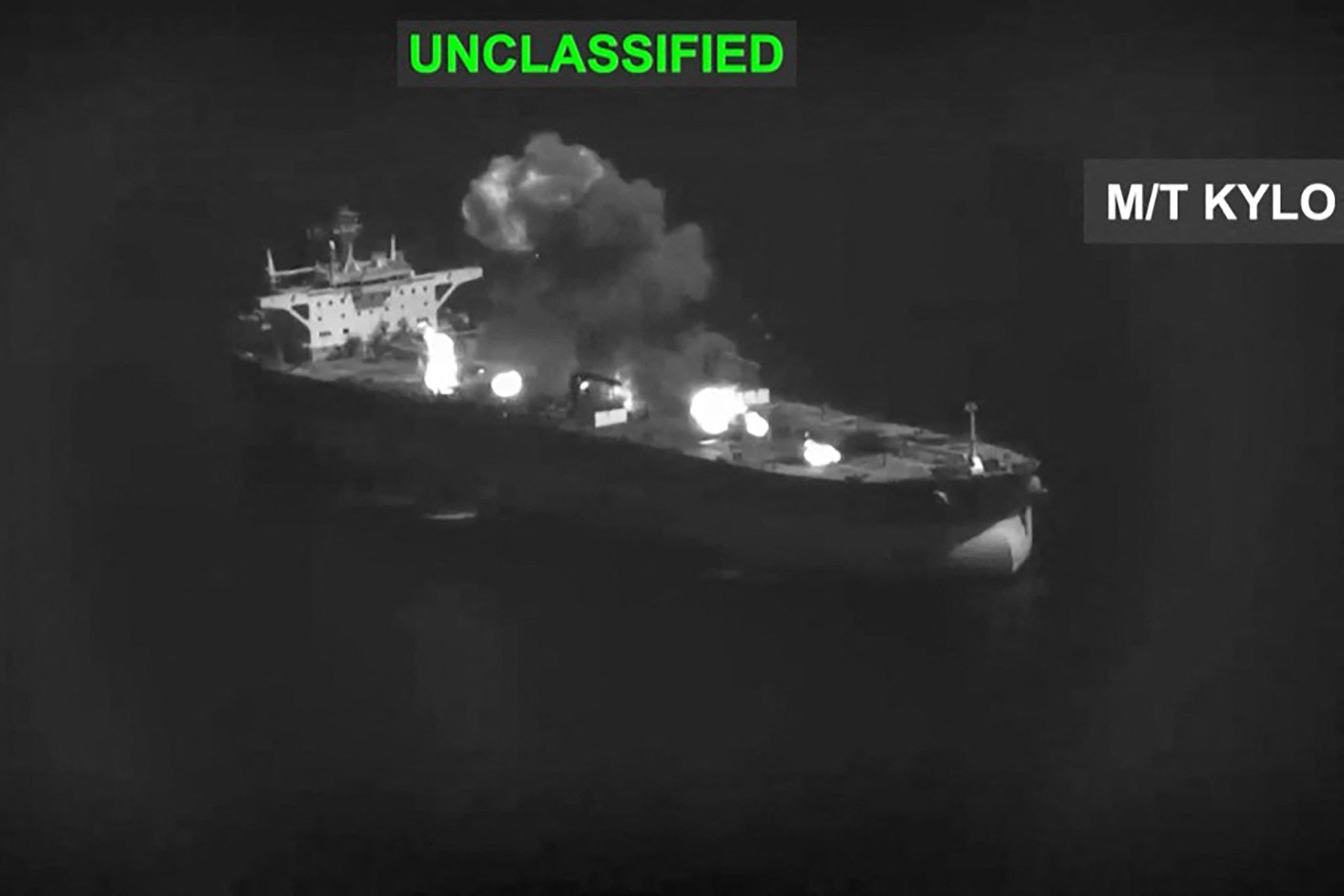
The U.S. military announced on September 8 that it had destroyed five Iranian crude oil tankers in a series of attacks in retaliation for Iranian Islamic Revolutionary Guard Corps ballistic missile strikes on a U.S. warship a few days earlier.
According to the US Central Command (CENTCOM), four ships that were hit—Kivik, Charminar, Horizon 1, and Riesco—were operating in the Gulf of Oman. The fifth, Derya, was attacked near Kharg Island, an area located in the strategic shipping lane leading into the Strait of Hormuz.
CENTCOM stated that U.S. forces ordered the crews of all five ships to leave their vessels before launching the attacks. The ships were subsequently struck and declared "incapacitated."
Washington asserted that the attacks were in response to Iran's "latest failed attacks" on U.S. warships. U.S. Secretary of State Marco Rubio stated that Washington would continue to target Iranian oil tankers if Tehran continued to attack U.S. forces.
"Iran continues to try to attack American warships, and every time they do so or try to do so, they lose oil tankers," Rubio told reporters during a visit to Colombia on September 8.
Despite warnings, Iran immediately retaliated after the US airstrikes. Iranian state media confirmed that its armed forces launched a large-scale missile attack targeting US military targets in Jordan.
Alarmingly, Iran's Islamic Revolutionary Guard Corps (IRGC), through its official IRNA news agency, has threatened to expand the scope of hostilities to include oil shipping in the Gulf. The IRGC warned all oil tankers anchored or docked at ports in Kuwait and Bahrain to immediately evacuate their crews, as these vessels would become targets of attack.
Iran accuses Kuwait and Bahrain of harboring and aiding "terrorist forces" by allowing the US to use their territory or military facilities to attack Iran.
The IRGC also claimed to have captured a US unmanned submarine at the entrance to the Strait of Hormuz. The US military later confirmed that one of its underwater drones had "malfunctioned" while surveying the waters in support of ongoing military operations.
"A U.S.-operated unmanned submersible experienced a malfunction more than a day ago. The device was conducting surveys in the area to support ongoing operations," said Captain Tim Hawkins, a CENTCOM spokesperson, without mentioning whether the device had been seized by Iran.
Mr. Hawkins added that the vehicle involved in the incident was an older model, not collecting sensitive data and not equipped with any secret sonar or radar systems.
Meanwhile, Iran described the vessel as one of the "most modern and intelligent" unmanned submarines operated by the US forces.