
Sweet and fragrant, a region of peanut candy and peanut butter.
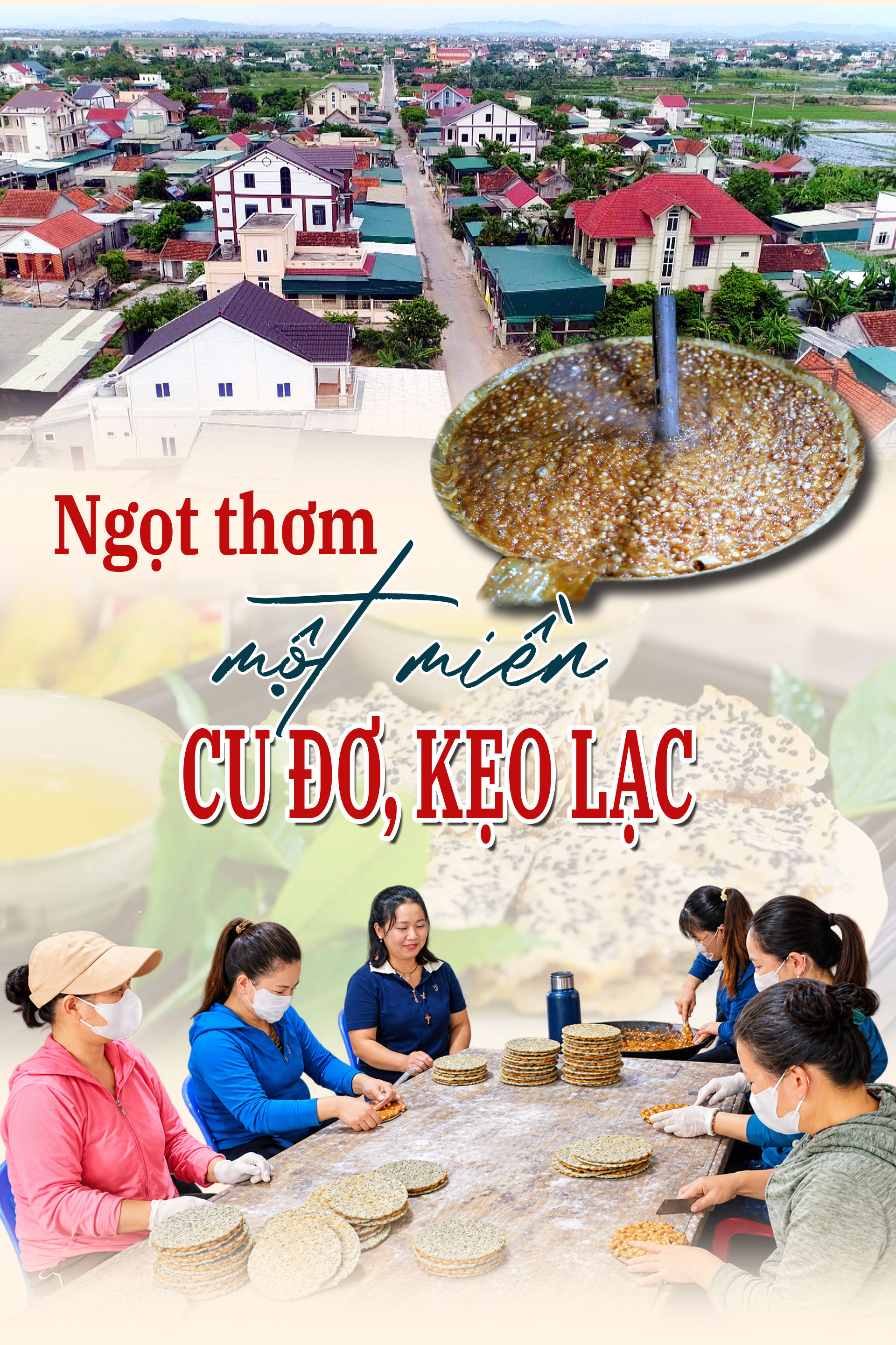
Using simple, rustic ingredients from the countryside such as peanuts, sesame seeds, molasses, and ginger, the people of Van Xuan hamlet, Duc Chau commune, have created unique-tasting peanut candy and other traditional treats. For generations, this traditional craft has not only provided livelihoods for the people but also helped preserve these traditional snacks deeply rooted in the local culture.
Khanh Ly - Thanh Phuc/Present:Hong Toai •14/11/2026
*****
Using simple, rustic ingredients from the countryside such as peanuts, sesame seeds, molasses, and ginger, the people of Van Xuan hamlet, Duc Chau commune, have created unique-tasting peanut candy and other traditional treats. For generations, this traditional craft has not only provided livelihoods for the people but also helped preserve these traditional snacks deeply rooted in the local culture.

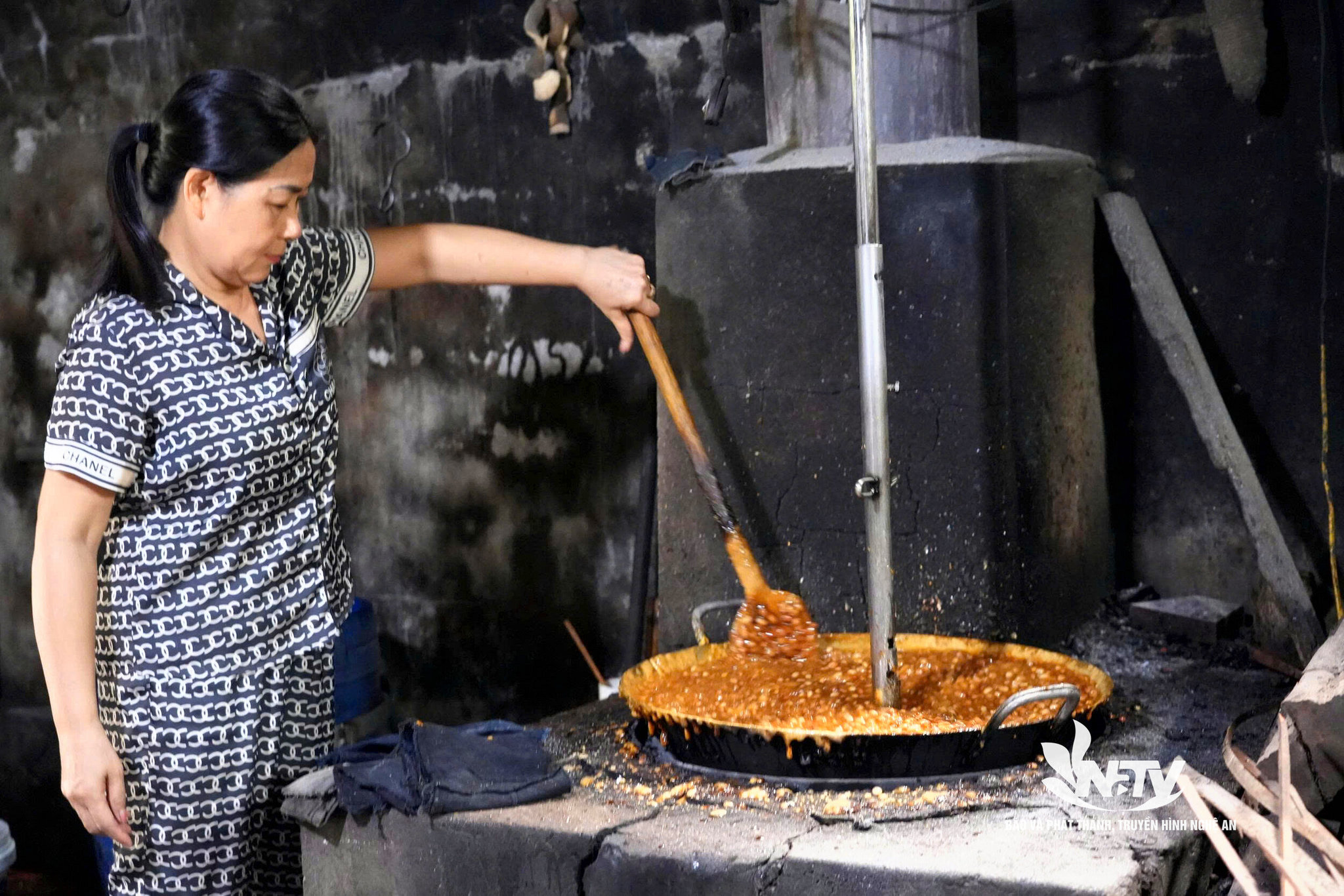
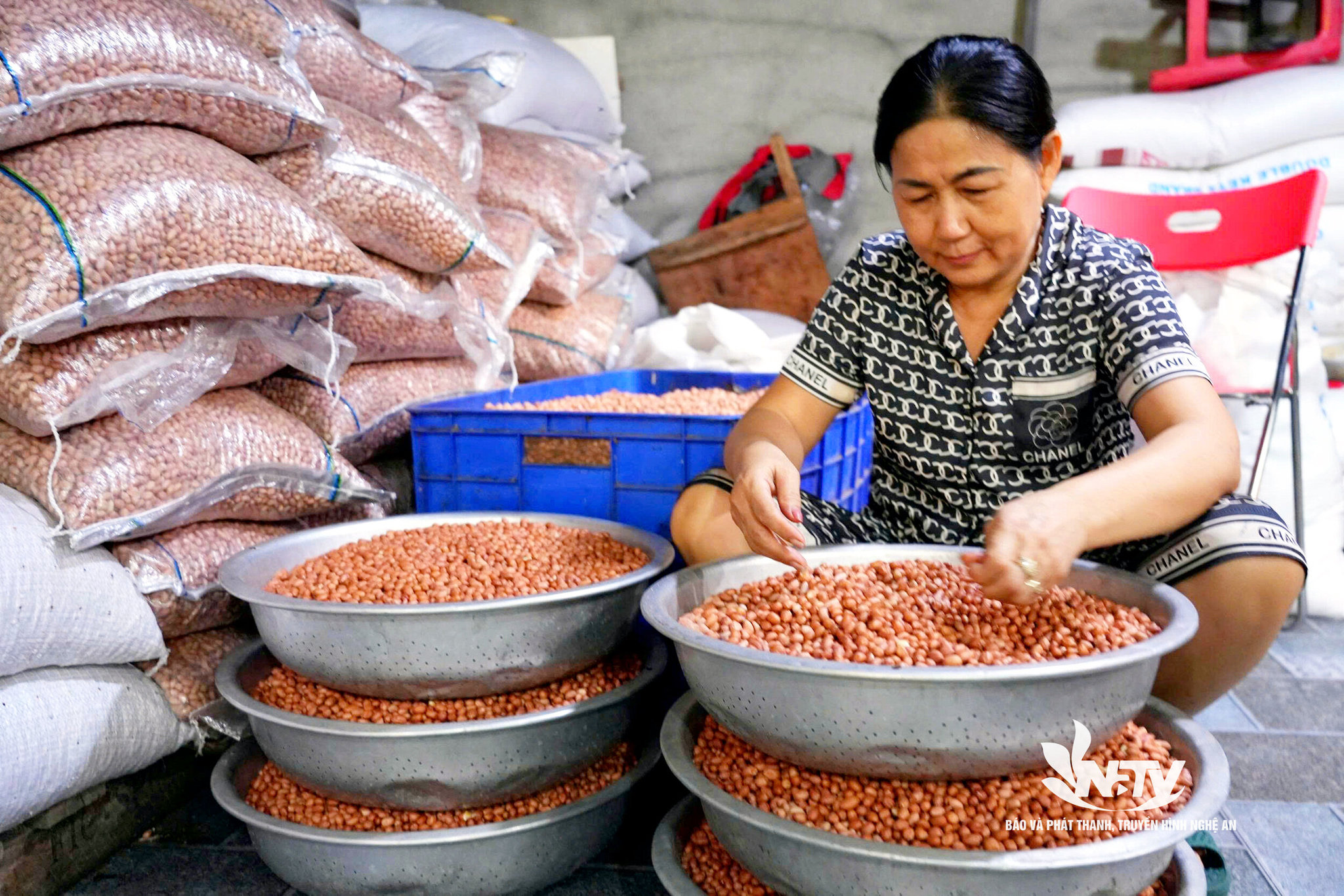
Visiting Van Xuan hamlet in Duc Chau commune these days, it's easy to spot the bustling atmosphere at the confectionery production facilities. The aroma of molasses, fresh ginger, and roasted peanuts permeates the small alleys. In the kitchens, some people are busily sifting peanuts, others are preparing ingredients, and still others stand beside pots of boiling molasses, carefully tending the fire for each batch of candy.
The craft of making peanut brittle and other local sweets has a long history, passed down through many generations. For many families, it's not just a means of livelihood but also a valuable skill inherited from their ancestors.
The family of Mr. Nguyen The Luc (born in 1966) is one of the households with a long tradition of making peanut candy in Van Xuan hamlet. According to Mr. Luc, the craft has been passed down from his great-grandfather for four generations. Currently, his eldest son, Nguyen Minh Dinh (born in 1990), is also continuing the family business, becoming the fifth generation.
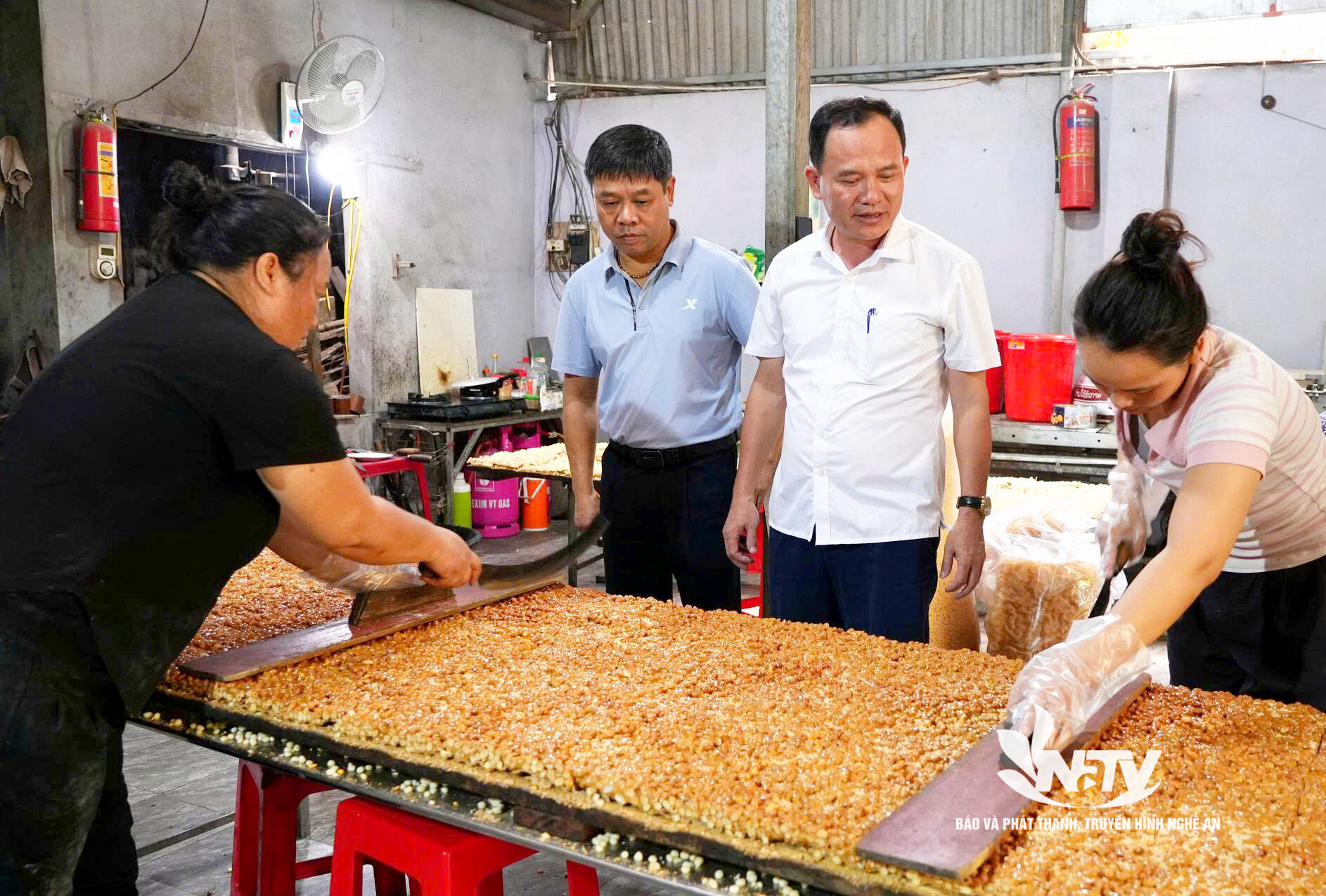
Memories of the craft have been deeply ingrained in Mr. Luc since childhood. Around the age of 8 or 9, his grandparents taught him each step of making cakes and candies. In those days, each family only made a few batches to sell in the village and surrounding areas. Besides peanut candy and peanut brittle, people also made sesame candy, sesame brittle, baked cakes, and biscuits…
Our entire childhood was filled with the scent of molasses, ginger, and the fragrant aroma of roasted peanuts. Back then, making candies was mainly based on experience; you could tell if a batch was ready just by looking at the color of the candy or listening to the sound of it boiling."
Lực recalled.
After working for five years at the Army Film Center under the 12th Army Corps, in 1987, Mr. Luc returned to his hometown and continued his family's traditional craft. For over 40 years, he has been involved in making candy, not only preserving the family's traditional flavor but also gradually developing his production facility.
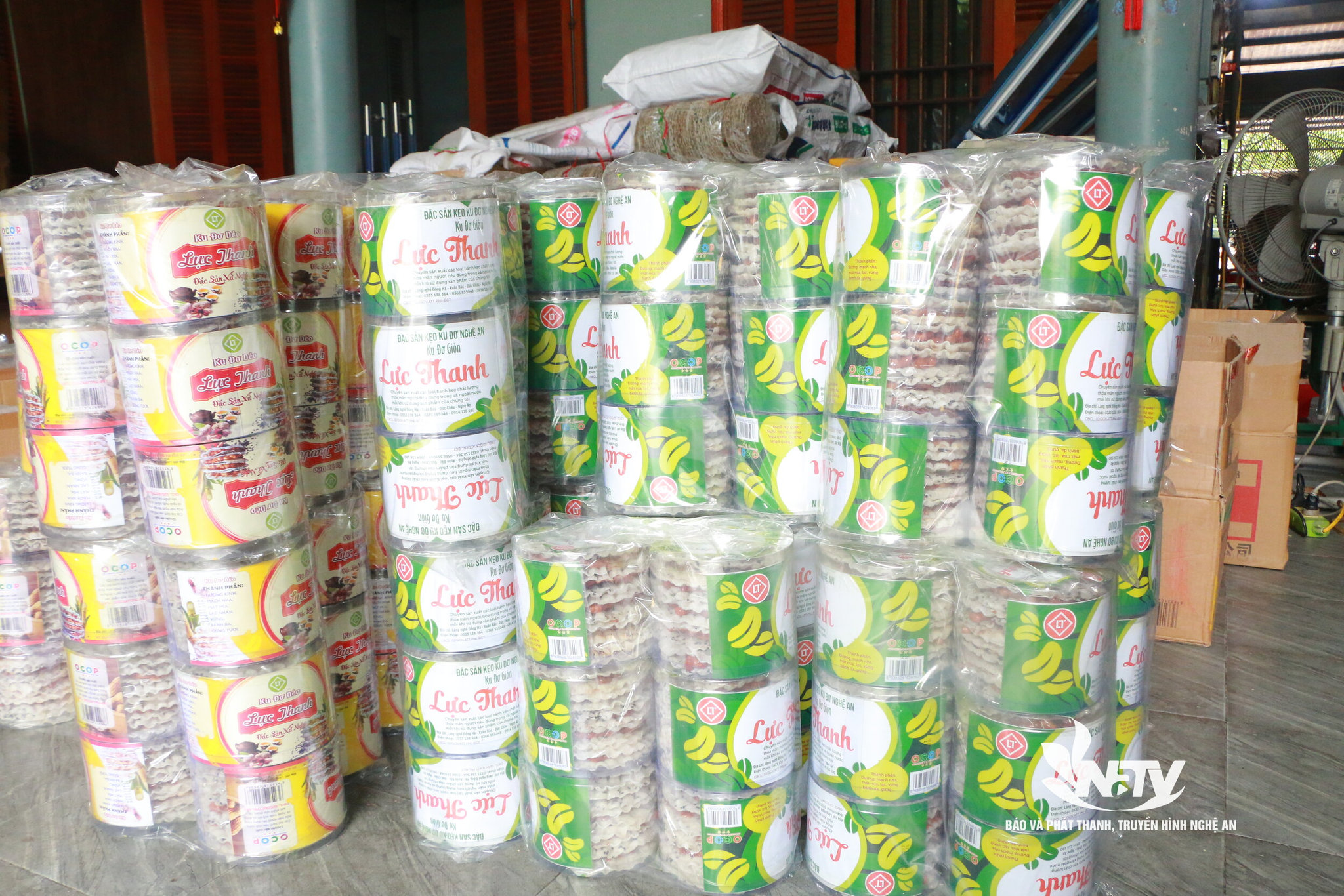
At one point, in the 1990s, the family business employed around 50 workers, producing various types of confectionery. Currently, he focuses on developing crispy and chewy peanut candy lines and peanut candy. In 2021, Luc Thanh's crispy and chewy peanut candy products were recognized as 3-star OCOP products and received a second round of recognition in 2023.
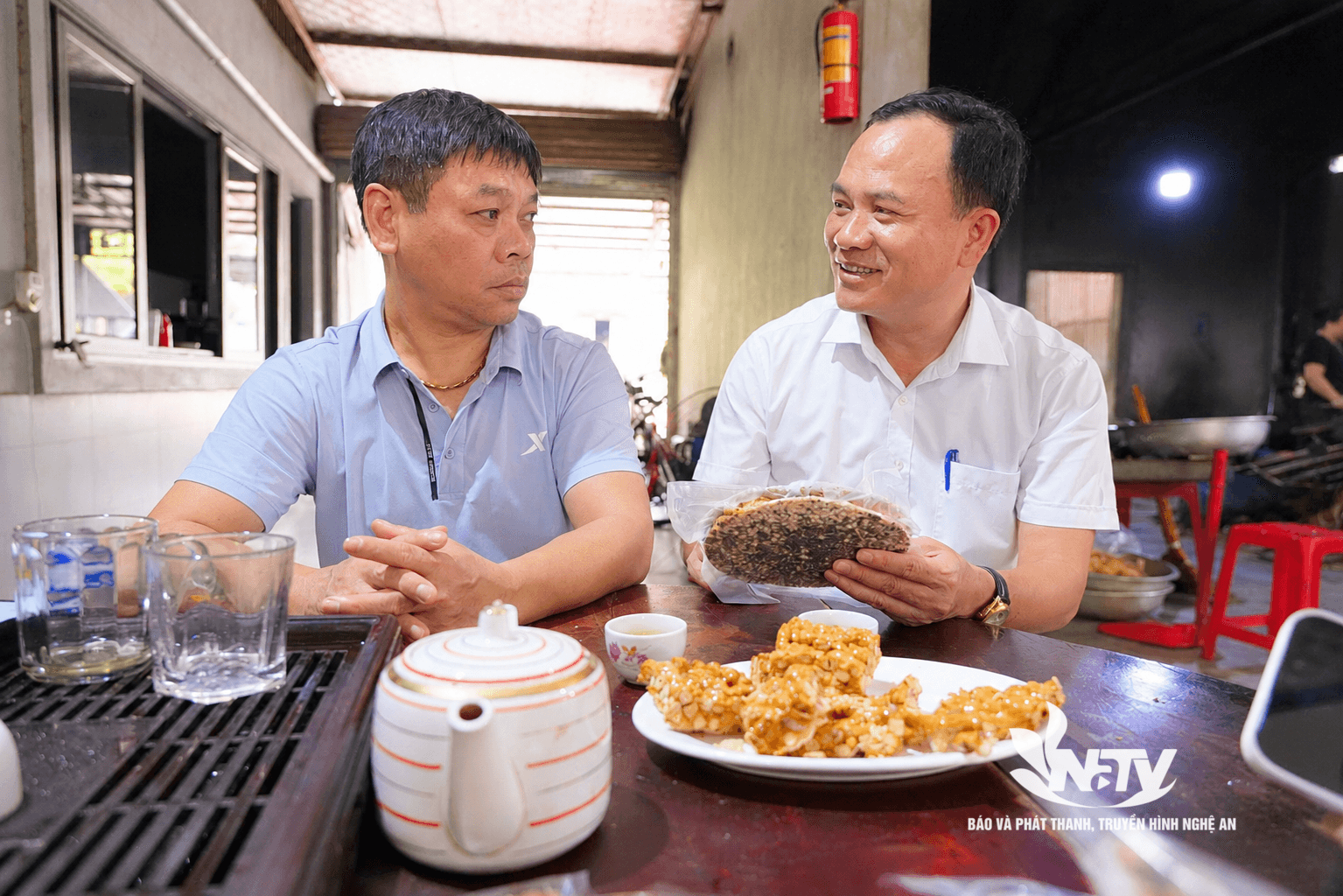
According to Mr. Luc, selecting the right ingredients is crucial for making these delicious candies. The peanuts must be local, large, round, and plump. The molasses comes from Met village in the former Nghia Dan area, with a natural consistency and yellow color. Fresh ginger is sourced from the former Ky Son district; the rice paper used for the outer layer is from Minh Duc craft village (Do Luong); and the sesame seeds are also top-grade, carefully screened to remove any underdeveloped kernels.
Using these familiar ingredients, candy makers must combine them in the correct proportions to create a batch of candy that is fragrant, crispy, and rich. The mixture of malt syrup and molasses is boiled, white sugar is added, and then peanuts are added and stirred well.
The cook must observe the color and boiling point of the mixture to determine the appropriate cooking time. If it's overcooked, the candy will harden and darken; if it's undercooked, the finished product will be soft and watery.
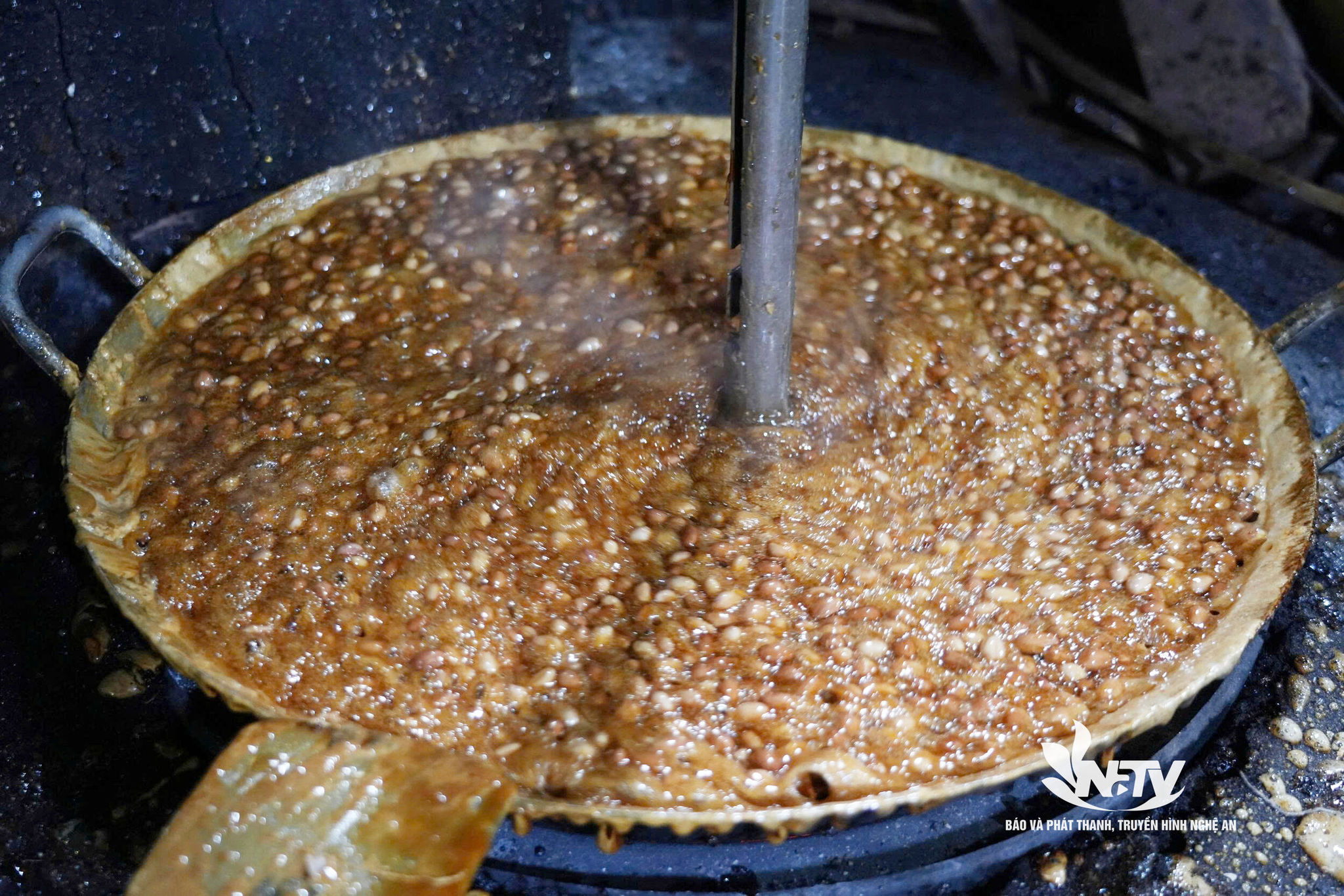
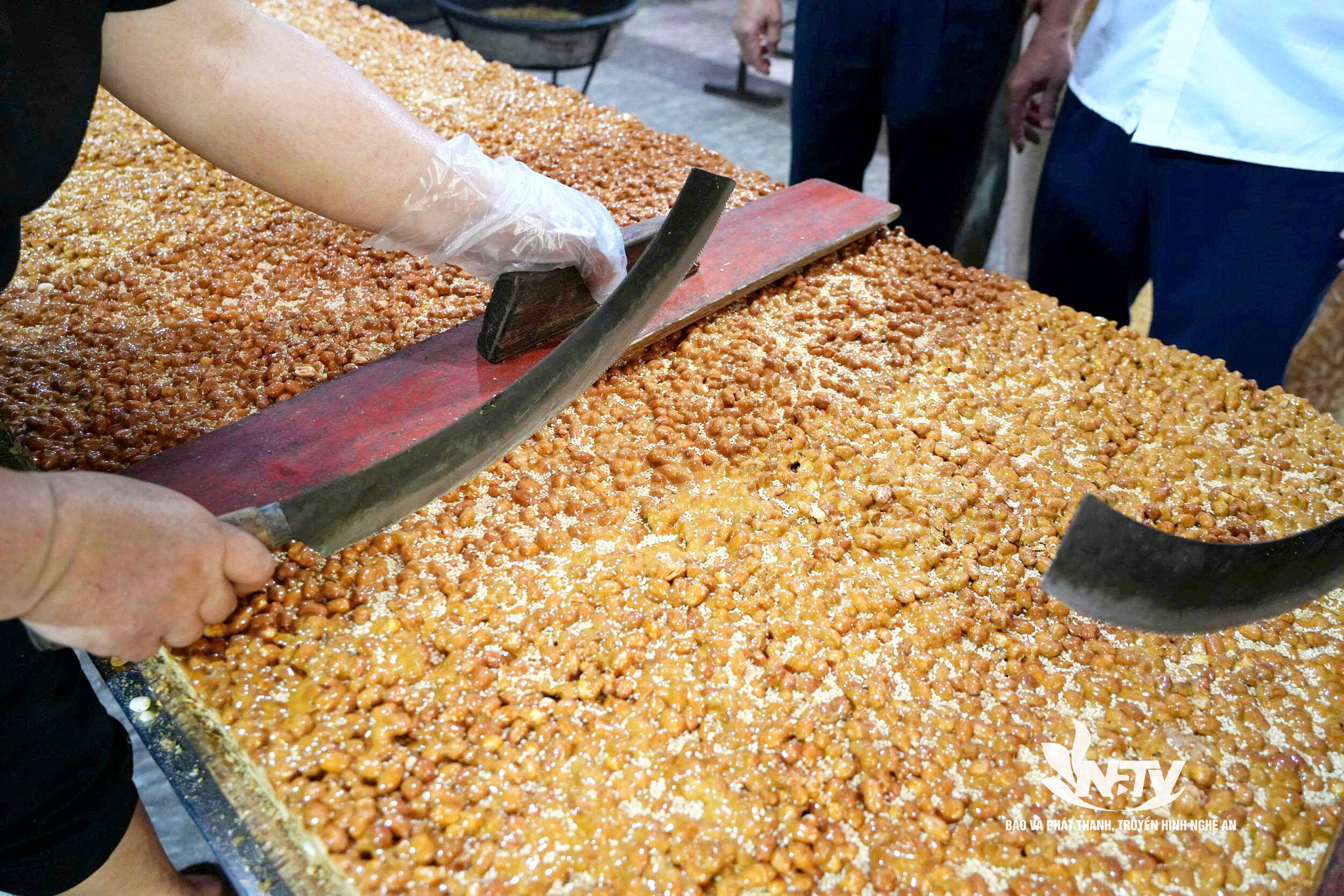
Ms. Vu Thi Thanh (born in 1970), Mr. Luc's wife, said that each type of candy has its own requirements regarding ingredients and techniques. For peanut brittle, roasted peanuts must be carefully sifted to remove any spoiled kernels; for peanut brittle and rice crackers, only high-quality, crispy peanuts are selected; and for chewy candy, glutinous rice flour and tapioca starch are added to create the right consistency. All require meticulous care, as even a few spoiled peanuts can affect the quality of the finished product.
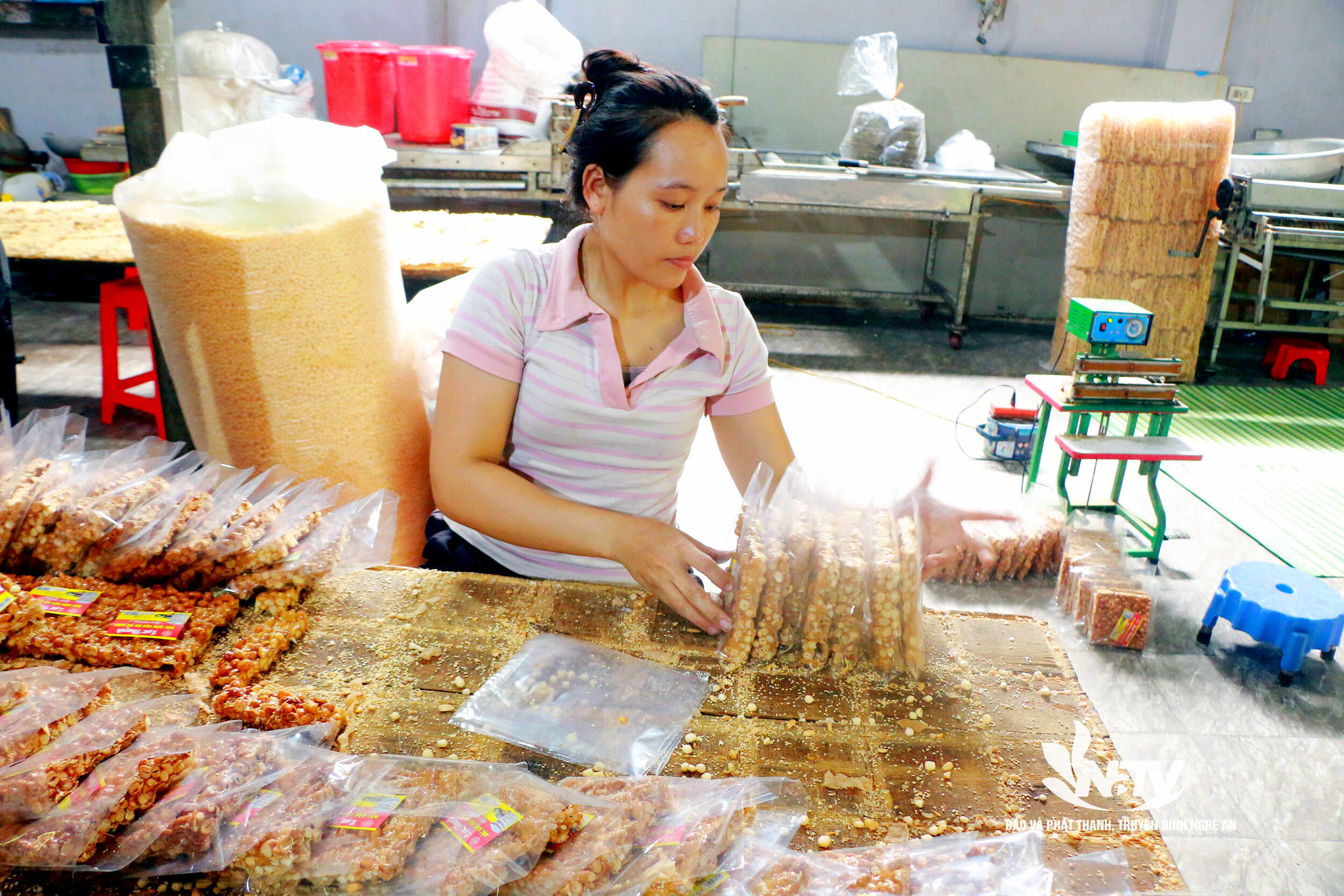
Currently, Luc Thanh facility offers approximately 20 varieties of crispy and chewy peanut brittle, along with other types of peanut brittle and sugar candies. The facility provides employment for 10 workers, including 6 permanent employees, with salaries ranging from 5-6 million VND per person per month.
During peak months, especially during Tet (Lunar New Year), the number of workers can increase to around 30 people. After deducting expenses, Mr. Luc and Ms. Thanh's family earns approximately 300 million VND per year. Currently, Luc and Thanh's peanut candy and peanut brittle are available in many localities throughout the country.
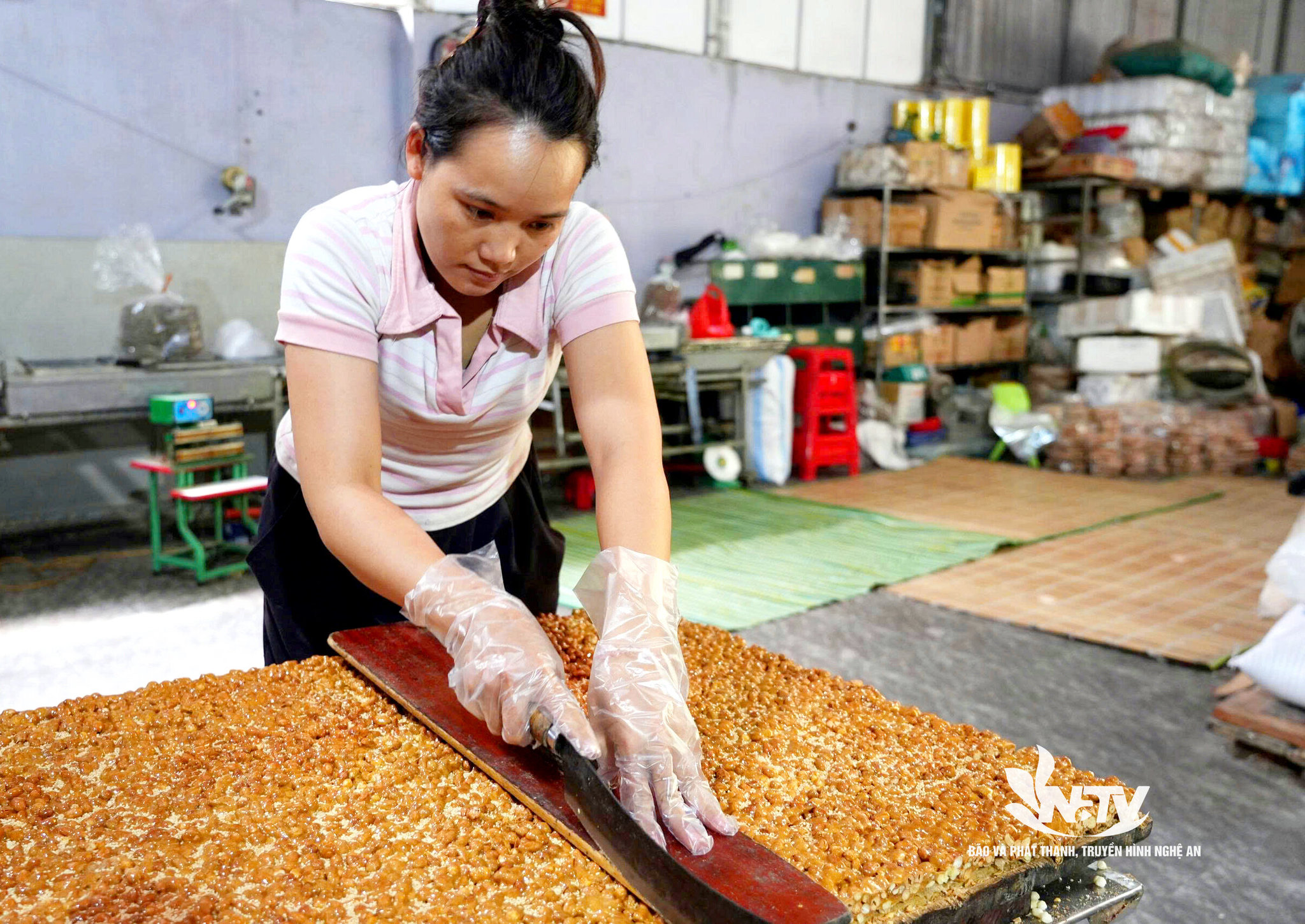
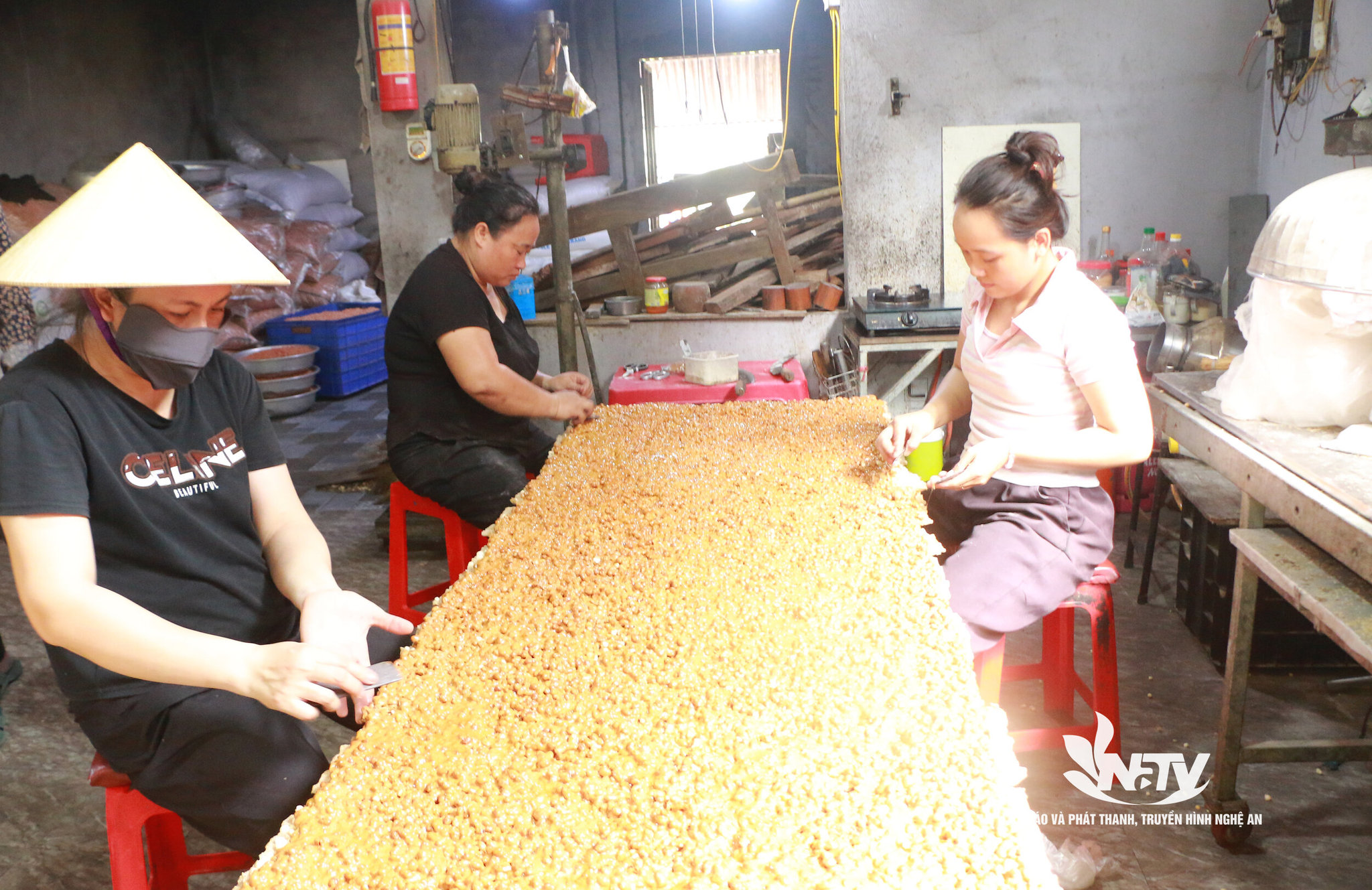
Also in Van Xuan hamlet, the family of Mr. Phan Van Trung (born in 1976) and Ms. Le Thi Tuyet (born in 1978) is one of the fairly large-scale producers and businesses of peanut candy and other similar treats. Both husband and wife come from families with a four-generation tradition of candy making. Mr. Trung, in particular, learned the trade from his grandparents and parents from the age of 10, and later traveled around delivering candy by bicycle.
According to Mr. Trung, to make delicious candy, besides ensuring quality ingredients, the cooking technique is crucial. The candy maker must adjust the temperature and stir the mixture of malt, molasses, white sugar, and ginger evenly. Just a little too much heat can make the candy bitter and lose its original flavor.
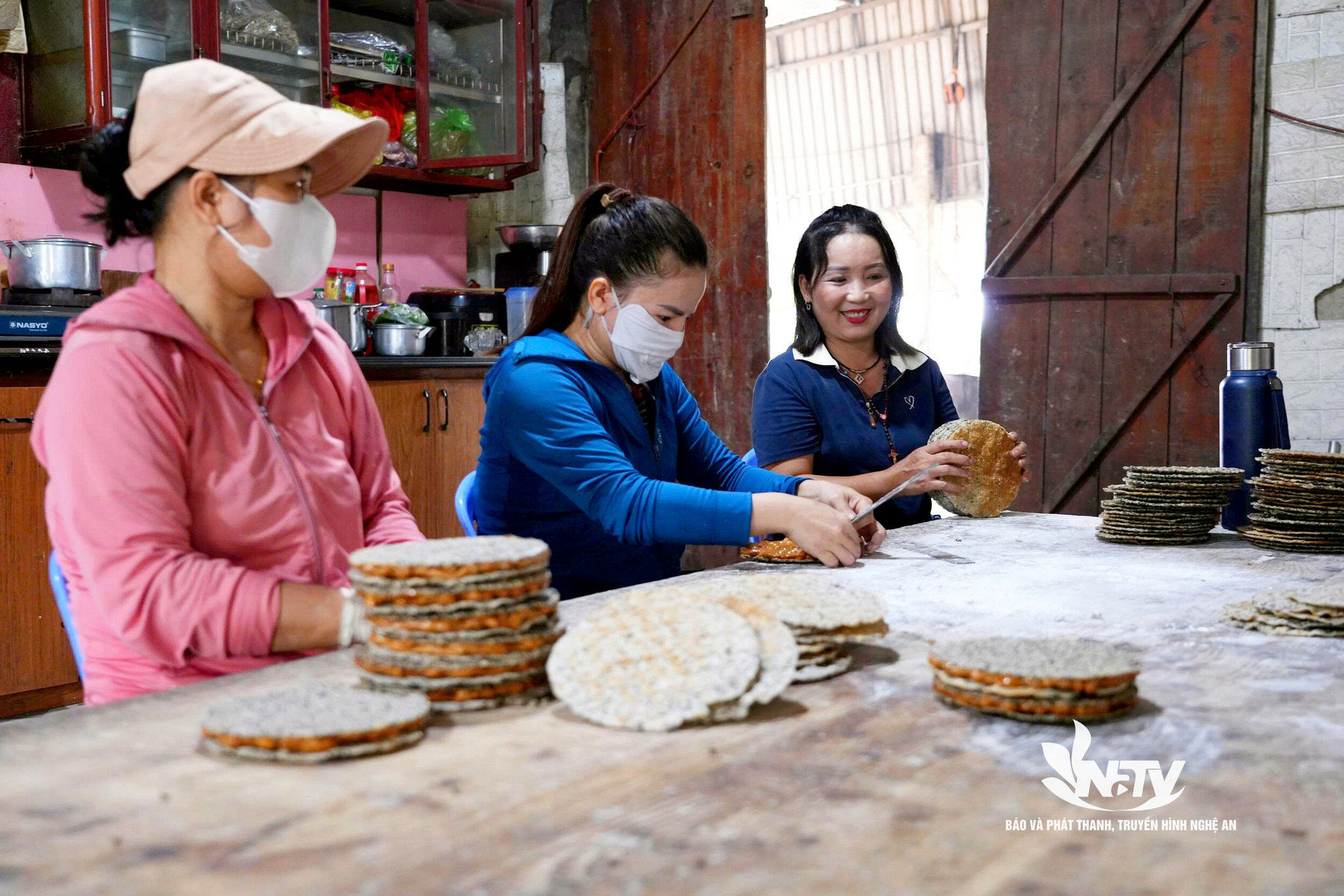
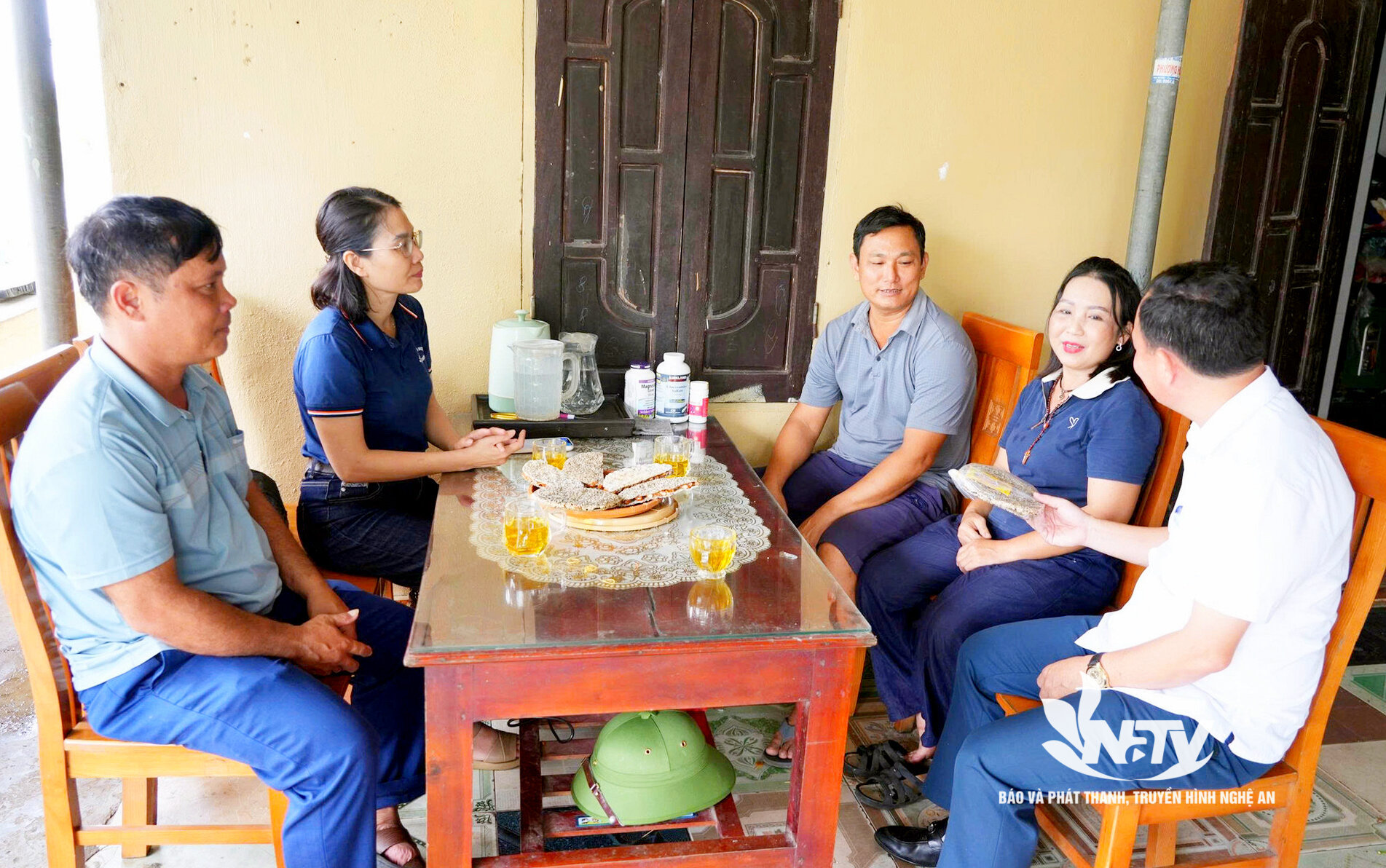
Currently, the family business provides employment for about 10 local workers. The products are sold within the province, the former Dien Chau area, and distributed through dozens of intermediaries in northern provinces. Each month, the business imports about 10 tons of candy, and after deducting expenses, earns a profit of several hundred million dong annually.
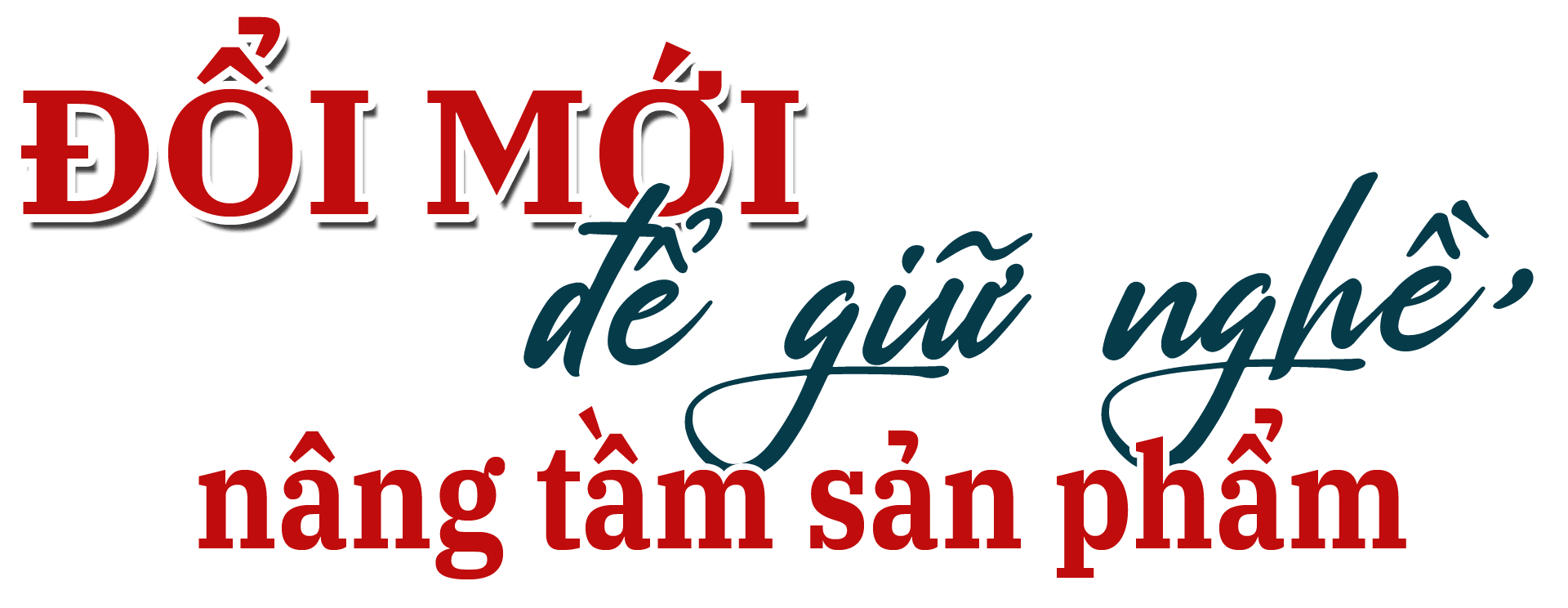
According to Mr. Tran Van Trung, head of Van Xuan hamlet, after the merger of hamlets, the area has two traditional confectionery villages, Dong Ha and Xuan Bac, which were recognized by the Provincial People's Committee in 2009. Previously, at one point, nearly 200 households participated in making peanut brittle, peanut candy, and other confectionery products.
However, with the changing market, only about 30 households in the entire village still maintain the craft, including 4 large-scale production facilities.
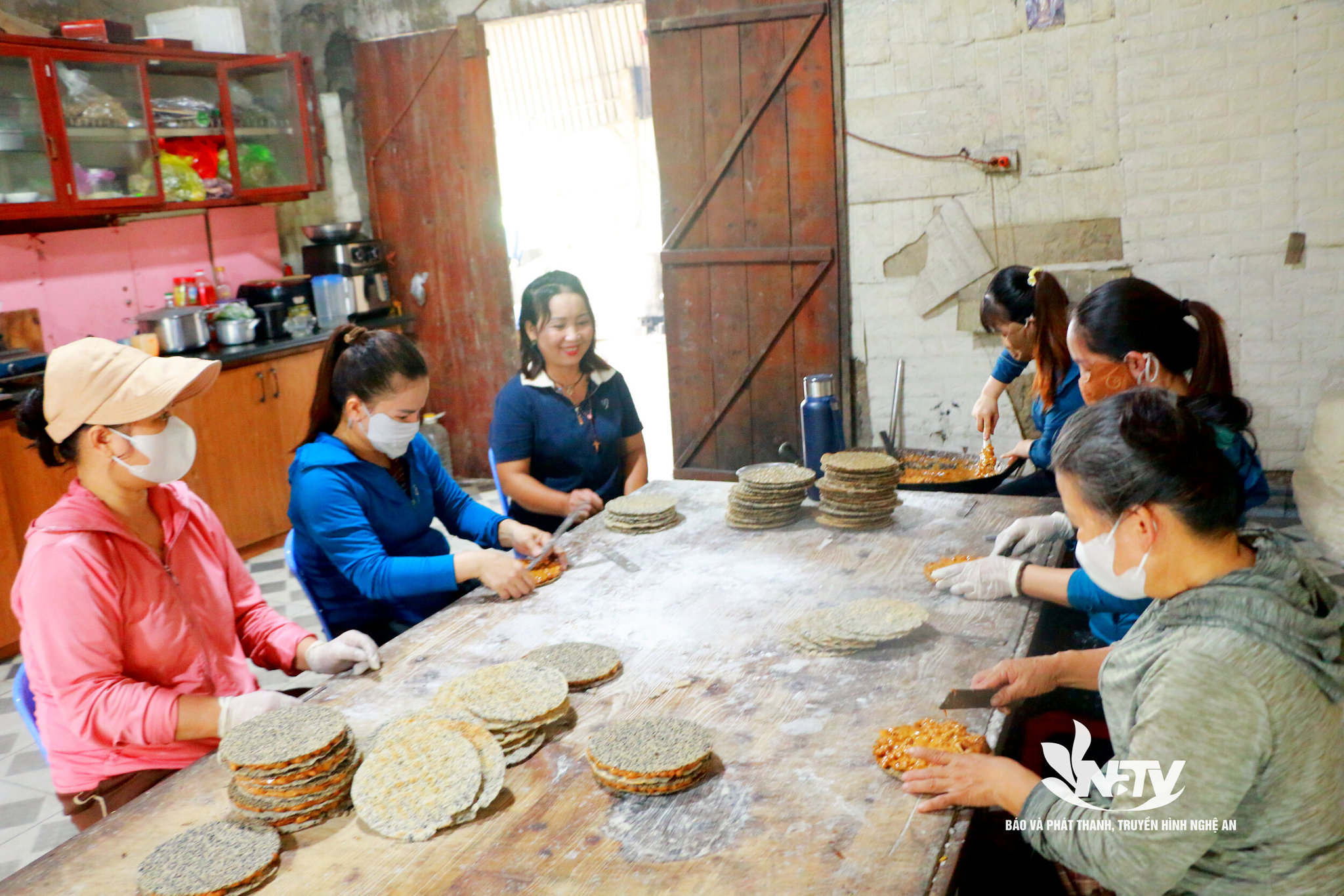
Although the number of households engaged in the craft has decreased, confectionery production still provides jobs and income for many local workers. On average, each worker can earn approximately 7-8 million VND per month after deducting expenses.
One of the significant changes in the profession is the introduction of machinery into production. While previously most processes were done manually, many families have now invested in equipment to increase productivity, reduce labor, and ensure food safety and hygiene.
As someone passionate about his work, Mr. Nguyen The Luc also independently researched and invented many types of machines to serve production, such as a ginger grinder, a rice cracker cutting and pressing machine, a sugar rolling machine, and a stirring machine to replace manual stirring. He also repurposed car rims to create a smokeless cooking system. Some of the machines he created were sold to households in need both within and outside the province.
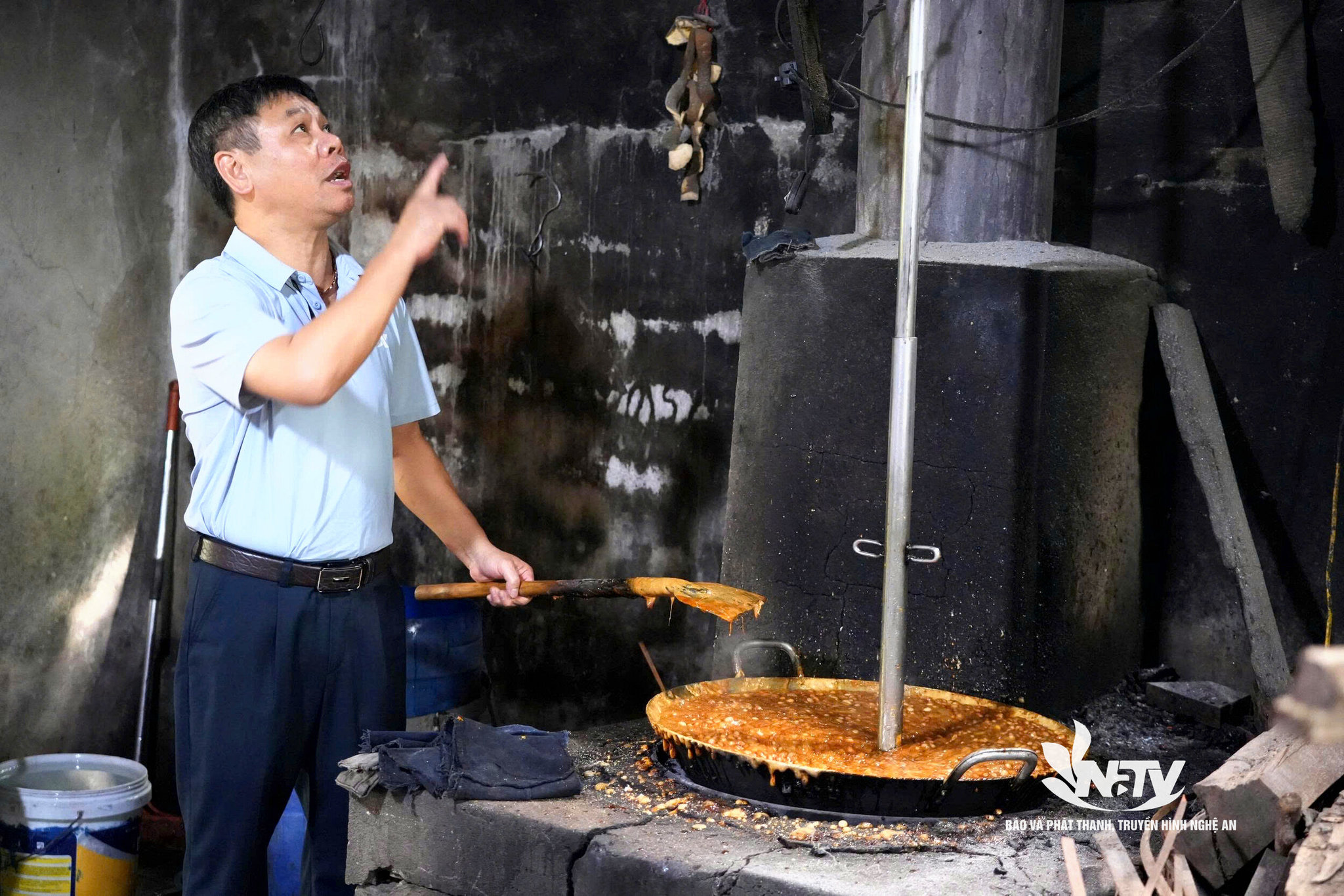
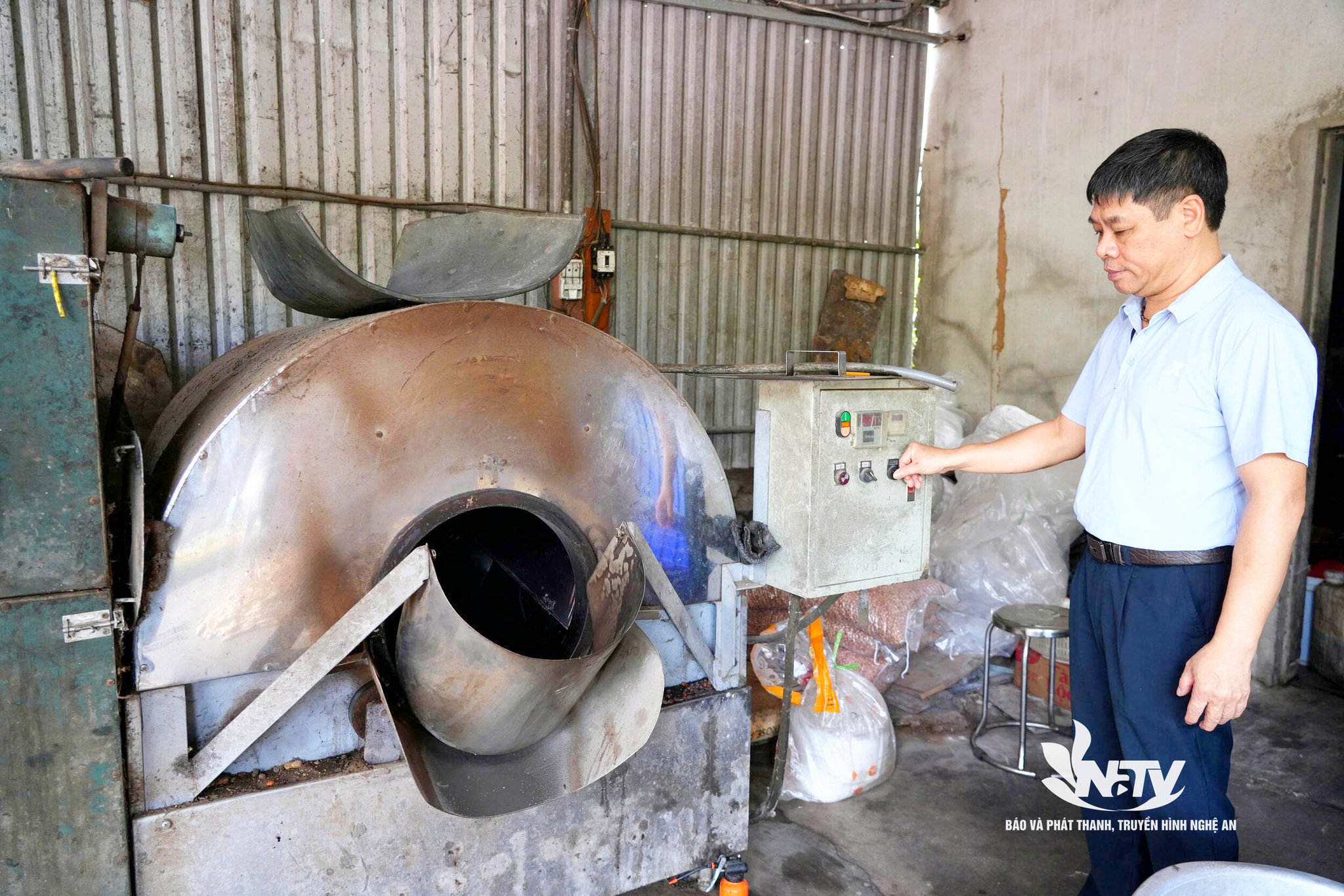
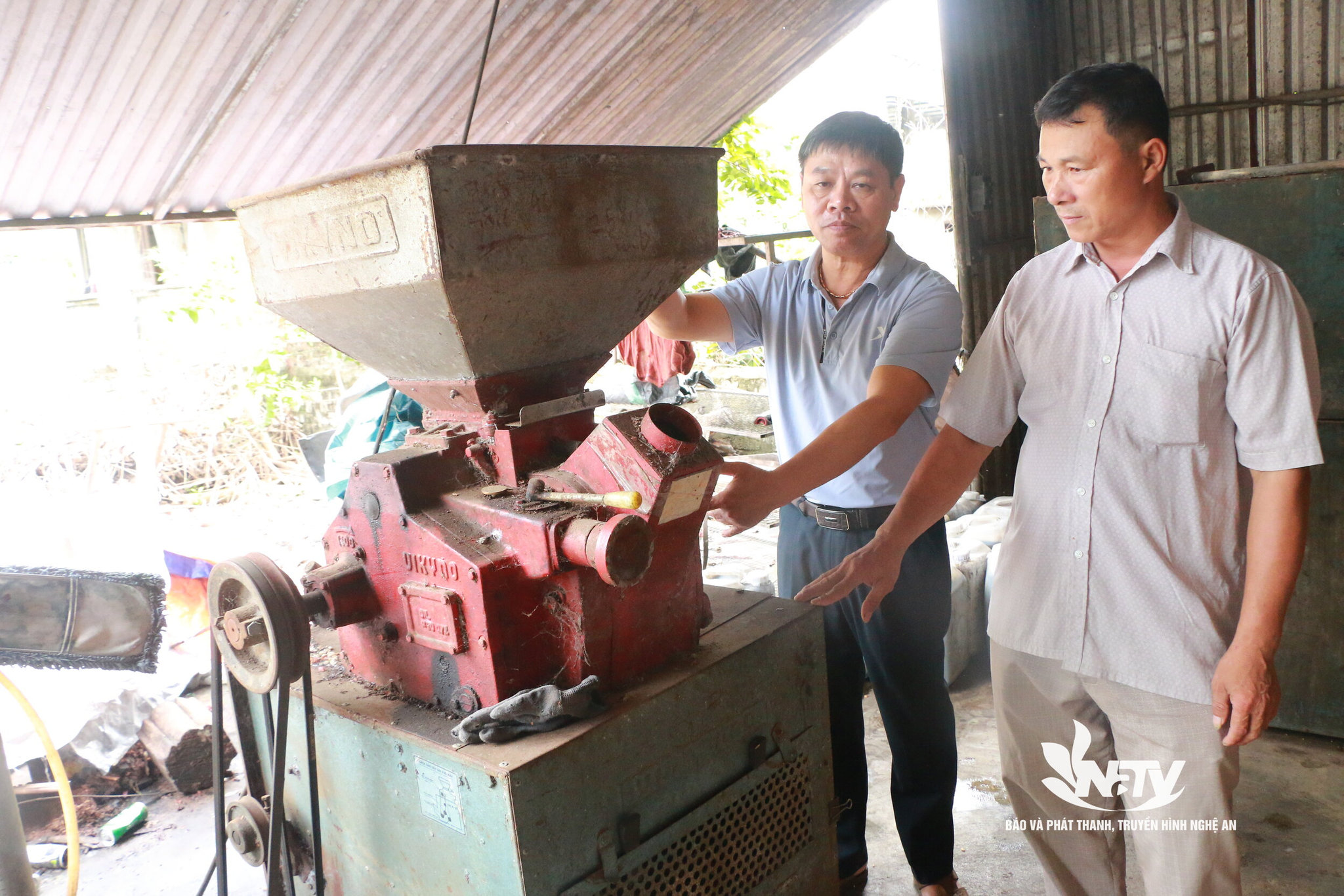
The effectiveness of applying machinery is clearly demonstrated in labor productivity. Previously, processing 400 kg of peanuts for candy required 6-7 workers working continuously for 2 days. Now, thanks to machinery, that amount of work can be completed in just one morning.
In addition to innovating production processes, households engaged in this craft are also proactively improving flavors and designs to meet consumer preferences.
Ms. Le Thi Tuyet is one of the pioneers in changing her products in this direction. Using traditional ingredients such as peanuts, sesame seeds, ginger, malt, and brown rice, she researched and combined them with butter, peanut milk, and coconut milk to create new flavors.
Today's consumers don't like overly sweet food as much as before. Therefore, we had to find a way to reduce the sweetness while still maintaining the chewy texture, aroma, and ensuring the product isn't hard, sticky, or unappetizing, and can be stored for a long time. My family currently offers more than 10 different varieties at varying prices.”
Ms. Tuyet shared.
Mr. Truong Sy Huynh, Deputy Head of the Economic Department of Duc Chau commune, said that in the coming time, the locality will strengthen the introduction and promotion of handicraft products; guide households to focus on food safety and hygiene, improve quality, perfect packaging and labeling, and continue to develop OCOP products.
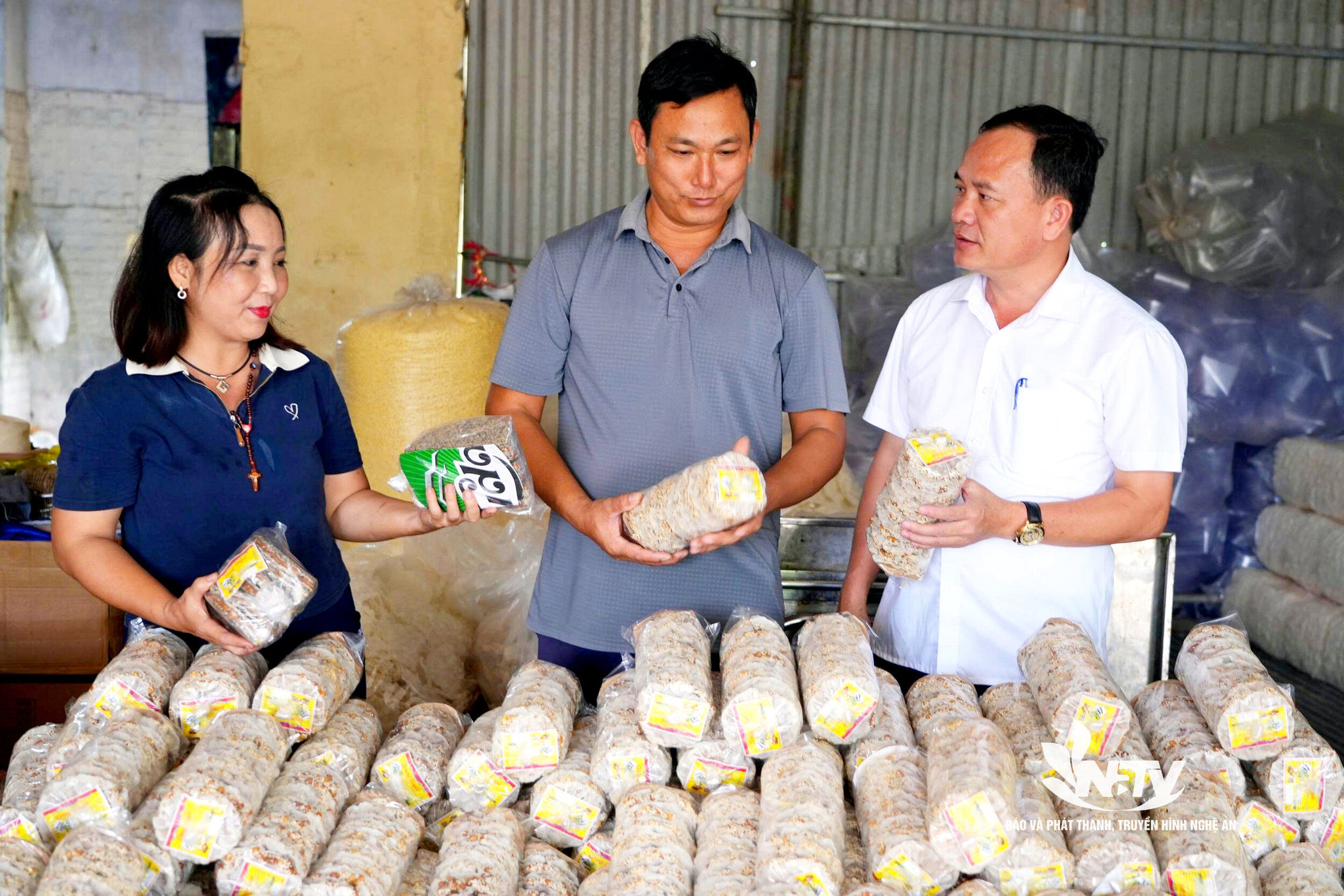
From simple, rustic ingredients of their homeland, through the skillful hands and experience of the artisans, Duc Chau peanut candy has become a well-known treat. Modern machines can replace human labor in some stages, and the designs and flavors have also been improved, but what makes the product quality special remains the meticulous selection of ingredients and the dedication of the artisans.
In Van Xuan village, enjoying cu do candy, peanut candy, and a bowl of green tea has long been a familiar part of daily life. Families with a good pot of tea often invite neighbors over to share, and a plate of cu do candy is always placed on the table. The mild bitterness of the green tea, combined with the sweet taste of molasses, the rich flavor of peanuts, and the slightly spicy kick of ginger, creates an unforgettable taste.
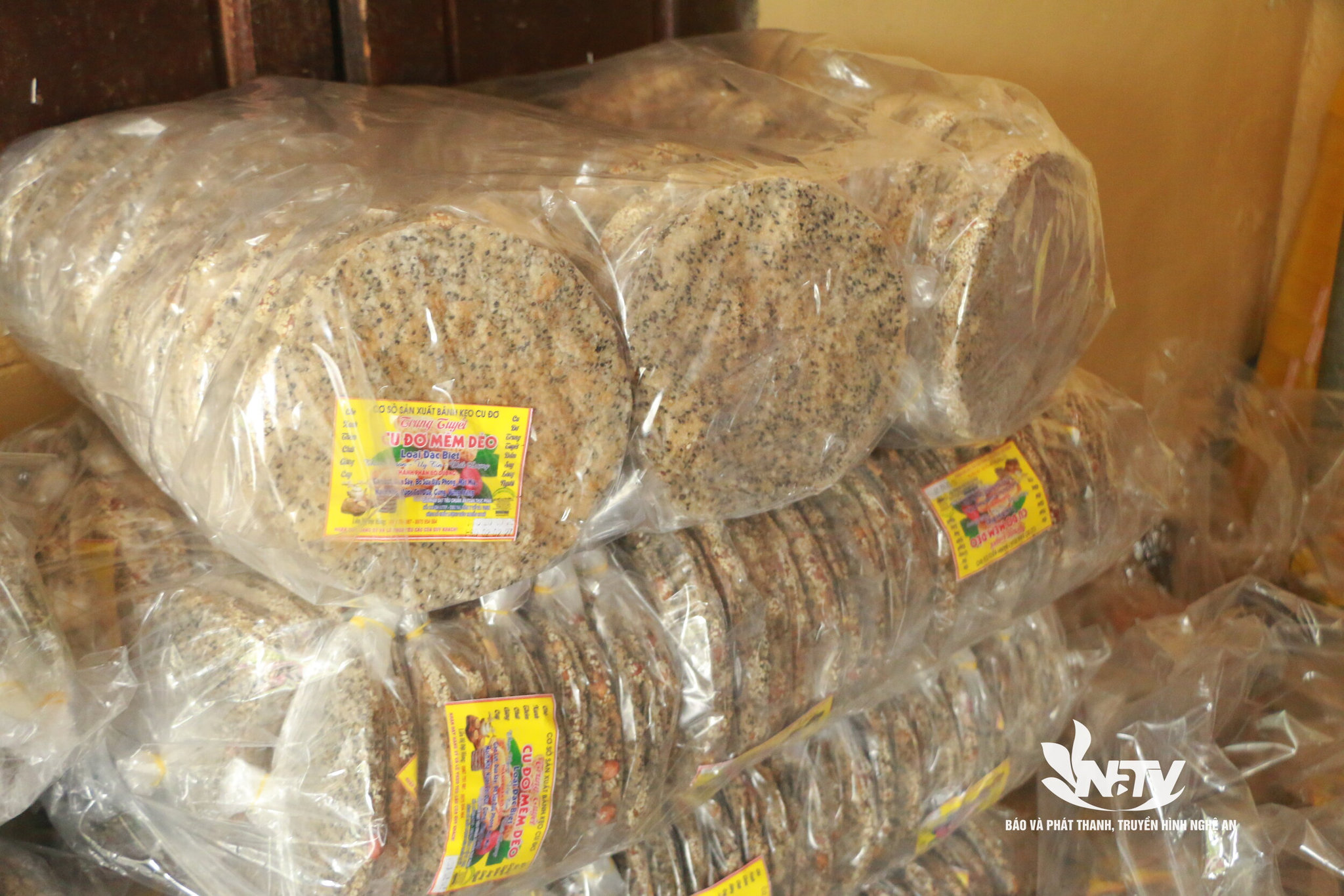
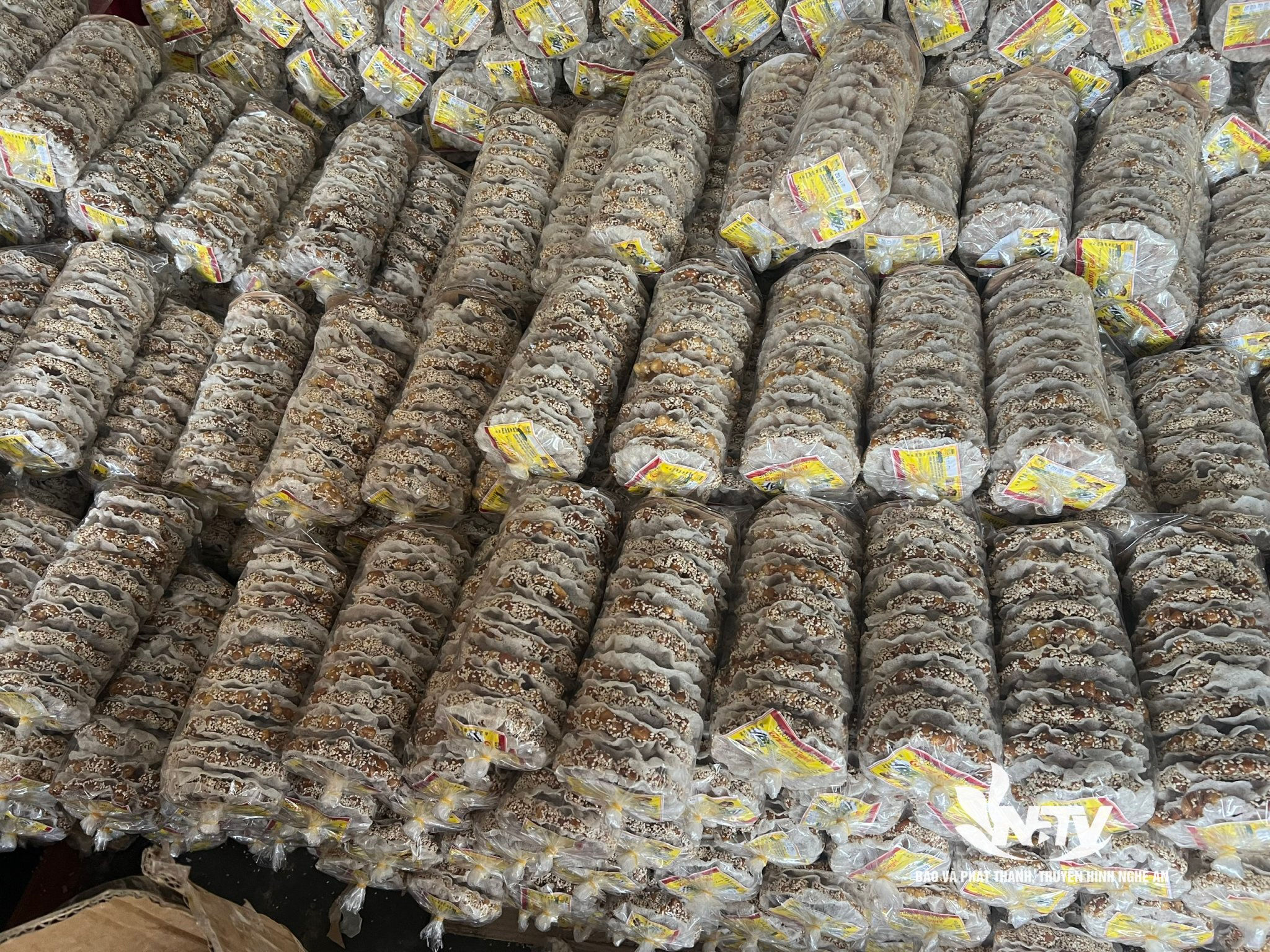
Over cups of tea, stories about village life, neighborhood affairs, and the studies and work of their children are shared. A plate of homemade candies not only enhances the flavor of the tea but also contributes to strengthening community bonds.
For the people of Van Xuan hamlet, Duc Chau commune, preserving the craft of making peanut brittle and peanut candy is not only about maintaining a livelihood but also about preserving familiar flavors that have been associated with generations.
Amidst a myriad of new and exotic treats, the sweet and savory taste of traditional homemade candy remains in the hearts of those who enjoy it, as a cherished gift from their homeland.
Khanh Ly - Thanh Phuc