
The US is pushing for an anti-drug coalition.
US Defense Secretary Pete Hegseth is on a trip to South America aimed at strengthening border security cooperation and advancing the anti-drug coalition. The trip is also part of an effort to increase Washington's military presence and cooperation in the region.
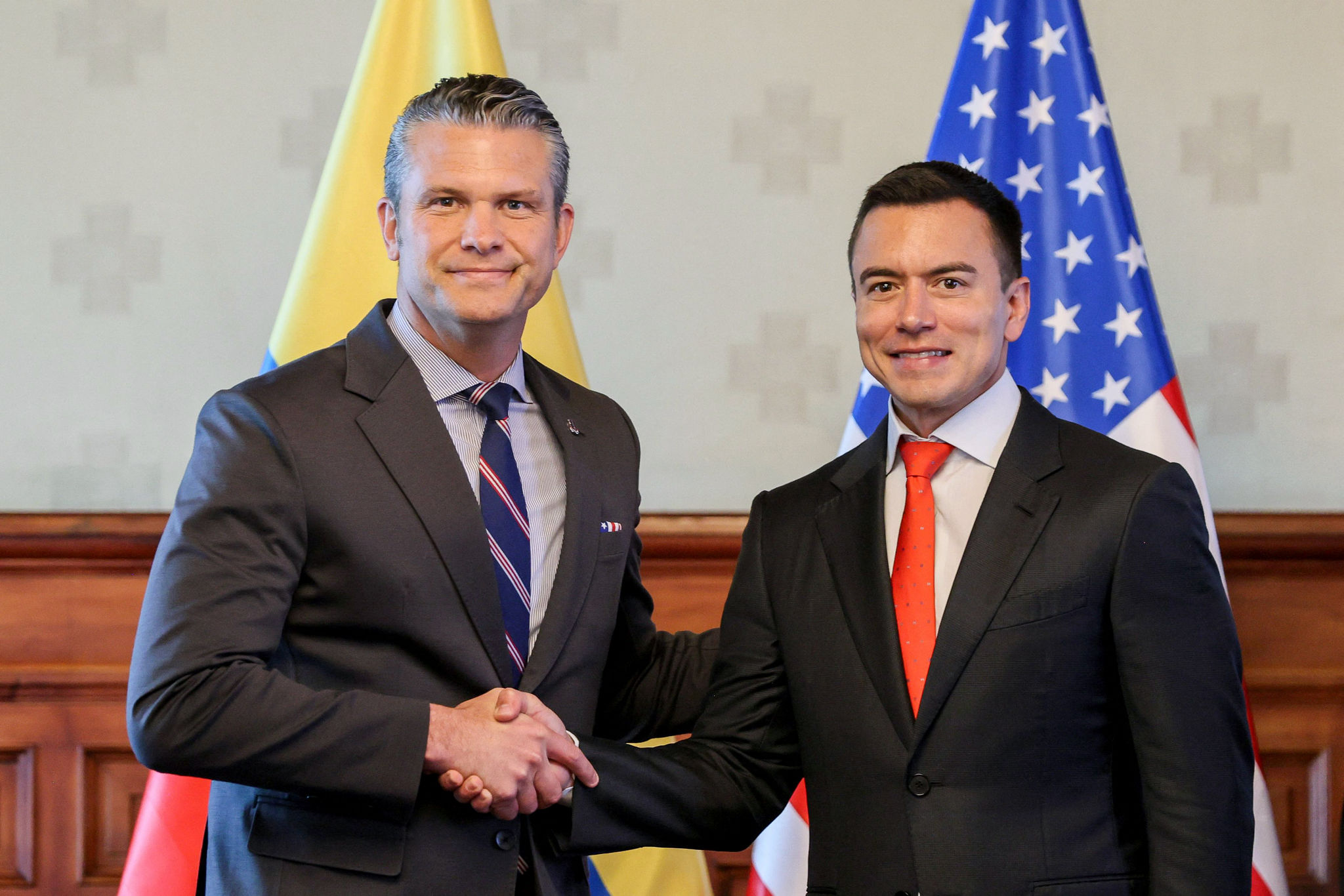
On November 19, US Defense Secretary Pete Hegseth met with Ecuadorian President Daniel Noboa in Quito to discuss strategies for combating transnational criminal networks. Both sides agreed to strengthen border security cooperation to "eliminate the operational space of drug trafficking networks"—a move seen as directly targeting organized crime groups operating along the border between Ecuador and Colombia. Discussions also addressed illegal mining, particularly illegal gold mining, which is rapidly increasing and directly competing with drug trafficking as a primary source of revenue for criminal gangs.
Ecuador is the third stop on the Pentagon chief's four-country Latin American tour, following visits to Venezuela and Colombia before his arrival in Honduras on the evening of November 19th. Secretary Hegseth's first official trip to South America comes as the region is considered strategically important and a priority area of influence for President Donald Trump's second term.
Notably, the visit comes amid growing evidence of an increased U.S. military presence in Ecuador, despite Ecuadorian voters last year rejecting the lifting of a ban on foreign military bases. Data shows at least 20 U.S. military flights have landed at a remote base on Ecuador's Pacific coast in recent months. However, President Noboa denies that the U.S. has established a military base in Ecuador, asserting that U.S. troops are only involved in temporary operations.
Before arriving in Quito, Hegseth made a surprise visit to Venezuela, where US forces conducted a raid in January that overthrew President Nicolas Maduro, killing more than 100 people. During a meeting with Venezuela's interim president, Delcy Rodriguez, Hegseth declared he would "hunt down" drug traffickers. He reiterated this firm commitment in Colombia, the world's largest cocaine producer.
In Colombia, the US Secretary of Defense also participated in the handover ceremony of a C-130 Hercules military transport aircraft to the administration of the new President Abelardo de la Espriella, who has vowed to crack down on armed forces involved in drug trafficking.
After Ecuador, Hegseth traveled to Honduras to hold talks with President Nasry Asfura, who was elected last year with strong backing from President Donald Trump. All three countries—Colombia, Ecuador, and Honduras—are part of the "American Shield" military and political alliance, initiated by Washington, which brings together more than a dozen Latin American nations to enhance security coordination in the region.
Hegseth's trip comes shortly after he narrowly escaped impeachment by U.S. lawmakers over the war with Iran and the legally controversial attacks on suspected drug-carrying vessels in Latin America, which killed more than 200 people.
Thu Trang