
Traditional craft villages are bustling with activity as Tet approaches.
In the final months of the year, craft villages in Nghe An enter their peak production season to serve the Tet (Lunar New Year) market. This bustling production creates jobs and increases income for rural workers, while also encouraging businesses to innovate production methods and enhance product value to adapt to the market.
Bustling production season at the end of the year.
These days, the eggplant cake making facilities in Hung Tan 2 hamlet, Hung Nguyen commune, are entering their peak production season. From mixing the dough and frying the cakes to packaging, all stages are carried out continuously. The golden-brown batches of eggplant cakes fresh from the oven are quickly finished to be delivered to customers on time.
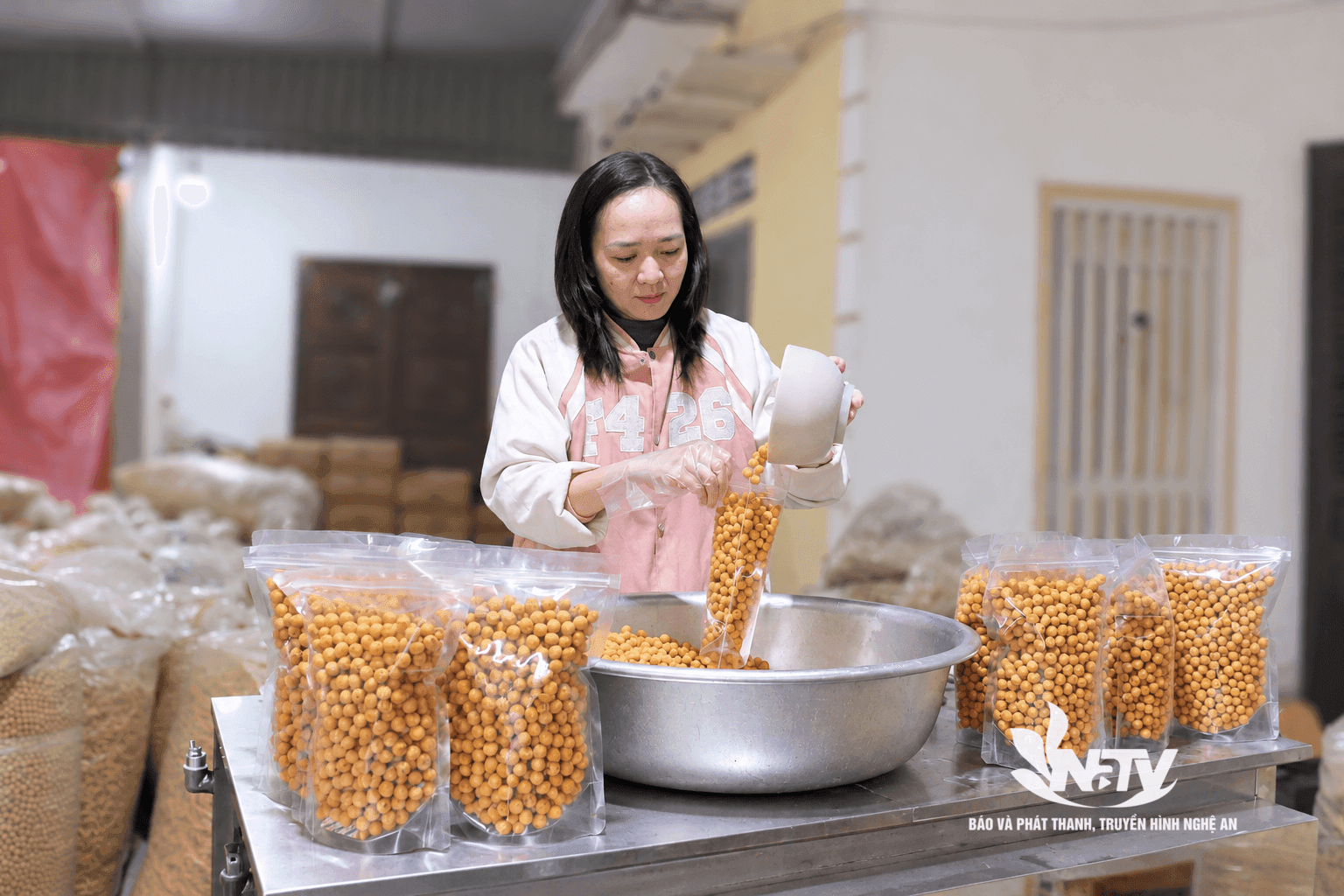
Ms. Ho Thi Hong Ngoc, owner of a traditional rice cake (banh ca) production facility, said her family has been involved in the craft for over 10 years. The facility currently produces two types of banh ca: savory and sweet, both of which have received OCOP (One Commune One Product) certification. The banh ca making business is maintained year-round, but the peak season for Tet (Lunar New Year) truly begins from the 10th lunar month. On normal days, the facility produces about 50-100 kg of banh ca, while during peak periods, production increases to 500-700 kg per day. To meet orders, in addition to family members, they hire more than 10 workers, divided into two shifts, sometimes working until late at night. Each worker earns between 280,000 and 320,000 VND per day, contributing to the local workforce's income during the last months of the year.
According to Mr. Nguyen Kim Khoi, head of Hung Tan 2 hamlet, currently more than 30 households in the hamlet maintain the craft of making banh ca (a type of Vietnamese cake). This craft has been associated with the local people for many generations. Previously, the cakes were mainly made during Tet (Vietnamese New Year) for personal enjoyment or as gifts. As market demand increased, the product is now produced year-round and has gradually become a branded commodity. Nowadays, banh ca is not only consumed within the province but also exported to many other localities throughout the country.
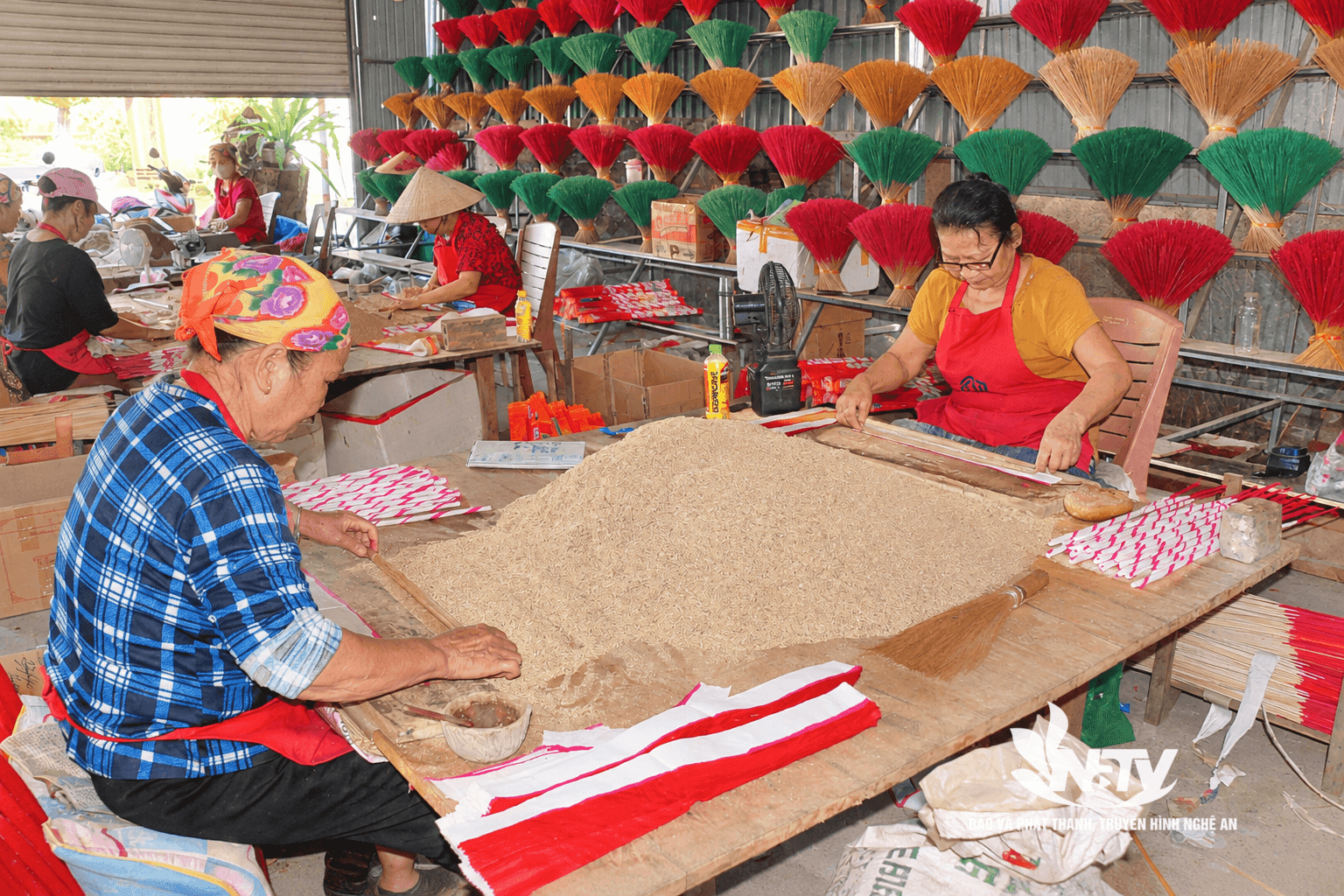
In Quy Chau commune, incense production facilities are also busy preparing goods to serve the Tet market. Mr. Nguyen Van Hieu's family has been involved in the incense making profession for 40 years. From the family's traditional craft, the facility now produces many product lines such as incense cones, candles, incense rings, and incense sticks, with incense sticks being the main product.
According to Mr. Hieu, to produce high-quality incense, the craftsman must have experience in balancing the proportions of ingredients, ensuring that the incense, when burned, has a natural, pleasant aroma and burns evenly. During the Tet holiday season, the number of orders nearly doubles compared to normal days. Each day, the facility uses nearly 50kg of incense powder for production and has to hire 5 additional workers, not including family members.
Along with maintaining product quality, incense-making establishments in Quy Chau are focusing on diversifying designs, building brands, registering trademarks, and participating in the OCOP program to enhance value and expand their consumer market.
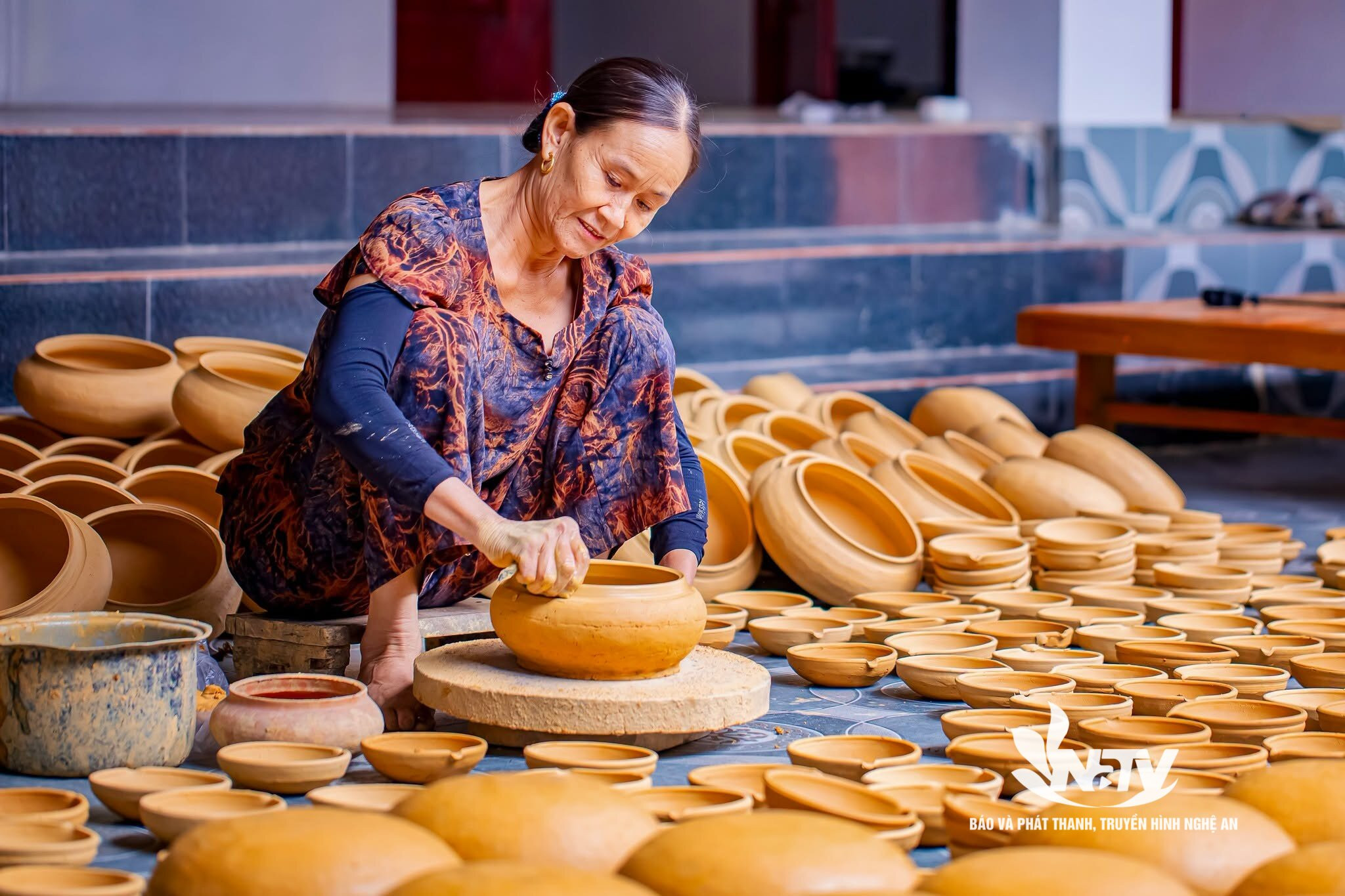
The end-of-year production atmosphere is bustling in Tru Son pottery village, Bach Ha commune. Although the number of households practicing the craft has decreased significantly compared to before, those who still maintain it diligently work through each stage of kneading clay, shaping, drying, and firing the products. Le Xuan Hai, a craftsman, said that instead of maintaining entirely manual methods, he has researched and improved the pressing machine, plaster molds, and invested in an electric kiln to increase productivity and product quality. Thanks to this, with favorable weather conditions, he and his wife can produce about 80-100 products per day.
Innovating methods and enhancing the value of traditional craft villages.
Besides creating products to meet consumer needs, craft villages also preserve skills, production experience, and cultural values passed down through generations. According to statistics, Nghe An currently has approximately 200 craft villages and traditional craft villages. The activities of these villages contribute to job creation and income generation for tens of thousands of rural workers.
Experience from traditional craft villages shows that innovation is becoming essential to maintaining the craft and enhancing product competitiveness. Machinery is being introduced into some stages to reduce labor and increase productivity; designs and packaging are being improved, while businesses are paying more attention to brand building, traceability, and participation in the OCOP program.
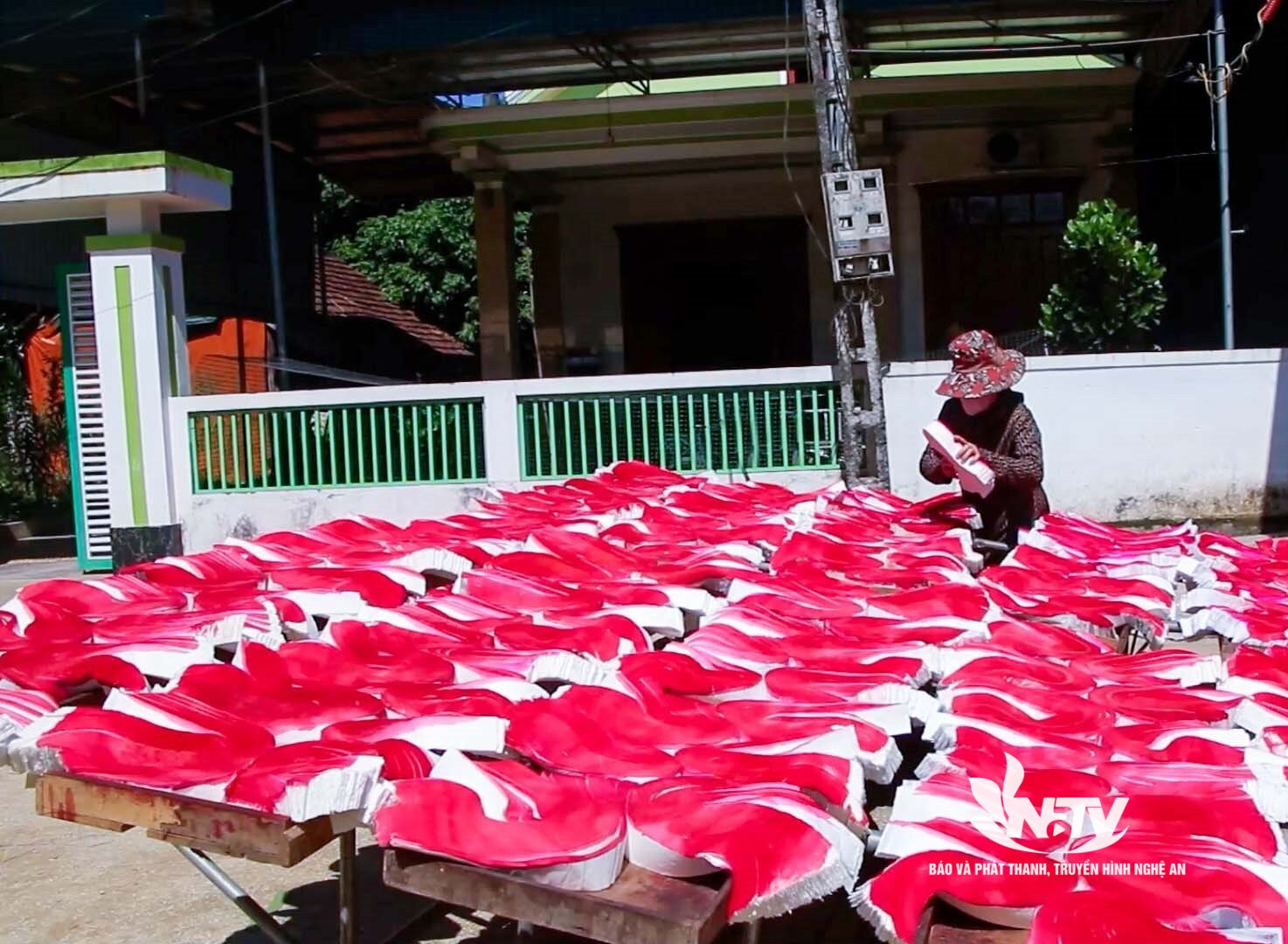
In Quy Chau commune, the incense-making industry is gradually shifting from small-scale production to a greater focus on brand building and market expansion. According to Mr. Nguyen Van Dung, Chairman of the Commune People's Committee, the locality currently has 5 recognized incense-making villages, with 45 large, medium, and small-scale production facilities. The total production capacity is estimated at approximately 90 million incense sticks per year, generating nearly 90 billion VND in revenue and creating jobs for about 300 regular workers and 500 workers during the Tet holiday season.
Mr. Dung stated that in the coming period, the commune will continue to encourage businesses to strengthen linkages, invest in machinery, improve production processes, designs, and packaging; while also focusing on brand building, developing OCOP products, and expanding distribution channels on e-commerce platforms. The locality also aims to research the possibility of forming raw material zones to ensure a stable supply for production.
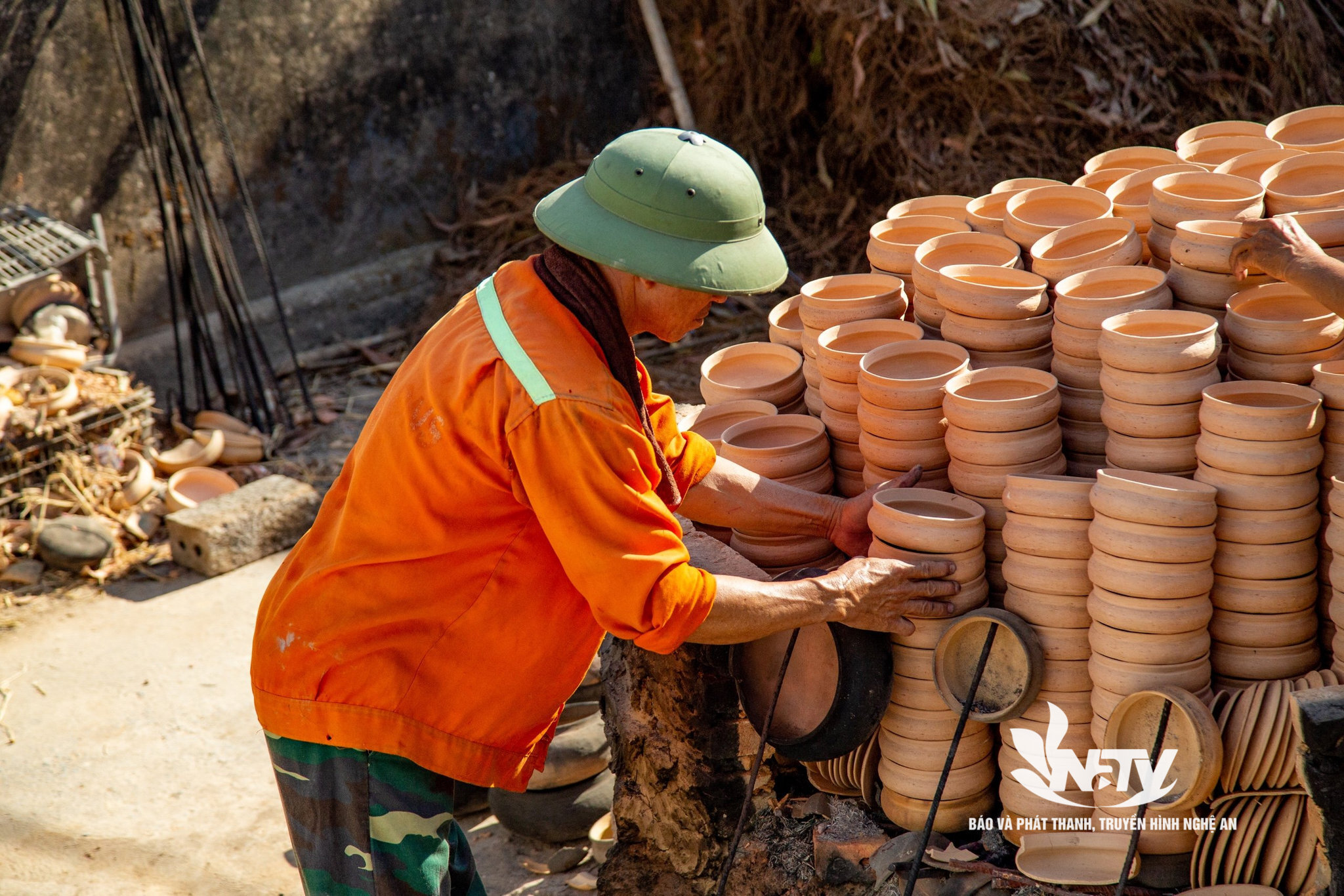
For the Tru Son pottery village, the challenge is to both maintain the traditional craft and adapt to market demands. According to Mr. Nguyen Cong Minh, Head of the Culture and Social Affairs Department of Bach Ha commune, nearly 30 households in the commune still maintain the pottery-making craft. Production peaks from September to December of the lunar calendar each year, serving the market demand during the year-end and Tet (Lunar New Year) holidays. Products from these establishments are mainly made to order, serving restaurants, hotels, and eateries. The locality is orienting the development of the craft village in conjunction with community tourism, while encouraging production households to apply science and technology and digital transformation in product promotion and consumption.
According to the Project for the Preservation and Development of Craft Villages in Nghe An Province for the period 2023-2030, the province aims to recognize at least 30 new craft villages and 3 traditional craft villages by 2030, including 4 craft villages linked to tourism; and ensure that over 80% of craft villages and traditional craft villages operate effectively. Simultaneously, the province strives to ensure that at least 90% of the workforce receives vocational training and skills upgrading; at least 1 traditional craft village and 12 craft villages have OCOP (One Commune One Product) products; 20% of craft villages have products protected by trademarks; and at least 20 cooperatives are established within craft villages. Importantly, 100% of production facilities and households within craft villages will comply with environmental protection regulations.
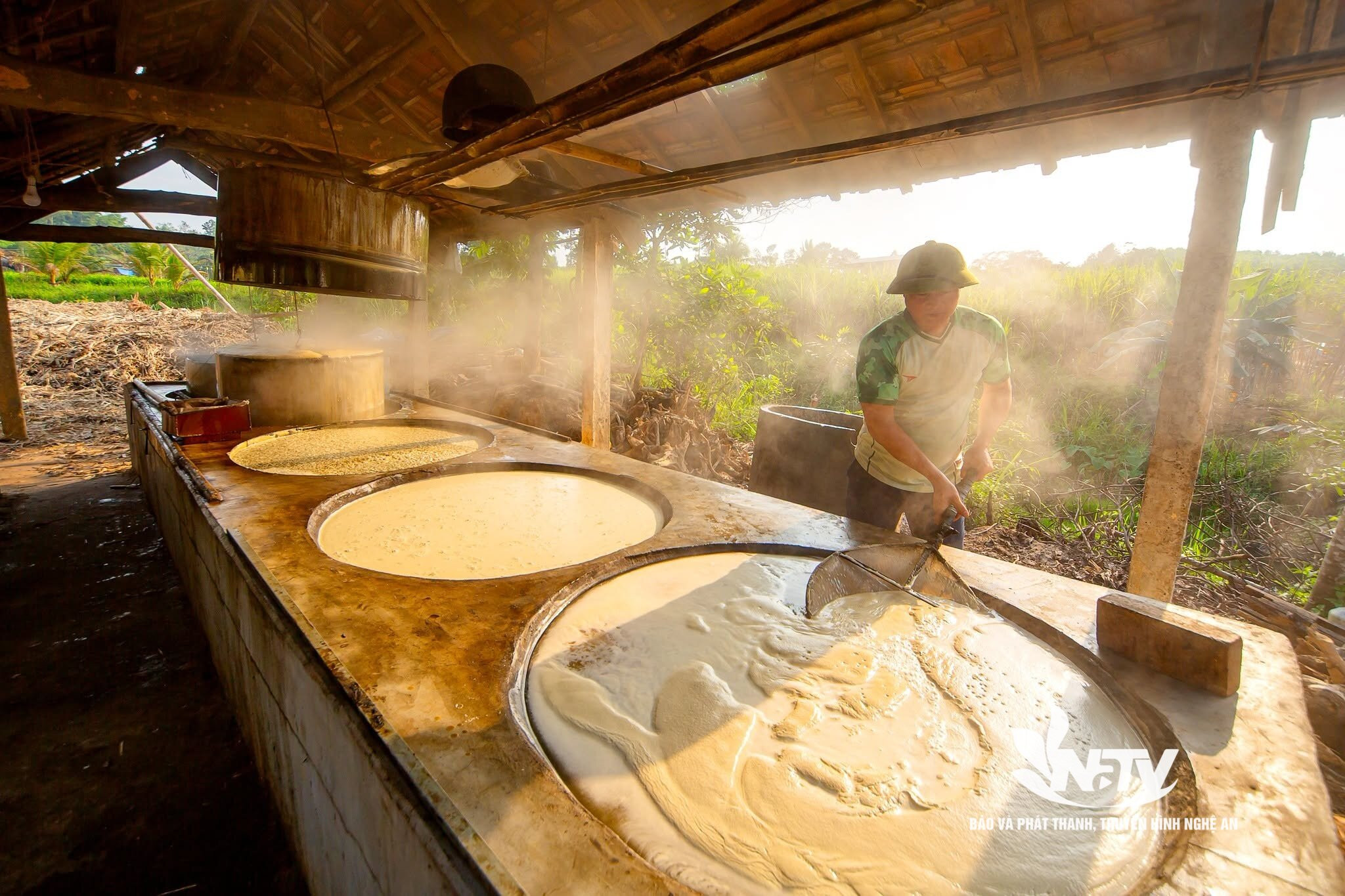
These goals require the involvement of all levels and sectors, as well as efforts from the production facilities themselves. In reality, production in many craft villages remains fragmented, mainly on a household scale; raw material sources are unstable, and linkages between facilities are limited. Some crafts lack young workers to succeed them, and brand building, design innovation, and access to modern distribution channels are uneven.
Preserving traditional crafts therefore means not only maintaining long-standing production processes but also adapting to market demands. Combining the experience of artisans with appropriate technology, strengthening production linkages, proactively promoting trade, and expanding markets will contribute to increasing product value, creating stable livelihoods, and maintaining the vitality of craft villages.
Dang Cuong