
My village is situated next to a river. Like many other villages in Vietnam, being near a river inevitably means having a dike. It's a familiar sight, a protective barrier for the village, and holds cherished childhood memories for generations.
There were times when I was so exhausted from work that I would go back and sit on the riverbank, facing the river and feeling the breeze. The wind blowing from the river caressed my face, washing away stress and worries, restoring a sense of peace and tranquility. I would lie down on the soft green grass, rest my head on my arm, and gaze at the blue sky and white clouds. A flood of memories would rush back, stirring my heart, and pure, sweet emotions would gently caress my mind.
I remember my childhood days, when my bare feet used to run, jump, and play on this very dike. The village dike was covered in wild grasses and wildflowers, which had a strong vitality, intertwining and growing lush and green. That patch of grass was the playground for the country children. That patch of grass was like a soft mattress for me to lie down and fall asleep after a game of football one afternoon.

In summer, wildflowers bloom profusely along the paths and embankments. The purple color of the wildflowers creates a gentle beauty, as if they are dressing the embankment in a new coat that is both unfamiliar and familiar. Here and there are clumps of periwinkle, tiny, delicate purple flowers the size of buttons, as humble as the beauty of a village girl. These colors instill a sense of peace in the heart.
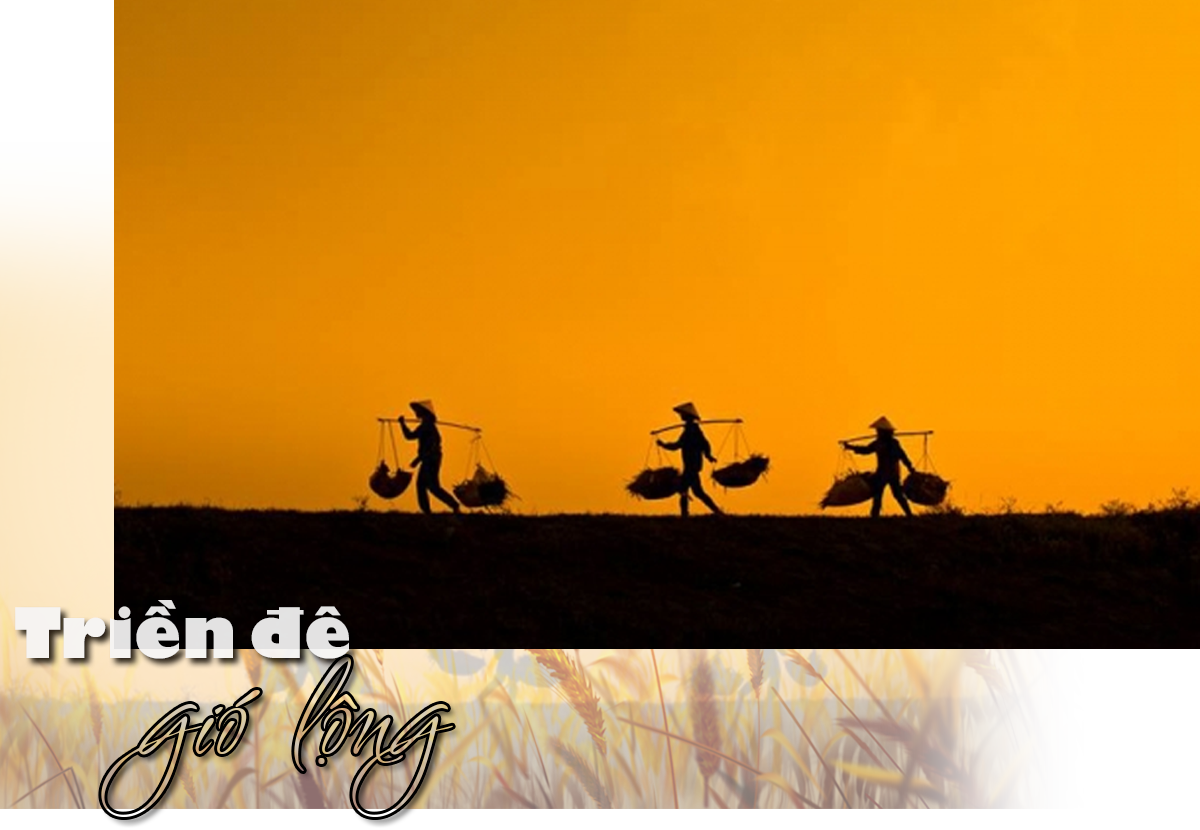
In harvest seasons of yesteryear, when agriculture relied primarily on human labor, a whole procession of people would carry bundles of rice on the dike. Seen from afar, the group moved rhythmically, the heavy bundles of rice swaying with each step. This scene filled people with joy; it was a picture of prosperity, a prosperity gradually approaching the village. As they carried the rice home, they passed through dense patches of wild grass, which clung to everyone's trousers. Wild grass was strange, so wild and vigorous, sometimes even annoying. Who knows how much time the women spent removing the grass from their trousers, but for the young women, it was the opposite; they found joy in it. Why? Because on summer nights after the harvest, the young women would meet their lovers on the dike. They would pick the wild grass clinging to their lovers' trousers, and then together they would remove the grass from the hems of their clothes. Those couples were so engrossed in gathering wildflowers that they forgot to return home late at night. Under the moonlight, they whispered sweet, tender words to each other. Weddings have taken place after such moonlit nights, and the village dike has been a witness to their love story.
I still remember the story my grandparents used to tell about the flood more than half a century ago. That historic flood forced them to move to a hillside village to escape the flood, and they settled here permanently. It was a story about the massive floods that the dike couldn't withstand. Indeed, the dike had endured countless flood seasons protecting the villagers. The village dike was a valiant shield protecting people and crops; it was a silent benefactor, and after each flood, it returned to a verdant, peaceful landscape.
There were times I sat thoughtfully on the dike, wondering how long the village dike would endure alongside the people. But then I reassured myself that the dike, with its breezy slopes, would forever remain there, gentle beside the rivers, carrying a sense of peace and tranquility, because I know that many people, like me, have fallen in love with these breezy dikes. And the dikes remain lush and green, with a gentle fragrance of grass and flowers, and the wind continues to blow away the dust of the city, dispelling the weariness of the daily struggles of the people of my beloved village…
Article by: Le Minh Hai
Illustrative image: Archival material