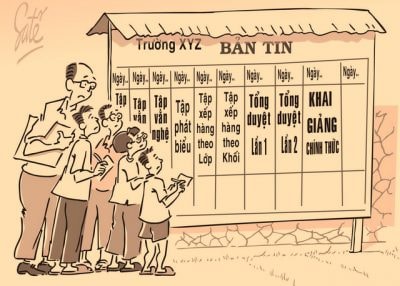

When I was very young, whenever there was an announcement, the village headman would take a metal loudspeaker, walk along the village road, and point it at each cluster of houses to make the announcement. Once, he was holding the loudspeaker and saying, "Hello, hello, tonight at 8 PM, all residents of Dong village are invited to the community hall to receive relief flour…", when a neighbor sitting inside called out, "Village headman, please come in for a cup of green tea!" As if by reflex, the village headman put the loudspeaker back up and replied, "Hello, hello, wait a minute!"
Of course, that's a somewhat amusing story from a time when "grassroots broadcasting" was still very rudimentary. Then, over time, grassroots information activities gradually developed. Later, a system of commune-level broadcasting stations was established throughout the country, providing information coverage to every corner of the population. In 2016, the Prime Minister issued Decision No. 52/2016/QD-TTg on the Regulations on Grassroots Information Activities. In November 2020, the Ministry of Information and Communications further issued Circular No. 39/2020/TT-BTTTT stipulating regulations on commune-level broadcasting stations applying information and communication technology. Thus, from the old tin loudspeakers, grassroots broadcasting has truly become a "radio station" (operating with journalistic characteristics). It's no longer a "regular" station, but a station "applying information and communication technology." This is a remarkable development from every perspective.
For a long time, local radio stations have primarily performed two tasks: firstly, delivering broadcast programs, and secondly, producing and broadcasting information to support the propaganda efforts of the local unit. People have affectionately called this system the "neighborhood loudspeaker." Recently, the story of the "neighborhood loudspeaker" has once again heated up the online community after our beloved capital city issued an order to revive it. Someone hinted at a "new official, new policy," but they're probably mistaken; as netizens say, "Perhaps not!" The "neighborhood loudspeaker" is not a "new policy"; it was born amidst the flames of war, and in reality, there has never been a time when the "neighborhood loudspeaker" was forced to "retire."
I'm not a fanatic about the "neighborhood loudspeaker," but I can't bring myself to express my gratitude to those who are rejecting and betraying it. I suddenly remember this time last year; if it weren't for the "neighborhood loudspeaker," the history of the healthcare industry would have had to dedicate its most sorrowful pages to the Covid-19 pandemic, the most horrific pandemic in human history. However, losing so much doesn't mean losing everything. From the battle against the pandemic, life has extracted so many good things. Something that every household uses, every day, but few remember to thank... is the "neighborhood loudspeaker."
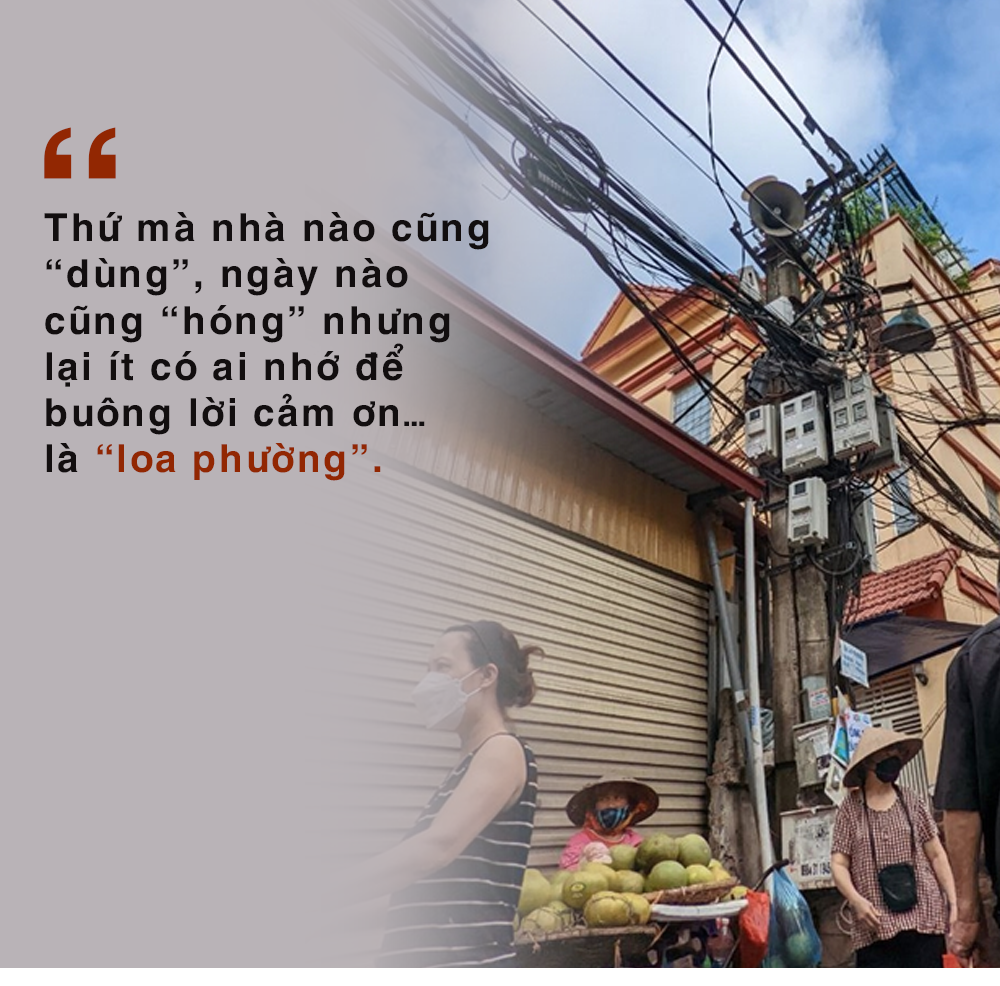
During epidemics and natural disasters, the "neighborhood loudspeaker" stands tall like a reliable and familiar fortress. No flashy jingles, no mixed male and female voices, no melodic pronouncements, yet every word emanating from the loudspeaker is valuable information. Despite its importance, the neighborhood loudspeaker has faced considerable hardship. It seems it has been repeatedly discussed and debated. There have been times when people have sighed at the proverb, "To abandon it is a pity, to keep it is a burden." A few years ago, somewhere, the neighborhood loudspeaker was mercilessly neglected, caught in a state of "unwilling to leave, unable to stay," its precarious state serving as a test of patience for those dedicated to it. The officials in charge of the commune-level broadcasting station remain "part-time," while those in charge of the village-level loudspeakers are, of course, "carrying the village's burden" throughout their terms. There was a time when social media "attacked" the neighborhood loudspeaker. There was even a hundred-episode comedy series called "Neighborhood Loudspeaker." Many opinions consider it an outdated media legacy. Some even use the so-called 4.0 revolution to attribute many absurdities to neighborhood loudspeakers. In those years, the Chairman of the Hanoi People's Committee even "directed" that "Public address systems were very effective during the subsidy period, but in the current information technology era, they have fulfilled their mission." He also emphasized: "It's very expensive. Each ward spends hundreds of millions of dong a year." Following this, a widespread and quite fierce boycott of neighborhood loudspeakers erupted... on keyboards. The crisis peaked at a meeting at the end of 2017, when the Minister of Information and Communications "concluded" that: "I agree with Hanoi's proposal to abolish urban neighborhood loudspeakers." It seems that at that time, there was "agreement from above and below" for a quiet departure. Those neighborhood loudspeakers were truly unlucky; if the administrators hadn't made a mistake back then, they would have been "buried" years ago. I once asked someone in charge of a local radio station, "What crime did the neighborhood loudspeakers commit to be mistreated?" He jokingly replied, "Their biggest crime is waking up chronic sleepers." Then he added, "Each level of broadcasting has its own specific tasks; how can you use the 'district loudspeaker' to read out announcements about pension payments for the neighborhood? It's information, not a multi-level marketing scheme!"
It must be said that many information channels are being overshadowed by social media. However, no one has yet replaced the neighborhood loudspeaker system. Yes, admittedly, the loudspeakers may not be very good, and the content may not be engaging, but the key to their effectiveness lies in their practicality. Sometimes, when faced with a task requiring "information enforcement," the loudspeaker system is the only option. A Google search for "neighborhood loudspeaker" yields 14,600,000 results; it turns out "neighborhood loudspeaker" is still a useful keyword to search in everyday life.
Many people wonder why Western countries don't have loudspeakers? Well, it's simply because they are Western countries! They prefer bread with butter to pickled eggplant and gourd soup! Just as during wartime, Western countries used tanks, firepower, and even Agent Orange, while we chose guerrilla warfare. Each country, each community, and even each family has its own unique characteristics. When cultural spaces, social psychology, and economic potential differ, it's not necessary to choose the same methods. Differences shouldn't be used to create hierarchy.
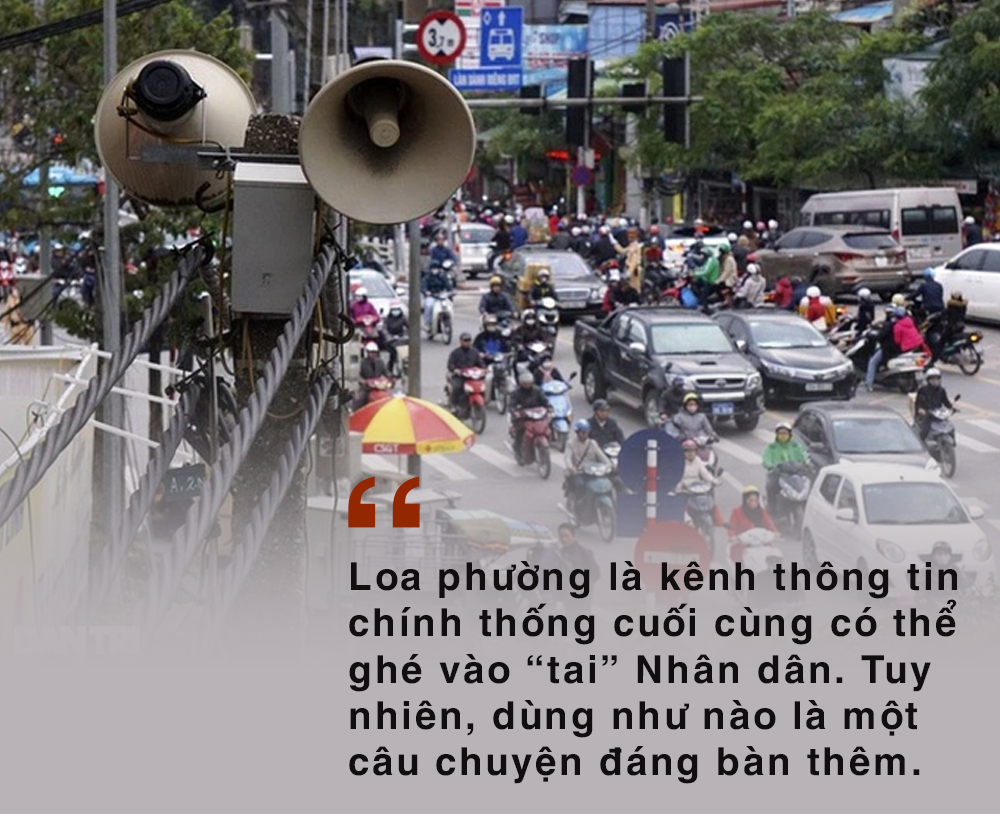
The neighborhood loudspeaker system remains a vital informational platform, providing significant benefits. It's the last remaining official channel of information that can reach the people's ears. However, how to use it effectively is a topic worth discussing further. Perhaps it should be limited to providing information directly relevant to the daily lives of the people in its designated areas. Advertisements, music, and cultural performances are perhaps more suited to television and radio than the loudspeaker system. These more significant tasks should be left to other mass media outlets. The loudspeaker system is innocent; its usefulness or harmfulness depends on how we utilize it.
Illustrative image: Archival material