

10 places bearing the mark of President Ho Chi Minh
(Baonghean.vn) - On the occasion of President Ho Chi Minh's birthday on May 19th, what could be more exciting than visiting 10 locations across the country that once bore the imprint of his image?
1.Sen Village - President Ho Chi Minh's ancestral home:
Sen Village, whose official name is Kim Lien (Golden Lotus), is nestled behind a green bamboo hedge. Behind it stands the simple, rustic five-room thatched house of the family of Nguyen Sinh Sac, the father of President Ho Chi Minh. In the Tan Suu (1901) imperial examination, Nguyen Sinh Sac passed with the rank of Pho Bang (Associate Scholar). Following local custom and the wishes of the villagers, he and his children left Chua Village (Hoang Tru) to live in Sen Village, his ancestral home. This house was built by the villagers using public funds to celebrate the achievement of the Pho Bang. All the trees in the garden were also planted by the villagers.
 |
| Teachers and students from Hung Chinh Kindergarten (Vinh City) visit Lang Sen, President Ho Chi Minh's birthplace. Photo: Thanh Cuong |
At Sen Village, visitors can admire the typical Vietnamese countryside while also witnessing sacred relics associated with President Ho Chi Minh, the beloved father of the Vietnamese nation and a world-renowned figure.
2. Hoang Tru Village - President Ho Chi Minh's maternal hometown
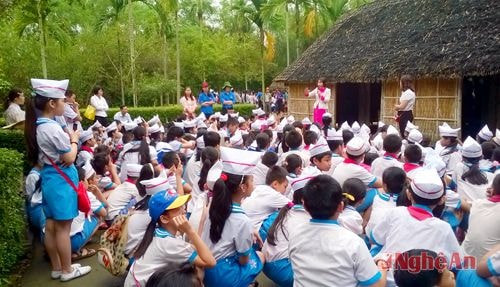 |
| The children were moved to hear stories about Uncle Ho's childhood days in Hoang Tru village, his maternal hometown. |
Hoang Tru village is about 2 km from Kim Lien village, both belonging to Kim Lien commune, Nam Dan district, Nghe An province; about 15 km west of Vinh city. This is where the Hoang Tru historical site is located, the birthplace of President Ho Chi Minh. It is also the place associated with his childhood years and the touching story of his parents.
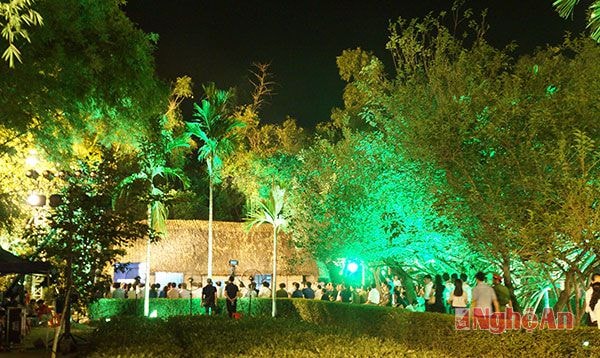 |
| Hoang Tru historical site complex |
The Hoang Tru historical site complex includes: the house of Mr. Hoang Duong and Mrs. Nguyen Thi Kep – President Ho Chi Minh's maternal grandparents; the ancestral temple of the Hoang Xuan branch of the family; and the house of Mr. Nguyen Sinh Sac and Mrs. Hoang Thi Loan – President Ho Chi Minh's parents. The Hoang Tru historical site complex covers an area of 7 Central Vietnamese sao (approximately 3,500 m2), bearing the distinct mark of a Vietnamese rural village.
2. The trading port – Where Uncle Ho began his life of earning a living.
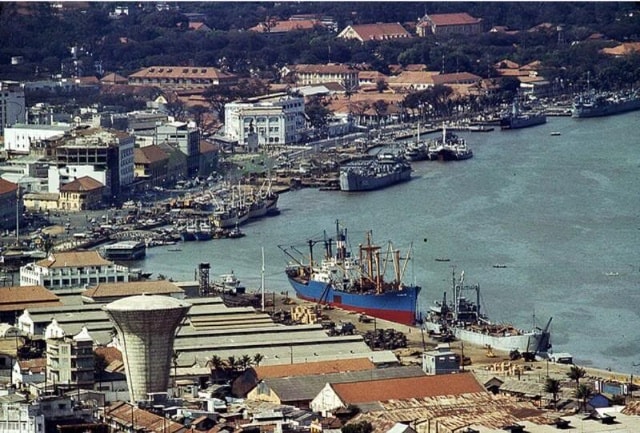 |
| The old Saigon port. |
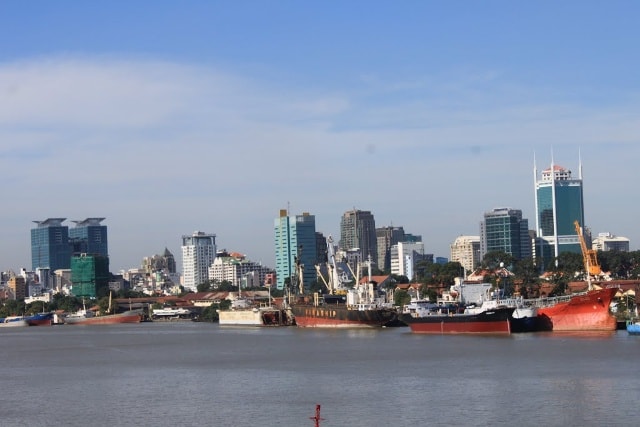 |
| ...has become the modern Saigon port of today. |
This is where the young Nguyen Tat Thanh sold newspapers daily to earn a living and learn about the lives of workers and laborers in the months before he left to find a way to save the country. The port, renamed Saigon Port in 1975, was formerly a large port complex including the Ham Nghi, Nha Rong, Khanh Hoi areas and the fish market.
4. The house where Uncle Ho once lived in Saigon
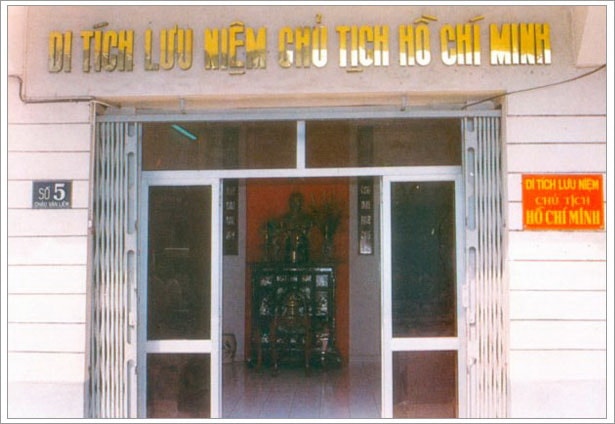 |
| The facade of house number 5 Chau Van Liem. |
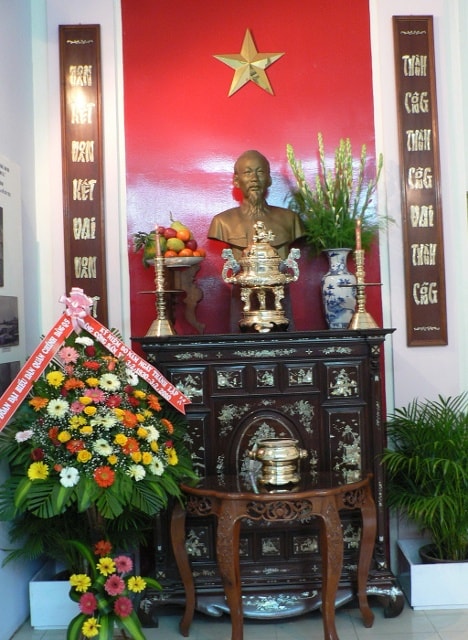 |
| and the altar dedicated to Uncle Ho is here. |
That's the house at 5 Chau Van Liem Street (Ward 14, District 5, Ho Chi Minh City) – where young Nguyen Tat Thanh stayed for nine months before leaving to find a way to save the country. The house has been recognized as a historical and cultural relic and is now a popular tourist destination.
5. Nha Rong Wharf - The place where Uncle Ho departed to find a way to save the country.
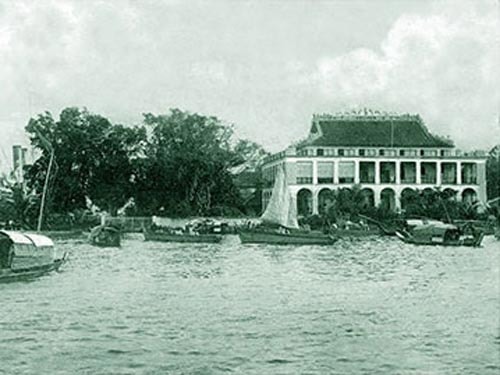 |
| The old Nha Rong Wharf... |
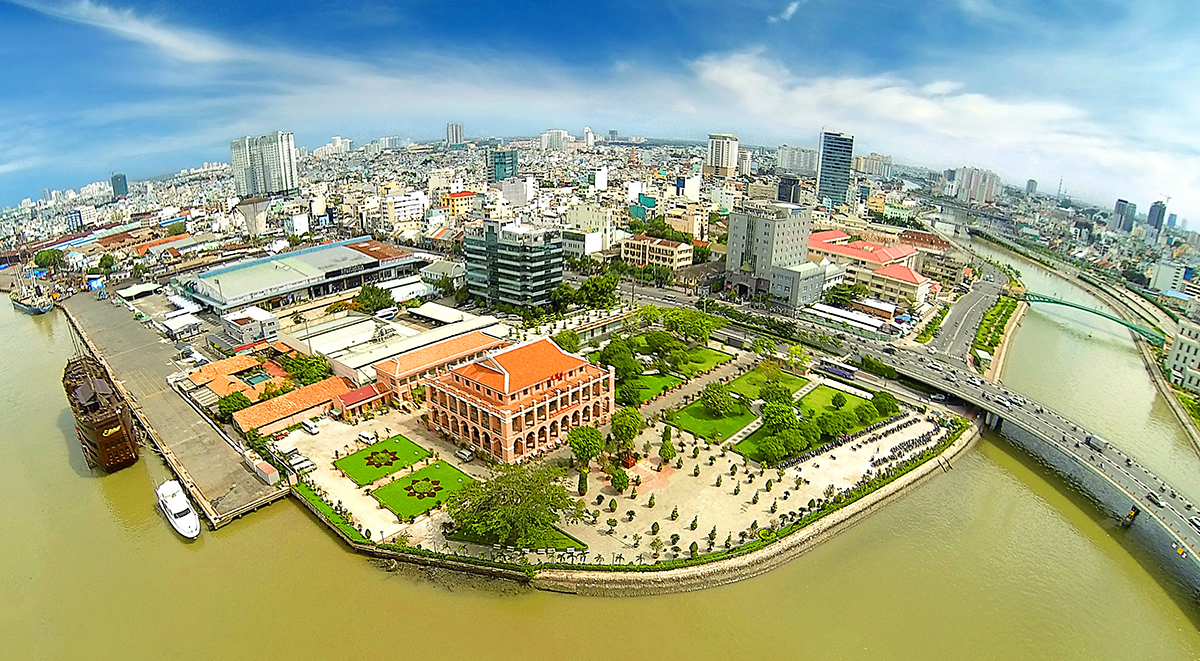 |
| Nha Rong Wharf today. |
This is undoubtedly the first place you should visit if you want to relive the memory of where Uncle Ho departed from the Latouche-Tréville ship to seek a path to national salvation. Nha Rong Wharf, now known as the Ho Chi Minh Museum, houses many artifacts related to Uncle Ho and marks the beginning of the patriotic young man Nguyen Tat Thanh's aspiration to save the country.
6. Pac Bo Special National Historical Site
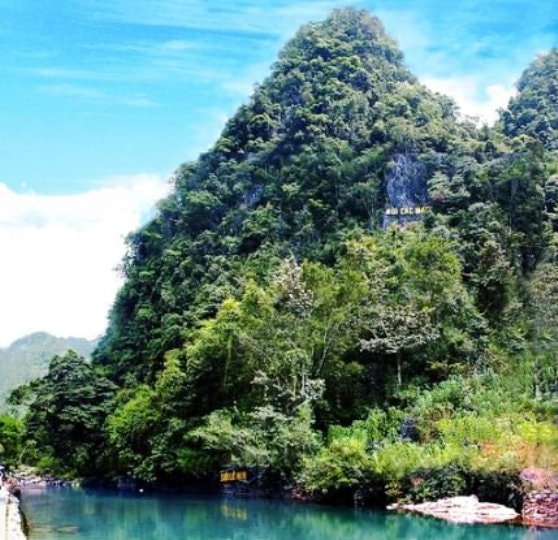 |
| Lenin Stream |
Pac Bo, located in Truong Ha commune, Ha Quang district, lies near the Vietnam-China border, more than 50km from Cao Bang city. After 30 years abroad searching for a way to save the country and engaging in revolutionary activities, on January 28, 1941, leader Nguyen Ai Quoc returned to his homeland via border marker 108. He chose Pac Bo as his residence and revolutionary base for many years during the period of 1941-1945. Here, leader Nguyen Ai Quoc opened political and military training classes for revolutionary cadres in Cao Bang province, translated the book "History of the Communist Party of the Soviet Union" into Vietnamese, and compiled and published revolutionary documents: "History of Our Country," "Geography of Northern Vietnam," "Geography of Cao Bang"; and military training materials: "Guerrilla Warfare Techniques," "Experiences of Russian Guerrilla Warfare," "Experiences of Chinese Guerrilla Warfare," etc.
7. The house at 48 Hang Ngang Street - Where Uncle Ho wrote the Declaration of Independence
For many years, the house at 48 Hang Ngang Street, where President Ho Chi Minh wrote the Declaration of Independence, giving birth to the Democratic Republic of Vietnam on September 2, 1945, has become one of the typical historical sites related to President Ho Chi Minh.
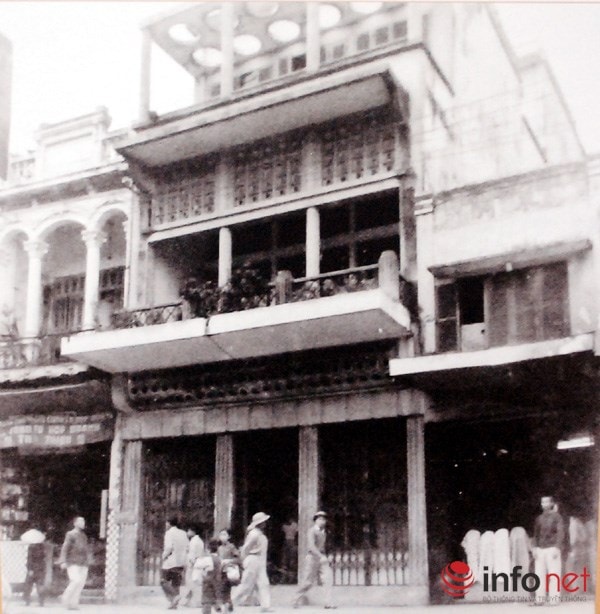 |
| The house at 48 Hang Ngang Street in the past. |
President Ho Chi Minh stayed at 48 Hang Ngang Street from August 25, 1945, to September 2, 1945. Here, he wrote the Declaration of Independence, giving birth to the Democratic Republic of Vietnam, the first people's democratic state in Southeast Asia. This is a historical event of immense significance, marking a turning point in the history of the Vietnamese nation.
Since 1970, the house at 48 Hang Ngang Street has been dedicated to commemorating President Ho Chi Minh. In 1979, the house was classified as a national historical monument by the Ministry of Culture and Information.
Currently, the house preserves many simple images and mementos of President Ho Chi Minh. The house at 48 Hang Ngang Street, Hoan Kiem District, Hanoi, is located in the bustling Old Quarter, with a back entrance leading to 35 Hang Can Street.
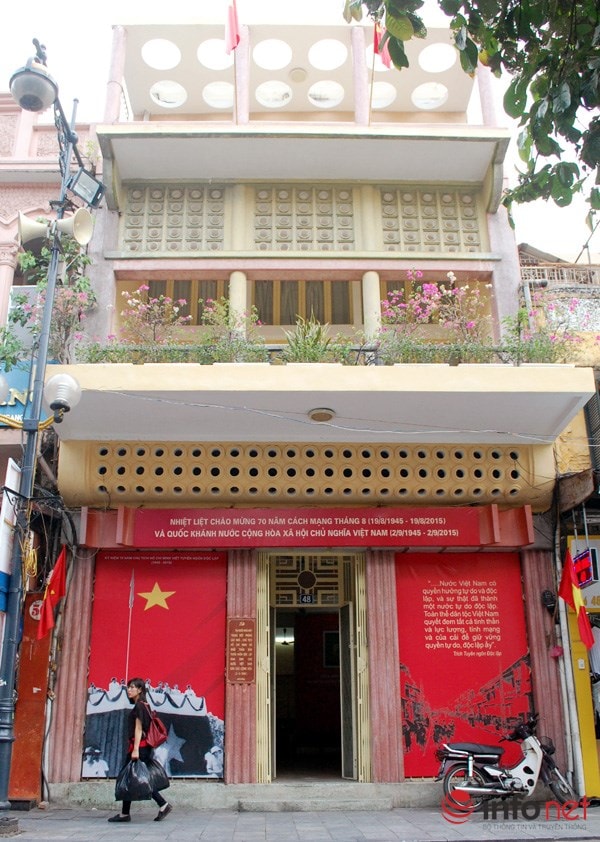 |
| The house at 48 Hang Ngang Street has now become a national historical monument. |
8. President Ho Chi Minh's stilt house in Hanoi
As one of Hanoi's culturally significant and historically rich tourist attractions, President Ho Chi Minh's stilt house is where he lived and worked for the longest period during his revolutionary career.
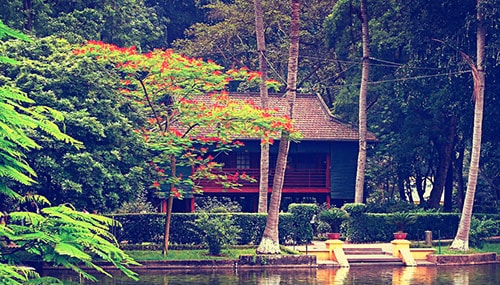 |
| President Ho Chi Minh's stilt house in Hanoi. |
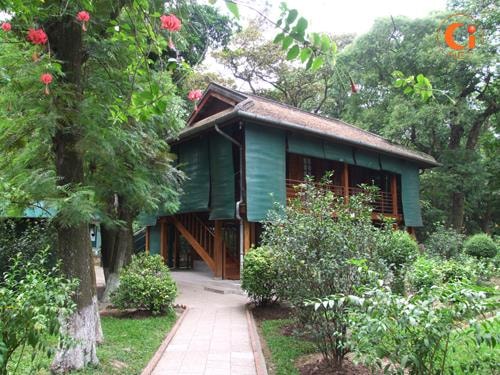 |
| The historical site was also where President Ho Chi Minh held receptions for international delegations and met with representatives of the Vietnamese people during his lifetime. |
Today, President Ho Chi Minh's stilt house is considered a destination for many domestic and international tourists, but perhaps most importantly, it is President Ho Chi Minh's spirit and love that have transformed this place from just a tourist spot into a journey back to memory, back to the old era of a man wholeheartedly devoted to his people and country. President Ho Chi Minh's stilt house is a historical relic located within the grounds of the Ho Chi Minh Mausoleum in Hanoi. The house is 10.5 meters long and 6.2 meters wide. It has two floors. The upper floor consists of two rooms. The lower floor is mainly used for receiving guests.
9. Ho Chi Minh Mausoleum
The Ho Chi Minh Mausoleum, also known as the Ho Chi Minh Mausoleum or Uncle Ho Mausoleum, is the resting place of President Ho Chi Minh. Construction of the Ho Chi Minh Mausoleum officially began on September 2, 1973, on the site of the former ceremonial platform in Ba Dinh Square, where he had previously presided over large rallies.
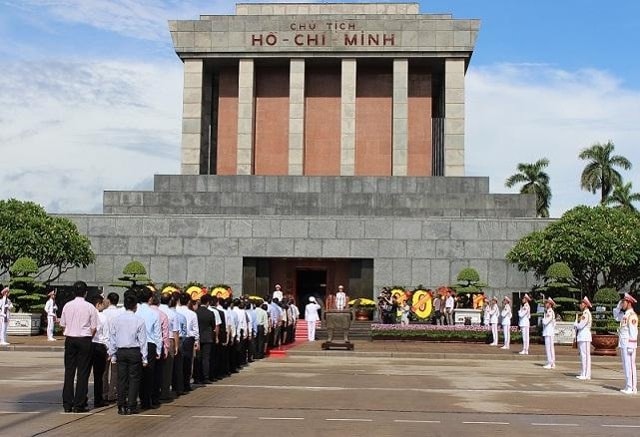 |
| Hundreds of thousands of visitors come to visit Ho Chi Minh Mausoleum every day during its opening hours. |
 |
| During holidays, Ho Chi Minh Mausoleum is especially beautiful. |
The mausoleum was inaugurated on August 29, 1975. It consists of three layers, reaching a height of 21.6 meters. The lower layer is designed as a three-tiered platform, while the middle layer is the central structure, comprising the embalming chamber and surrounding corridors and staircases. All four sides are lined with square granite columns, and the top layer features a three-tiered roof. The main facade bears the inscription: "President Ho Chi Minh" in plum-colored pink stone. In his will, Ho Chi Minh wished to be cremated and have his ashes placed in three regions of the country. However, the Politburo of the Central Committee of the Communist Party of Vietnam, 3rd term, citing "the wishes and sentiments of the people," decided to preserve Ho Chi Minh's remains for the long term so that people throughout the country, especially those in the South, and international visitors could later pay their respects.
10. Ho Chi Minh Square in Nghe An
The Ho Chi Minh Monument and Ho Chi Minh Square are located in Truong Thi Ward, bordered to the north by Ho Tung Mau Street, to the east by Truong Thi Street, and to the south by Tran Phu Street (National Highway 1A).The statue of President Ho Chi Minh is modeled after an image of Uncle Ho visiting his hometown. The statue's face is turned towards the northeast, following the direction of natural light, enhancing its majestic and imposing appearance and clearly depicting Uncle Ho's figure: his gait, facial expression, and gaze...
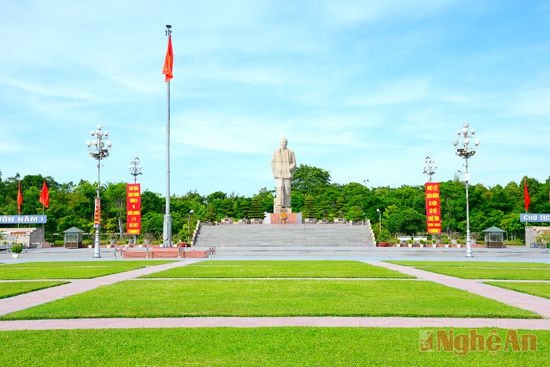
The Ho Chi Minh Monument and Ho Chi Minh Square have become an important cultural landmark, attracting an increasing number of city residents, tourists from within the province, across the country, and around the world to gather around him for sightseeing, recreation, and festivals.
Thanh Thuy
(synthetic)