

Ngư Island - The jewel of the seaside town
(Baonghean) - Ngư Island, also known as Song Ngư, is formed from two large mountains facing the sea. The highest peak is about 133m high, while the other is smaller at about 88m, hence the name Ngư Island (Fish Island) from ancient times. With an area of only 2.5 km2, Ngư Island serves as a wave barrier for the Cửa Lò tourist area and is also an attractive tourist destination.
(Baonghean) - Ngư Island, also known as Song Ngư, is formed from two large mountains facing the sea. The highest peak is about 133m high, while the other is smaller at about 88m, hence the name Ngư Island (Fish Island) from ancient times. With an area of only 2.5 km2, Ngư Island serves as a wave barrier for the Cửa Lò tourist area and is also an attractive tourist destination.
Visitors to the island pay particular attention to the Ngư Pagoda, built during the Trần Dynasty nearly 700 years ago and considered the most sacred temple here. Located between the Cửa Lò and Cửa Hội trade routes, merchants traveling between these areas traditionally stopped here to offer incense and pray for good fortune. The Ngư Pagoda consists of three parts: the upper pagoda, the lower pagoda, and the pagoda garden. Besides worshipping the Buddha, the pagoda also houses a shrine to a talented general from the Trần Dynasty, Sát Hải Đại Vương Hoàng Tá Thốn. Legend says that he was a skilled general with many glorious victories, so the people requested permission from the king to worship him here in remembrance of his contributions.
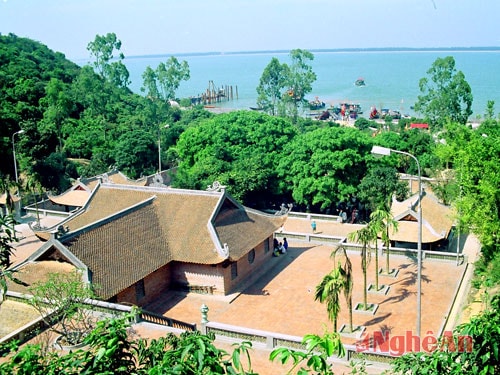 |
| Song Ngu Pagoda. Photo: Cong Sang. |
The pagoda has a simple architectural style, with carved patterns adhering to the design of other pagodas in Vietnam. It has three sections covered with yin-yang tiles; the lower beams are carved with the four mythical creatures (dragon, unicorn, tortoise, phoenix), which are very beautiful and sacred. The pagoda garden has many naturally growing trees such as banyan, fig, and fig trees. There are currently two ancient fig trees and a freshwater well called the Jade Well. The courtyard has two banyan trees approximately 700 years old. The garden space is very airy and cool with the shade of large green trees. Here, you will find inner peace. Visiting the pagoda and respectfully offering incense, tourists feel immersed in the legendary atmosphere of more than seven centuries ago. Surely, when leaving Ngư Island, visitors will still cherish the solemn and sacred atmosphere of the pagoda and this heroic land.
The island is home to a wide variety of wildlife such as weasels, monitor lizards, goats, and monkeys, along with many valuable seafood species, especially the "specialty" dragon snail. Located on the outer edge, Ngư Island enhances the picturesque beauty of Cửa Lò beach. The year-round blue of the sea stretches far into the distance, meeting the reddish-brown hues of the island's cliffs in the clear morning sky. The island also provides shelter for small fishing boats during storms.
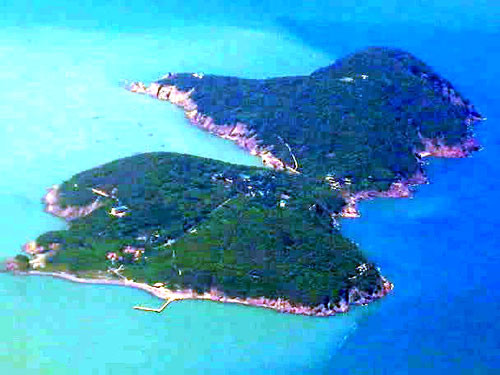 |
Ngư Island viewed from above.
After visiting the temple and admiring the island scenery, tourists can go hiking, take boat trips around the island, visit the grouper fish farm on Ngư Island; and have the opportunity to go to Ngư Island beach with its clear waters… All of this will melt away the fatigue after exploring the island.
TB (Summary)