(Baonghean.vn) – Vietnam's seas and islands are beautiful and rich. Besides oil fields, methane hydrate deposits, and other resources, the sea also has abundant seafood – a source of income for our fishermen. Visiting Truong Sa and participating in a night fishing trip on the ship HQ 996, we clearly felt this.
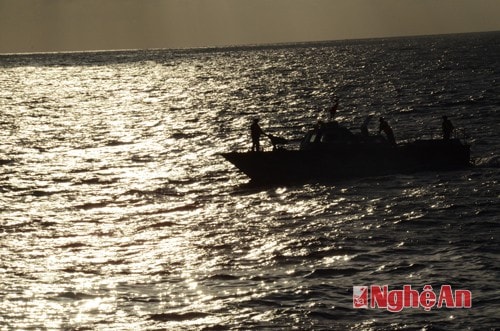 |
| As the sun begins to set over the vast expanse of the East Sea, the nocturnal fishing life begins. |
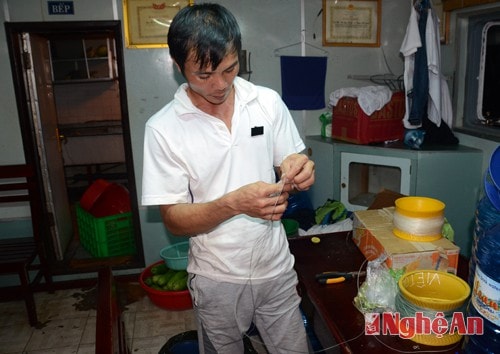 |
| The ship HQ 996 is anchored outside the waters surrounding the submerged and above-water islands of the Spratly Archipelago. Seafood around the coral reefs of the submerged islands is usually more diverse and abundant... Inside the boat, the crew prepares fishing lines. |
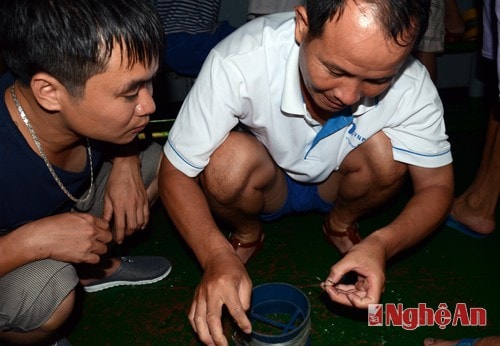 |
| Fishing in the South China Sea doesn't require a fishing rod, but rather strong fishing lines and sharp, sturdy hooks, because it's quite possible to catch fish weighing 50-60 kg. |
 |
| To catch small fish, sea anglers need to prepare live shrimp as bait. For catching larger fish, smaller fish are used as bait. |
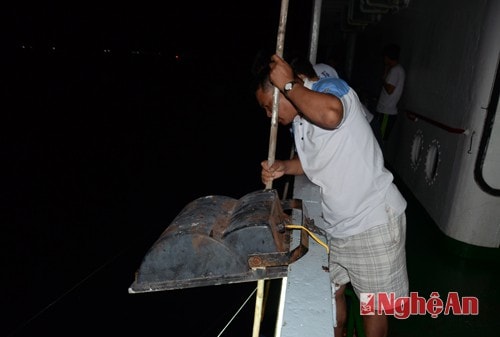 |
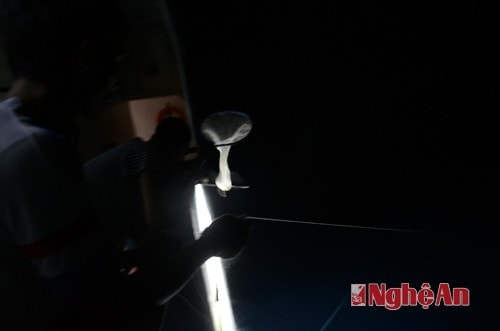
| With no prawns available, the crew used spotlights to shine down on the water to attract small fish. |
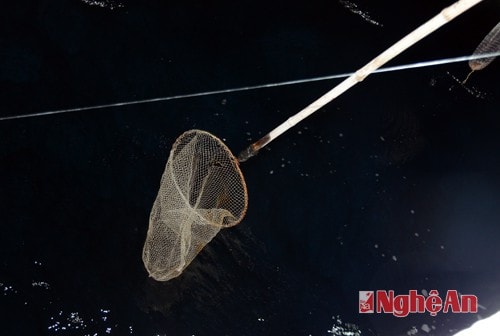 |
| Then, use a long-handled net to catch these small fish. However, this is not an easy task. |
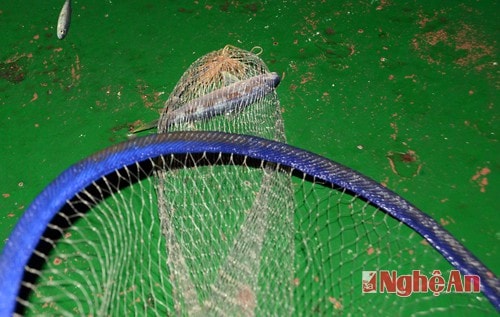 |
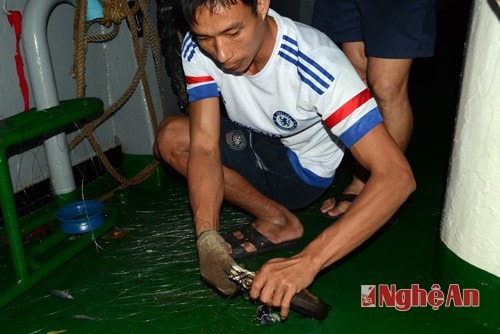
| A small flying fish has been caught in the net. |
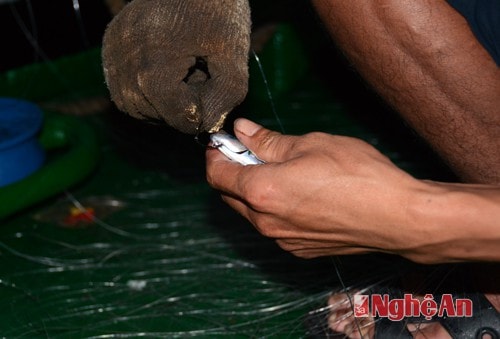 |
| Flying fish are a favorite among anglers because they are an ideal bait for catching larger fish. |
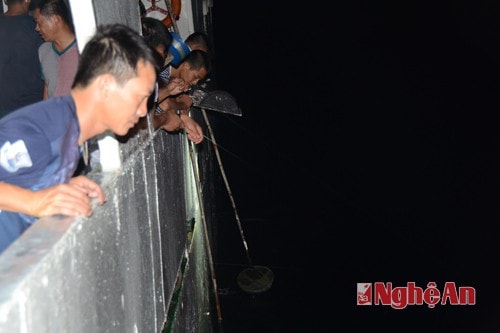 |
| The South China Sea has many currents; even in calm, waveless areas, the currents are very strong, requiring heavy sinkers and long fishing lines. Because there are no floats, anglers need to concentrate intensely to know if a fish has bitten the bait and is hooked. |
 |
| A ghost fish took the bait and hooked the hook. |
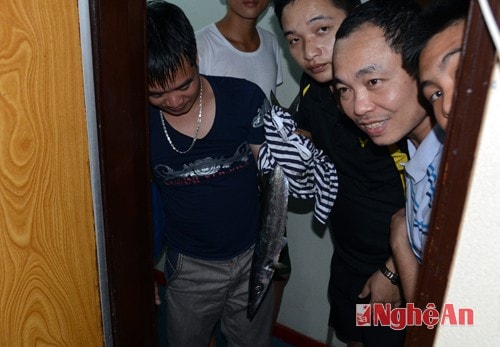 |
| A cook on the HQ 996 caught a small tuna. This is a delicious fish. The best fish, however, are the armored catfish and the grouper. |
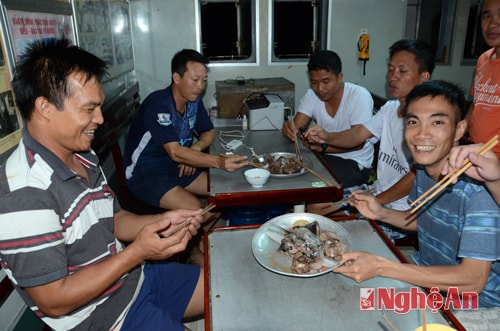 |
| Fishing on board the HQ 996 during its journey to Truong Sa is not only for recreation but also to improve meals. |
Thanh Son

