
Cô sinh viên bán đồ sida kiếm 50 triệu/tháng
Một chiếc áo sơ mi 100.000-150.000 đồng, váy chưa đến 200.000 đồng hay áo khoác dạ cũng chỉ 250.000-350.000 đồng,... mỗi ngày bán cả trăm chiếc như vậy, cô sinh viên kinh doanh hàng thùng kiếm 40-50 triệu đồng/tháng.
Một chiếc áo sơ mi 100.000-150.000 đồng, váy chưa đến 200.000 đồng hay áo khoác dạ cũng chỉ 250.000-350.000 đồng,... mỗi ngày bán cả trăm chiếc như vậy, cô sinh viên kinh doanh hàng thùng kiếm 40-50 triệu đồng/tháng.
European designer brands cost... just a few tens of thousands.
After graduating from high school, with skillful hands and a passion for painting, Nguyen Thu Trang (born in 1993) passed the entrance exam to Hanoi University of Industrial Fine Arts with a high score. Even as a student, Trang made a firm resolution: she had to earn her own money to cover her personal expenses.
Seeing many students selling clothes and phone accessories, earning a profit of 3-4 million VND per month, Trang was also tempted. But with the personality of an art student, she didn't want to follow in the footsteps of others.
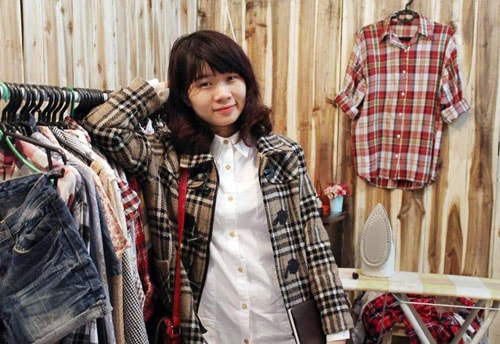 |
| This college student in her 20s is passionate about selling secondhand clothes. |
During a chance visit to Dong Tac Market (Kim Lien, Hanoi), Trang was overwhelmed by the uniqueness and vibrant colors of the used goods (or second-hand items, vintage items). From clothes, shoes, and bags to stuffed animals and beauty accessories, everything was displayed in abundance, with a wide variety of designs. Even more surprisingly, the prices were quite cheap, only about one-tenth the price of new items.
What's special is that each item is one-of-a-kind, so you don't have to worry about wearing the same thing as someone else. With clever styling, you can create many eye-catching outfits, all for less than the price of a brand new shirt or pair of pants bought from a store.
In particular, thanks to her keen eye for aesthetics and knack for choosing, Trang discovered that among the seemingly discarded items were a considerable number of high-end "designer" goods with well-known labels like Mango, Zara, H&M, etc., originating from Europe, Korea, Japan, or at the very least, domestically produced in China. There were even woolen coats that were entirely hand-stitched, exquisitely beautiful, and brand new, which would cost several million dong in shops.
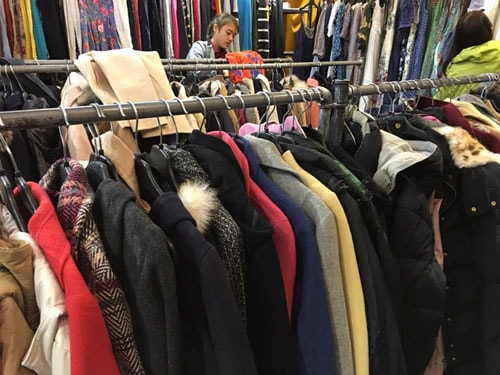 |
| Each day, the store can sell hundreds of shirts of all kinds, and winter coats priced from 200,000 to 300,000 VND. |
From a 20m2 rented room to a famous store.
The spirited student started thinking about business. From afternoons spent meticulously collecting and examining each shirt and dress, gathering them into large sacks, Trang would transport them back to her rented room on her rickety mini-bicycle, carefully sorting them.
She hires someone to wash, iron, and smooth out her secondhand clothes before photographing them and selling them on Facebook. The average price is 100,000-150,000 VND per item, with coats ranging from 200,000-300,000 VND each – quite reasonable for students and those with low incomes. Even those with more money but a love for unique items seek Trang out.
With the profits she earned from her cramped 20-square-meter rented room, Trang saved enough money to rent two houses in the student-filled Lang Street area to open a shop. Thanks to the spacious premises, she imported and displayed more models, and her customer base increased accordingly. She not only sold to customers in Hanoi but also to customers throughout the provinces and cities.
Trang honestly shared: "I've poured all my heart and soul into these items, working passionately and seriously. I don't just buy large quantities of pre-packaged clothes like other places; I meticulously select each item myself, ensuring that even though they're used, they're still of good quality."
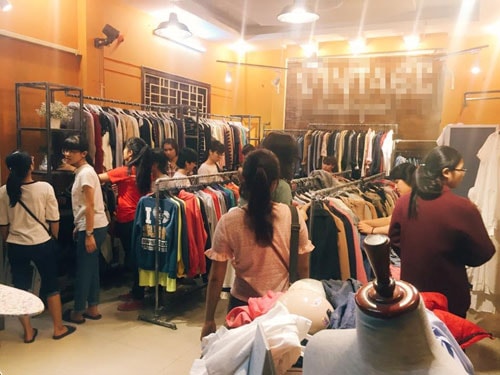 |
| Trang's shop is always crowded with customers. |
The biggest difference lies in the effort and time invested. After carefully washing and ironing the products, Trang even hires models to photograph them. "Not only must the price be reasonable, but the item must also be worth the money the buyer pays to ensure customer satisfaction," she says.
The first difficulty Trang faced when starting her business was her family's opposition. She recounted, "My parents didn't like the idea of me going into business because the family was financially capable of supporting my education, but I was so passionate about it that I decided to see it through. After a year of proving myself, my family understood and sympathized. My whole family even came down to Hanoi to help me."
The demanding business schedule, coupled with schoolwork, caused Trang to lose nearly 5 kilograms and constantly suffer from sleep deprivation. Fortunately, she always had the encouragement and support of friends and a large number of regular customers, which helped her regain her spirits.
Currently, with two locations and nearly 20 employees, Trang's shop serves an average of 100-200 customers per day, generating a profit of up to 50 million VND per month. After deducting all expenses, Trang can cover her tuition and personal living costs, with any surplus saved or used for family purchases.
According to Vietnamnet.vn
| RELATED NEWS |
|---|