(Baonghean.vn) - After many years of collecting, researching, and studying ancient coins, Mr. Nguyen Duc Vuong, currently an art teacher at Pha Danh Primary School in Ky Son district (Nghe An province), owns thousands of ancient coins that once circulated in Vietnam. Notably, among them are quite a few rare coins.
 |
| Starting his collecting hobby in the 8th grade, after 18 years, Nguyen Duc Vuong has amassed a collection of ancient coins from Vietnam, China, Japan, and France that have circulated in the country from over 2,000 years BC to the present day. A small part of Vuong's enormous coin collection. Photo: Nguyen Duc Vuong |
 |
| Mr. Vuong currently owns almost a complete collection of ancient Vietnamese coins from various periods, from the Dinh Dynasty (970-980) with the "Thai Binh Hung Bao" coin – the first coin minted and circulated by the Vietnamese – to the time of the last emperor of the Nguyen Dynasty, Bao Dai (1925-1845), with the "Bao Dai Thong Bao" coin, during the Democratic Republic of Vietnam. The photo shows a part of his collection of ancient Vietnamese coins from different eras. |
 |
| Mr. Vuong introduces his collection of antique coins. |
 |
| The "Thai Binh Hung Bao" coin – the first Vietnamese coin minted and circulated by King Dinh Tien Hoang after Vietnam gained independence. This coin helped end the monopoly of Chinese currency in the Vietnamese monetary market. From then on, subsequent dynasties minted coins bearing their own reign names for use. |
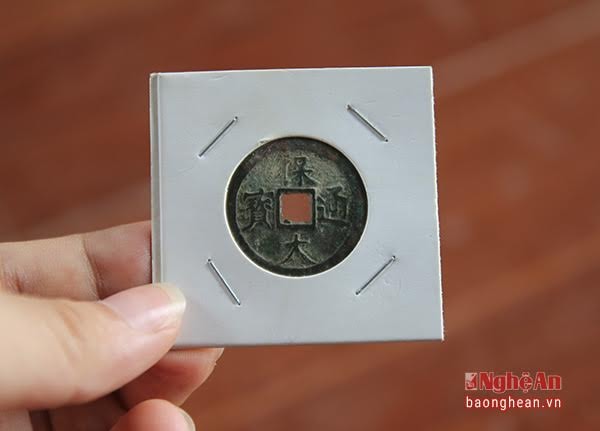 |
| The "Bao Dai Thong Bao" coin was issued during the last reign of the Nguyen dynasty under Emperor Bao Dai (1825-1845). |
 |
| Because there were quite a large number of ancient coins, Mr. Vuong put them into individual jars for safekeeping. It is known that jars containing coins that remain intact are quite rare, as people often break them open to search for valuable items when they find ancient jars. |
 |
| A jar containing ancient coins remains after its outer layer of pottery was broken. Mr. Vuong said that to acquire his current collection of ancient coins, he has put in a lot of effort and money. Some of the ancient Vietnamese coins he had to ask people to travel all the way to China to buy. He was even willing to spend tens of millions of dong to acquire some of them. Photo: Nguyen Duc Vuong |
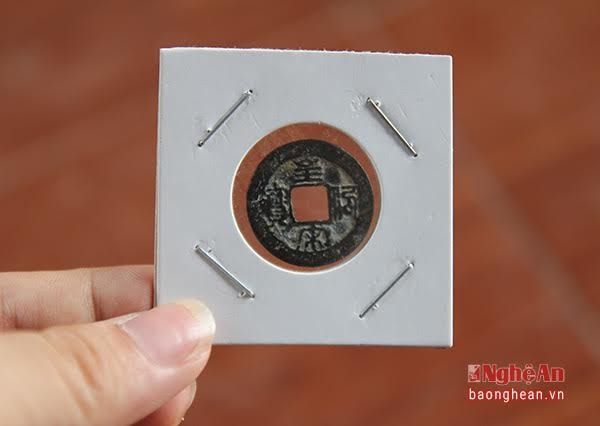 |
| Currently, Mr. Vuong owns more than 30 rare Vietnamese and Chinese coins that have never been documented in books. The photo shows a Vietnamese coin called "Hoang Tong Hieu Bao," which is not documented in any books and has only been recorded in Japanese books on ancient coins. |
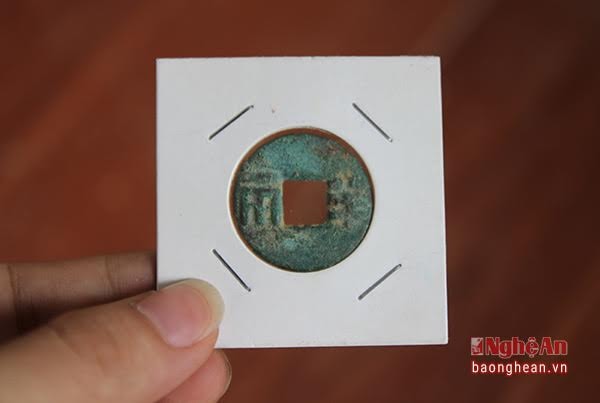 |
| The Ban Liang coin of the Qin Dynasty in China was minted by Qin Shi Huang (King Huiwen of Qin) in the second year of his reign – 336 BC. This was the first coin of China. |
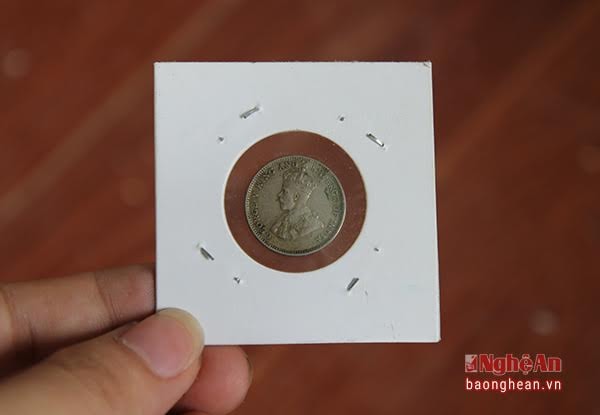 |
| The Hong Kong First Coin, minted in 1905 by the Qing Dynasty, is the last coin of the feudal Chinese dynasty. The obverse features a portrait of King Edward VII, King & Emperor. |
 |
| During the French colonial period, Vietnam used the "Bách phân chi nhất" (card currency) issued in 1885, which featured the symbol of the Statue of Liberty. |
 |
| The Piastre coin issued in 1926 features the Statue of Liberty and the inscription "French Republic" (République Francaise). Piastre coins issued in 1900 are highly valuable because they were a trial print and are therefore rare; they were also the last French coins printed in Vietnam. |
 |
| The Japanese "Tenpo Tōbao" coin once circulated in Vietnam. This is evidence of a period of trade between Vietnam and Japan. |
Chu Thanh

