

5 places on Earth where no human footprints have ever been found.
These are all places that have retained their pristine beauty, untouched by any trace of human presence.
Tepui, the "cloud table" mountain in Venezuela.
Its name means a tall, majestic mountain range that rises above the clouds. The Tepui are flat mountain ranges found in the Guayana highlands of South America, particularly in Venezuela. In the language of the Pemón people living in Gran Sabana, "tepui" means "house of the gods".
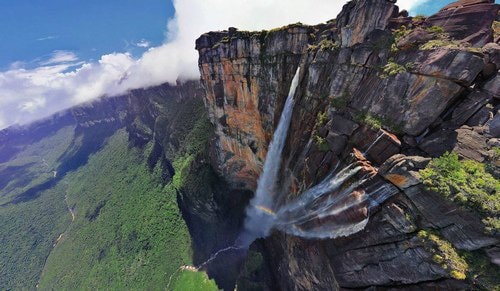 |
| No one has ever set foot on the summit of the mountain. |
This mountain stands alone, unconnected to any other mountain, and is home to hundreds of endemic plant and animal species. It rises almost vertically, over 1,000 meters above the surrounding forest. Its sheer cliffs, reaching heights of up to 3,000 meters in many places, make it inaccessible on foot.
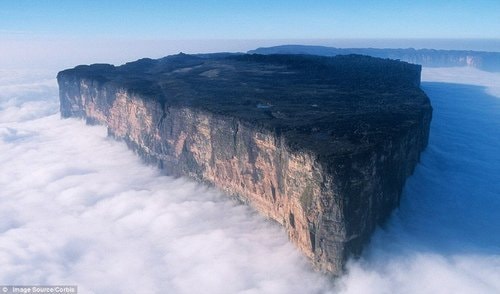 |
| Tepui has a glorious history, yet it is also full of mysteries for mankind. |
Tepui is the remains of a large sandstone plateau that was once covered by granite. Over millions of years, this area has eroded, and all that remains is the Tepui we see today. Neither scientists nor explorers have been able to reach the summit of Tepui.
Honokohau Falls (USA)
"Strange" is the word explorers used to describe Honokohau Falls on Maui, part of the Hawaiian Islands (USA). This location is frequently featured in the movie "Jurassic Park" because it gives viewers a glimpse and a sense of a world completely "alien" from the rest.
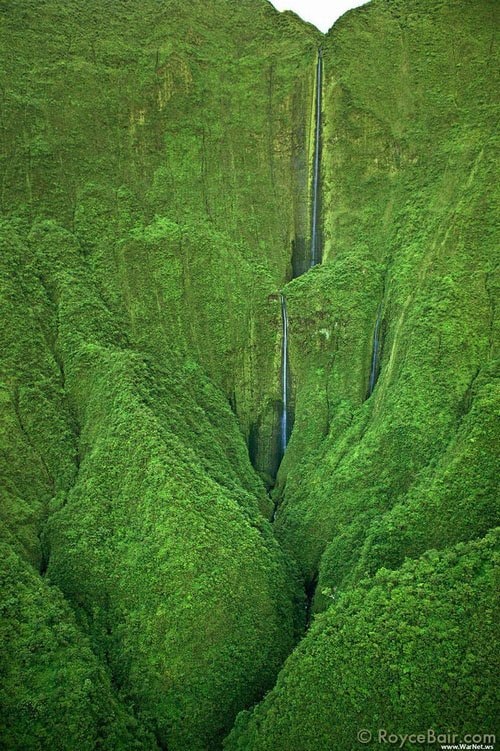 |
| Honokohau Waterfall reaches a height of 487 meters. |
This waterfall has never been conquered by anyone, due to its unimaginable height and steep terrain. Inaccessible by car or hike, the only way to admire this magnificent natural wonder is by helicopter.
 |
It is named after the long Honokohau River that flows from the summit of Puu Kukui, which receives up to 9,000mm of rainfall annually, making it the area believed to have the highest rainfall in the world.
Rocky mountains and forests in Madagascar
The jagged rock formations and canyons, seemingly capable of piercing the clear blue sky above, are a hallmark of the rocky mountain forests of Madagascar, Africa. Formed over millions of years, these narrow caves lie deep underground, with the deepest reaching 120 meters. Monsoon rains have eroded thick layers of limestone and Cretaceous sediments, creating one of the world's most unique and mysterious natural wonders.
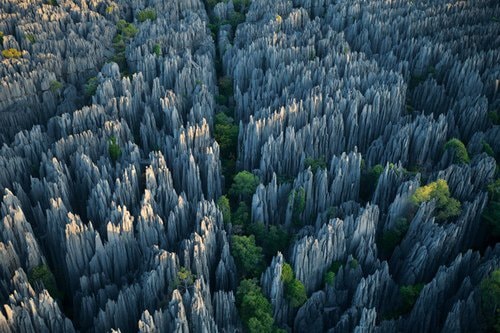 |
| The rocky mountains and forests resemble knives piercing up from the earth. |
No human habitation exists here due to the harshness and almost insurmountable terrain.
Only a few species can survive here, such as this lemur. Living alongside them are only a few reptiles, insects, and plants.
Dallol, Ethiopia
This place has been dubbed "Hell on Earth" by photographers, or the world's lowest terrestrial volcano. This is because, with its record-high salinity, no animal or plant life can survive. And it's easy to understand why humans can't explore this place.
 |
Dallol is located in the Danakil Desert depression in northeastern Ethiopia. This mysterious area lies 116 meters below sea level, with an average annual temperature of 35 degrees Celsius. Nearby is the Dallol volcano, which erupted in late 1926. The place is extremely hot and super-salty, a graveyard for any life, yet a haven for brave photographers. However, they cannot stay here for long without risking their lives.
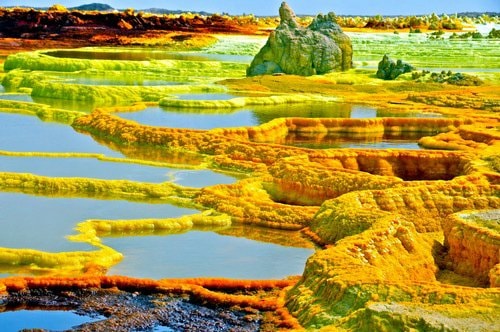 |
| The terrifying sight of the super-salty salt mountains at Dalol |
Gangkhar Puensum Mountain
 |
The highest mountain yet to be conquered by humans is Gangkhar Puensum, located in the disputed territory between Bhutan and China. The mountain is 7,570 meters above sea level. Its height was first measured in 1922, but many believe this measurement is inaccurate because the expedition at the time was unable to reach the summit. Furthermore, mountain climbing is prohibited in Bhutan due to religious beliefs.
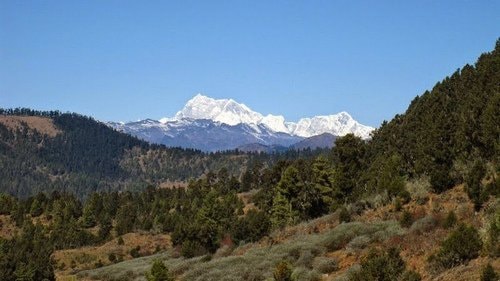 |
| World wonders can be seen from very far away. |
According to Vietnam Tourism
| RELATED NEWS |
|---|