(Baonghean.vn) - TheseThese days, the mat weavers in Hung Hoa commune (Vinh City) are bustling with activity as they harvest the second sedge of the year. The sedge is dried in the fields, on the alluvial plains along the Lam River dike, and even in the small yards in front of their houses.
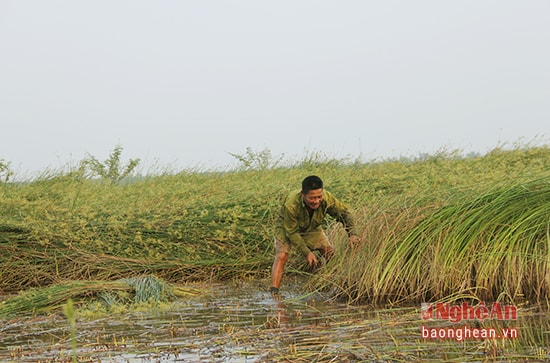 |
| As a suburban unit of Vinh City, Hung Hoa commune has a total of 65 hectares of land planted with sedge, employing 600 households, mainly concentrated in Phong Hao and Phong Thuan hamlets. After the floodwaters receded, the people of Hung Hoa rushed to harvest the second sedge crop of the year. |
 |
| Each year, sedge growers have two harvests: the spring harvest and the autumn harvest (corresponding to March to April and August to September in the lunar calendar). After harvesting, the sedge is cut at the base and top, then manually split before being dried. |
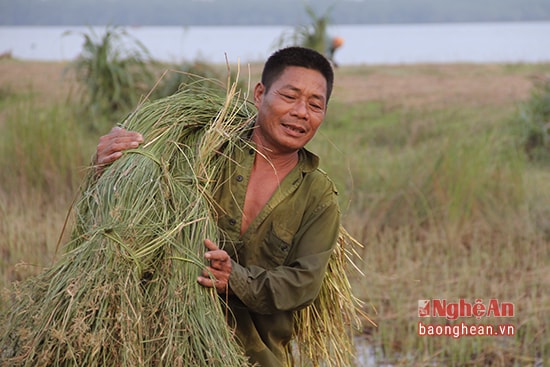 |
| Carry the reeds from the fields to dry them in the sun. |
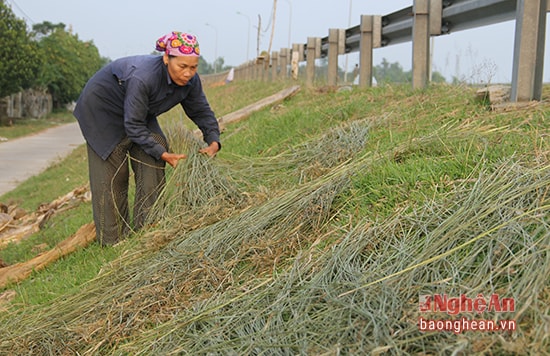 |
| Taking advantage of the dry days, people dry sedge along the Ta Lam dike. |
 |
| Locals also choose the alluvial plains along the Lam River to dry their raw sedge materials. |
 |
| During the drying process, the reeds are shaken evenly to remove the dry outer layer. |
 |
| Bundles of sedge are being dried along the banks of the Lam River. |
 |
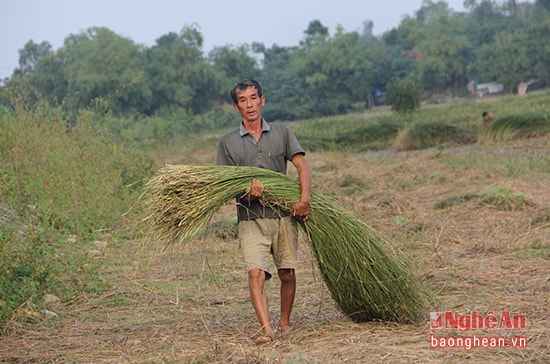
| A bundle of freshly harvested sedge grass was gathered by the villagers and brought home. |
 |
| The women carried the reeds home. |
 |
| Besides harvesting sedge for weaving mats according to traditional methods, Hung Hoa sedge is also sold to traders in Ha Tinh, Thanh Hoa, and other provinces at a price of about 700,000 VND per quintal. On average, each family harvests 2-3 quintals of sedge per season. |
 |
| Although the mat-making craft in Hung Hoa commune has not been as prosperous as before, the unique characteristics of the mangrove area, which provides ideal conditions for sedge growth, have allowed some households to maintain the craft, thereby increasing their family income. |
Wang Yun

