

What should people with chickenpox eat to recover quickly?
Eating properly will help patients recover quickly and avoid complications when suffering from chickenpox.
"Chickenpox outbreaks in children during seasonal changes"
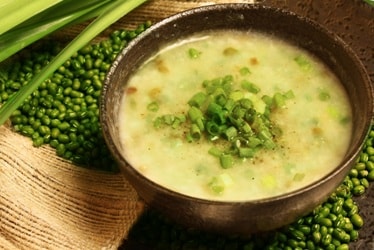 |
| Mung bean porridge is a cooling and detoxifying dish for people with chickenpox. |
Chickenpox is caused by the Varicella Zoster virus. The disease usually appears in late winter and early spring, lasting into summer.
Patients with chickenpox typically experience fatigue and loss of appetite, followed by a fever 24-48 hours later. By the third day, a skin rash begins, initially as red, itchy bumps, which develop into blisters after a few hours.
Blisters appear very quickly, within 12-24 hours. The blisters are 1-3 mm in size, containing clear fluid; in severe cases, the blisters will be larger, or if further infected with bacteria, they will become cloudy due to the presence of pus.
The most common complication of the disease is skin infection, which can lead to scarring. These scars are often pitted, unsightly, and usually last a lifetime.
Chickenpox is highly contagious within the community.
Foods that are beneficial or harmful for people with chickenpox.
While ill, one should avoid greasy foods, hot foods, and overly rich foods. It is best to consume light, nutritious foods in liquid or semi-liquid form that are easy to digest, such as mung bean porridge, water chestnut and barley porridge, water chestnut and young bamboo leaf porridge, brown rice porridge, honeysuckle porridge, wheat porridge, mung bean vermicelli porridge, asparagus, eggs, bananas, red beans, green beans, black beans, potatoes, carrots, white radish, winter melon, spinach, purslane, centella, bitter melon, amaranth, Chinese cabbage, cabbage, lettuce, and mugwort.
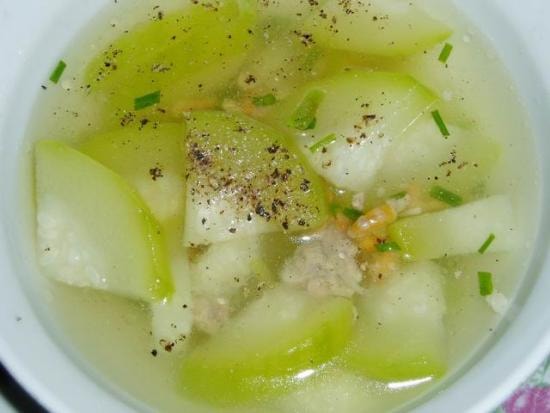 |
| People with chickenpox should eat winter melon, bitter melon, mung beans, black beans, potatoes, cabbage, mugwort, etc. |
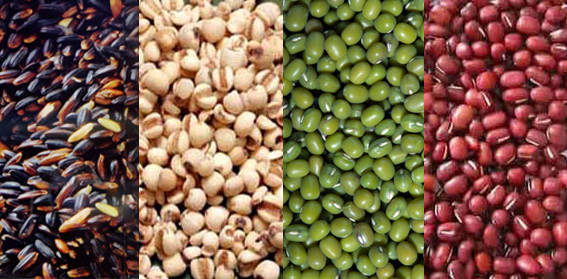 |
| Brown rice, red beans, green beans, and black beans are very good for people with chickenpox. |
People with chickenpox should avoid spicy foods such as ginger, onions, garlic, leeks, chili peppers, black pepper, dill, curry, mustard, coriander, meats such as goat, dog, chicken, duck, goose, eel, seafood (shrimp, crab, clams, snails, etc.), lychees, longan, plums, ripe mangoes, jackfruit, persimmons, cherries, water spinach, fatty foods such as chestnuts, roasted peanuts, roasted melon seeds, fried beans, fried pastries, fried and stir-fried foods, animal fat, etc.
The most incompatible ingredient is cinnamon, because cinnamon has a very hot nature, is purely yang, and its warming and fire-enhancing effects can be excessively drying, damaging yin essence and posing a serious danger to chickenpox patients.
Vitamin C
Consume foods rich in vitamin C such as: lemons, oranges, avocados, strawberries, kiwis, pears, watermelons, cucumbers, tomatoes, etc.
Vitamin C helps boost immunity, fight infections, accelerate collagen production, and prevent pitted scars.
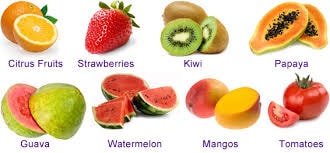 |
| Foods rich in vitamin C boost immunity and fight infections. |
After the illness has healed, the wounds begin to dry and new skin forms, so fresh turmeric should be used at this time to treat pitted scars after chickenpox.
Instructions: Wash the turmeric root thoroughly, gently scrape off the outer layer to release the juice inside. Apply this juice evenly around the scarred area once a day before bed, leave it overnight, and wash it off the next morning. Then, apply another layer.
Some foods that people with chickenpox should eat.
Tri-bean and licorice root drink:
100g each of mung beans, black beans, and red beans, and 2g of licorice root.
Boil with 1 liter of water, reduce to 500ml, and divide into 2-3 portions for the child to drink throughout the day.
Delicious soups made with water spinach and pork.
Cooling soup:
Mung beans, water chestnuts, cogon grass roots, young bamboo shoots, carrots, 20-30g each. Boil with 1 liter of water, reduce to 650ml, divide into two doses for the child to drink during the day (if the child has asthma or cough, do not use water chestnuts and carrots).
This soup has a moisturizing and cooling effect, making it very beneficial for people with chickenpox, high fever, and those who feel hot and restless.
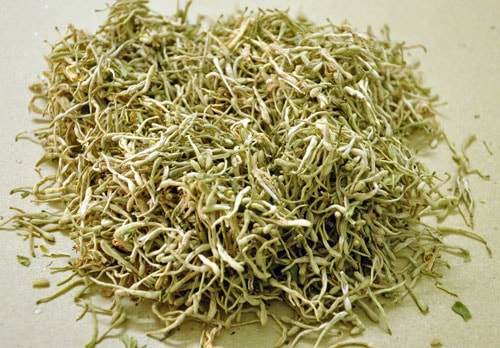 |
| Honeysuckle. |
Honeysuckle tea:
10g of honeysuckle flowers, 20ml of sugarcane juice. Boil with 500ml of water for about 10 minutes. Drink once a day for 7-10 consecutive days to help dispel wind, clear heat, and reduce fever.
Red bean and barley porridge:
20g Job's tears, 30g red beans, 30g Poria cocos, 100g rice.
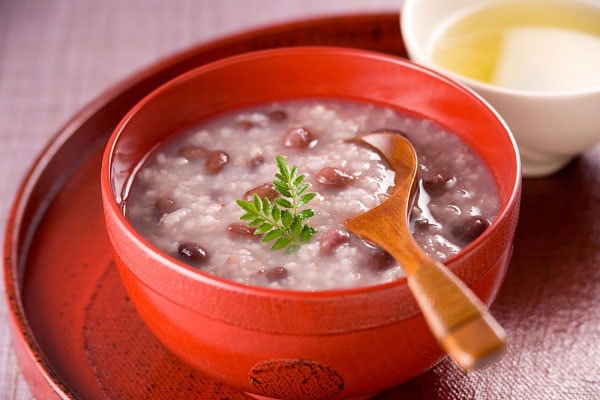 |
Wash all ingredients thoroughly and cook them with an appropriate amount of water to make porridge. Divide into three portions and eat throughout the day, with a little white sugar or rock sugar.
This porridge has detoxifying and anti-inflammatory effects, and is especially suitable for those who have recovered from chickenpox but still have a fever, yellowish-red urine, fatigue, and loss of appetite.
Bean porridge with pork:
80g of white rice, 30g of red beans, 30g of green beans, and 50g of minced pork. Cook all ingredients with an appropriate amount of water until a soft porridge is formed. Consume when hungry.
This porridge is easy to digest and very good for people with chickenpox and a mild fever.
Purslane juice:
When suffering from chickenpox, you can use 100-120g of fresh purslane, wash it thoroughly, extract the juice, and drink it throughout the day.
Purslane juice has cooling, anti-inflammatory, and anti-acne properties, making it very beneficial for people with chickenpox.
How to care for a chickenpox patient: - The illness typically lasts about 7-10 days, and if there is no secondary bacterial skin infection or other complications, it can usually resolve spontaneously. - Use fever-reducing medication when the child has a fever, and ensure adequate nutrition. Feed the child frequent, liquid foods, increasing nutritional content to boost immunity and limit complications. Keep the patient in bed, limiting contact and movement. - If you see blisters with cloudy fluid, indicating bacterial superinfection, or if the child coughs, has a rising fever, is tired, has a headache, or vomits, they may have one of the common complications such as dermatitis, pneumonia, or encephalitis/meningitis. The child should be taken to the hospital immediately. - Vaccination against chickenpox is the most effective way to prevent the disease. The vaccine is given when children are one year old or older. |
According to Suckhoedoisong
| RELATED NEWS |
|---|