

What scenarios will unfold following the South Korean presidential election results?
Amidst escalating tensions between North Korea and the United States, Japan, and China, South Korea is holding an early presidential election.
The South Korean presidential election is taking place seven months early, following charges of involvement in a corruption scandal against former President Park Geun-hye. The scandal is ongoing, with some of South Korea's largest conglomerates, such as Samsung and Lotte, under investigation.
But putting the scandals aside, the big question now is who is likely to win the South Korean presidency and what their policies will be, particularly in relation to North Korea, the United States, and China?
Moon Jae-in: The number one candidate
Moon Jae-in is the leading candidate in this South Korean presidential election. According to opinion polls conducted just before the vote, Moon Jae-in could receive 40% of the vote, a significant lead of 20 percentage points over his closest rival.
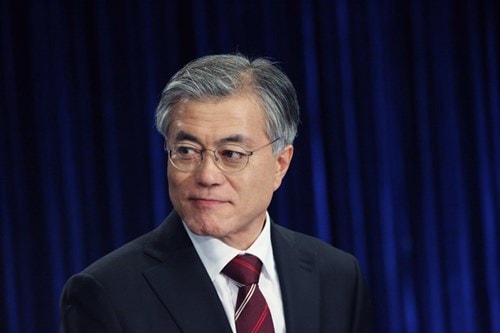 |
| Moon Jae-in is the leading candidate in this South Korean presidential election. Photo: CFP Photo |
Moon Jae-in is considered a "liberal" or "progressive" candidate.
Ahn Cheol-soo: The tech mogul
Another key candidate is Ahn Cheol-soo, a businessman who ranked second in polls ahead of the South Korean presidential election.
Analyst Volodzko said: "Ahn Cheol-soo, a tech mogul who developed a computer antivirus program, is a tech tycoon who transitioned into politics. But he's started to resemble a traditional candidate, with conservatives rallying behind him, hoping to avoid a victory for Moon Jae-in."
Conservative voters in South Korea are pouring their votes into Ahn Cheol-soo's plan, but to foreigners, his policies appear to lean heavily towards socialism.
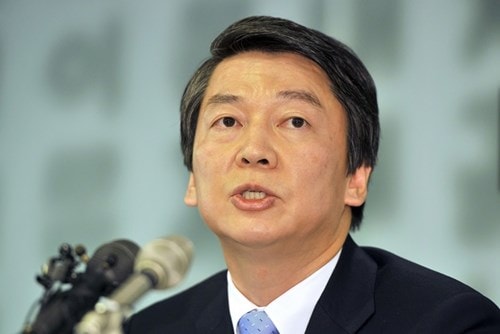 |
| Ahn Cheol-soo's policies appear to lean heavily towards socialism. Photo: CFP |
Analyst Volodzko commented: “Ahn Cheol-soo supports increasing taxes on profits, criticizes free trade agreements, and advocates for public welfare. Regarding economic policy, he wants to help newly established businesses and plans to introduce various stimulus packages to assist small businesses.”
According to Volodzko, the fact that conservative parties are rallying around a presidential candidate like Ahn Cheol-soo, who wants to raise taxes, renegotiate free trade agreements, and increase welfare benefits, seems odd, but it's mainly due to opposition to the foreign policy of leading candidate Moon Jae-in.
Volodzko said, "Everything leads me to believe that perhaps Moon Jae-in will engage in dialogue with North Korea and at least help to ease tensions. He also seems to be one of the candidates likely to actively engage with China."
Significance for regional security
Reducing regional tensions seems like a good idea, as tensions on the Korean Peninsula are currently at a high level, with the risk of war breaking out.
But according to Asian security expert Zack Cooper of the Center for Strategic and International Studies (CSIS) in Washington, D.C., that doesn't fit with the current plans of the Donald Trump administration.
The Donald Trump administration wants to exert pressure until North Korea is ready to sit down at the negotiating table and negotiate on terms set by Washington. But if President Moon Jae-in proceeds with bilateral talks with the North Korean leader too soon, the Trump administration's plan could fail.
Ahead of the South Korean presidential election, Moon Jae-in strongly opposed the THAAD ballistic missile defense system that the US is deploying in South Korea. He even stated that he would suspend the THAAD deployment if elected president.
But according to the US military, the THAAD system has already been deployed in South Korea.
Mr. Cooper stated that this was no coincidence, as the U.S. deployed the THAAD system just days before the South Korean presidential election. He commented, "I think this was a very carefully planned collaboration between the U.S. and the former South Korean government."
Analysts Cooper and Volodzko both believe that President Moon Jae-in is unlikely to reverse the deployment of the THAAD missile defense system once it is operational in South Korea.
According to Kienthuc.net.vn
| RELATED NEWS |
|---|