
10 ways to teach children independence at an early age.
(Baonghean.vn) - Encouraging children to do things themselves, from the smallest tasks to those within their capabilities, will help them become much more independent and self-reliant compared to always helping them unconditionally.
(Baonghean.vn) - Encouraging children to do things themselves, from the smallest tasks to those within their capabilities, will help them become much more independent and self-reliant compared to always helping them unconditionally.
Stop doing everything for your child.
The first step in teaching children independence is to show them how to do things for them instead of doing them for them.
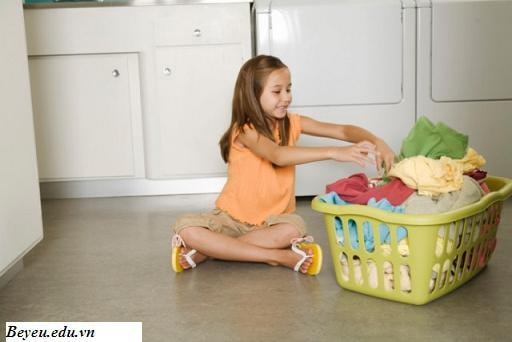
Even when children are very young, you can guide them to play independently with toys without parental supervision (but you must keep an eye on them), to feed themselves, to tidy up their toys after playing, to choose their own clothes to wear daily, or to fold their own clothes, etc. With these tasks, you need patience, you shouldn't rush, and you should guide them gradually towards specific goals.
For example, if this week you guide your child to eat independently, next week you can guide them to choose their clothes, tidy up their toys, get their own toothbrush and toothpaste... it's essential to always create a happy and relaxed psychological state for your child to achieve good results.
 |
| Illustrative image. |
It's not easy to satisfy children's demands.
Children are very demanding and will find every way to achieve their goals. If parents don't carefully consider the situation and hastily fulfill their children's requests, the children will feel that their requests are easily granted and will not appreciate them. Therefore, in cases where children ask for parental help, parents should consider the situation. If parents help, they should explain the process to the child so that the child can do it themselves next time.
Assign tasks to each team member.
 |
| Illustrative image. |
In the family, assigning tasks to each member helps children understand that everyone has responsibilities and develop good work habits and independence from an early age. You can assign your child tasks like wiping the dining table, fetching dishes, tidying the shoe rack, carrying small shopping bags, etc., and remind them regularly to form good habits. Once they get used to these tasks, they will run to help parents wipe the table and fetch dishes whenever it's time to set the table, even while playing or doing other things.
Be patient with children's mistakes.
Children's learning and practice is a long process, and mistakes are inevitable. Children need to learn from their mistakes, and parents need to patiently guide and encourage them at the right time to motivate them to strive. A key advantage of the Japanese parenting method is that parents shouldn't scold their children when they can't do things on their own. Scolding only makes children lose confidence in their abilities. Instead, mothers should gently guide them through the process again.
Praise should be seen as an act of acknowledging that a child has completed a task, even if it's only the most rudimentary or simplest one. Offer positive feedback after each task, avoiding excessive praise for a simple action, which can be counterproductive. Instead, offer positive encouragement, such as: "You folded your clothes so neatly today," or "Our shoe rack is so tidy thanks to you!"
Show off your child's achievements to everyone, praise them when they start doing well, and express pride as they approach adulthood to motivate them to try harder.
Don't laugh at your child's ideas, no matter how strange they are.
 |
| Illustrative image. |
Just like adults, children want to be valued. When ridiculed, their instinct is to get angry, withdraw, and stop sharing ideas for fear of being treated the same way again. Furthermore, children naturally see the world through a completely different lens than adults. You might be surprised by what you hear when you show them that you listen and value their opinions.
Teach your children how to manage money.
Once your child understands the value of money, get them a small piggy bank and teach them how to save. Help them set a goal: when they've saved enough money, you'll buy them a bicycle, a computer, or anything else they like that you think is appropriate. This will motivate them to save money.Furthermore, before deciding to buy something, explain to your child whether the item is truly necessary. If it's not necessary, use the money to increase their savings account for more meaningful purposes.
Once your children understand how to manage money, give them a reasonable monthly allowance and guide them on how to spend wisely, distinguishing between necessary and unnecessary expenses. Record all income and expenses in a small notebook. At the end of the month, parents should review the expenses together and analyze whether the spending was reasonable, what lessons can be learned, etc. Gradually, your child will develop appropriate and effective spending habits.
Teach your children to take responsibility for themselves.
What do you do when your child spills milk? Do you immediately get them a new carton of milk, or do you teach them not to spill it again next time?
You should let your child do things independently and take responsibility for their own actions! And if they make mistakes, guide them so they don't repeat those mistakes next time! Don't cover up for your child if they do something wrong! Don't let your own pride teach your child the bad habit of "blaming" others! When they are young, if you teach them to take responsibility for their actions, they will be responsible for their own lives when they grow up!
 |
| Illustrative image. |
Teaching children to cope with fear
Letting your child sleep alone from a young age, getting them used to the dark, or simply showing them cartoons with fierce animals... at first, they might be scared, but explain to them that these things are normal, that they need to be strong and resilient, and that there's nothing to be afraid of. Gradually, you will see your child become much more courageous and brave.
Let your child decide their own future.
You need to help your child understand their passions, so that they can identify the fields they want to pursue. Together, research trending professions, those with high demand, and the requirements of those professions to see if they suit your child's abilities.
Don't force your child to choose a career they don't like just because of your own desires! Let them choose and decide their own future! Let them understand that their life is their own and they are responsible for it! Don't choose for them; be a guide instead of a planner for their lives!
Give your children the opportunity to experience freedom.
When your child starts school, you should give them their own room, creating a comfortable space so they don't feel constantly controlled by their parents. Let them decorate their room however they like, and guide them in cleaning and organizing it neatly.
 |
| Illustrative image. |
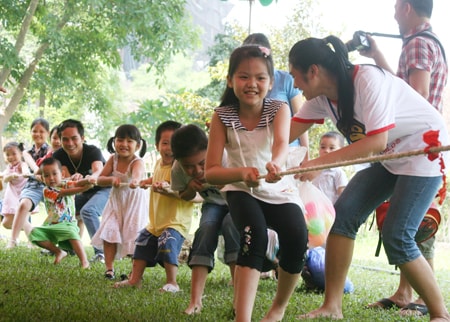
Don't keep your children cooped up at home every weekend. After a hard week of studying, let them go outside, participate in sports, and play with friends. But remember, you need to know who they're playing with, where they are, and make sure they come home on time.
Your child is growing up, and it's time for them to learn to get to school by bike, electric scooter, or even on foot. Don't always be so focused on picking them up on time; let them learn to stand on their own two feet, even if it's a little challenging at times.
By giving your children opportunities to experience freedom, you teach them the value and meaning of independence, that life is vast, that the world outside is not simple at all, and that a parent's arms cannot always embrace and protect them.
Hoa Le
(Synthetic)
| RELATED NEWS |
|---|