Philippine President Rodrigo Duterte's anti-drug campaign is putting prisoners in a difficult situation: outside, they risk being shot; inside, it's like hell.
In 2016, Philippine President Rodrigo Duterte promised to "solve drug trafficking, crime, and corruption" within three to six months. His war on drugs has now been underway for over a year. The administration's planning appears to have been flawed. Wrong in terms of the scale and nature of the crackdown, as well as in the legal and infrastructure preparations.
The sheer number of people being imprisoned in a short period of time has led to prisons, particularly Quezon prisons, becoming overcrowded.
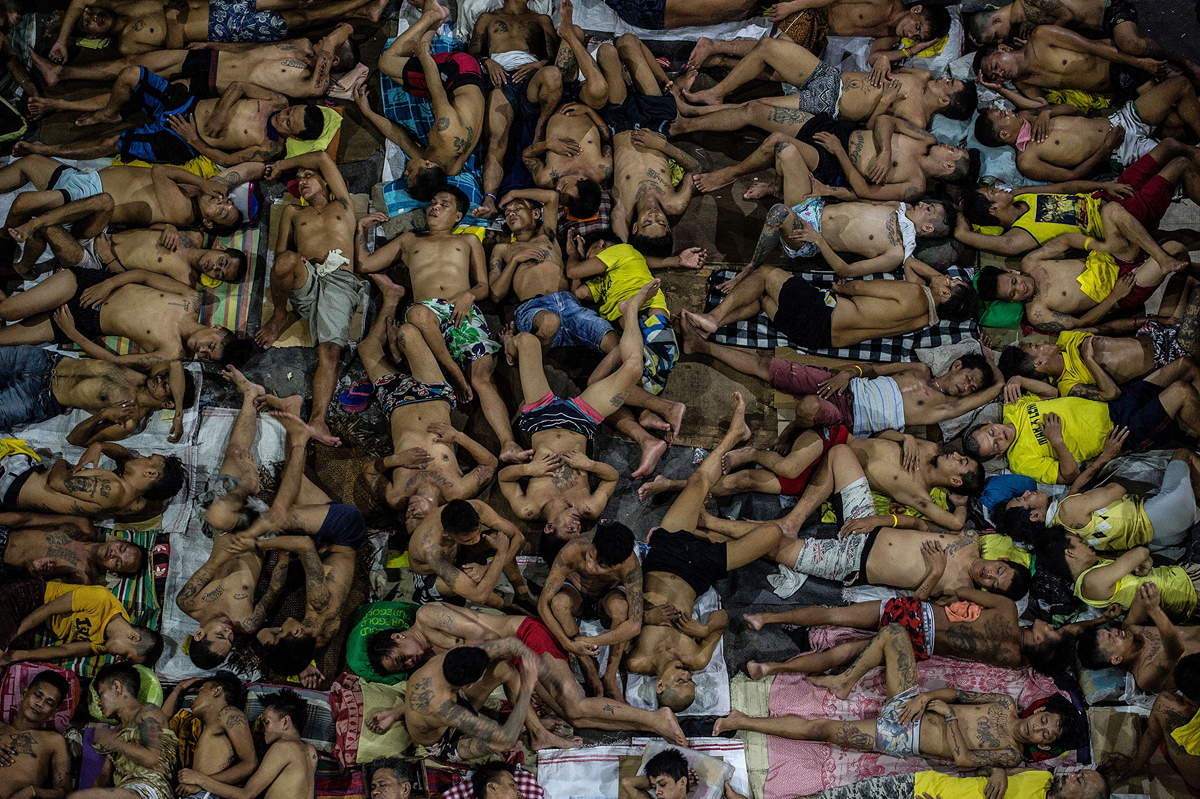 |
| Prisoners sleep sprawled out in cramped spaces. The photo was taken during the early days of President Duterte's anti-drug campaign. Photo: AFP |
 |
| AFP reported that, under maximum effort, Quezon prison facilities can accommodate 800 inmates. However, at times, the number of prisoners has reached 4,000. Photo: AFP |
 |
| This prison was originally built to accommodate approximately 262 inmates, but the current number of detainees has reached 2,975, according to Reuters figures released on September 1st. Photo: Reuters. |
 |
| Living conditions were appalling; each prisoner was estimated to share a toilet with around 150 other people. Photo: AFP |
 |
| Prisoners had to sleep wherever they could, from the corridors to the football field. Photo: AFP |
 |
| Most prisoners in the Philippines lack bail money and therefore remain incarcerated. Because they lack money, they cannot afford decent sleeping quarters and are forced to sleep outdoors. (Photo: AFP) |
 |
| Rody Lacanilao, a prisoner who has been in Quezon for 18 months, said he and his fellow inmates just hope it doesn't rain because then they won't know where to sleep. "Since the war on drugs started, sleeping has become more difficult. We don't know where to go when it rains," Lacanilao told Reuters. (Photo: AFP) |
 |
| Prisoners on their way to a court hearing. Most were arrested in connection with drug-related crimes during President Duterte's campaign. But because of their large numbers, they endure lengthy detention periods before their fate is decided. Sometimes this can last for years. Photo: AFP |
 |
| According to an assessment by the Institute for Criminal Policy Research (ICPR) in Birkbeck (University of London, UK), prisons in the Philippines are among the most overcrowded in Asia, with an average overcrowding rate of 316%, meaning the number of inmates is three times the capacity. Globally, Philippine prisons rank third in terms of overcrowding, after Haiti and Benin. Photo: AFP |
 |
| The Bureau of Prisons and Penalties (BJMP) reported that as of the end of June, the number of prisoners in the Philippines, including convicted criminals and those awaiting trial, had reached 137,417, a 22% increase since President Duterte took office in June 2016. (Photo: AFP) |
 |
| Philippine police and drug enforcement agencies arrested 96,703 suspected drug users and traffickers between July last year and early August, with 94% of those detained awaiting trial. According to Metropolitan Police Chief Oscar Albayalde, this means an average of 100 arrests per day. (Photo: AFP) |
 |
| According to the BJMP, there are currently 303,534 drug cases awaiting trial as of June. The Public Attorney's Office (PAO) is representing these suspects. They stated that 1,665 lawyers are handling 709,128 criminal cases currently in progress, meaning each lawyer is dealing with 426 cases. Photo: AFP |
 |
| However, being in prison is still safer for Filipino prisoners. Because it means they haven't died like the more than 10,000 others hunted down in this operation. "It's safer here. Out there, if the police want to shoot you, they shoot, and then they say you're a drug dealer," said Jason Madarang, a female prisoner. (Photo: Reuters) |
According to Tuoi Tre newspaper


