

"Party Regulation 102 is for Party members to self-reflect and self-cultivate."
According to Mr. Tran Ngoc Duong, Regulation 102 can be said to be a regulation for Party members to self-reflect and cultivate themselves in order to restrain their desires in life.
Recently, the Politburo signed and issued Regulation 102-QĐ/TW on disciplinary action against Party members who violate regulations. This regulation clearly specifies the disciplinary measures of reprimand, warning, dismissal, and expulsion for each specific violation.
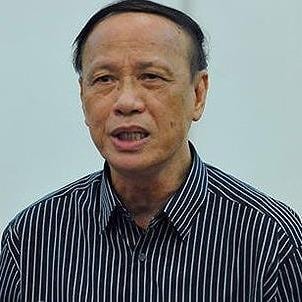
Mr. Tran Ngoc Duong, former Deputy Head of the National Assembly Office, discussed this matter.
|
| Mr. Tran Ngoc Duong, former Deputy Head of the National Assembly Office. |
PV:How do you assess the handling of Party members and officials who have violated regulations in the recent past?
Mr. Tran Ngoc DuongRecently, especially after the 4th Central Committee Conference, the Party has paid great attention to and acted very strongly in handling cases of corruption, causing losses and waste in state-owned enterprises.
These actions, which are increasingly supported and endorsed by the people, demonstrate the strength and determination of our Party and State in the fight against corruption. If this trend continues, the people's trust will only grow stronger.
PVRecently, the Politburo issued Regulation 102 on disciplinary action against Party members who violate regulations. In your opinion, what is the role and significance of this Regulation in the work of inspecting, supervising, and disciplining Party members who violate regulations?
Mr. Tran Ngoc DuongRegulation 102 on handling disciplinary actions against Party members, in my opinion, is a law governing the organization and operation of the Party. While the State has laws on administrative sanctions or the Criminal Code, within the Party, those members who have dedicated their lives to the Party's ideals and participated in Party activities also have their own laws.
Regulation 102 reflects the ideology of a rule of law state within the Party's organization. It serves as the basis and foundation for handling violations.
PV:Previously, the Party's regulations on disciplinary action did not address the issue of statutes of limitations. However, with Regulation 102, for the first time, a regulation on statutes of limitations has been introduced. In your opinion, what impact will this have?
Mr. Tran Ngoc DuongStatute of limitations is a concept in legal science. If a violation of the law is brought to trial after the statute of limitations has expired, it is unethical and inhumane. Furthermore, bringing it to light after the statute of limitations has expired does not have any positive deterrent or educational effect.
I believe Regulation 102 is extremely progressive. The statute of limitations for disciplinary action within the Party is clearly defined for different offenses, such as: 5 years for violations serious enough to warrant a reprimand…
"When talking about purity and integrity, people first look at the Party. Regulation 102 can be said to be a regulation for Party members to self-reflect and cultivate themselves in order to restrain their actions and desires in life," said Mr. Tran Ngoc Duong.
PVRecently, some cases of disciplinary action against Party members have involved dismissal from office. However, Regulation 102 stipulates the principle: If the offense warrants dismissal, then dismissal must be applied; resignation is not permitted. Do you think that implementing disciplinary action up to the point of dismissal would be clearer?
Mr. Tran Ngoc Duong:"Dismissal" would be a more accurate term than "removal from office." This is because removal from office can occur in many cases, such as leaving one position to take another; or someone may be removed from office for health reasons rather than disciplinary action.
Regarding disciplinary action, dismissal from office is the only correct form of discipline, not simply removing someone from their position.
PV:Despite the Party's regulations being considered very specific and detailed, some public opinions still suggest they are too strict. Do you think this strictness and rigor are necessary?
Mr. Tran Ngoc Duong:In the context of declining moral standards among officials and the phenomenon of self-evolution and self-transformation, these regulations are very strict, detailed, and specific, effectively restricting even the smallest actions to ensure they remain within the established framework. If you have joined a political organization, especially the Party, you must abide by them.
PVHow should this be implemented to achieve the best results, sir?
Mr. Tran Ngoc Duong:The regulations of Article 102 must first be known and understood by all Party members. Perhaps a study session on Regulation 102 should be organized for cadres and Party members. Once cadres and Party members understand it clearly, they will voluntarily comply.
Once understood, the issue of handling these violations is extremely important. Disproportionate, non-transparent, and dishonest handling can also render these regulations ineffective.
PVThank you, sir!