

Laughing gas, popping candy - a danger to young people.
(Baonghean.vn) - Following the incident at the recent music festival, police seized "laughing gas" and several tablets suspected to be synthetic drugs at the scene. The increasing number of dangerous toys for young people poses a management challenge for authorities.
Laughing gas
Recently, from bars to street stalls, it's not uncommon to see young people inhaling nitrous oxide (laughing gas)... They use it freely, believing it's just a form of entertainment and not as harmful as other addictive drugs. However, reality has proven that laughing gas is very dangerous and can even be fatal.
Laughing gas is essentially balloons filled with nitrous oxide (N2O). When inhaled, nitrous oxide creates euphoria and hallucinations that induce laughter.
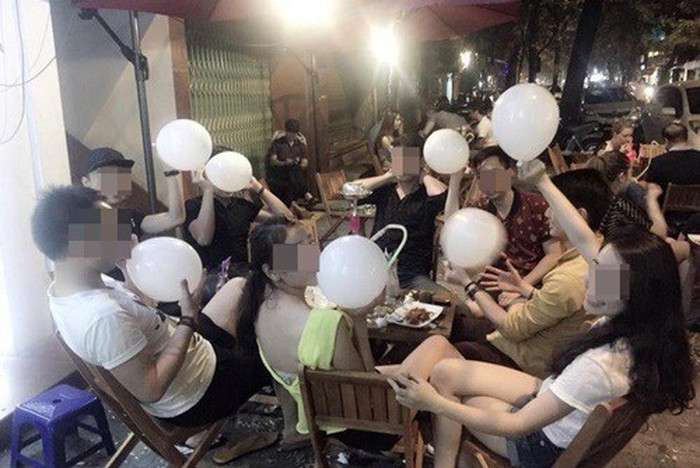 |
| Many young people are excited about laughing gas without knowing that this is a potentially deadly game. |
Simply put the balloon's opening in your mouth, inhale the air, then blow it back out to inflate it. Repeat this about 4-5 times, and anyone, whether happy or sad, will burst into laughter.
While it may seem harmless, playing with and inhaling nitrous oxide (laughing gas) poses many dangers. Inhaling laughing gas directly affects the cardiovascular and nervous systems, and the worst consequences of abuse can lead to depression or death.
Scientists worldwide have warned that nitrous oxide (laughing gas) can be fatal if used in confined spaces or in plastic bags. The danger is that long-term abuse of this hallucinogenic substance can easily lead to the use of real drugs, even narcotics.
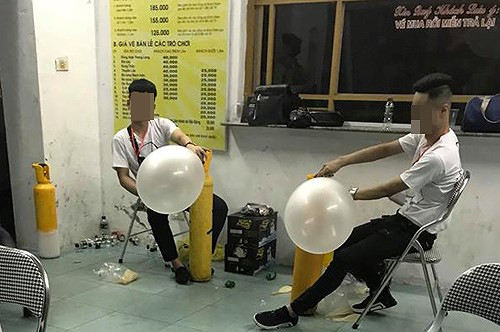 |
| The area selling balloons for 200,000 VND was located in the hallway leading to the stage at a recent music festival in Hanoi. |
According to authorities, N2O – the substance pumped in "laughing gas" balloons – is not yet classified as a precursor or a narcotic-like addictive substance, so there are no regulations on its handling. However, market management agencies and local authorities can apply measures regarding the trading of goods of unknown origin, the trading of N2O gas without authorization, and fire safety measures due to the trading of dangerous gas cylinders without preventive measures or fire safety equipment as required by regulations.
In reality, the "danger" of using "laughing gas" has created another haunting fear: the possibility of fires and explosions occurring at any time at these business locations.
Popping candy
This is a type of candy that is quite popular among elementary and middle school students. According to the description, if you break it and shake it in the dark, it glows with a shimmering, magical light, but if you throw it in a basin of water, it will explode. The fun for the children lies in the skill required to make the candy explode, so they compete to buy and eat the candy to make it explode, hoping to prove they are more skilled than others.
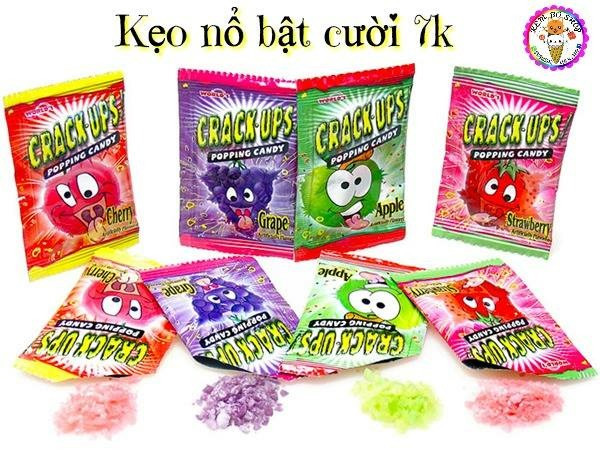 |
| Many types of popping candy with eye-catching packaging are widely advertised online and are readily available in front of school gates. |
It's not just this type of candy; many similar candies are also sold rampantly in front of schools, such as "ghost candy" and colored candies soaked in water... all appealing to the curiosity of students. The common characteristics of these candies are that they are very cheap, have bright, eye-catching packaging, and absolutely no expiration date or information about their origin. Most of the packaging is printed in Chinese characters, with no Vietnamese translation.
According to experts, most of these candies use harmful food colorings, do not meet food safety and hygiene standards, and may even endanger human health and lives, especially young children.
Therefore, relevant authorities, especially market management agencies, need to actively intervene and strictly handle the sale of goods without clear origin; parents also need to pay attention to their children, preventing them from using unhealthy candies and stimulants, and preventing unfortunate consequences from occurring.