

Britain's snap general election - a new turning point for Brexit.
(Baonghean) - The British Parliament has just gone through another dramatic session that lasted until late at night with the important decision to vote on a plan to hold an early general election on December 12th.
This decision is expected to break the deadlock in the Brexit process, providing a clear answer for both the UK and the EU after a long and arduous period. However, experts also warn that Brexit has altered the political landscape of Britain, disrupting traditional party relationships and making the upcoming election one of the most unpredictable in British history.
Boris Johnson's final gamble
The plan for an early general election on December 12th received 438 votes in favor and 20 against, exceeding the necessary requirement of two-thirds of MPs supporting it, equivalent to 434 votes. The early general election plan still needs to be submitted to the House of Lords for consideration. However, with such a high number of votes in favor, it is almost certain that the plan will be approved by the House of Lords. According to procedure, the current Parliament will be dissolved on November 6th to make way for the general election.
This will be the first general election in Britain held in December in almost 100 years, and also the third in four years, highlighting the unusual situation Britain is facing due to Brexit.
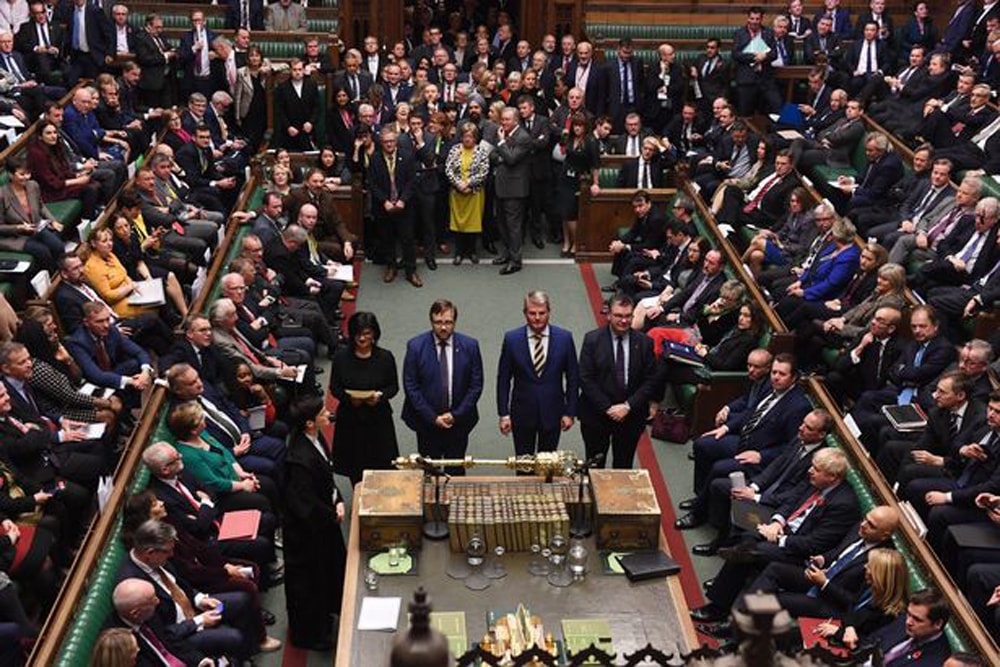 |
| The British Parliament voted to approve a plan for an early general election on December 12. Photo: PA |
Prime Minister Boris Johnson's plan to hold an early general election required four votes to pass Parliament, a rare victory for him after his previous plans and proposals were repeatedly rejected by Parliament. When the European Union decided to extend Brexit until January 31, 2020, European Council President Donald Tusk once again reminded Britain of the need to seize the three months to resolve internal issues, and that Brexit should not be delayed again after this date. With all other options blocked in Parliament, holding an early general election was Boris Johnson's last gamble – a gamble with the "prize" of a parliamentary majority, which would allow him to push through his Brexit plans, including the agreement reached with the EU last October.
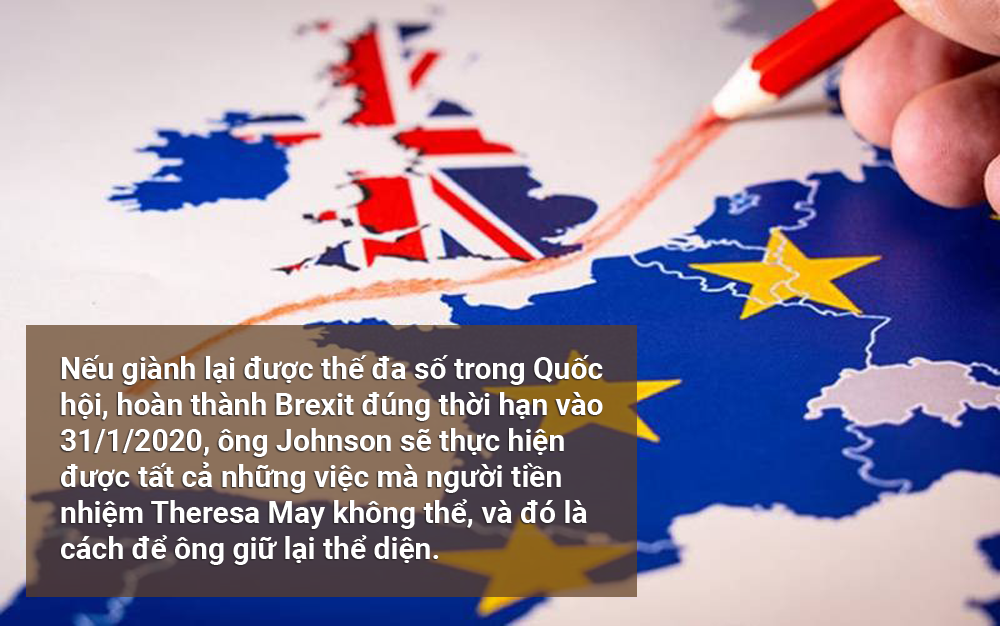
Boris Johnson once called being forced to write to the EU requesting a Brexit extension a disgrace, contradicting his earlier statement of "either leave the EU or die." Therefore, if he regains a majority in Parliament and completes Brexit on schedule by January 31, 2020, Johnson will have accomplished everything his predecessor Theresa May could not, and that is how he can save face.
 |
| Illustration photo: Reuters |
In the UK Parliament's approval of the general election plan, the shift in stance by the opposition Labour Party, led by Jeremy Corbyn, cannot be overlooked. Previously, Corbyn had consistently rejected the proposal for an early general election because he lacked confidence in a Labour victory. However, with both opposition parties, the Liberal Democrats (Lib-Dem) and the Scottish National Party (SNP), supporting an early general election—despite their differing goals of preventing Brexit—Corbyn certainly did not want to stand alone and face criticism from the weary British people who needed a clear answer.
Ready for the big battle
Recent polls show that the Conservative Party is still leading in voter approval ratings with 36% support, followed by the Labour Party with 23%, the Lib Dems in third place with 18%, and the recently formed Brexit Party with 12% support. However, these figures do not guarantee victory for any party, including the Conservative Party. Remember, in 2017, Theresa May confidently held a general election when polls showed the Conservative Party leading the Labour Party by more than 20%, but ultimately the Conservative Party lost its fragile majority in Parliament.
Although Boris Johnson is betting on a victory in the upcoming election, all other parties also see the current chaos surrounding Brexit as an opportunity to improve their parliamentary seat count since the 2017 general election. Therefore, all parties are pouring their efforts into this major battle.
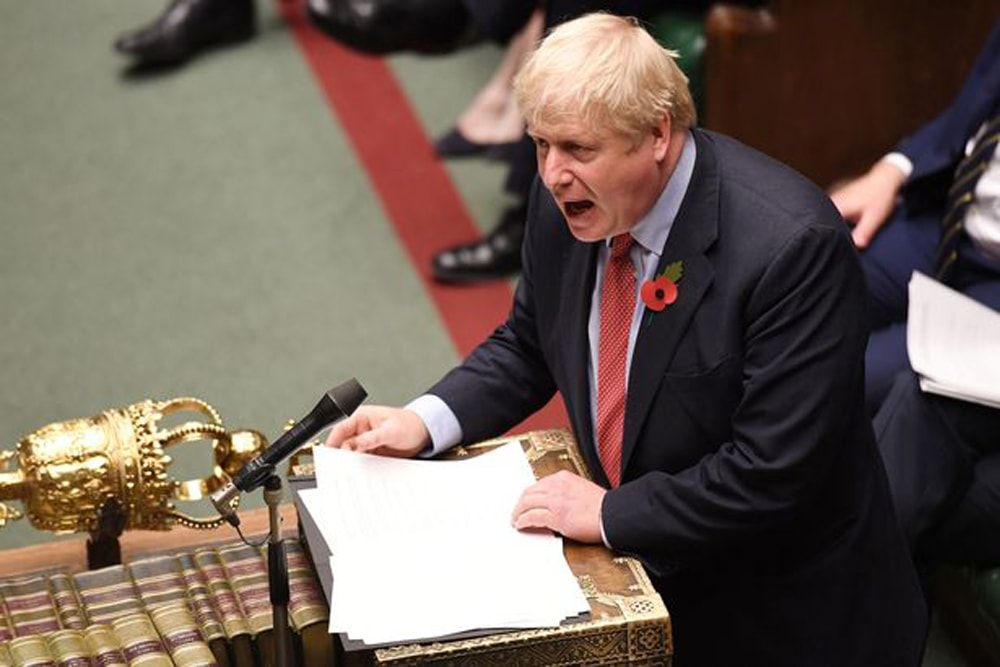 |
| Prime Minister Boris Johnson is betting on regaining a majority in Parliament. Photo: AFP |
For the Conservative Party, Boris Johnson has readmitted 10 of the 21 MPs he expelled earlier in September. The Conservative Party has also assembled a large team of advisors, many of whom participated in the "Leave" campaign during the 2016 Brexit referendum. The Conservative Party believes that what British voters want most now is a definitive, non-protracted Brexit. Meanwhile, the Labour Party and other opposition parties such as the Lib-Dem and SNP are also looking to use this opportunity to attract more voters who previously voted to leave but now regret it, or those who fear that Boris Johnson's Conservative Party might push for a no-deal Brexit scenario leading to a sudden separation from the EU.
The Conservative Party may also have to split its votes toward Nigel Farage's Brexit Party, who vehemently opposes Boris Johnson's deal with the EU, calling it a half-hearted Brexit. Analysts believe that the protracted Brexit saga over the past three years has profoundly altered the British political landscape, making the upcoming election extremely unpredictable, and it's not unlikely that no single party will win a majority in Parliament.
The inability to predict the outcome of the election means that the scenarios for Brexit are also unpredictable.
Currently, there are still four possible scenarios for Brexit, depending on the different election results. Firstly, if the Conservative Party wins a majority in Parliament, Boris Johnson could put the agreement reached with the EU to a vote, thereby proceeding with his plan to take Britain out of the EU before the new deadline of January 31, 2019.
 |
| The voters' ballots will decide the future of Brexit. Photo: Daily Express |
The second possibility is that the Conservative Party will still win but will not have a sufficient majority in Parliament, thus failing to vote through the agreement. In this case, the default scenario would be that the UK leaves the EU on January 31, 2019, without a deal.
Third, if the Labour Party wins, or forms an alliance with parties opposing Brexit, a referendum could take place. People could once again be given the choice between supporting the government's deal or remaining, or between leaving without a deal and staying.
The ultimate possibility is that Brexit will be canceled, regardless of whether the Conservative or Labour party wins, because the new government is simply exhausted by what has happened over the past three years. Thus, the decision to hold an early general election is seen as having taken the UK's Brexit process to a new turn. However, the crucial question of "where will it lead?" will only be revealed after December 12th.