

Unique Tet (Lunar New Year) cuisine of ethnic groups in the highlands of Nghe An.
(Baonghean.vn) - Each ethnic group in the highlands of Nghe An, such as the Thai, Mong, and Khmu, has its own unique characteristics in culinary culture. As Tet (Lunar New Year) approaches, they all prepare characteristic dishes for their families to both offer to their ancestors and entertain honored guests.
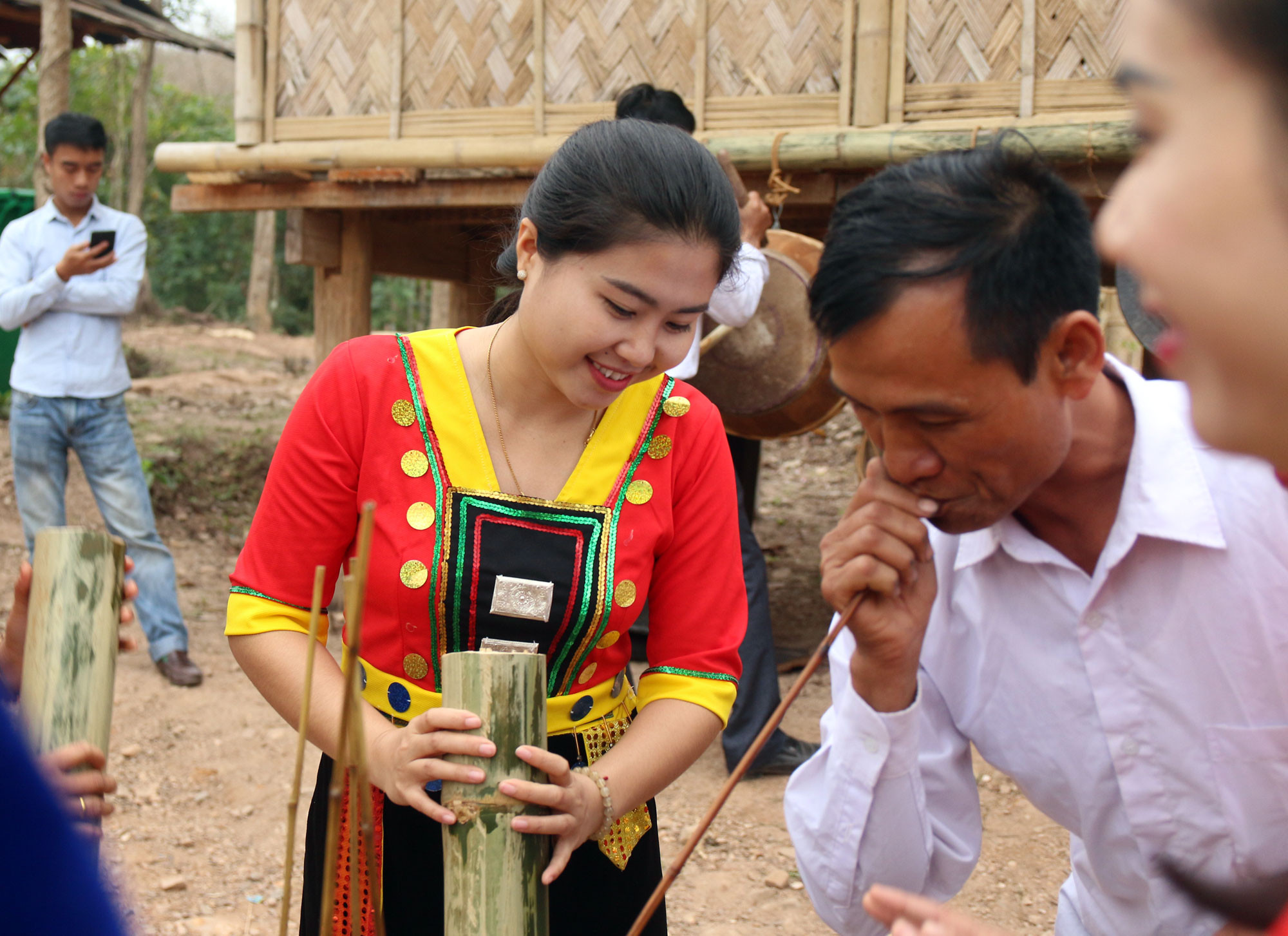 |
| Each ethnic minority group in western Nghe An province has its own New Year celebration; however, nowadays, they all celebrate the traditional Lunar New Year of the entire Vietnamese nation. |
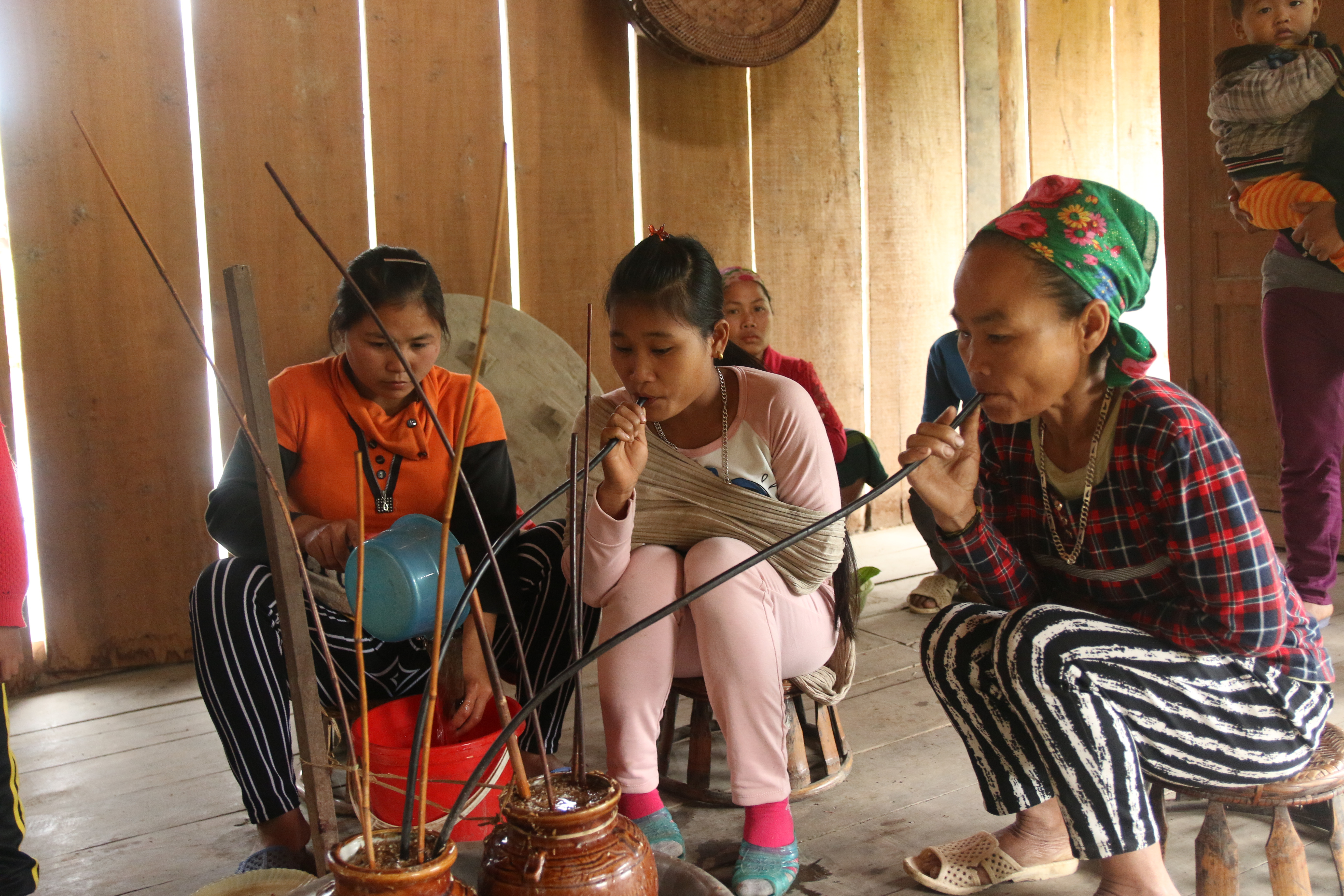 |
| Among the dishes served during Tet (Vietnamese New Year), rice wine is an indispensable drink for the Thai and Khmu people. The length of each celebration depends on the amount of rice wine prepared by the host. |
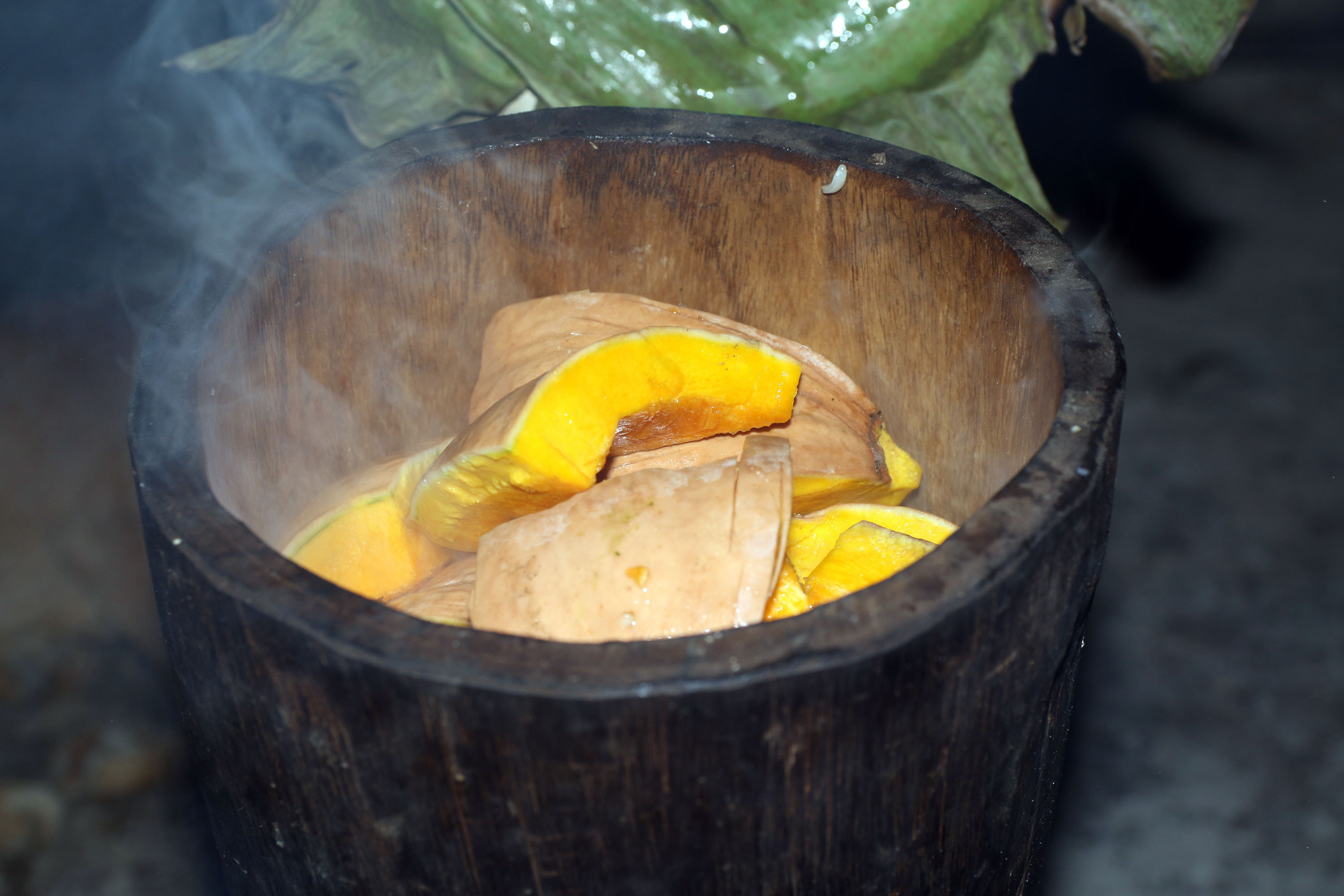 |
| For the Khmu people, pumpkin is a mandatory item on the offering tray during Tet (Lunar New Year) to express the loyalty and gratitude of descendants to their ancestors. |
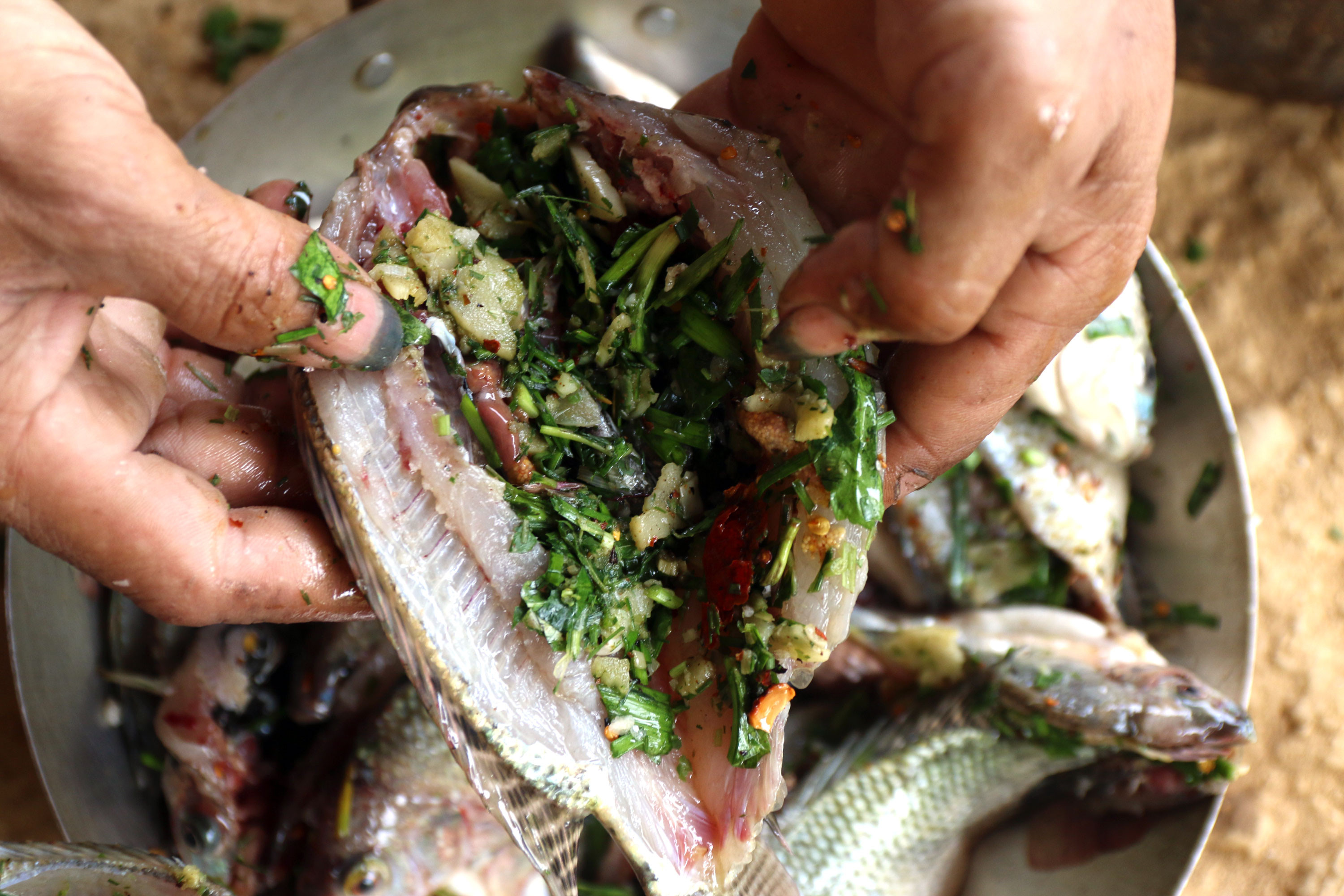 |
| In addition, this community also has grilled fish, or fish stew. According to tradition, the fish is offered as a sacrifice to pray for a year of favorable weather and abundant harvests. |
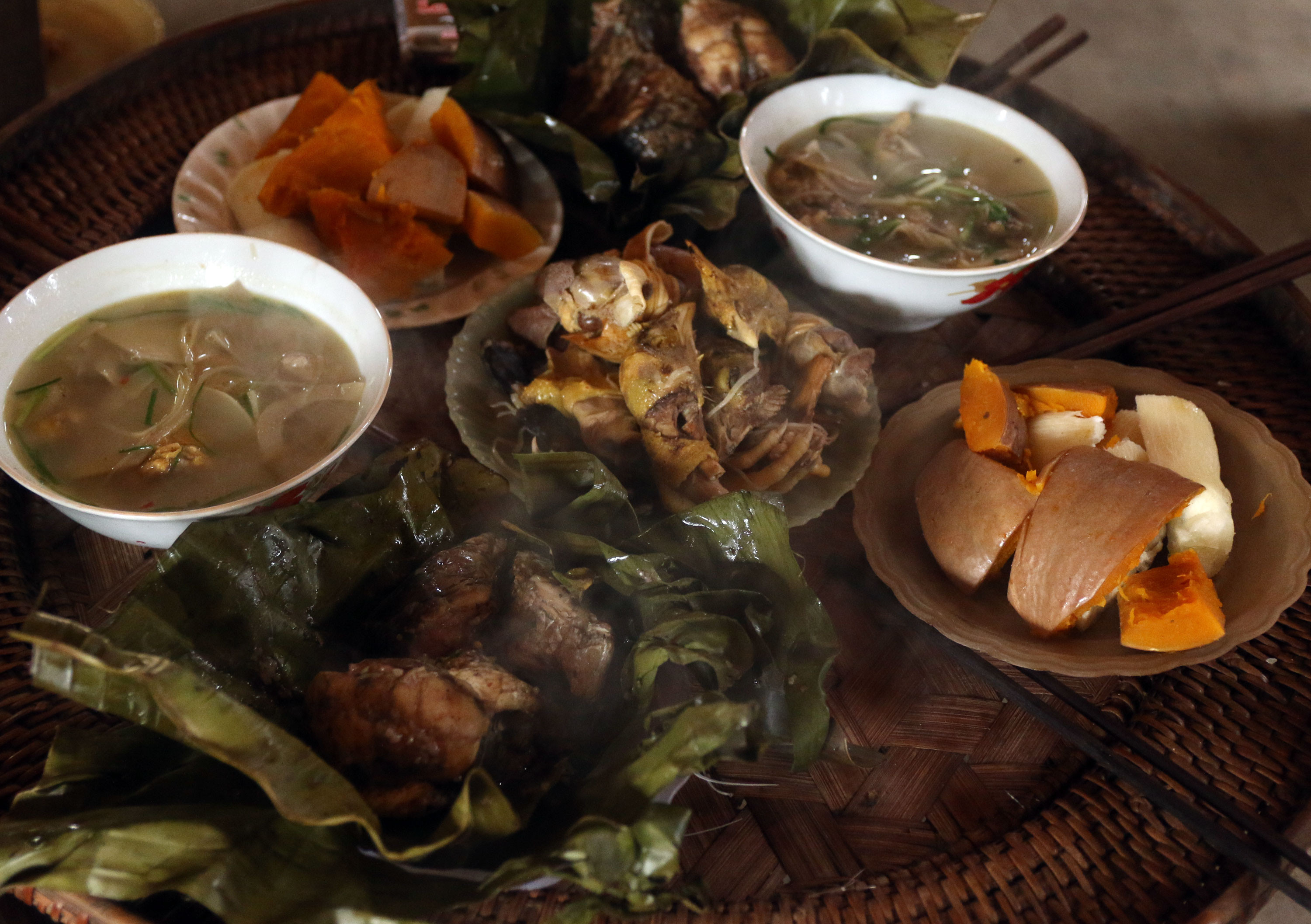 |
| The offering tray for the New Year celebration of the Khmu community. |
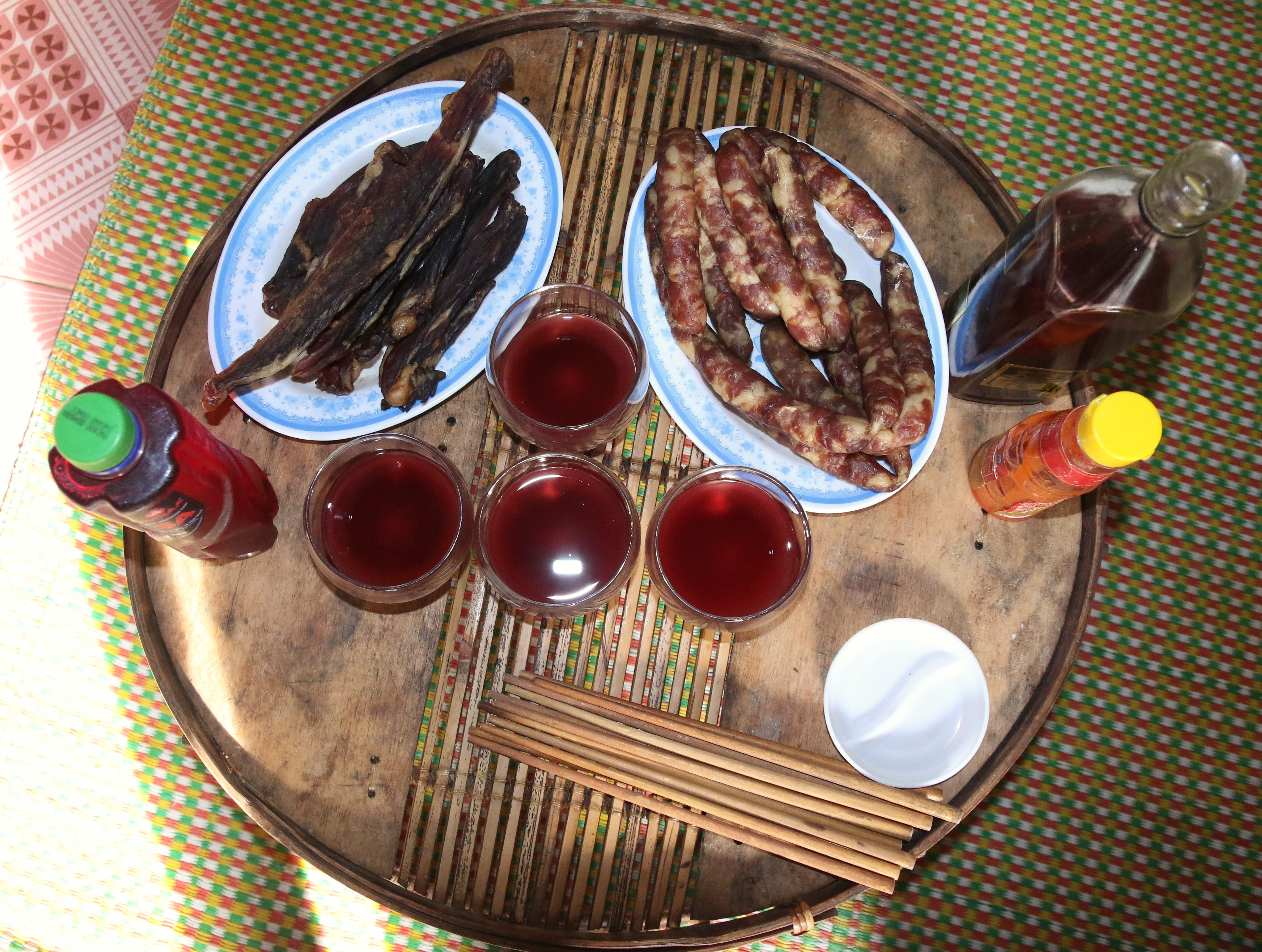 |
| One thing that sets them apart in the Thai community is that their New Year's feast includes indispensable dishes such as braised pork, rice wine, and sausages. |
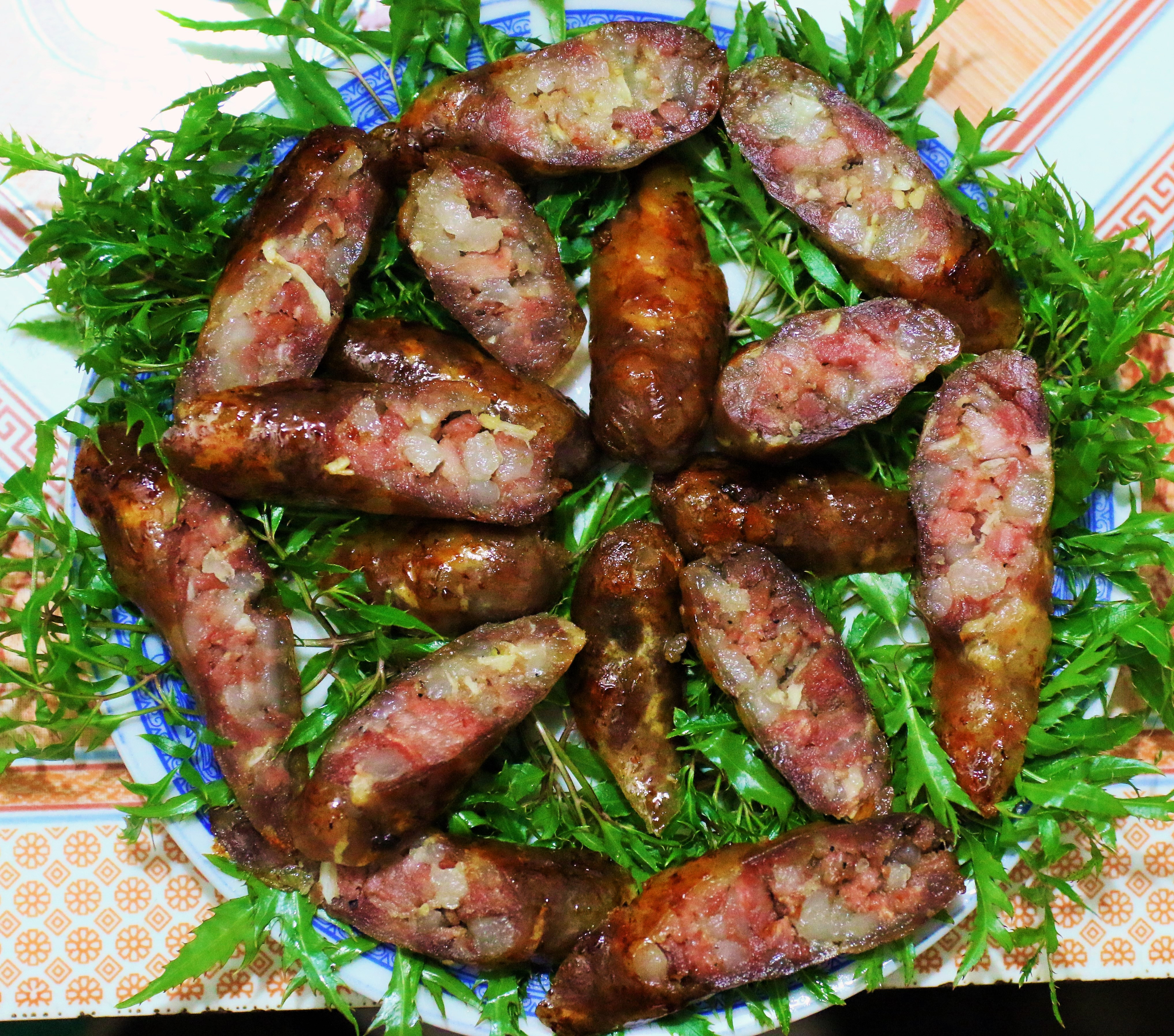 |
| Thai sausage. |
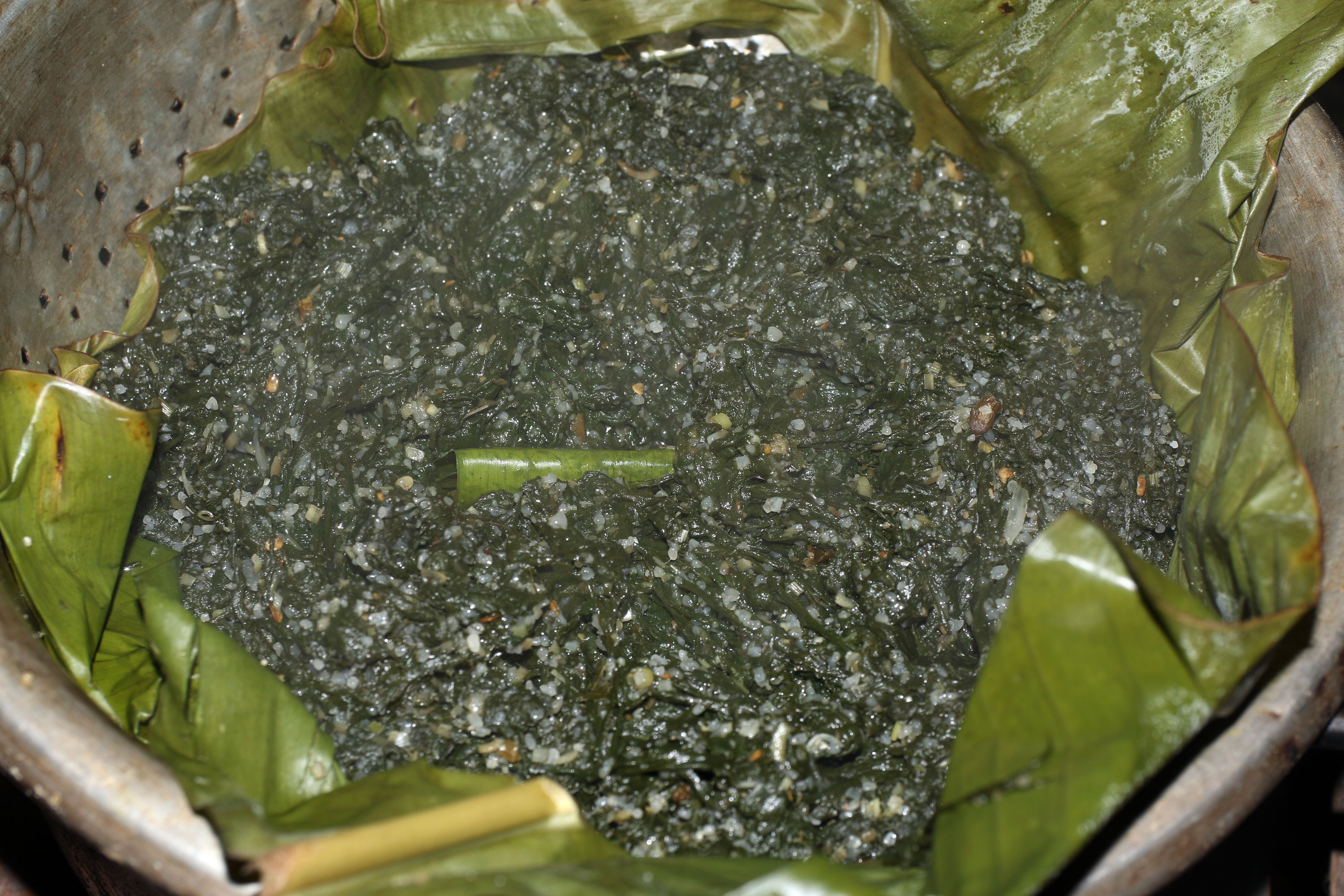 |
| Families who prepare more carefully also include rock moss as a dish. The rock moss is harvested from streams and cleaned through several steps before being processed. |
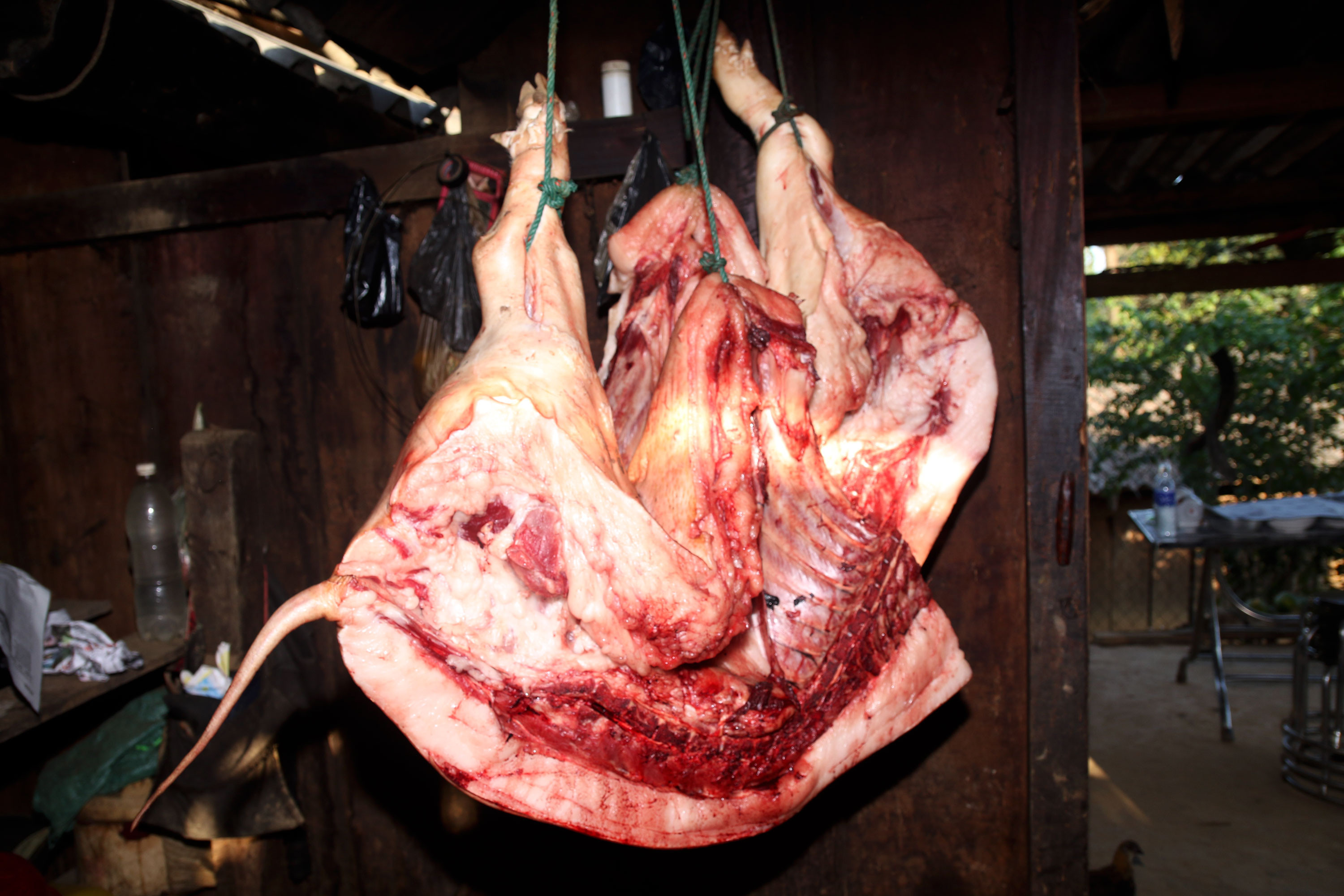 |
| For the Hmong people, pork is an important food during Tet (Lunar New Year) or any important event. A portion of the pig is used for consumption, and another portion is given as gifts to the shaman and relatives on the mother's side. |
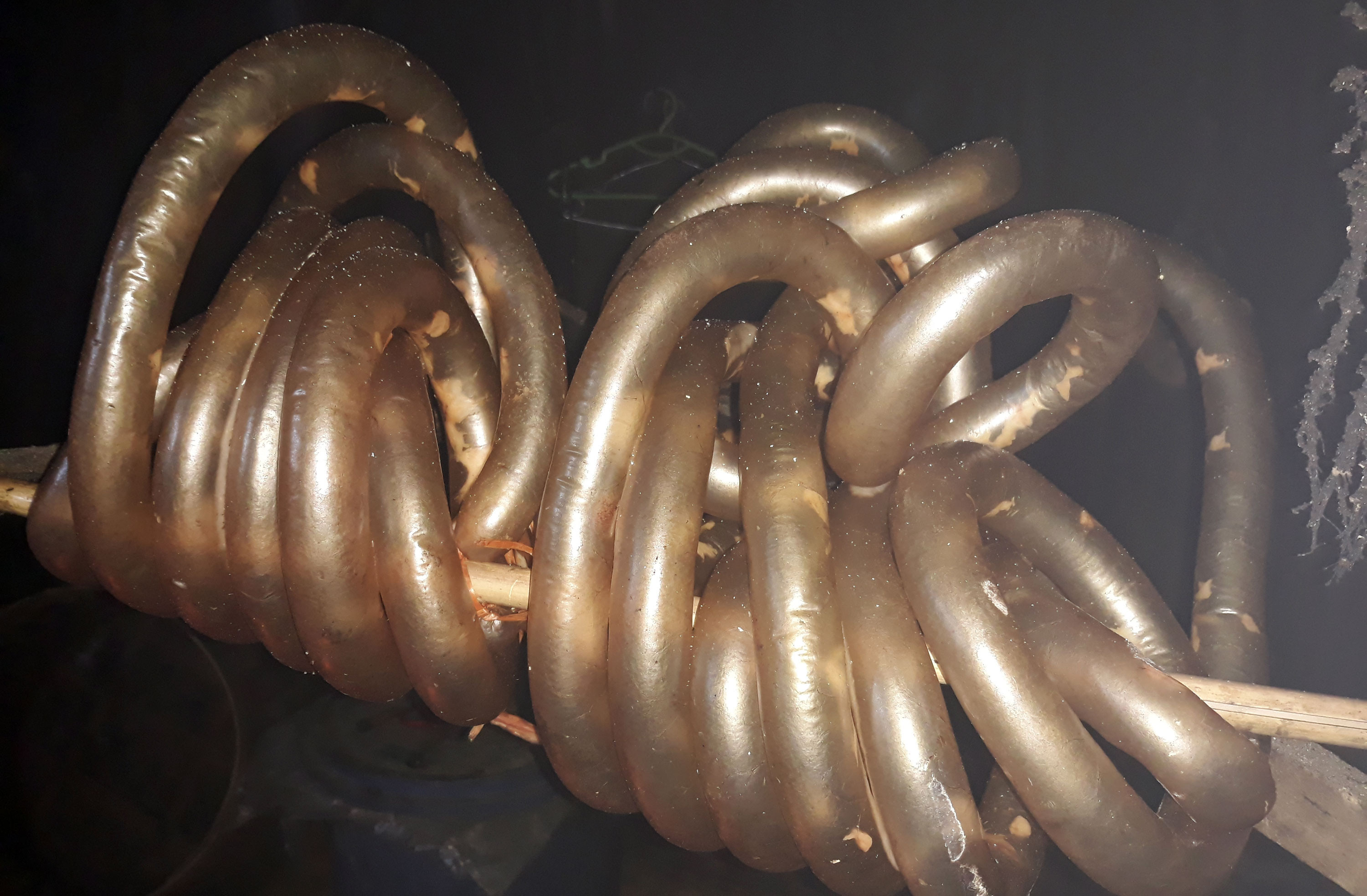 |
| The intestines are cleaned and dried by the Hmong people in the attic above the kitchen, then processed into "nhú dử" (a type of sausage but with a filling of sticky rice and various spices) to treat honored guests. |
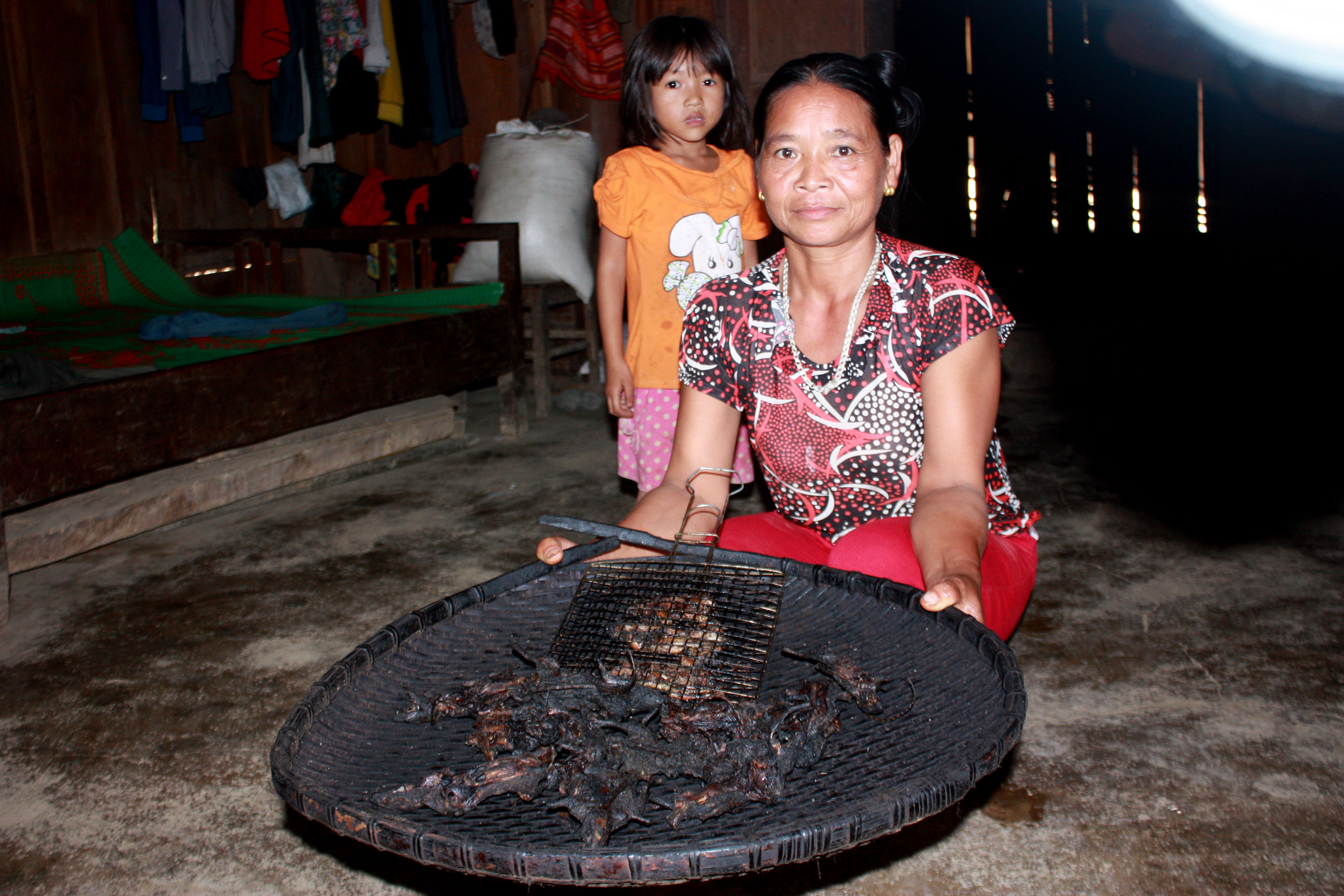 |
| In addition, some families, including the Thai, Hmong, and Khmu people, store a small amount of dried meat from forest rats to use as food during Tet (Lunar New Year). |