

Challenges for Ukraine in the counter-offensive against Russia
To launch a counteroffensive, Ukraine needs more troops and weapons than the Russian forces, something Kyiv currently lacks.
On August 29, the Ukrainian army announced the launch of multiple offensives in the southern part of the country, including Kherson province, in an effort to retake territories currently controlled by Russia.
It is difficult to assess the scope and immediate impact of the counteroffensive, but experts believe it could set the stage for further developments in the conflict.
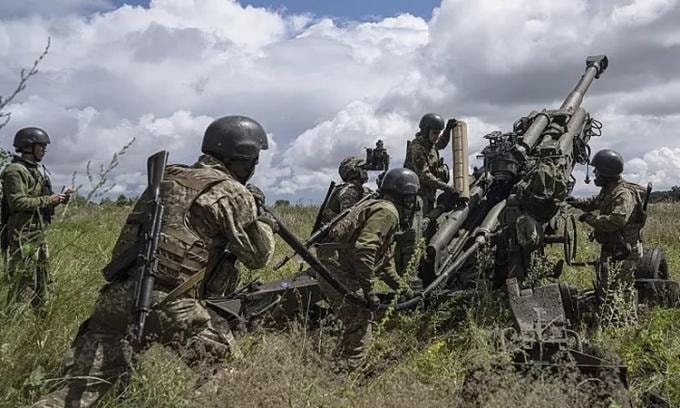 |
Ukrainian soldiers prepare to fire M777 howitzers at Russian positions on July 14. Photo:AP |
For months, Ukrainian officials have repeatedly announced a major counteroffensive in Kherson aimed at pushing Russian forces off the western bank of the Dnieper River, the natural barrier separating the region.
President Volodymyr Zelensky's government is also under pressure to quickly launch a counter-offensive before the rainy season arrives, which would turn rural Ukraine into muddy swamps, and before the winter energy crisis threatens to undermine Western support for Kyiv.
Observers believe that the success of the campaign will help Ukraine rekindle its fighting spirit and persuade its Western allies to continue providing weapons. Meanwhile, Ukraine's failure in the counter-offensive would lead to a stalemate in the fighting, something Kyiv never wants.
Ukrainian military and civilian officials said the August 29 attack had "broken through the enemy's first line of defense near Kherson." The Ukrainian army also claimed to have destroyed a major Russian military base behind the lines.
The Russian Defense Ministry confirmed Ukraine's counterattack attempt in the region, but added that "Ukrainian units suffered heavy losses" and the attack had "failed miserably." According to Moscow, approximately 560 Ukrainian soldiers were killed or wounded, and two fighter jets, along with dozens of tanks and other armored vehicles, were destroyed in the counterattack.
"The counterattack demonstrates Ukraine's desire to break the stalemate on the battlefield," commented an unnamed U.S. defense official. However, he also noted that the Pentagon remains uncertain whether Ukraine has made significant progress with its current military strength.
Ukrainian Sergeant Dmytro Pysanka, stationed on the Kherson front, confirmed that "the counteroffensive is underway." "I don't know what will happen next or how, but so far, everything is going according to plan," he replied in a message.NY Times.
Since the end of July, the HIMARS multiple rocket launcher systems supplied by the US to Ukraine have begun targeting bridges leading to the city of Kherson in an effort to isolate Russian forces west of the Dnieper River.
General Dmytro Marchenko, a senior Ukrainian military official, declared that Kherson would be liberated by the end of this year. However, observers believe that goal is a major challenge for Ukraine.
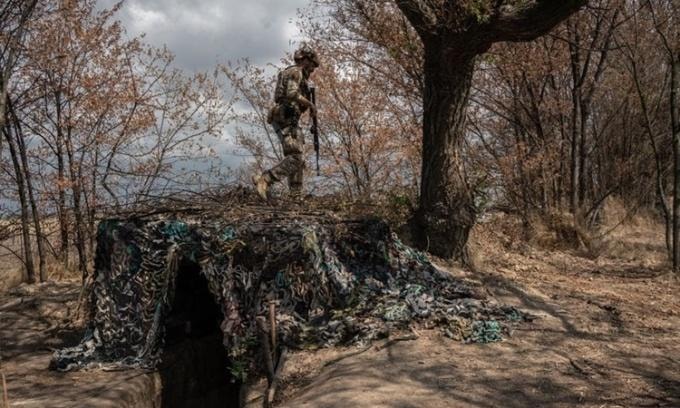 |
A Ukrainian defensive position on the border of Mykolaiv and Kherson provinces in the south of the country. Photo:WSJ |
The HIMARS artillery bombardments weakened the Russian lines in Kherson, but that wasn't enough. After the shelling, only infantry could regain control of the territory.
According to military theory, an attacking force needs three times the size of a defensive unit. Meanwhile, numbers are clearly not an advantage for Ukraine.
Following Kyiv's repeated announcements of a counter-offensive, Russia took precautionary measures by withdrawing forces from the city of Izyum on the eastern front to reinforce Kherson and surrounding areas.
According to expert Konrad Muzyka from Rochan Consulting, a company that monitors the Russia-Ukraine conflict, Russia deployed 13 battalion-level combat groups (BTGs) in Kherson at the end of July, but this number may now increase to 25-30 BTGs, each with 600-800 troops.
"I think Ukraine has missed its best opportunity to counterattack," Muzyka said. "They now don't have enough manpower to match Russia's troop numbers."
According to the magazineEconomistUkraine has a fairly large armed force in terms of numbers, but most are members of the Territorial Defense Forces, who have not received extensive military training.
Jack Watling from the Royal United Services Institute in the UK noted that after six months of fierce fighting, Ukraine's most battle-hardened brigades had suffered heavy losses. Training and equipping new units for a counter-offensive would take considerable time.
Offensives typically require more ammunition than defensive ones. Offensive forces also tend to suffer higher casualties. According to Sergiy Grabskyi, a colonel in the Ukrainian army's reserves, since 1992, the Ukrainian army has not regularly studied offensive strategies during exercises.
"After eight years of fighting in the east, Ukrainian army units are excellent at defense, but they have almost no experience in deploying large-scale offensive operations," he said.
Unlike Ukraine, the Russian army had time to prepare its defenses. For months, they had dug a vast system of trenches in Kherson. They may also have trained artillery to ambush targets along the routes Ukraine would use to advance.
"Ukraine's counteroffensive risks hitting a dead end," assessed Chris Dougherty, a former Pentagon official. "They could pay a heavy price for their lack of manpower and resources. This is likely Ukraine's last major offensive this year."
A Ukrainian military intelligence source described the latest offensive in Kherson with rather cautious details, stating that it was only the beginning of a larger operation.
On the night of August 28, Ukraine attacked key bridges, river crossings, ammunition depots, and Russian command centers in the south, cutting off Russia's ability to provide rear-area support to the front lines.
Sources say that breaking through Russia's first line of defense is good news. But a more difficult challenge awaits them: breaking through the second line, which is defended by heavily armed and highly mobile mechanized units.
If Ukraine succeeds in this attempt, they will have the opportunity to break through the third line of defense to reach the banks of the Dnieper River northeast of Kherson, thereby threatening the 20,000-25,000 Russian troops believed to be deployed on the west bank of the river.
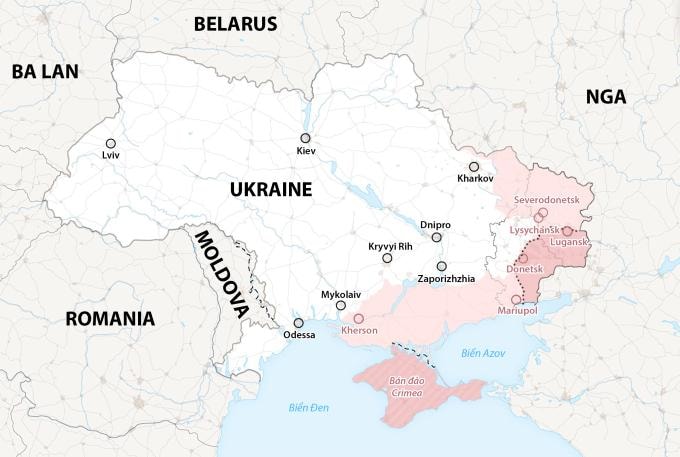 |
The battlefield situation in Ukraine after more than 6 months of fighting. Graphic:NY Times |
A former senior Ukrainian official said the immediate goal of the operation was not to directly attack Russian forces in Kherson, but to weaken Russian positions around the area, hoping to force them to retreat without any urban battles breaking out. Urban battles are often protracted, inflicting heavy losses on both attacking and defending forces.
"If Ukraine only retakes Kherson, Russian forces will intensify shelling from across the river," he warned, while predicting that Ukraine's counteroffensive would be slow and steady, minimizing risks to the attacking forces.