

'Special Task Force' in the heart of the Pù Mát forest
(Baonghean.vn) - In Pu Mat National Park, there is a rather special group of forest rangers. Their job is to eat and sleep in the forest for more than two weeks each month, with their main task being to patrol and apprehend those who illegally hunt and shoot wild animals; at the same time, they dismantle the numerous animal traps scattered throughout the forest.
"Eating in the forest, sleeping outdoors" to rescue wild animals.
In mid-December, amidst the biting cold of the first monsoon winds, Nguyen Huu Trung (28 years old) and his colleagues were still packing their belongings, preparing for a long trip into the forest. To cope with the rain and cold during their time eating and sleeping deep in the forest, they had to carry quite a lot of personal items on their backs. This was the team's last long trip into the forest in 2022.
Trung is the coordinator of the Forest Protection Team in Pu Mat National Park. This team is also known as the Antipoaching Team – the first special unit of its kind in Vietnam to actively support the forest rangers. It also has other names such as the "Wildlife Protection Team" or "Special Task Force"... The team has 15 members, with Trung responsible for planning and coordinating with forest rangers to deploy patrol routes, conduct raids, protect the forest, and promptly prevent and remove traps and camps used for exploiting flora and fauna in Pu Mat.
The team was established and paid by the Wildlife Conservation Center in Vietnam since 2018. Most of the members are engineers and forestry graduates, who have undergone thorough recruitment, training, and instruction. Besides requiring knowledge, skills in foraging, and good health, candidates must also love the forest, and especially, wildlife. Their income is only slightly over 8 million VND per month, which is hardly commensurate with the effort, but since being selected, the 15 members of the team have been very dedicated and passionate about their work.
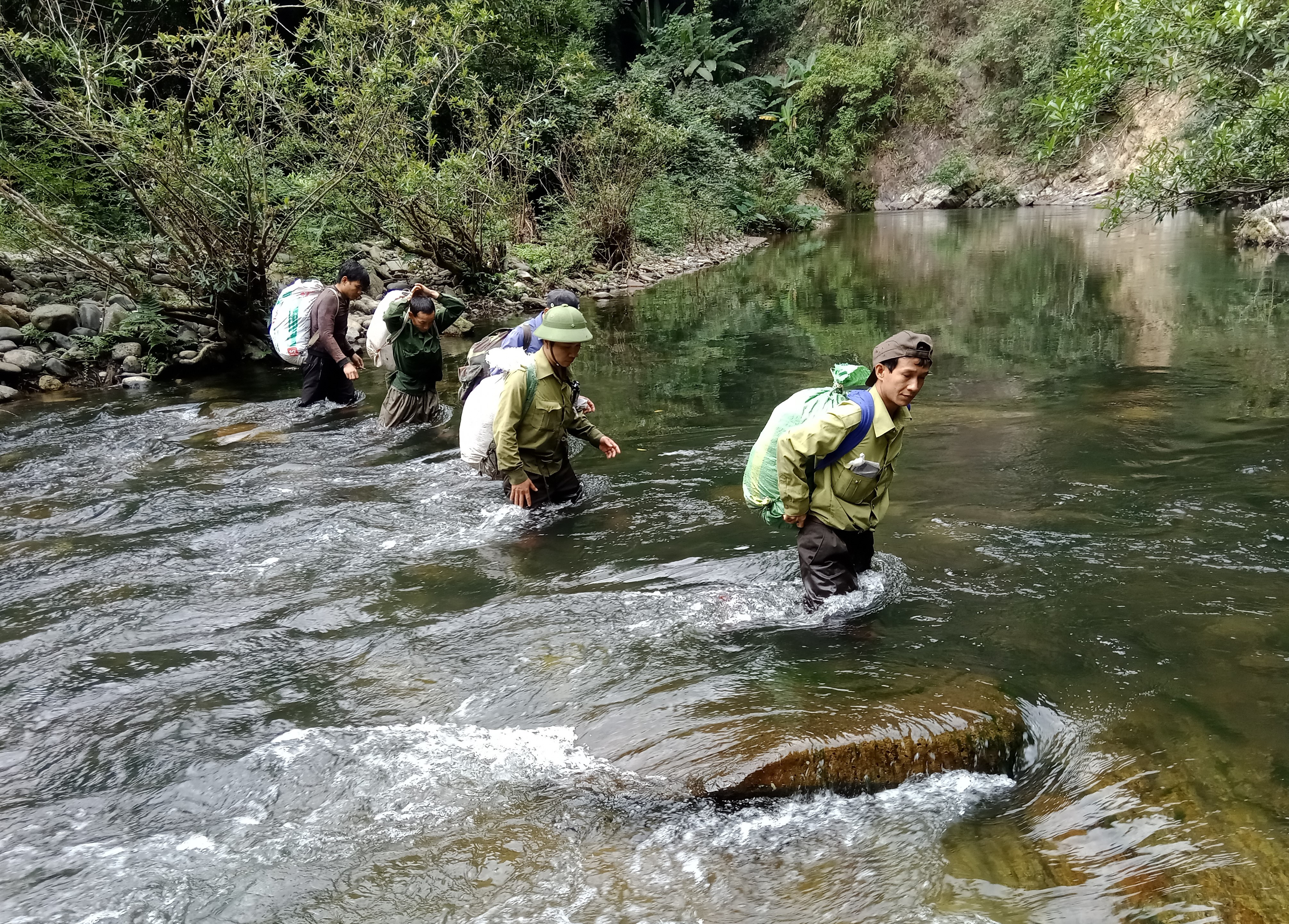 |
A difficult journey. Photo: HT |
Nguyen Huu Trung, originally from Thanh Chuong district, graduated from the University of Forestry and then dedicated himself to the Pù Mát mountain forest. His work involves being deep in the forest, sometimes leaving him without returning home for an entire month. Working in this team, they make at least two trips into the forest each month, each lasting over a week. Their supplies include rice, dried fish, salted pork, cooking pots, hammocks, tarpaulins, and medicine. Each person carries a sack weighing about 20 kg on their back. To sustain themselves through long journeys in adverse weather conditions, they also carry ducks and chickens dangling from their sides to eat and regain their strength. Each time they go into the forest, they are divided into several groups, each with only about 5 people.
On each of these forest expeditions, their greatest fear is the countless traps set by hunters, like a vast network of snares. Carelessness can easily lead to accidents. Furthermore, they face fierce resistance from hunters, armed with homemade hunting rifles. Meanwhile, despite being called a "Special Task Force," they lack any supporting equipment. Each trip involves traversing forests and wading through streams during the day, and sleeping in hammocks at night. Some days, members of the group travel dozens of kilometers through the forest without finding a water source. Without water, at night they have to use plastic bags to collect dew from moss-covered tree trunks. Leeches, forest mosquitoes, fruit flies, rotting branches, and sudden floods are constant threats.
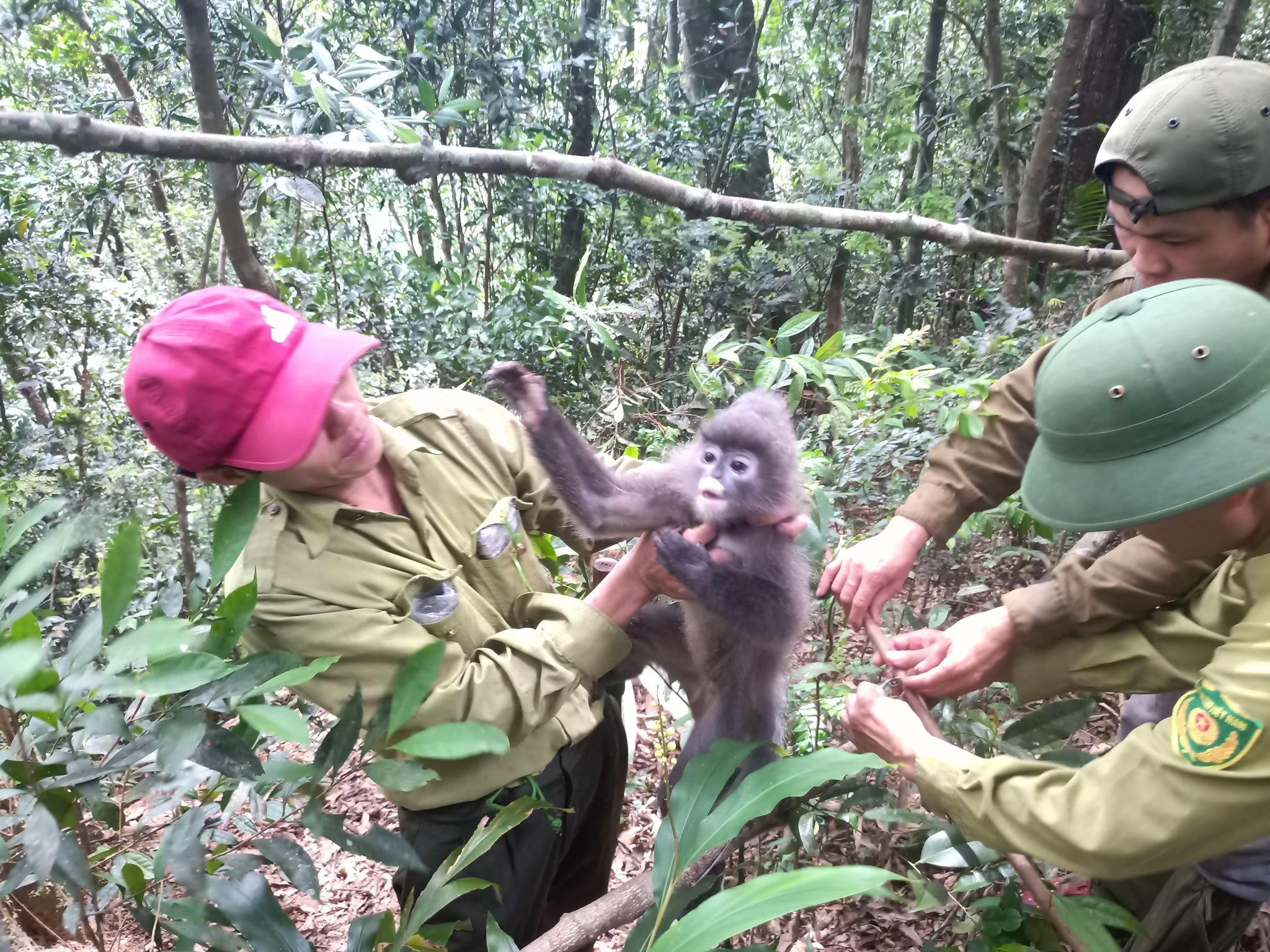 |
Rescuing wild animals caught in traps. Photo: HT |
Paying back the debt to the green forest.
At Pù Mát National Park, we also met a rather special person. That was Nguyen Van Huy (41 years old), from Bo Trach district, Quang Binh province. Mr. Huy is currently a part-time employee of the "Special Task Force". His hometown is right next to Phong Nha - Ke Bang National Park, and since childhood, Huy has been familiar with the mountains and forests, living off the forest. With over 20 years of experience in the forest, he is a valuable asset to the team on every patrol.
Over 20 years ago, Huy first set foot in Pu Mat National Park, following his compatriots to search for agarwood. Since then, he has become intimately familiar with the ancient forests along the Nghe An border, down to every stream. The agarwood search journey lasts several months in the forest, and during times of food shortages, hunting wild animals for meat is unavoidable. Therefore, in addition to his agarwood-finding skills, Huy has also gradually become a skilled hunter. "However, the most dangerous thing is that groups like Huy often teach local people how to hunt wild animals effectively," said Nguyen Huu Trung, speaking about his former rival, now a close colleague.
One day at the end of 2018, a group of four agarwood prospectors from Quang Binh province, including Huy, were crossing the Pu Mat forest into Laos when they were discovered by a "Special Task Force" and forest rangers/border guards. All four were taken to a nearby border post. There, they were each fined 300,000 VND for illegally entering the border area. While the four were being processed, Mr. Tran Xuan Cuong, Director of Pu Mat National Park, personally visited them. Knowing that these men were very skilled at navigating the forest and were familiar with the terrain of Pu Mat, Mr. Cuong offered to hire them. Two of them accepted, but to this day, only Huy remains with the work.
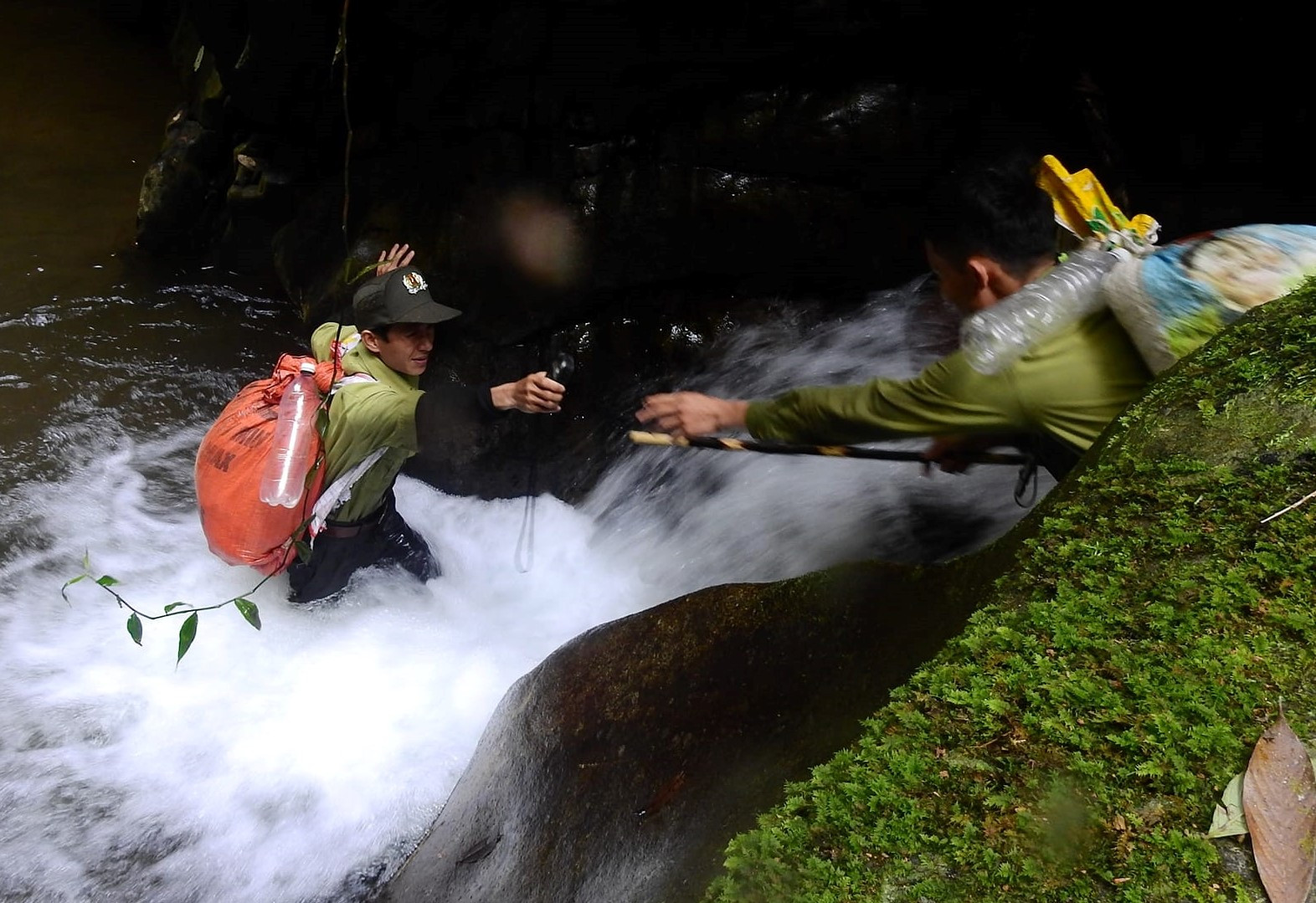 |
Since its establishment, this "Task Force" has conducted over 2,000 patrols, spending 7,466 days hiking in the forest. |
Despite lacking formal qualifications and training, Huy's experience in the forest impressed the entire team. Each patrol involved traversing dozens of kilometers through the forest without a map, yet Huy never led the team astray. He could determine directions simply by looking at the forest canopy and the moss growing on the tree trunks. Huy passed on his forest-going experience and his methods for detecting and confronting illegal loggers and hunters in Pù Mát to his teammates. The "illegal loggers" in Pù Mát were also people who had lived in the forest for generations; their skills in navigating the forest and dealing with forest protection forces were quite formidable. After the traps used to catch monitor lizards throughout the forest were discovered and destroyed, the hunters switched to smaller traps and avoided setting up shelters in easily visible locations. However, these hunters could not escape the watchful eyes of Nguyen Van Huy.
Since its establishment, this "Special Task Force" has conducted over 2,000 patrols, spending 7,466 days hiking in the forest. They also estimate the total distance walked by the team to be 68,665 km. During these forest expeditions, the team detected 861 violators and issued citations to 370 people. In addition, they dismantled nearly 15,000 animal traps, discovered 311 animals that had been hunted, shot, or transported; and destroyed over 1,000 hunting camps. Through camera-guided traps, Pu Mat National Park assesses that since the team's formation, the number of wild animals in the park has increased significantly.