

Tin mines are killing the Nam Ton River.
(Baonghean.vn) - From a river that provided abundant aquatic resources for the people, for many years now, the Nam Ton River (Quy Hop district) has turned a murky red color and is severely polluted. The main cause of this situation is the clandestine discharge of waste directly into the river by mining operations.
Dead River
For many years, the people of Quy Hop district have become all too familiar with the murky red color of the Nam Ton River. They call it the "dead river," because it no longer provides them with any benefit, not even for irrigation.
The Nam Ton River, along with the Nam Huong River, are the two main tributaries of the Dinh River – one of the natural symbols of Quy Hop District. The Nam Ton River originates from the mountain ranges in Chau Hong, Chau Tien, and Lien Hop communes. In many sections of these communes, the river flows underground at the foot of the mountains, forming numerous karst caves. Upon reaching Chau Quang commune, the Nam Ton River merges with the Nam Huong River to form the Dinh River.
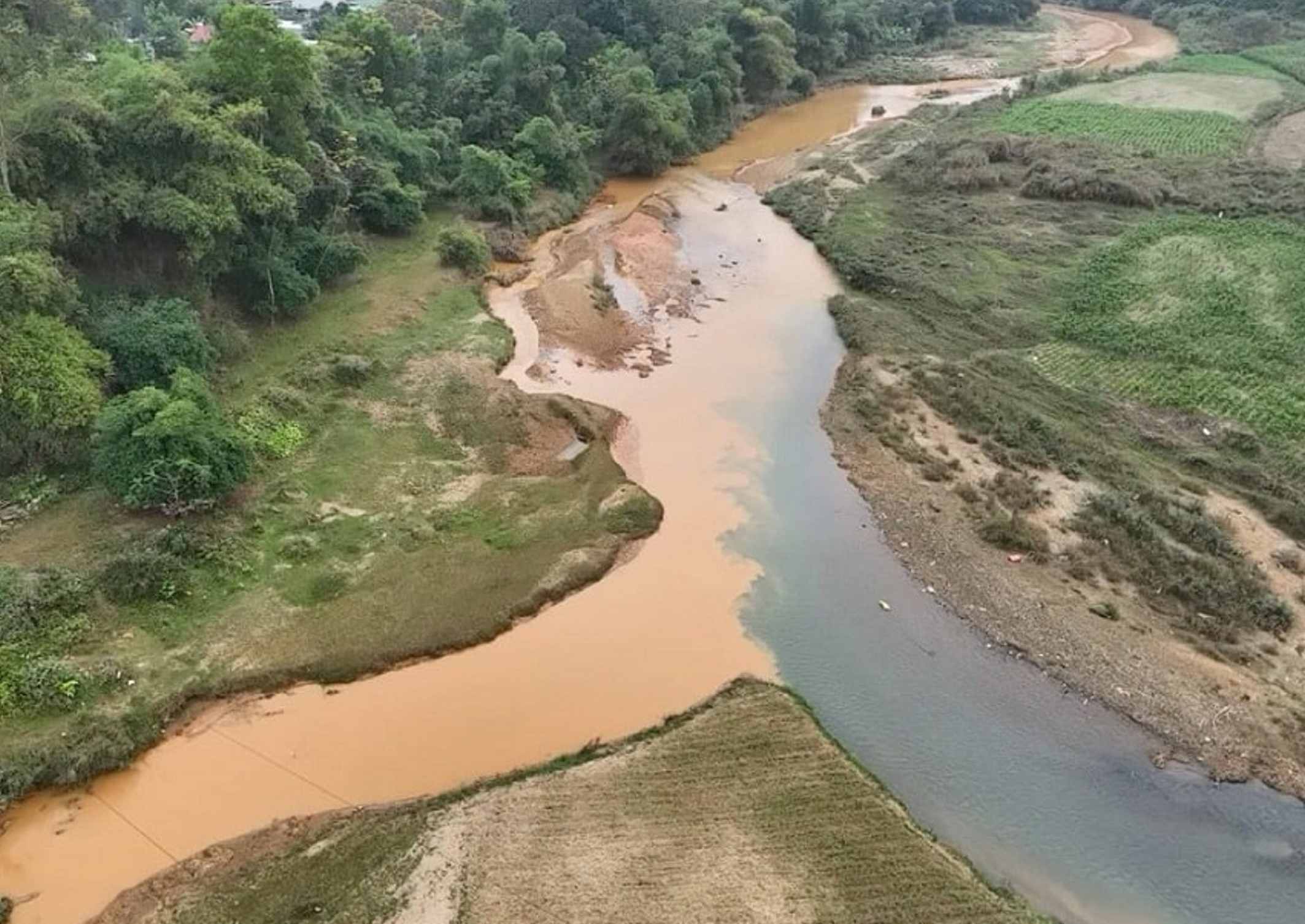 |
The Nam Ton River (on the left) at its confluence with the Nam Huong River. Photo: TH |
“It’s red like that all year round. It’s dead! Only when the mines stop discharging waste will the river come back to life,” said Mr. Lo Dinh Ha (72 years old, Chau Hong commune), shaking his head in dismay. In Mr. Ha’s memory, the Nam Ton River used to be crystal clear, and local people often drew water from it to their homes for daily use. It was also full of shrimp and fish, a great source of income for them. During the dry season, the river water was even used to irrigate the rice fields here. However, the fate of this river had to change when the first mining companies arrived.
According to Mr. Lang Van Hanh, Chairman of the Chau Tien Commune People's Committee, that was about 30 years ago, when the first tin ore processing and mining plant was licensed right next to the upstream of the Nam Ton River.
"Previously, environmental issues were not given much attention. The mines simply discharged waste directly into the river without treatment. The Nam Ton River has been polluted ever since," Mr. Hanh said.
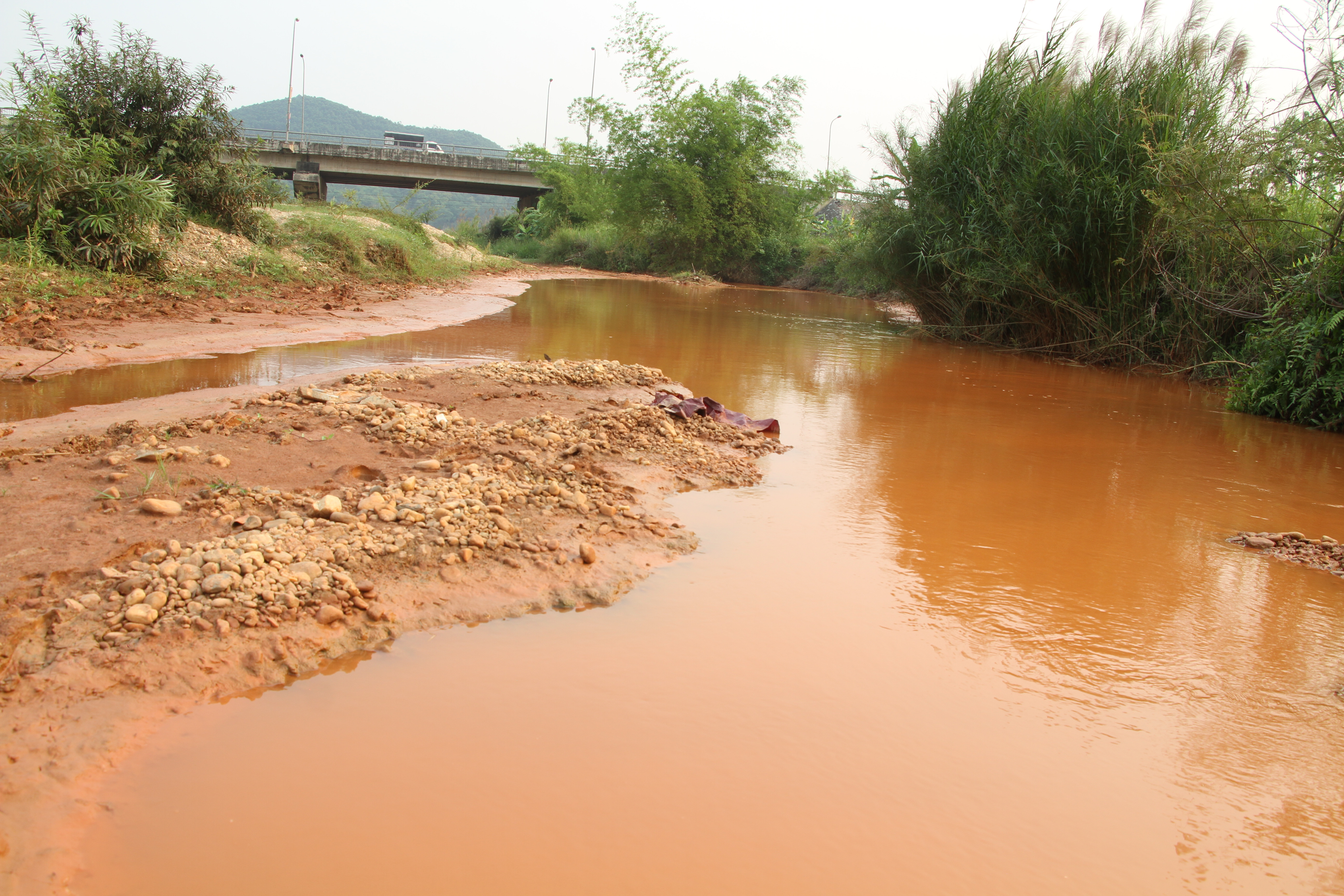 |
For most of the year, this river is red. Photo: TH |
To date, dozens of mineral mines have been licensed in the upstream area of the Nam Ton River, in the communes of Chau Hong, Chau Tien, and Lien Hop. This area is therefore known as the "mineral capital" of Nghe An province. Among them, tin ore mines are the main culprits that have turned the Nam Ton River into a dead river.
For most of the year, the Nam Ton River's water is a terrifyingly murky red. Fish and shrimp gradually die off, and people no longer dare to irrigate their fields with the water. After each irrigation, the rice plants wither, and the soil degrades due to the polluted water. Without a water source for irrigation, they are forced to switch to other crops.
Pollution in the Nam Ton River has become increasingly serious in recent years, due to the increasing number of licensed tin ore mines. According to the Nghe An Provincial Environmental Protection Agency, water samples taken from monitoring points on the Nam Ton River show a high turbidity, with TSS levels exceeding standards multiple times. Specifically, in 2017, TSS levels exceeded the standard by 2.4-3.3 times; in 2018, by 1.63-4.73 times; and in 2019, by 1.43-10.86 times. Notably, in 2020, the TSS level reached 808 mg/l during the third monitoring period, while the Vietnamese standard is 30 mg/l (exceeding the standard by 26.93 times). In the sediment sample, which was also first monitored by this unit in 2021, the arsenic level was over 157 mg/kg, while the Vietnamese standard is 17 mg/kg (exceeding the limit by 9.28 times), and the mercury (Hg) level exceeded the limit by 1.01 times.
However, these are only water samples taken at a monitoring station on the river section passing through Quy Hop town, tens of kilometers upstream from the Nam Ton area. From upstream, where the ore mines are located, the river has merged with many small streams. Therefore, the level of pollution may have decreased significantly.
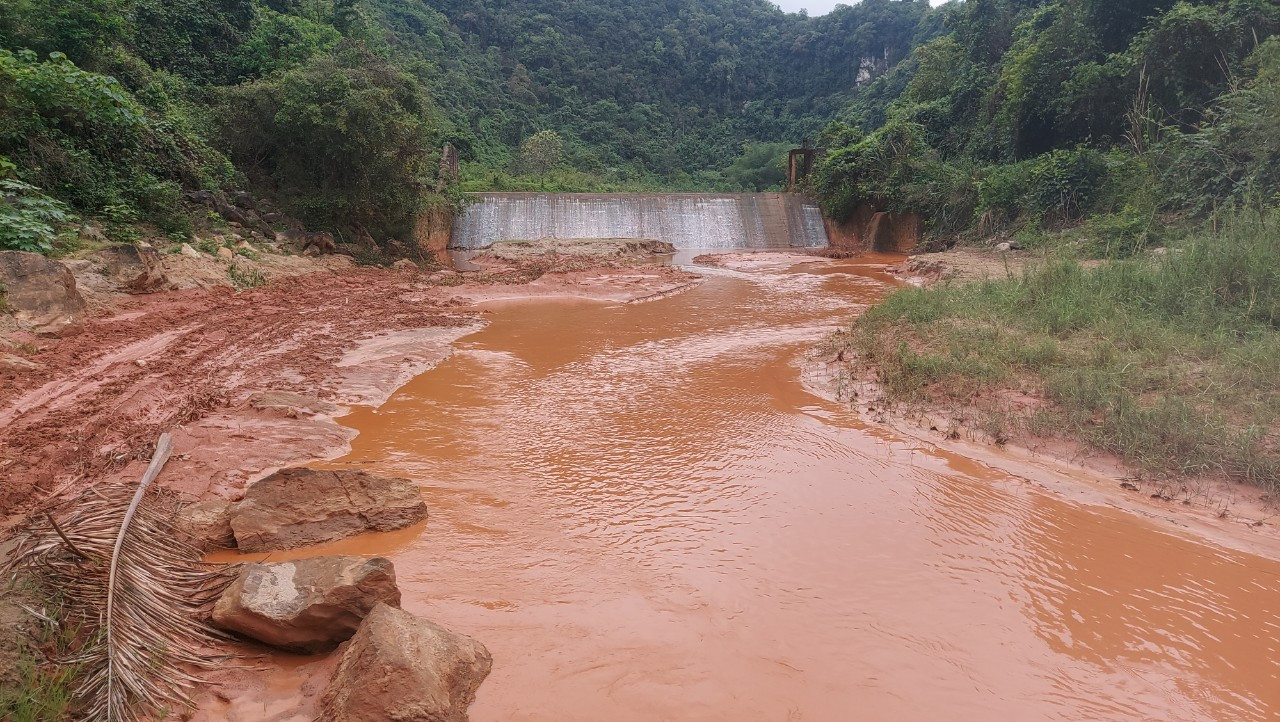 |
The Nam Ton River has been turned into a dead river. Photo: TH |
The sophisticated tactics of mine owners
According to our investigation, as of January 2022, there were 13 licensed tin ore mines in Quy Hop district with remaining mining permits. Of these, 10 are located upstream of the Nam Ton River in the three communes of Chau Hong, Chau Tien, and Lien Hop. Mine owners typically pump groundwater to process the ore, separating other compounds and metals from the tin. According to regulations, wastewater used for ore processing must be channeled into settling ponds, treated, and then reused, and not discharged into the environment.
However, many mine owners, after processing ore, find ways to discharge waste directly into the environment. This not only pollutes the environment but also causes groundwater to be pumped out to the point of depletion. In recent years, in this "mining capital," hundreds of houses and offices have cracked, subsided, and wells have dried up completely. According to the inspection team's conclusion, the cause is the depletion of groundwater resources.
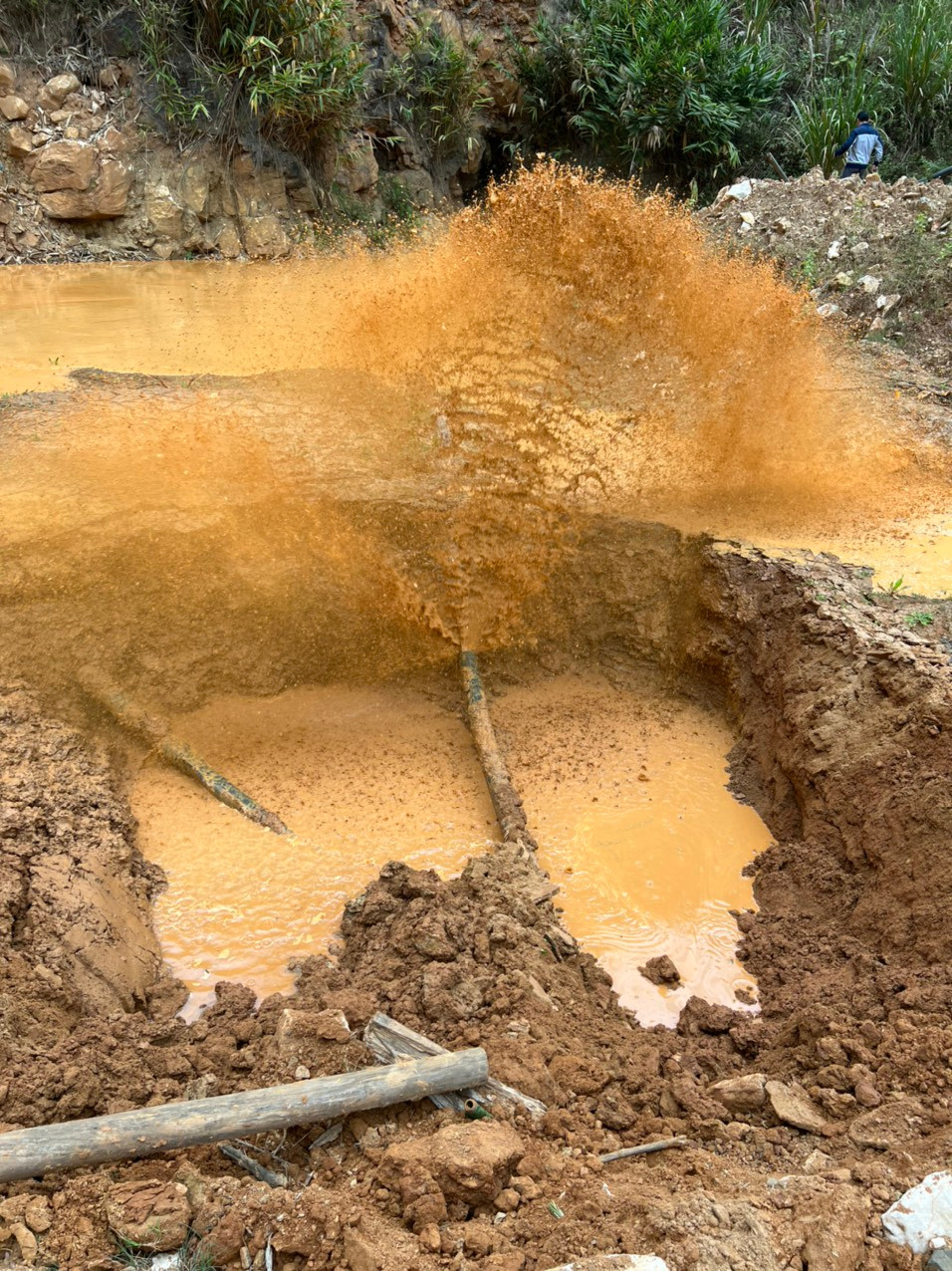 |
A pipe buried deep underground leading into a karst cave after being excavated. Photo: TH |
A leader from Quy Hop district stated that the Nam Ton River's severe pollution over the past decades is one of the most pressing issues facing the locality. Local authorities and relevant departments have regularly inspected the ore mines, but it has been very difficult to detect violations.
During a recent inspection, when one of the mine's wastewater pipes malfunctioned, the inspection team discovered that two businesses were secretly discharging wastewater directly into the Nam Ton River. Taking advantage of sections of the river flowing underground through karst caves deep within the mountains, the two tin mines had installed pipes up to 800 meters long, burying them underground and running them directly into the caves for discharge. Because the discharge point was deep inside the caves, previous inspection teams had not detected it.
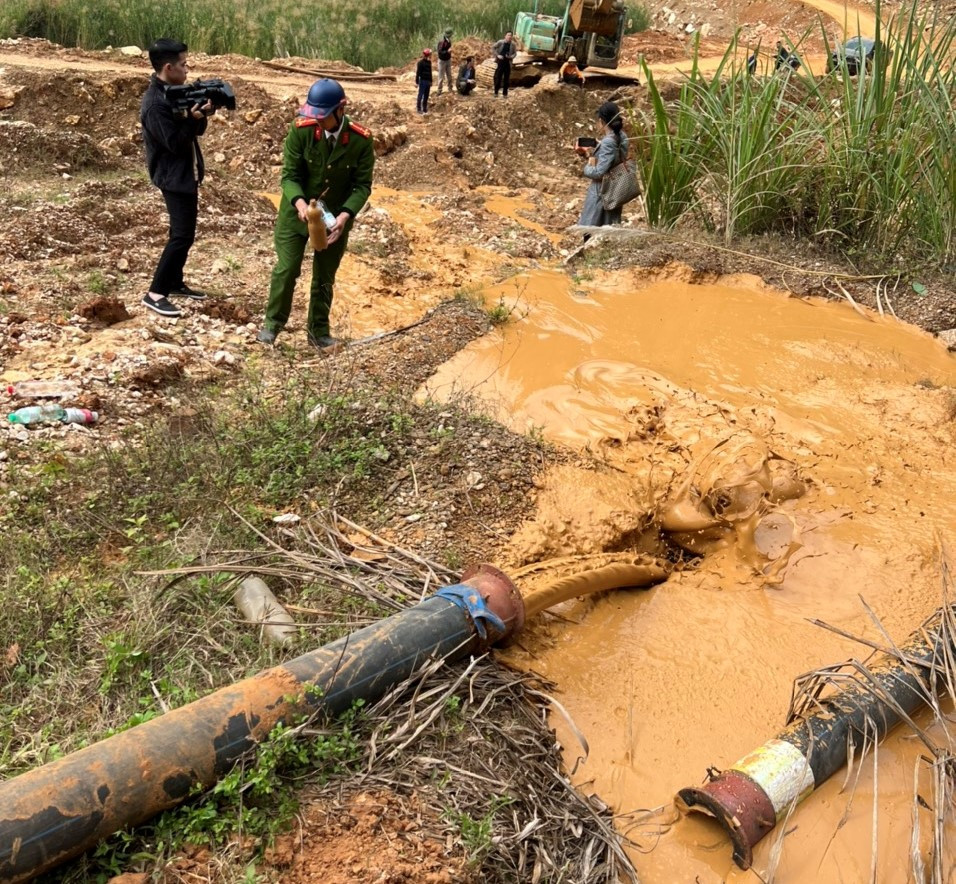 |
Authorities are testing water samples. Photo: TH |
Specifically, during an inspection at the tin ore mining and processing facility of Hong Luong Co., Ltd. in the Hung Noi area (Chau Hong commune), the inspection team unexpectedly discovered a large amount of reddish wastewater gushing from the ground. The leaders of Quy Hop district, who directly inspected the site, immediately dispatched an excavator and discovered a 150mm diameter pipe buried deep underground. Following this pipe, the inspection team found the final discharge point deep within a karst cave, where the Nam Ton River flows underground.
"If the pipeline hadn't burst, surely no one would have discovered this clandestine dumping," said an official in the inspection team.
At the settling tank of Hong Luong Co., Ltd., the inspection team also discovered an approximately 11 KW pump used to pump wastewater. Significantly, within the karst cave, the inspection team also found two more pipelines. These two pipelines, with a diameter of 140 mm and a length of approximately 400 meters, lead to the wastewater settling pit of Ha Cuong Co., Ltd. This company is licensed to mine and process tin ore in the Thung Xen area (Chau Tien commune). Although these two mines are located in two different communes, they are adjacent to each other and both are situated next to the Nam Ton River.
According to the environmental impact assessment report for the Ha Cuong tin mine, approved by the Nghe An Provincial People's Committee, wastewater from the ore processing will flow into a sedimentation pond. Here, most of the suspended solids in the water will settle. The water will then flow to a settling pond for further sedimentation and then to a reuse reservoir. It will be reused by recirculating through a pump to continue the ore processing process. The settled sludge from the ponds will be periodically dredged and dried in a 1,400 m2 sludge drying area before being transported for disposal. The area will then be reinforced by building sedimentation ponds using waste rock and soil products from the mine…
However, at the time of inspection, the embankment of one sedimentation pit had broken due to heavy rain and flooding, but the company had not reinforced or repaired it. Waste mud from the production process accumulated in the waste ponds, causing water to overflow into the environment. The company's actions constitute a failure to comply with one of the contents of the environmental impact assessment report approved by the Provincial People's Committee.
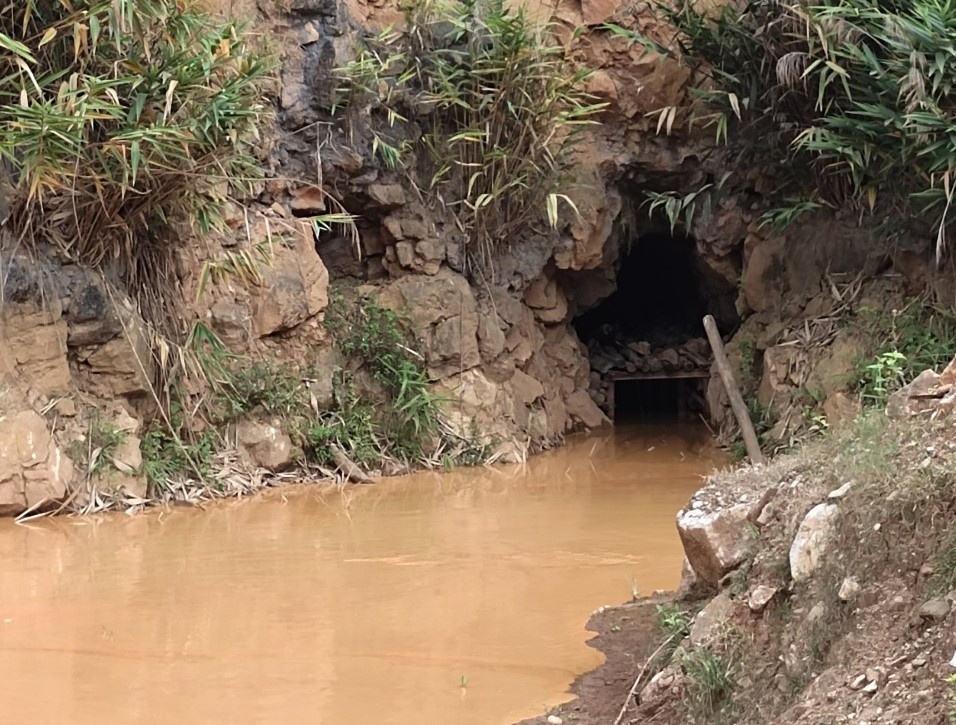 |
Taking advantage of the terrain with many karst caves, mine owners extended pipelines deep into the caves to discharge waste. Photo: TH |
At the company's sedimentation tank system, the inspection team discovered that the company had installed two 11kW pumps connected to two pipelines leading from the sedimentation tanks to the karst cave. At the time of the inspection, the company was not directly discharging wastewater into the environment. However, during questioning, the company admitted that the purpose of installing the pumps and pipelines was to pump wastewater into the karst cave when the sedimentation tanks were full or during heavy rains and floods. These two ore mines were subsequently fined 420 million VND by the Quy Hop District People's Committee. Additionally, construction and waste-generating activities were suspended for two months to rectify the violations.
According to Mr. Tran Duc Loi, Vice Chairman of the Quy Hop District People's Committee, after suspending operations at these two ore mines, the Nam Ton River is showing signs of recovery and becoming clear again.
This is not the first time authorities have discovered ore mines upstream of the Nam Ton River discharging waste into the environment. On May 20, 2022, the People's Committee of Nghe An province fined Tan Hoang Khang Joint Stock Company 70 million VND for a similar violation. This company was licensed to mine and process tin ore in the Thung Lun area (Chau Hong commune).
Specifically, in 2022, the mine owner discharged wastewater pumped from the mine shaft into a recirculating settling tank system, and then pumped the wastewater from the recirculating settling tank into the karst cave. Meanwhile, according to the environmental impact assessment report for this ore mine, wastewater from the production process (from the processing plants) must be collected, then mechanically settled and 100% recirculated back to supply the processing system without being discharged into the environment.