
Tin mines are killing the Nam Ton River.
(Baonghean.vn) - From a river that provided abundant aquatic resources for the people, for many years now, the Nam Ton River (Quy Hop district) has turned a murky red color and is severely polluted. The main cause of this situation is the clandestine discharge of waste directly into the river by mining operations.
The Dead River
For many years, the people of Quy Hop district have become all too familiar with the murky red color of the Nam Ton River. They call it the "dead river," because it no longer provides them with any benefit, not even for irrigation.
The Nam Ton River, along with the Nam Huong River, are the two main tributaries of the Dinh River – one of the natural symbols of Quy Hop District. The Nam Ton River originates from the mountain ranges in Chau Hong, Chau Tien, and Lien Hop communes. In many sections of these communes, the river flows underground at the foot of the mountains, forming numerous karst caves. Upon reaching Chau Quang commune, the Nam Ton River merges with the Nam Huong River to form the Dinh River.
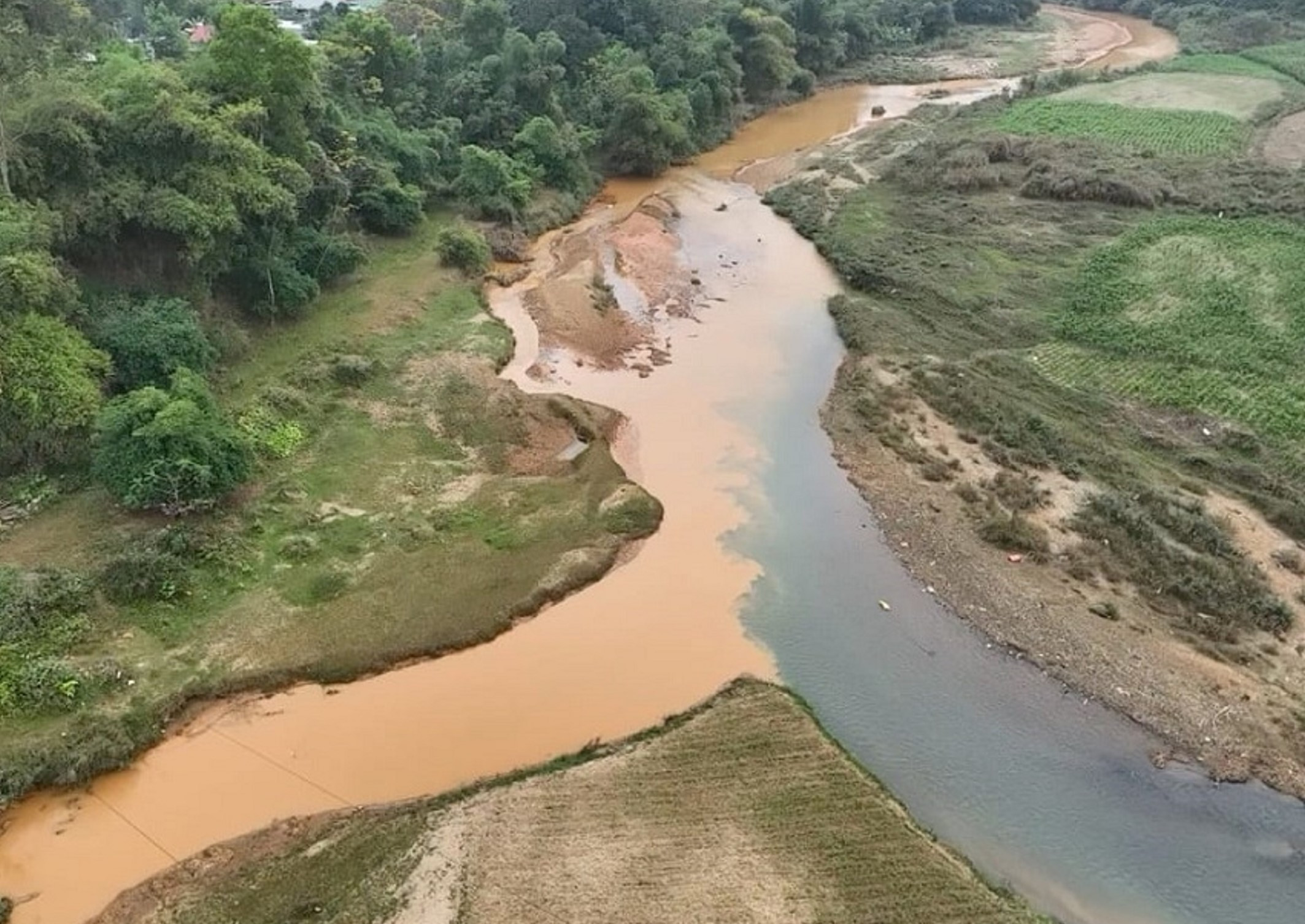 |
The Nam Ton River (on the left) at its confluence with the Nam Huong River. Photo: TH |
“It’s red like that all year round. It’s dead! Only when the mines stop discharging waste will the river come back to life,” said Mr. Lo Dinh Ha (72 years old, Chau Hong commune), shaking his head in dismay. In Mr. Ha’s memory, the Nam Ton River used to be crystal clear, and local people often drew water from it to their homes for daily use. It was also full of shrimp and fish, a great source of income for them. During the dry season, the river water was even used to irrigate the rice fields here. However, the fate of this river had to change when the first mining companies arrived.
According to Mr. Lang Van Hanh, Chairman of the Chau Tien Commune People's Committee, that was about 30 years ago, when the first tin ore processing and mining plant was licensed right next to the upstream of the Nam Ton River.
"Previously, environmental issues were not given much attention. The mines simply discharged waste directly into the river without treatment. The Nam Ton River has been polluted ever since," Mr. Hanh said.
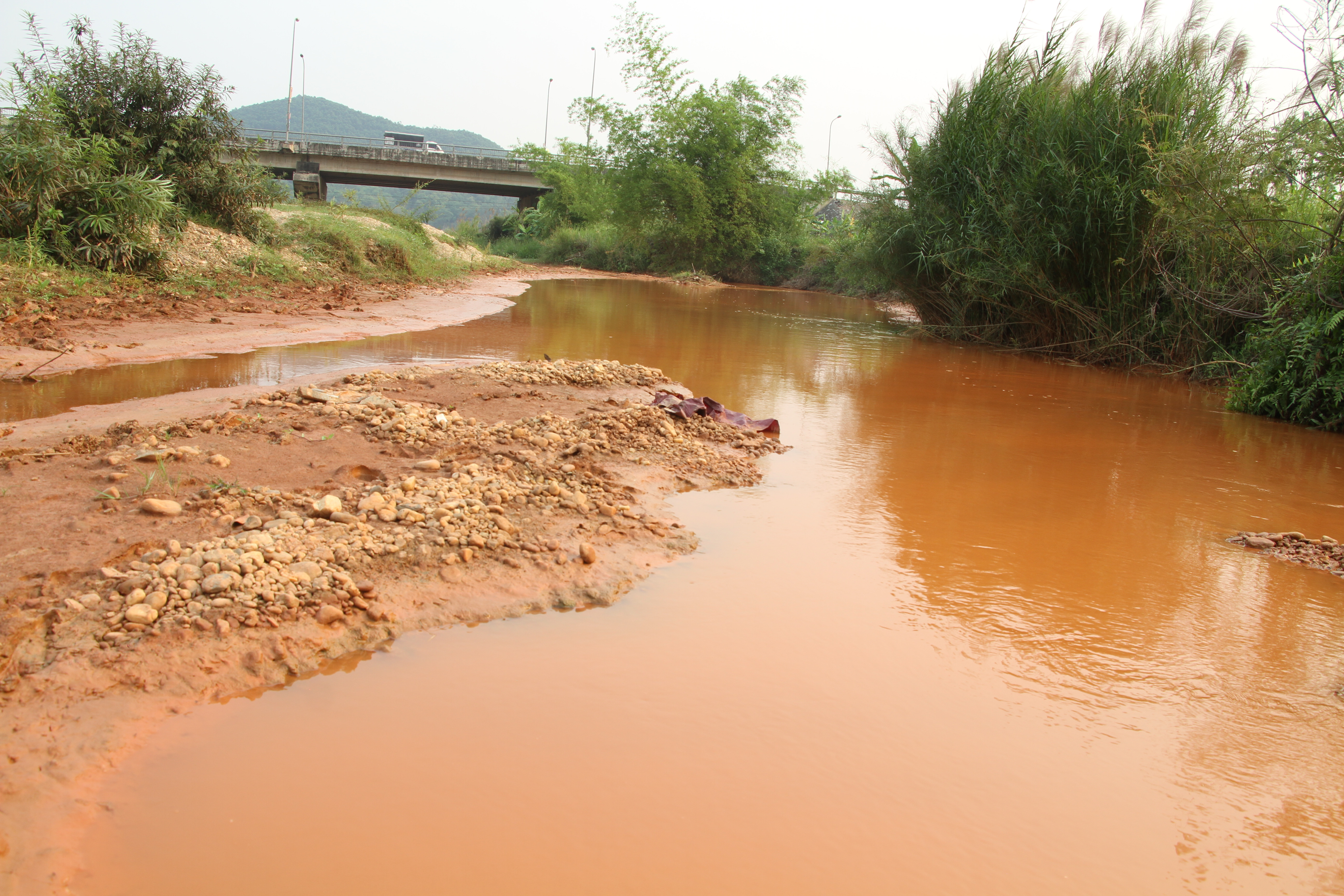 |
For most of the year, this river is red. Photo: TH |
To date, dozens of mineral mines have been licensed in the upstream area of the Nam Ton River, in the communes of Chau Hong, Chau Tien, and Lien Hop. This area is therefore known as the "mineral capital" of Nghe An province. Among them, tin ore mines are the main culprits that have turned the Nam Ton River into a dead river.
Hầu hết thời gian quanh năm, nước sông Nậm Tôn đều đỏ ngầu một cách đáng sợ. Cá tôm dần bị chết, người dân cũng chẳng còn dám dẫn nước vào tưới tiêu cho ruộng của mình. Bởi sau mỗi lần tưới, lúa dần héo úa, đất đai cũng bị thoái hóa do nguồn nước ô nhiễm. Không có nguồn nước để tưới, họ đành phải chuyển đổi cây trồng.
Tình trạng ô nhiễm sông Nậm Tôn ngày càng nghiêm trọng trong những năm trở lại đây. Khi mà các mỏ quặng thiếc được cấp phép, đi vào hoạt động ngày càng nhiều. Theo Chi cục Bảo vệ môi trường tỉnh Nghệ An, mẫu nước lấy từ điểm quan trắc trên sông Nậm Tôn có độ đục khá cao, chỉ số TSS nhiều lần vượt quy chuẩn. Cụ thể, năm 2017 chỉ số TSS vượt quy chuẩn từ 2,4-3,3 lần, năm 2018 vượt từ 1,63-4,73 lần, năm 2019 vượt từ 1,43-10,86 lần. Đặc biệt năm 2020, chỉ số TSS xuất hiện trong đợt 3 đạt 808mg/l, trong khi theo quy chuẩn Việt Nam là 30mg/l (vượt 26,93 lần). Trong mẫu trầm tích cũng được đơn vị này quan trắc lần đầu tiên vào năm 2021 thì chỉ số Asen là hơn 157mg/kg trong khi theo quy chuẩn Việt Nam là 17mg/kg (vượt 9,28 lần), chỉ số thủy ngân Hg vượt 1,01 lần.
Tuy nhiên, đây chỉ là những mẫu nước được lấy ở trạm quan trắc trên sông đoạn qua thị trấn Quỳ Hợp, cách khu vực thượng nguồn Nậm Tôn hàng chục km. Từ trên thượng nguồn, nơi có các mỏ quặng xuống đây, dòng sông đã được hợp lưu từ nhiều con suối nhỏ. Mức độ ô nhiễm vì thế có thể đã giảm đi nhiều.
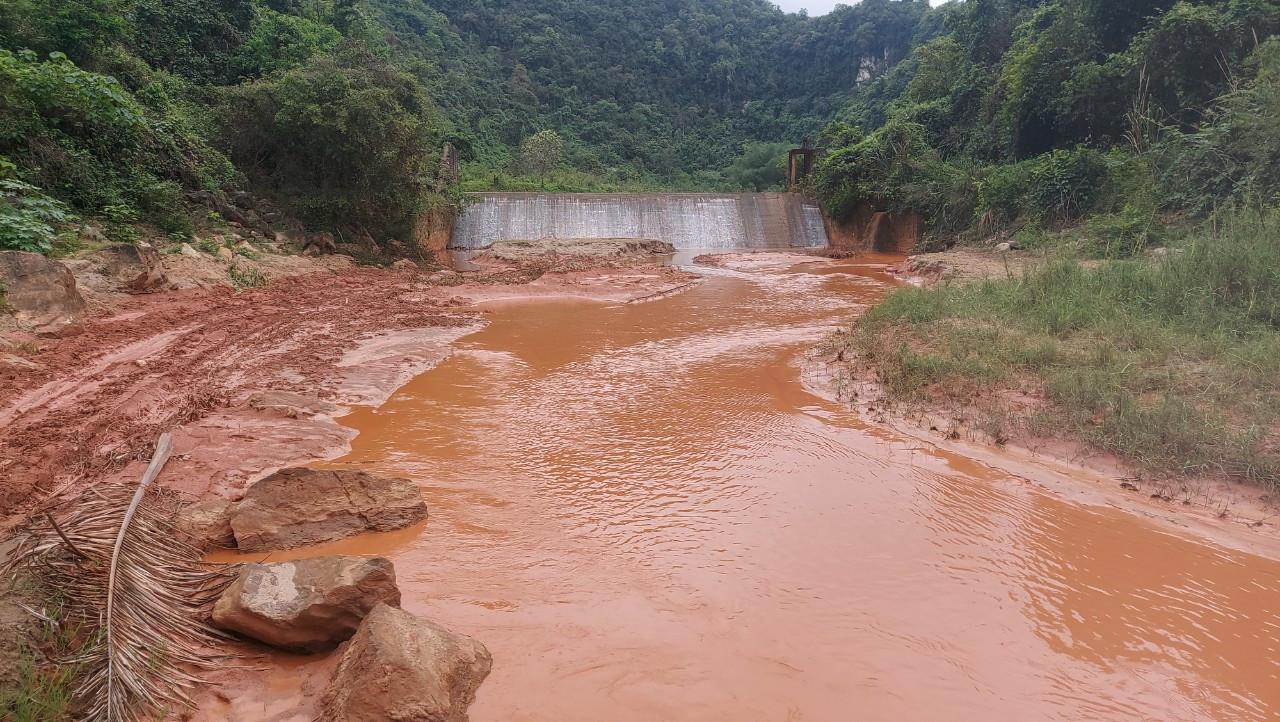 |
Nậm Tôn đã bị biến thành dòng sông chết. Ảnh: T.H |
Thủ đoạn tinh vi của các chủ mỏ
Theo tìm hiểu của phóng viên, trên địa bàn huyện Quỳ Hợp tính đến tháng 1/2022, có 13 mỏ quặng thiếc đã được cấp phép và còn hạn khai thác. Trong số này, có đến 10 mỏ quặng thiếc nằm trên thượng nguồn Nậm Tôn thuộc 3 xã Châu Hồng, Châu Tiến và Liên Hợp. Các chủ mỏ thường bơm hút nước ngầm lên để tuyển quặng, bóc tách các hợp chất, kim loại khác ra khỏi thiếc. Theo quy định, nguồn nước thải sau khi sử dụng để tuyển quặng xong phải cho xuống các hố lắng, thông qua các bước xử lý rồi tiếp tục tái sử dụng trở lại, mà không được xả ra ngoài môi trường.
Tuy nhiên, nhiều chủ mỏ sau khi tuyển quặng lại tìm cách xả thải trực tiếp ra môi trường. Điều này không chỉ ô nhiễm môi trường mà còn khiến nguồn nước ngầm bị bơm hút đến mức cạn kiệt. Trong vài năm trở lại đây, cũng tại “thủ phủ khoáng sản” này, hàng trăm nhà dân và công sở bị nứt nẻ, sụt lún, giếng nước thì cạn trơ đáy. Theo kết luận của đoàn kiểm tra, nguyên nhân là do cạn kiệt nguồn nước ngầm.
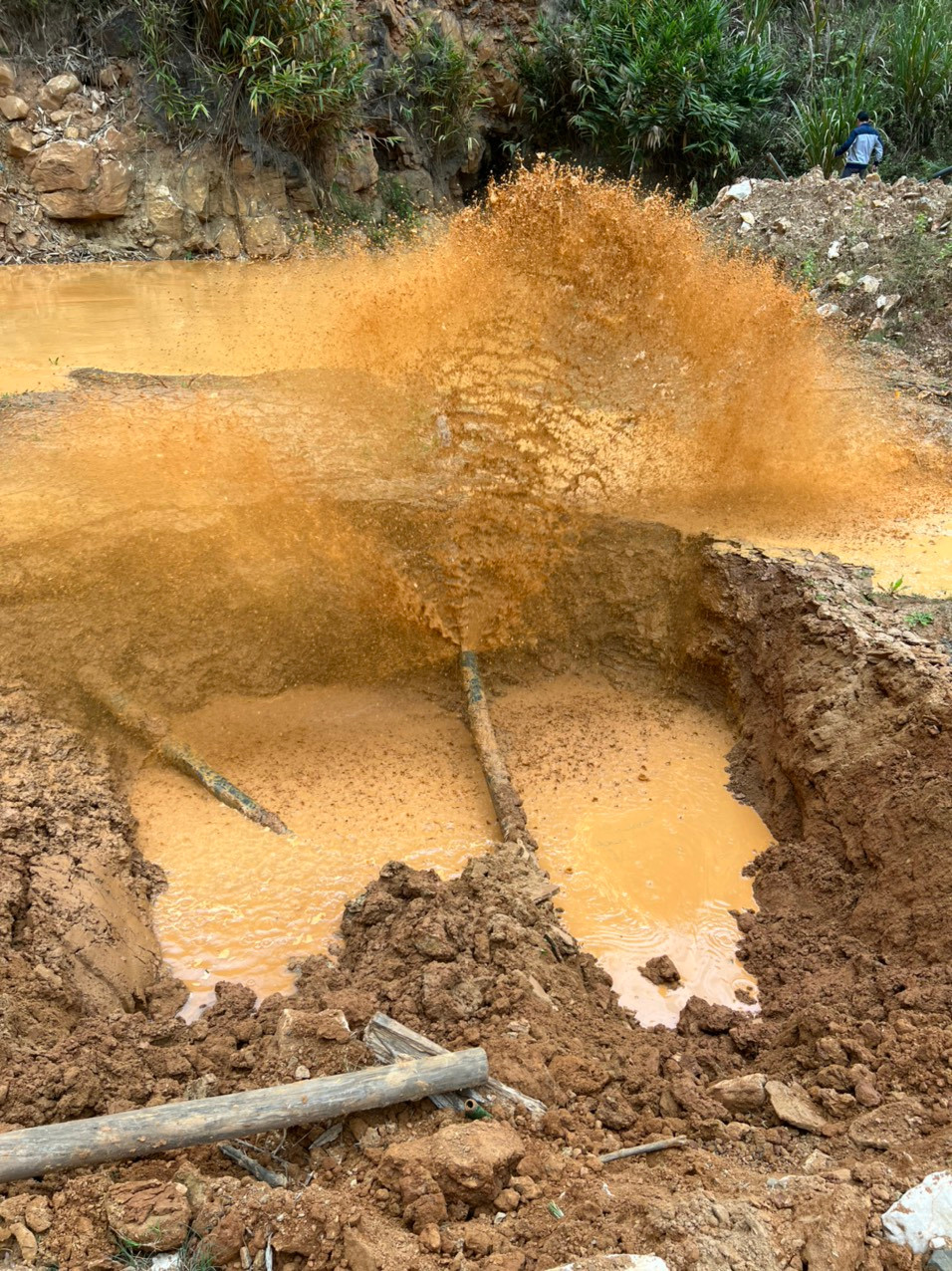 |
Một đường ống chôn sâu dưới lòng đất dẫn vào hang karst sau khi được đào lên. Ảnh: T.H |
Một vị lãnh đạo huyện Quỳ Hợp cho biết, việc sông Nậm Tôn bị bức tử trong suốt hàng chục năm qua, là một trong những vấn đề nhức nhối nhất của địa phương. Chính quyền địa phương cùng các sở, ngành đã thường xuyên kiểm tra tại các mỏ quặng, nhưng rất khó phát hiện vi phạm.
Trong chuyến kiểm tra mới đây, khi một trong những đường ống xả thải của mỏ quặng gặp sự cố, đoàn kiểm tra mới phát hiện được 2 doanh nghiệp lén lút xả thải trực tiếp xuống sông Nậm Tôn. Theo đó, lợi dụng những đoạn sông chảy ngầm qua các hang karst nằm sâu trong núi, 2 mỏ quặng thiếc đã lắp những đường ống dài tới 800m, sau đó chôn ngầm dưới đất rồi chạy thẳng vào trong hang để xả. Điểm xả thải nằm sâu trong hang nên những đoàn kiểm tra trước, không ai phát hiện ra.
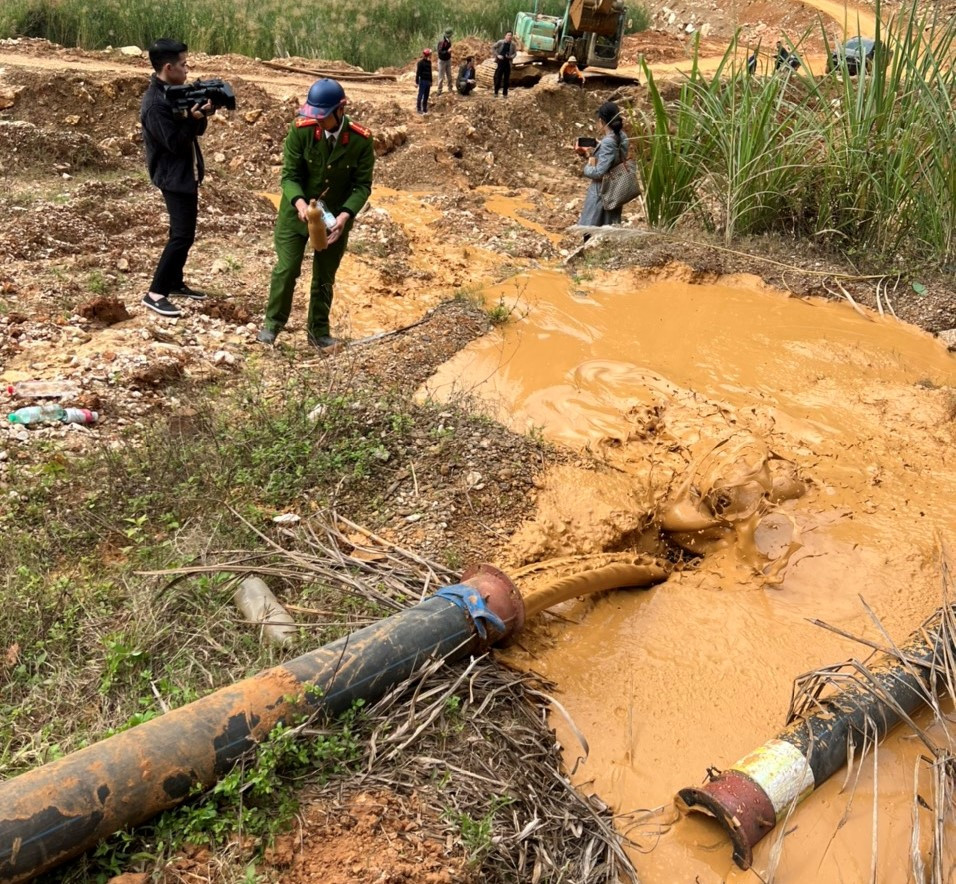 |
Authorities are testing water samples. Photo: TH |
Specifically, during an inspection at the tin ore mining and processing facility of Hong Luong Co., Ltd. in the Hung Noi area (Chau Hong commune), the inspection team unexpectedly discovered a large amount of reddish wastewater gushing from the ground. The leaders of Quy Hop district, who directly inspected the site, immediately dispatched an excavator and discovered a 150mm diameter pipe buried deep underground. Following this pipe, the inspection team found the final discharge point deep within a karst cave, where the Nam Ton River flows underground.
"If the pipeline hadn't burst, surely no one would have discovered this clandestine dumping," said an official in the inspection team.
At the settling tank of Hong Luong Co., Ltd., the inspection team also discovered an approximately 11 KW pump used to pump wastewater. Significantly, within the karst cave, the inspection team also found two more pipelines. These two pipelines, with a diameter of 140 mm and a length of approximately 400 meters, lead to the wastewater settling pit of Ha Cuong Co., Ltd. This company is licensed to mine and process tin ore in the Thung Xen area (Chau Tien commune). Although these two mines are located in two different communes, they are adjacent to each other and both are situated next to the Nam Ton River.
According to the environmental impact assessment report for the Ha Cuong tin mine, approved by the Nghe An Provincial People's Committee, wastewater from the ore processing will flow into a sedimentation pond. Here, most of the suspended solids in the water will settle. The water will then flow to a settling pond for further sedimentation and then to a reuse reservoir. It will be reused by recirculating through a pump to continue the ore processing process. The settled sludge from the ponds will be periodically dredged and dried in a 1,400 m2 sludge drying area before being transported for disposal. The area will then be reinforced by building sedimentation ponds using waste rock and soil products from the mine…
However, at the time of inspection, the embankment of one sedimentation pit had broken due to heavy rain and flooding, but the company had not reinforced or repaired it. Waste mud from the production process accumulated in the waste ponds, causing water to overflow into the environment. The company's actions constitute a failure to comply with one of the contents of the environmental impact assessment report approved by the Provincial People's Committee.
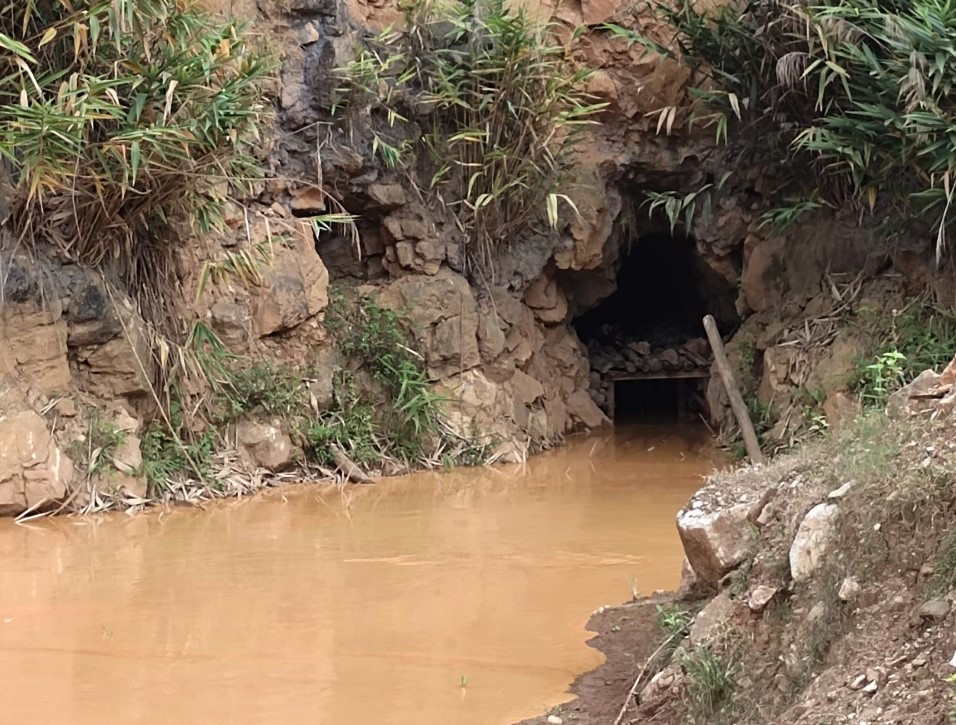 |
Taking advantage of the terrain with many karst caves, mine owners extended pipelines deep into the caves to discharge waste. Photo: TH |
At the company's sedimentation tank system, the inspection team discovered that the company had installed two 11kW pumps connected to two pipelines leading from the sedimentation tanks to the karst cave. At the time of the inspection, the company was not directly discharging wastewater into the environment. However, during questioning, the company admitted that the purpose of installing the pumps and pipelines was to pump wastewater into the karst cave when the sedimentation tanks were full or during heavy rains and floods. These two ore mines were subsequently fined 420 million VND by the Quy Hop District People's Committee. Additionally, construction and waste-generating activities were suspended for two months to rectify the violations.
According to Mr. Tran Duc Loi, Vice Chairman of the Quy Hop District People's Committee, after suspending operations at these two ore mines, the Nam Ton River is showing signs of recovery and becoming clear again.
This is not the first time authorities have discovered ore mines upstream of the Nam Ton River discharging waste into the environment. On May 20, 2022, the People's Committee of Nghe An province fined Tan Hoang Khang Joint Stock Company 70 million VND for a similar violation. This company was licensed to mine and process tin ore in the Thung Lun area (Chau Hong commune).
Specifically, in 2022, the mine owner discharged wastewater pumped from the mine shaft into a recirculating settling tank system, and then pumped the wastewater from the recirculating settling tank into the karst cave. Meanwhile, according to the environmental impact assessment report for this ore mine, wastewater from the production process (from the processing plants) must be collected, then mechanically settled and 100% recirculated back to supply the processing system without being discharged into the environment.


