
New regulations on vehicle license plate revocation: Things you need to know
Recently, the issue of revoking vehicle license plates has become a significant concern for many people.
Vehicle license plate revocation is a process in which the competent authority retrieves license plates previously issued to a vehicle. This is usually done in certain circumstances to ensure the accuracy and timeliness of the vehicle registration system.
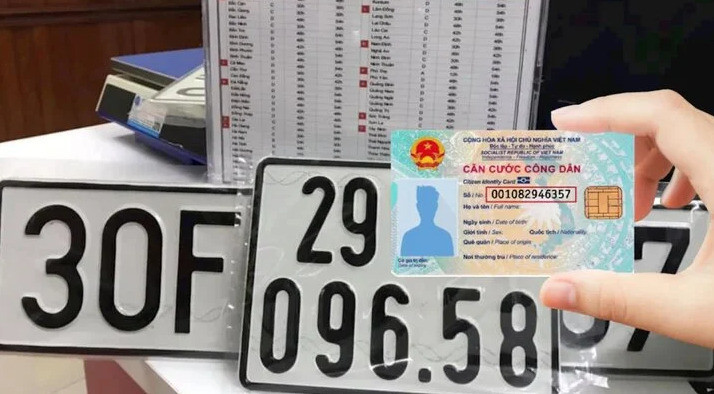
Illustrative image.
What are vehicle license plates and license plate revocation?
A vehicle license plate, also known as a registration plate or vehicle registration certificate (commonly called in the South), is a metal or plastic plate attached to a vehicle for official identification purposes. This plate contains a unique identification code registered in the database of the license plate issuing authority. This code may include letters and numbers, and its uniqueness may apply nationwide or only within a specific area such as a province or state, depending on the regulations of each country.
Vehicle license plate revocation is the process by which the competent authority retrieves previously issued license plates. This can occur due to various reasons and is accompanied by updating information in the database to ensure accuracy and reorganize the issuance of license plates for other vehicles.
Cases of license plate revocation
On July 1, 2023, the Minister of Public Security issued Circular 24/2023/TT-BCA regulating the issuance and revocation of registration and license plates for motor vehicles, replacing the previous Circular 58/2020/TT-BCA. This Circular will officially take effect from August 15, 2023, and specifies eight cases in which vehicle license plates will be revoked:
1. The vehicle is damaged, unusable, or destroyed due to objective reasons:In cases where a vehicle is damaged and unusable due to an accident, natural disaster, or fire, its license plate will be confiscated and removed from the registration system to prevent its reuse on another vehicle.
2. Vehicles that have reached the end of their service life:When a vehicle has reached its maximum legally mandated service life and no longer meets safety or technical standards, license plate revocation is necessary to prevent illegal operation.
3. Vehicles that have been stolen, appropriated, or scrapped:In the event that a vehicle is stolen, cannot be recovered, or has been scrapped at the owner's request, the license plate will be revoked and removed from the registration system.
4. Imported vehicles exempt from tax or temporarily imported vehicles of foreigners that are re-exported or transferred ownership:Imported vehicles that are tax-exempt or temporarily imported by foreigners will have their license plates revoked upon re-export or transfer of ownership to ensure compliance with regulations on imported vehicle management.
5. Vehicles registered in economic zones when re-exported or transferred into Vietnam:Vehicles registered in economic zones will also have their license plates revoked upon re-export or transfer into Vietnam to ensure compliance with legal regulations.
6. Vehicles undergoing registration transfer or relocation procedures:When a vehicle changes ownership or registration address, the old license plate will be revoked and a new one issued, avoiding duplication and ensuring accuracy in the registration system.
7. Vehicles with engines and frames removed for registration on other vehicles:When a vehicle's engine or frame is removed for use on another vehicle, the old license plate is no longer relevant and will be revoked to ensure accuracy in registration records.
8. Vehicles that have been registered but are found to have forged documents or altered chassis or engine numbers:Actions such as falsifying documents or altering chassis and engine numbers are illegal and will result in the revocation of license plates; offenders may even face prosecution under the Criminal Code.
Is it mandatory to switch to a registered license plate?
According to Circular 24/2023/TT-BCA, it is not mandatory to change the current license plate to a five-digit identification plate if the vehicle was registered with a five-digit plate before August 15, 2023, and has not yet undergone the revocation procedure. However, if the vehicle owner wishes to change to a five-digit identification plate or carry out other procedures such as renewing or reissuing the vehicle registration certificate or license plate, they can do so in accordance with the law.
Understanding the new regulations regarding vehicle license plate revocation will help vehicle owners avoid legal risks and ensure compliance with the law.
Hung Nguyen