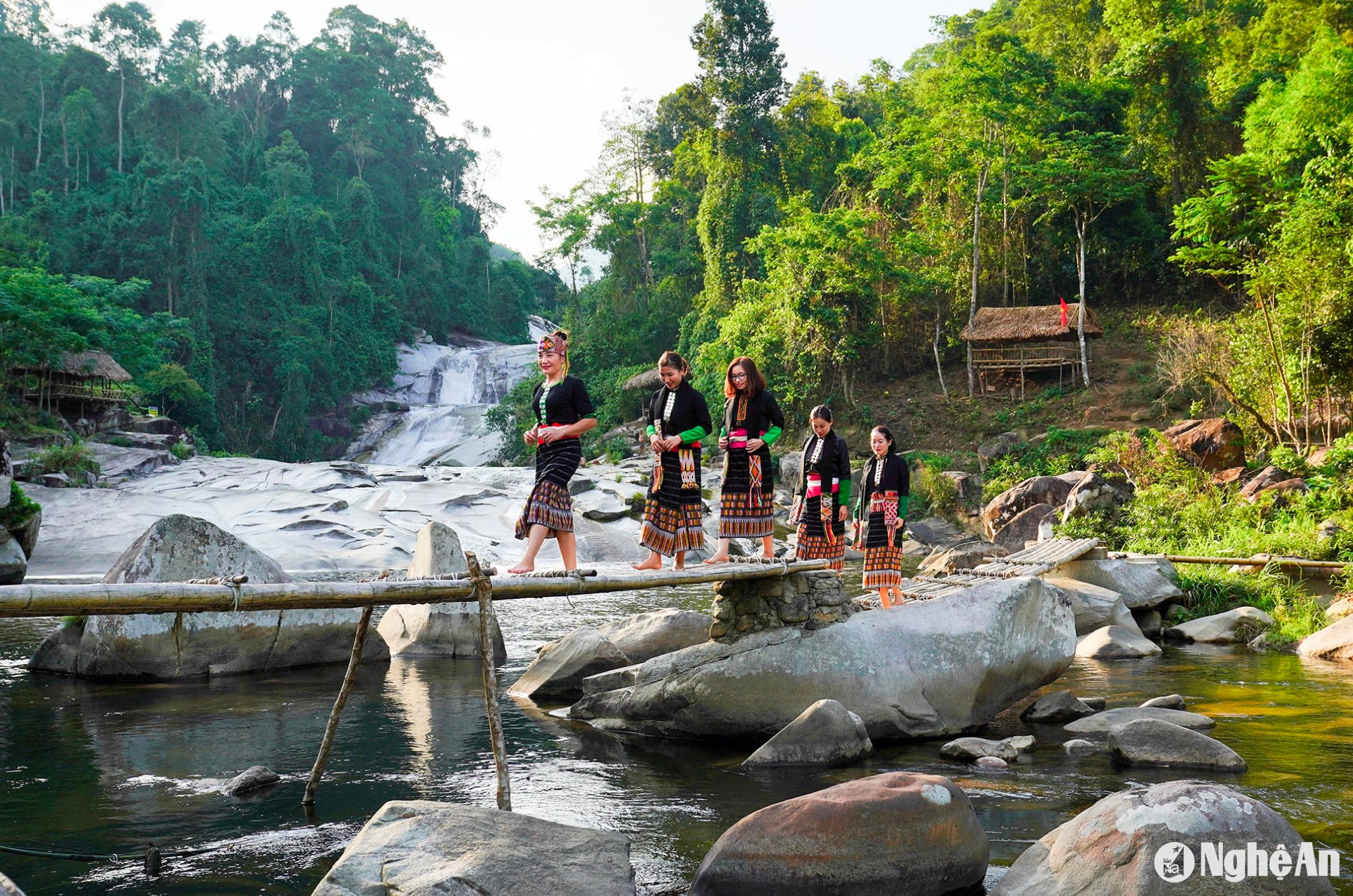
Part 2: Connecting and creating breakthroughs for highland tourism.
Digital technology not only helps bridge the gap in time and space in economic development and agricultural product consumption, but it also helps highland localities promote and exploit their tourism resources.
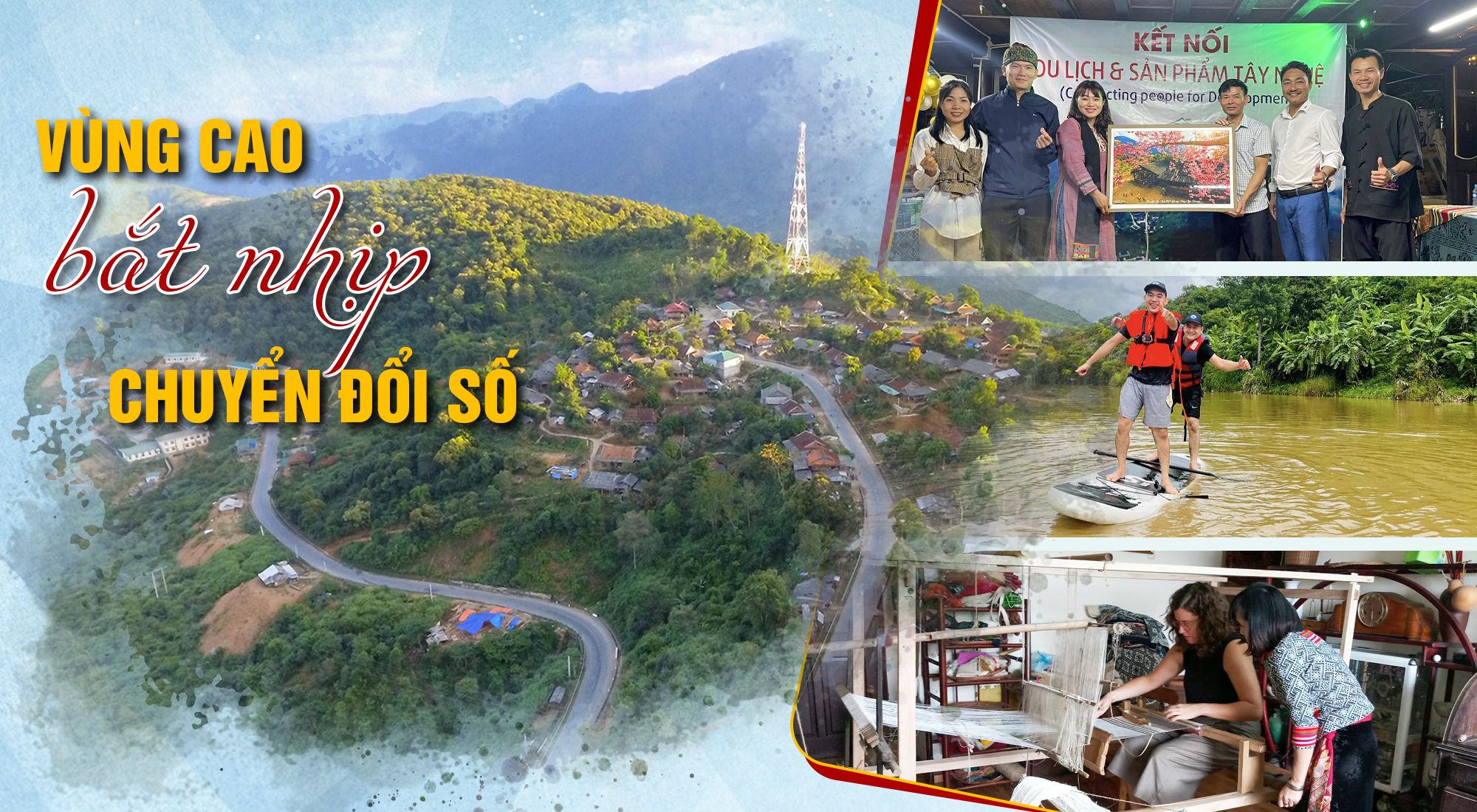

Thanh Phuc - Hoai Thu • September 25, 2024
Digital technology not only helps bridge the gap in time and space in economic development and agricultural product consumption, but it also helps highland localities promote and exploit their tourism resources.

Before it takes placeMuong Long Plum Harvesting FestivalFor two days, we traveled to the "Sapa of Nghe An" to scout ahead for our articles on tourism in the Mekong Delta. Along a small, precarious trail winding along the hillside, through orchards laden with ripe plums, we met Mr. Vu Xai Chu, carrying a heavy bundle of lush green grass on his back and a black chicken under his arm, heading towards his home. After exchanging greetings, the Vice Chairman of the People's Committee of Muong Long Commune, Vu Ba Xu, asked Mr. Xai Chu: "Where did you go to cut grass, Mr. Xai Chu?" Mr. Xai Chu cheerfully replied: "I cut grass in the plum orchard; this year, many visitors booked tickets online for the festival."
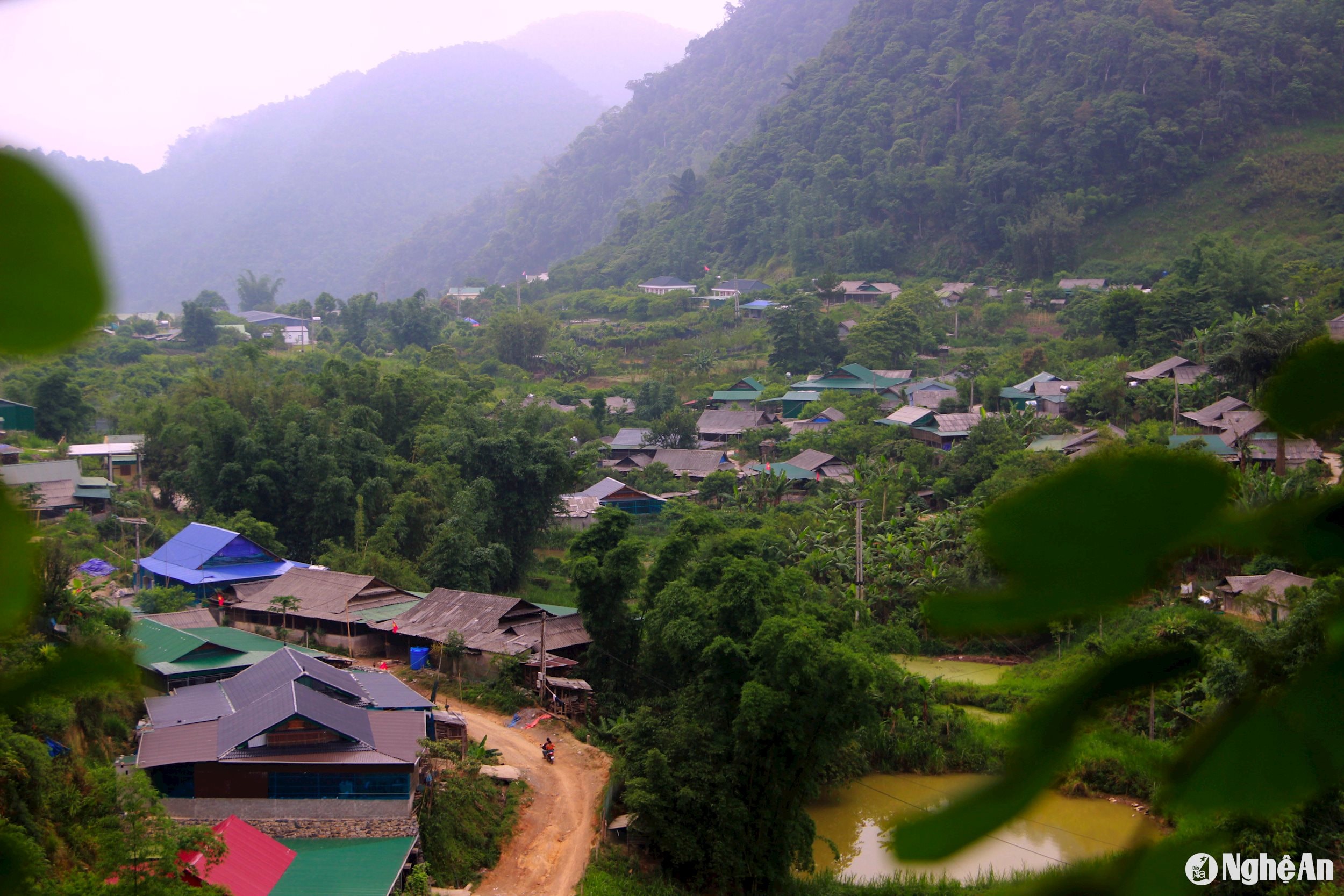
The relatively young commune official added that, in the last three years or so, the people of Muong Long have adopted new terms that appear daily in their lives, such as "doing tourism," "ordering online," etc. Along with this change come new economic approaches, from developing tourism services to homestays. "The beautiful local scenery, such as Dragon Waterfall, the ancient plum orchards that have been passed down for decades, along with the climate and customs of the people of Muong Long for generations, are now attracting tourists and becoming known to the world thanks to digital technology, the internet, and smartphones," Mr. Vu Ba Xu explained.
"The beautiful local scenery and age-old customs of the people in Muong Long are attracting tourists and becoming known to the world thanks to digital technology, the internet, and smartphones."
Mr. Vu Ba Xu - Vice Chairman of the People's Committee of Muong Long Commune
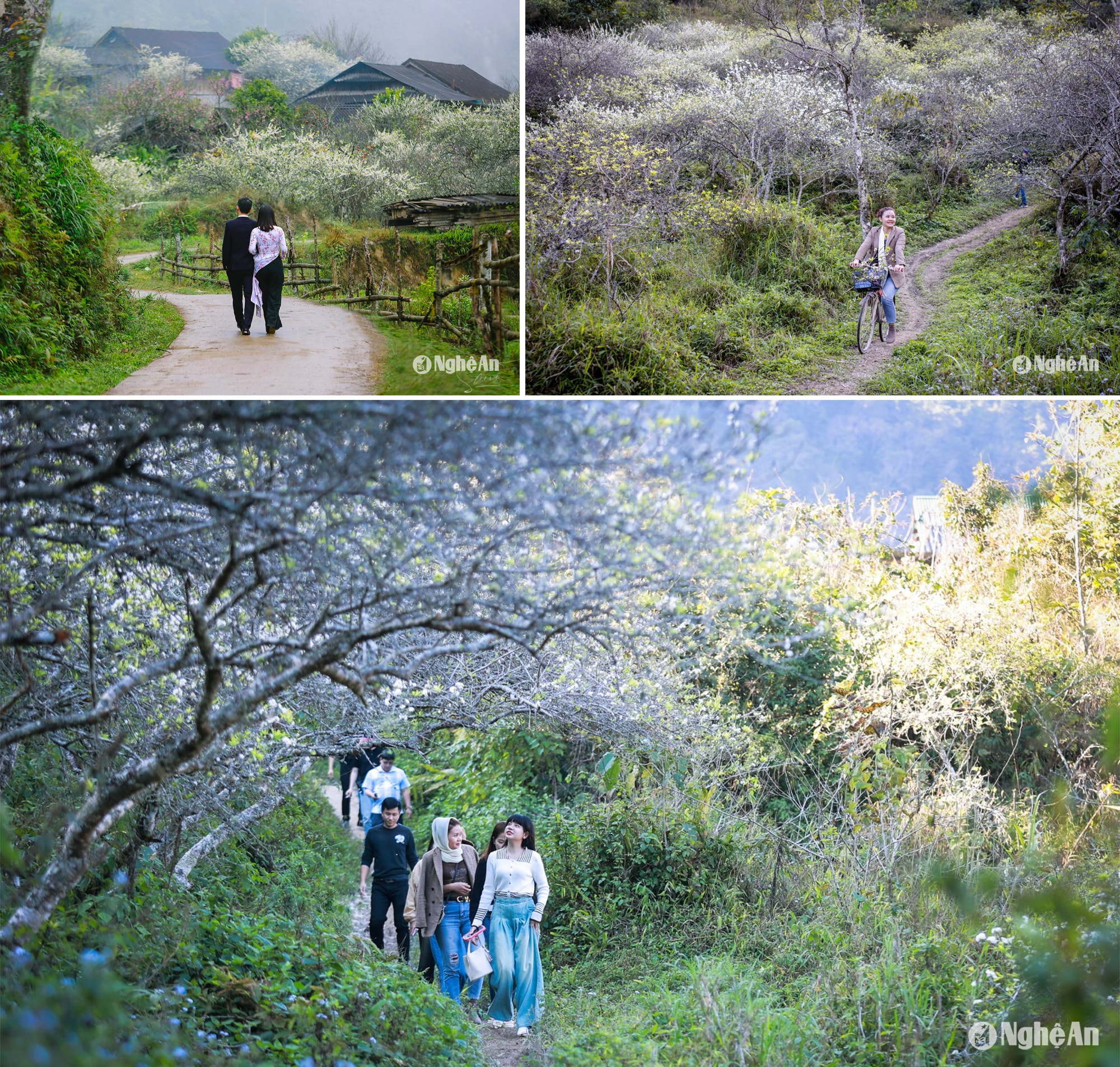
As for tourists, many who visit Muong Long also confirm this. Happily recounting unforgettable memories after a trip to the highlands of western Nghe An province during her children's summer vacation in 2024, Ms. Tran Thuy Lam from Dien Chau district said, "While browsing the internet on my phone, I came across a series of photos of waterfalls in the western region along with the lush green scenery of the mountains and forests, and also very attractive homestay services. Curious, Ms. Lam contacted the Fanpage, then asked her friends for more information and decided to experience the trip with her family."Western Nghe An.
Then, she happily shared that her family always organized a few days of summer vacation for the children, mostly to other provinces. Now, seeing the positive feedback on social media praising the beauty of her hometown, Nghe An, she also wanted to explore it. That trip included experiencing the Khe Kem waterfall in Con Cuong, chasing clouds in Na Ngoi, and participating in the plum picking festival in Muong Long, Ky Son – the most remote border district of Nghe An.
"It was a trip full of memories, full of surprises, excitement, and also quite… tiring, but it was totally worth it. It turns out my hometown has so many beautiful places."
Ms. Tran Thuy Lam, Dien Chau District
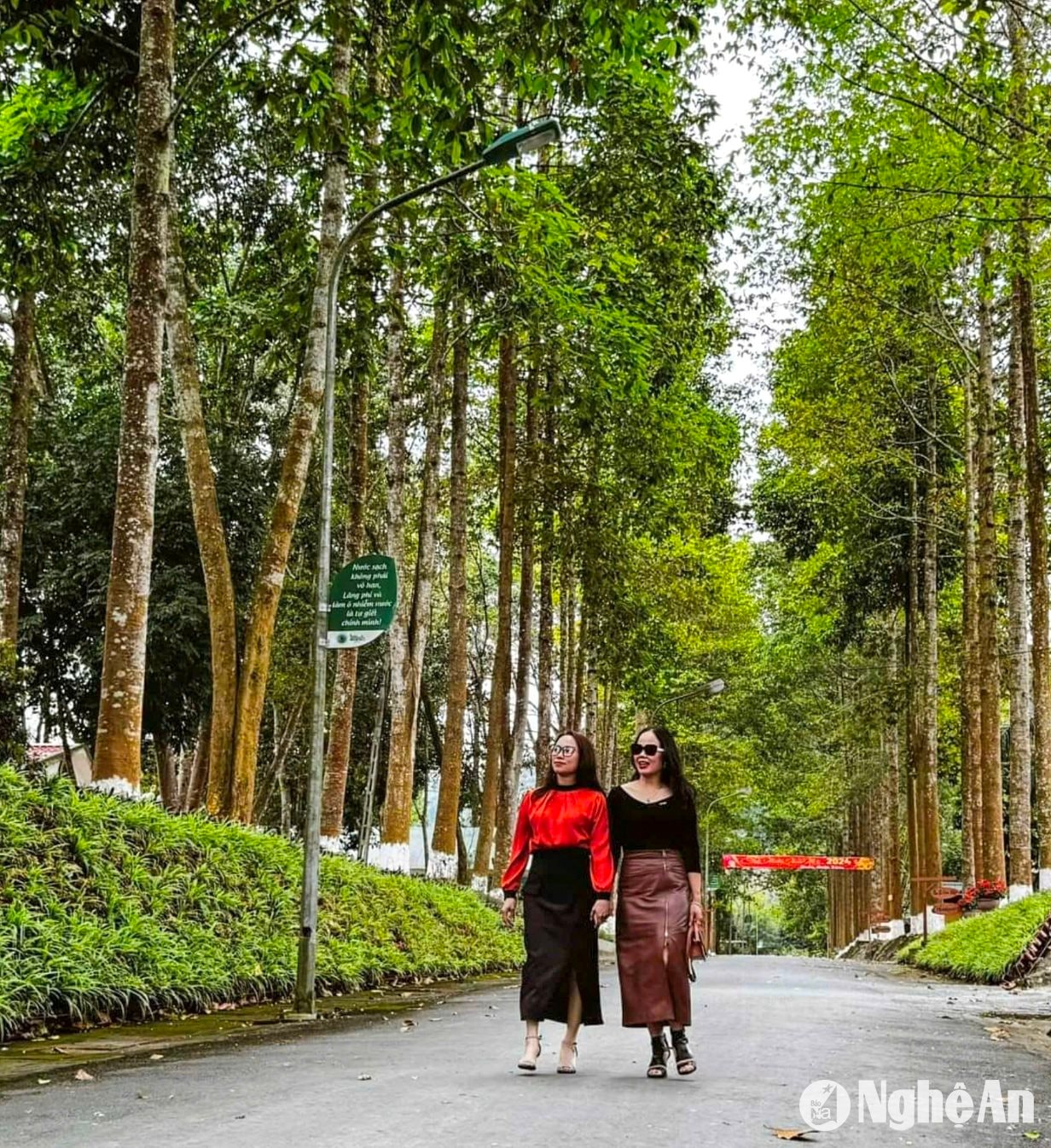
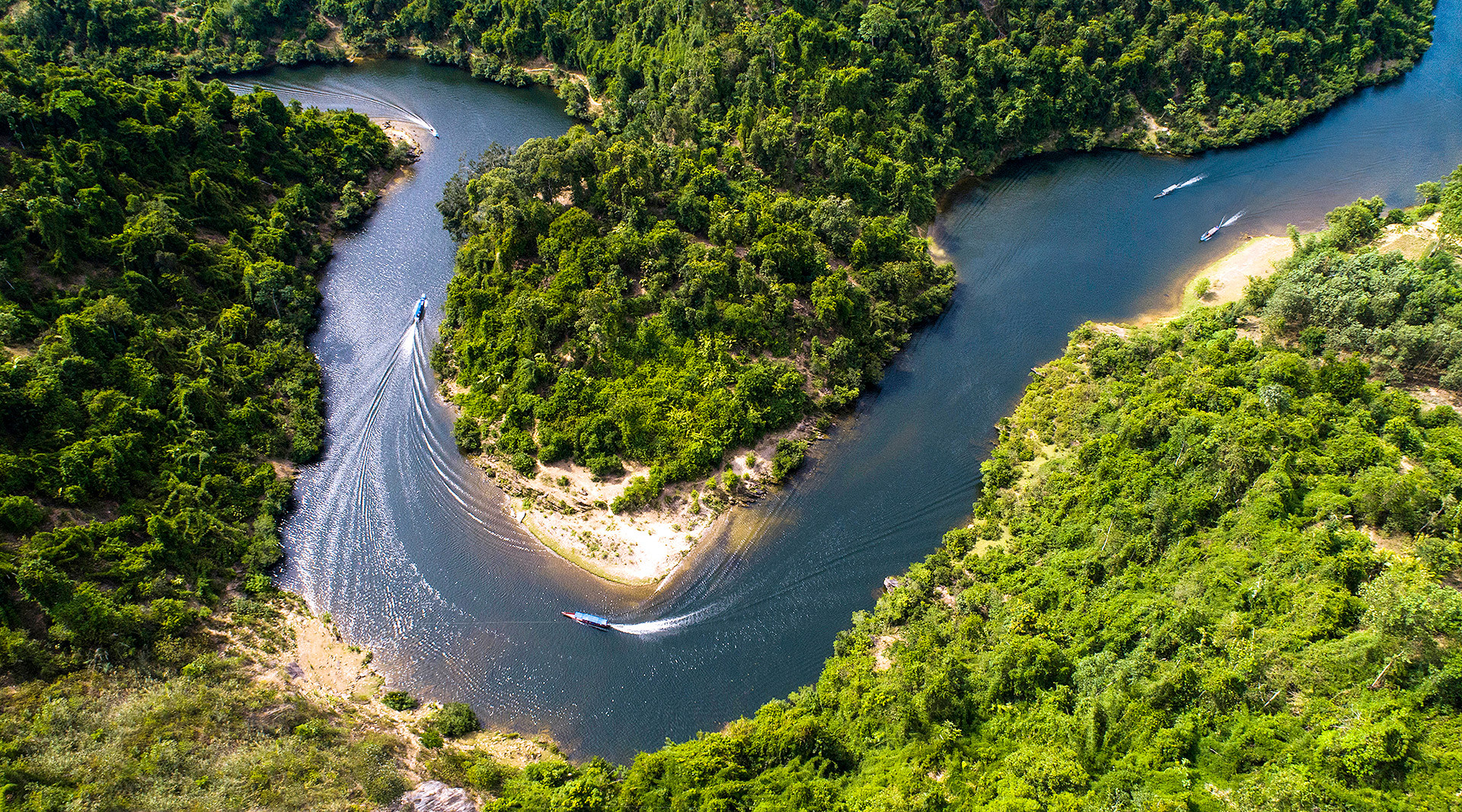
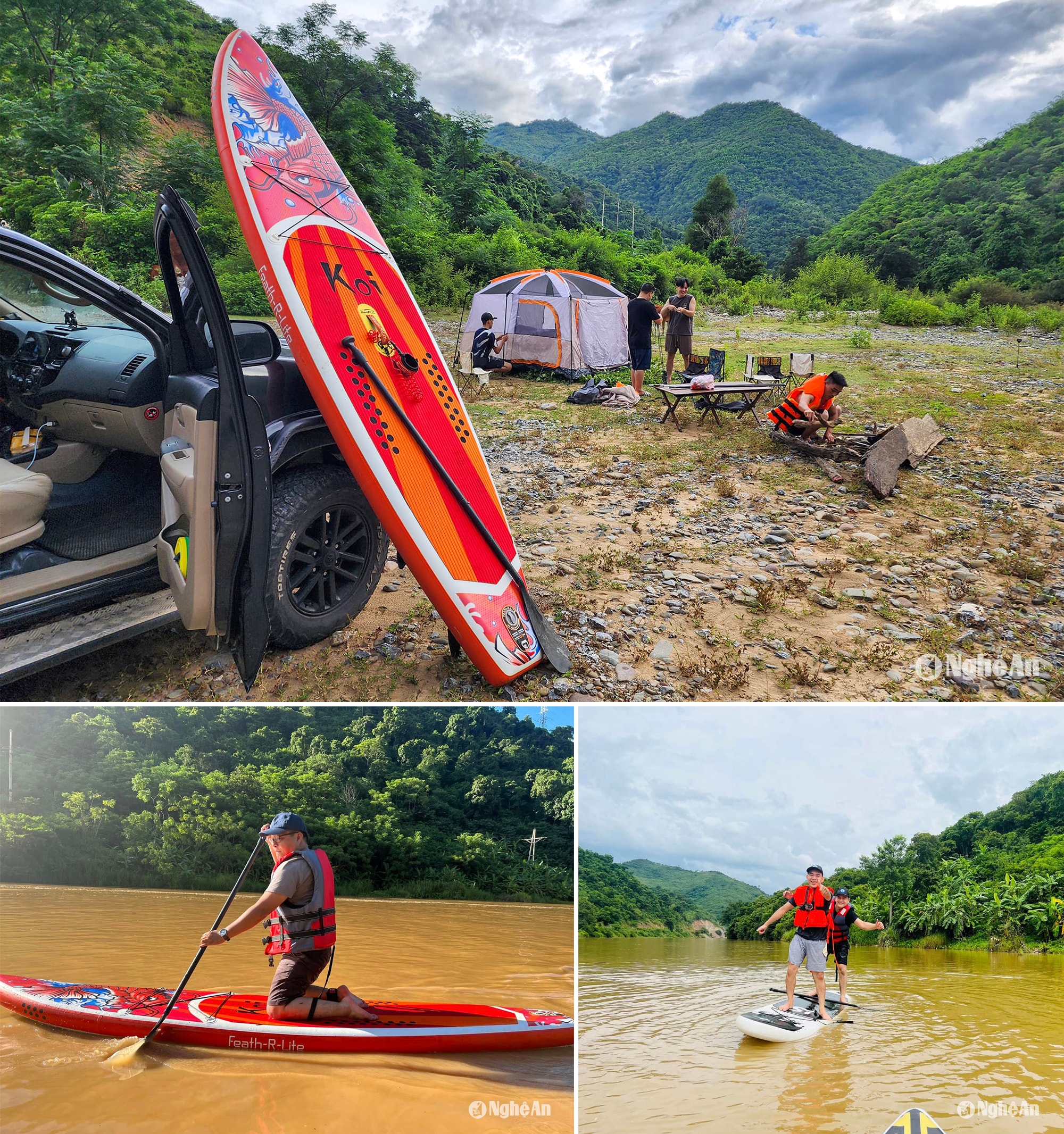
Currently, localities along National Highways 48 and 7 possess unique natural landscapes and rich cultural identities with great potential for developing the "non-polluting industry" (tourism). Besides the resources of forest area, scale, and biodiversity within the Western Nghe An Biosphere Reserve, the tourism resources of the Western region also include natural beauty scattered across many districts. For example, Pu Mat National Park (Anh Son, Con Cuong, Tuong Duong); Kem Waterfall, Pha Lai Dam, Nuoc Moc Stream (Con Cuong); Thanh Chuong has Liep Waterfall, Cay Tram Waterfall, Lua Waterfall, Song Ro Lake, tea island (Cau Cau Dam); Anh Son has But Gorge, Giang River - Ban Veu village; Tuong Duong has Ban Ve Hydroelectric Lake, Săng Lẻ forest, Co Stream; Ky Son has Muong Long Sky Gate.Pu Xai Lai Leng peak, many natural waterfalls such as Huoi Giang waterfall (Ta Ca commune), Rong waterfall (Muong Long commune), Ka Noi waterfall (Na Ngoi commune)...
And these natural resources are mostly known to tourists from near and far through digital promotion and internet connectivity. Ms. Vi Thi Tham, President of the Western Nghe An Tourism Coordination Center Co., Ltd. (TNT Tay Nghe Tourist), also affirmed this. Ms. Tham expressed that, as a daughter of the people, born in the Western region, she understands and is deeply connected to her homeland. She has also established a company operating in the tourism service sector and is now expanding her activities to coordinate and connect tourism routes within and outside the province.
For most businesses and individuals involved in the tourism sector in Nghe An, communication initially plays a crucial role in promoting the image of the destination and its services to tourists through social media and digital technology.
Ms. Vi Thi Tham, President of TNT Tay Nghe Tourist

For ethnic minority communities, cuisine not only serves the needs of individuals and communities in daily life and traditional festivals, but also represents a cultural heritage with the unique identity and flavors of each ethnic group. The cuisine of the Thai, Mong, Khmu, and Tho ethnic groups is increasingly being spread and promoted to friends both domestically and internationally through social media. Along with the scenery and distinctive cultural identity, unique cuisine has created an "attraction" to promote the development of tourism in the highlands.
For many years, Vi Kham Mon – a dynamic and passionate young man in the field of local tourism development (Ta Ca commune, Ky Son district) – has actively used Facebook to promote and introduce the unique characteristics of his ethnic group. He captures the beautiful natural landscapes of the highlands, from the misty valleys seen from the peak of Pu Nghieng, the traditional houses with their thatched roofs, and the picturesque terraced rice fields, creating engaging and vibrant cultural experience programs.
In particular, the culinary culture of the Thai and Hmong ethnic groups has attracted the most attention from this young person. Many images and videos depicting the people gathering wild vegetables, catching fish, preparing and cooking dishes, exploring and experiencing pristine nature, and enjoying clean, authentic cuisine in the villages have been viewed, shared, and commented on by many people. Images of unique and attractive dishes such as grilled chicken with mắc khén spice; long-legged dancers crawling through bamboo tubes; and stream fish cooked in bamboo tubes, vividly portrayed on Mon's Facebook, Zalo, and TikTok channels, have a strange allure, making anyone who clicks to view them feel amazed, stimulated, and longing to try them at least once. And many tourists, both from within the province and from other provinces, and even from neighboring Laos, have come to Ta Ca and Ky Son to experience them out of curiosity and excitement after watching Mon's videos.
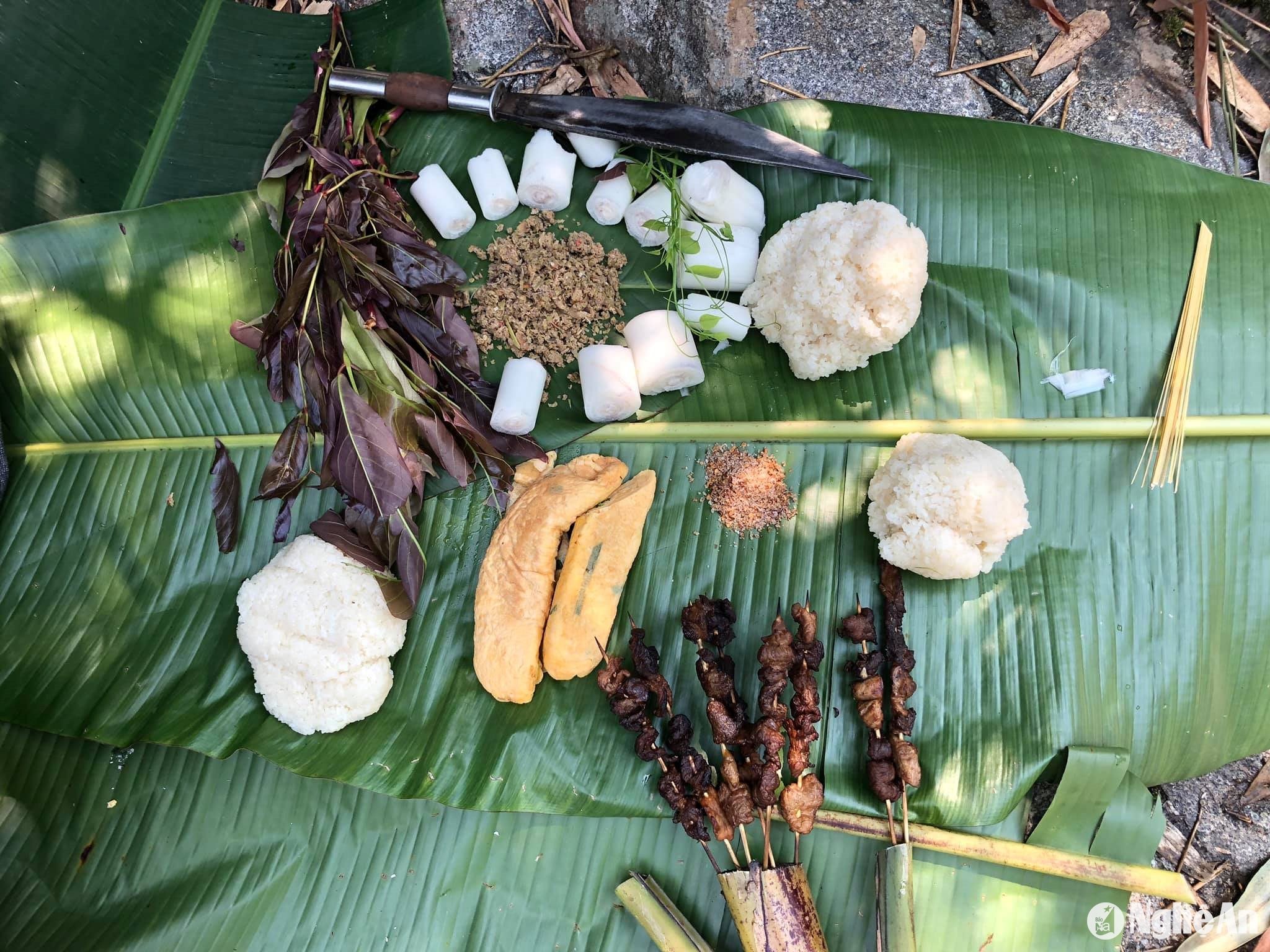
Coincidentally, during the recent April 30th holiday, we went to Quy Chau and met the family of Ms. Duong Xuan Anh, a tourist from Hanoi, who was at Dong Minh restaurant – specializing in Thai cuisine in Chau Hanh commune, Quy Chau. Slightly awkward in her Thai attire, she and her two daughters, under the guidance of the restaurant staff, were picking vegetables from the garden: leaves of the Doi plant, young banana tree shoots, rattan shoots… to prepare a Thai soup. “To be honest, I don't know much about Quy Chau, and it's not a place that particularly attracts me on my casual trips. However, the dishes – grilled fish with mắc khén spice, ột soup, bon soup, bamboo shoot salad, sticky rice with various toppings – of the local people, as depicted in the authentic and vivid images shared by Facebook users, are truly captivating. Therefore, even though I live in Hanoi, every holiday my family and I come to Quy Chau to experience the life of the Thai people, such as picking wild vegetables and bamboo shoots; joining the restaurant owner in cooking Thai dishes; and enjoying Thai cuisine,” shared Ms. Duong Xuan Anh.
To be honest, I don't know much about Quy Chau, and it's not a place that particularly attracts my attention during my travels. However, the local dishes – grilled fish with mắc khén spice, ột soup, bon soup, bamboo shoot salad, sticky rice with various toppings – as depicted in the authentic and vivid images shared by Facebook users are truly captivating.”
Ms. Duong Xuan Anh, a tourist from Hanoi.
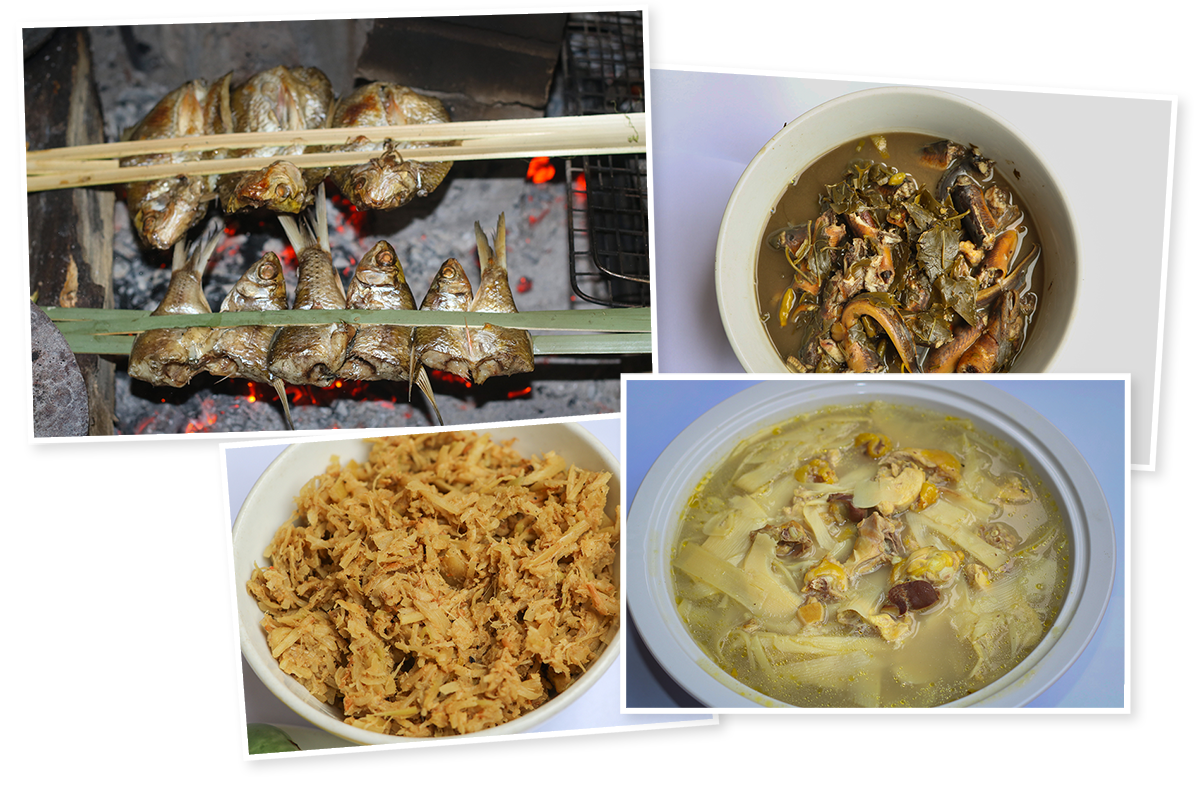
It turns out that Ms. Xuan Anh, like most tourists, learned about Dong Minh restaurant – specializing in Thai cuisine – through the posts of its owner, Lang Van Hiep. Whenever he prepares a dish, Mr. Lang Van Hiep films the entire process, from harvesting ingredients, preparing them, cooking, and serving… and posts it on his personal page, social media groups, and Thai food websites in Quy Chau. Initially, the restaurant only served local people, those in the district, or visitors from the lowlands brought in by locals, and working at the restaurant was just a "side job," only preparing and serving when customers placed orders. Gradually, through social media, through Mr. Hiep's livestreams shared by friends and relatives, the restaurant and Mr. Hiep became known to the press, and articles promoting the Thai cuisine he prepared were published. From then on, more and more tourists learned about Dong Minh Thai restaurant. Every group of tourists visiting Quy Chau now comes to the restaurant to enjoy Thai cuisine. Many people come to Quy Chau because they are so captivated by the Thai ethnic dishes that Mr. Hiep serves. As a result, the restaurant is becoming increasingly popular, requiring expansion and the hiring of more staff. Importantly, the appeal of the cuisine has significantly contributed to promoting and attracting tourists to Quy Chau.
Ethnic cuisine is a form of culture closely intertwined with the daily life and livelihoods of communities. Promoting and disseminating ethnic cuisine through social media and digital platforms allows its value to enter everyday life, spread across the "flat world," and serve all audiences, especially in the tourism sector, which is considered a key economic sector for localities in general and ethnic minority and mountainous regions in particular.
Mr. Nguyen Manh Loi, Director of the Nghe An Investment, Trade and Tourism Promotion Center
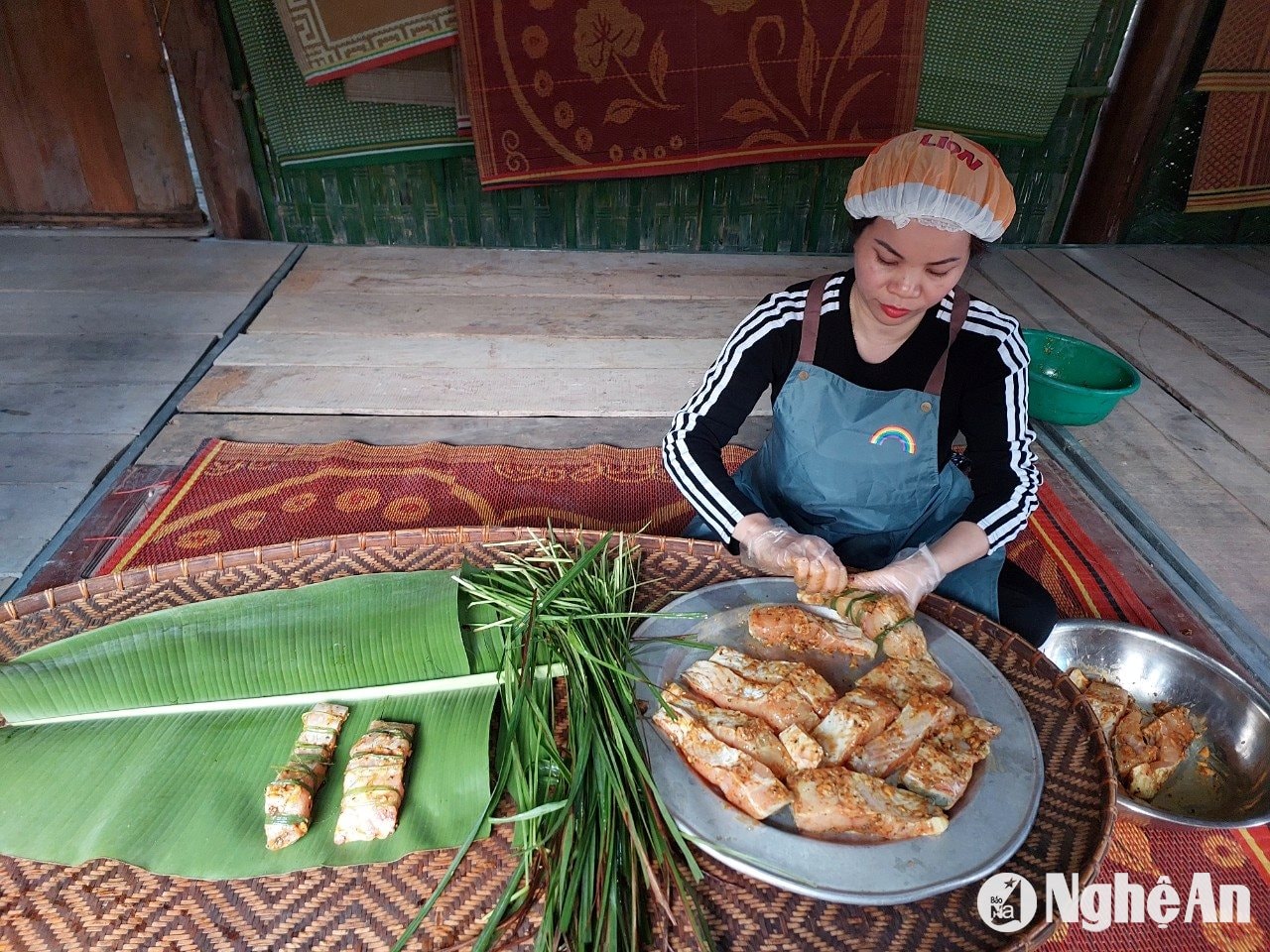
In the context of integration, many government programs and projects supporting digital transformation and international network connectivity have reached various sectors, levels, and regions across the country. Most recently, the project on applying information technology to ethnic minority and mountainous areas, under the National Target Program for socio-economic development of ethnic minority and mountainous areas for the period 2021-2030, has received over 1.549 billion VND in funding. Taking advantage of this, many young ethnic minority people have effectively utilized social media to introduce and promote their ethnic cuisine, contributing to preserving and spreading the traditional culture of their ethnic groups to friends both domestically and internationally. This is also a way for ethnic minorities to exploit the advantages of tourism development, attract tourists, and create more sustainable livelihoods.

With the explosion of technology, digital transformation has become closely linked to tourism, because consumers inherently prefer new experiences, something both technology and tourism can offer. To provide unique and attractive rural tourism experiences that will keep visitors coming back again and again, localities need to develop distinctive and unique products. These products should be based on factors such as natural features and climate to create truly one-of-a-kind offerings.
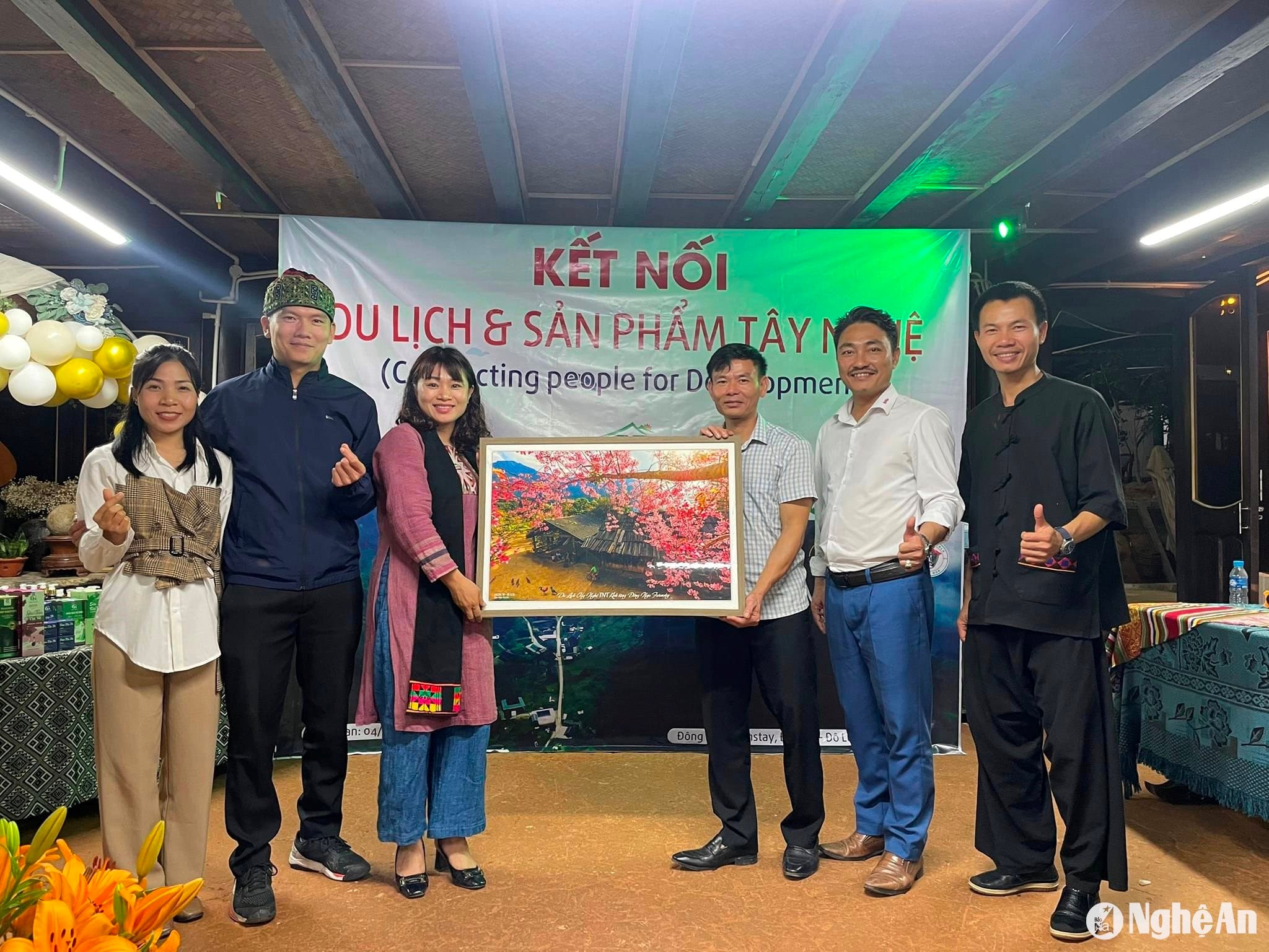
"In the 4.0 era, connectivity through cyberspace helps blur geographical distances and create initial impressions and experiences for tourists. Developing virtual reality products to enhance tourist experiences has significant commercial potential, as it creates the first impression to attract visitors. However, this is a major issue requiring fundamental policies and solutions from regulatory agencies, as businesses lack the resources and data to develop them. Furthermore, products built on digital transformation need to be designed in sync with real-world tourism," said Mr. Vo Nguyen, Director of a travel company specializing in intra-provincial tours.
Sharing this view, Ms. Vi Thi Tham stated that promoting the image, destinations, and potential of a region is essential, especially for companies and individuals that are just starting out and are small-scale. Without promotion, digital transformation, and social media, very few people would know about the destinations, scenic spots, and unique cultural and culinary features. However, alongside this, developing tourism in the Mekong Delta requires investment in infrastructure and service quality to avoid a discrepancy between the glamorous promotional images and the inadequate infrastructure and facilities once many people visit, leading to tourists never returning. Examples include traffic congestion at Mekong Delta destinations during peak season, food shortages, and a lack of decent accommodation.