Part 1: Providing more 'fishing rods' for people in mountainous regions
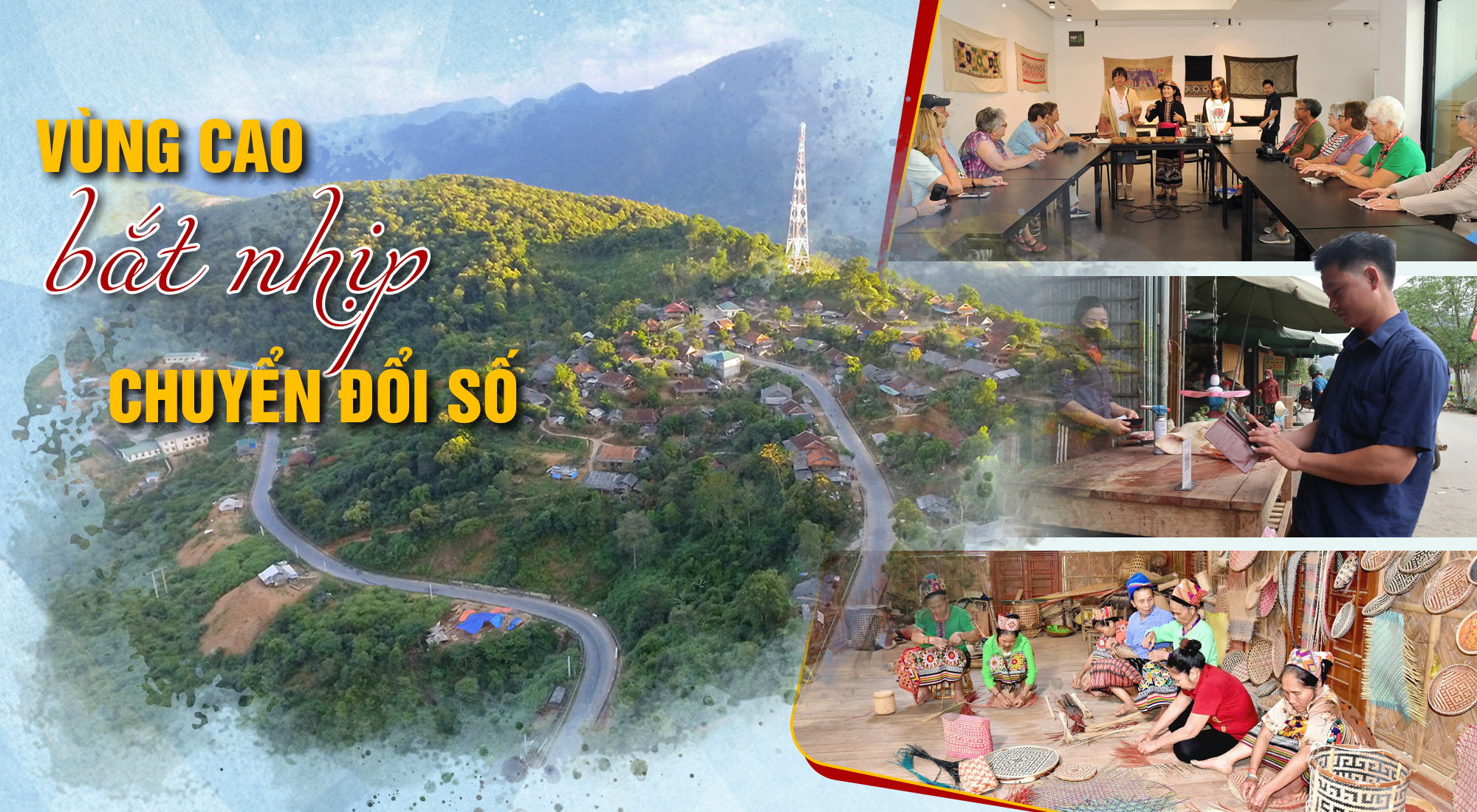
For the local people, the term "digital economy" was completely unfamiliar. However, in recent years, when going to the market daily, from selling chickens and pigs to carrying baskets of bamboo shoots and bunches of mustard greens, they have learned to accept payments via QR code or bank transfer; they use social media to livestream the sale of agricultural products from their fields and farms; and they know how to promote and sell their rattan and bamboo weaving, brocade, and embroidery products online... As a result, the agricultural, local, and forestry products of the local people have become more widely known, more people order them, they sell more goods, earn more income, and have more "fishing rods" to alleviate poverty.

Thanh Phuc - Hoai Thu • September 25, 2024
For the local people, the term "digital economy" was completely unfamiliar. However, in recent years, when going to the market daily, from selling chickens and pigs to baskets of bamboo shoots and bunches of mustard greens, they have learned to accept payments via QR code or bank transfer; they use social media to livestream the sale of agricultural products from their fields and farms; they know how to promote and sell their rattan and bamboo weaving, brocade, and embroidery products online... As a result, the agricultural, local, and forestry products of the local people have become more widely known, more people order them, they sell more goods, earn more income, and have more "fishing rods" to alleviate poverty.

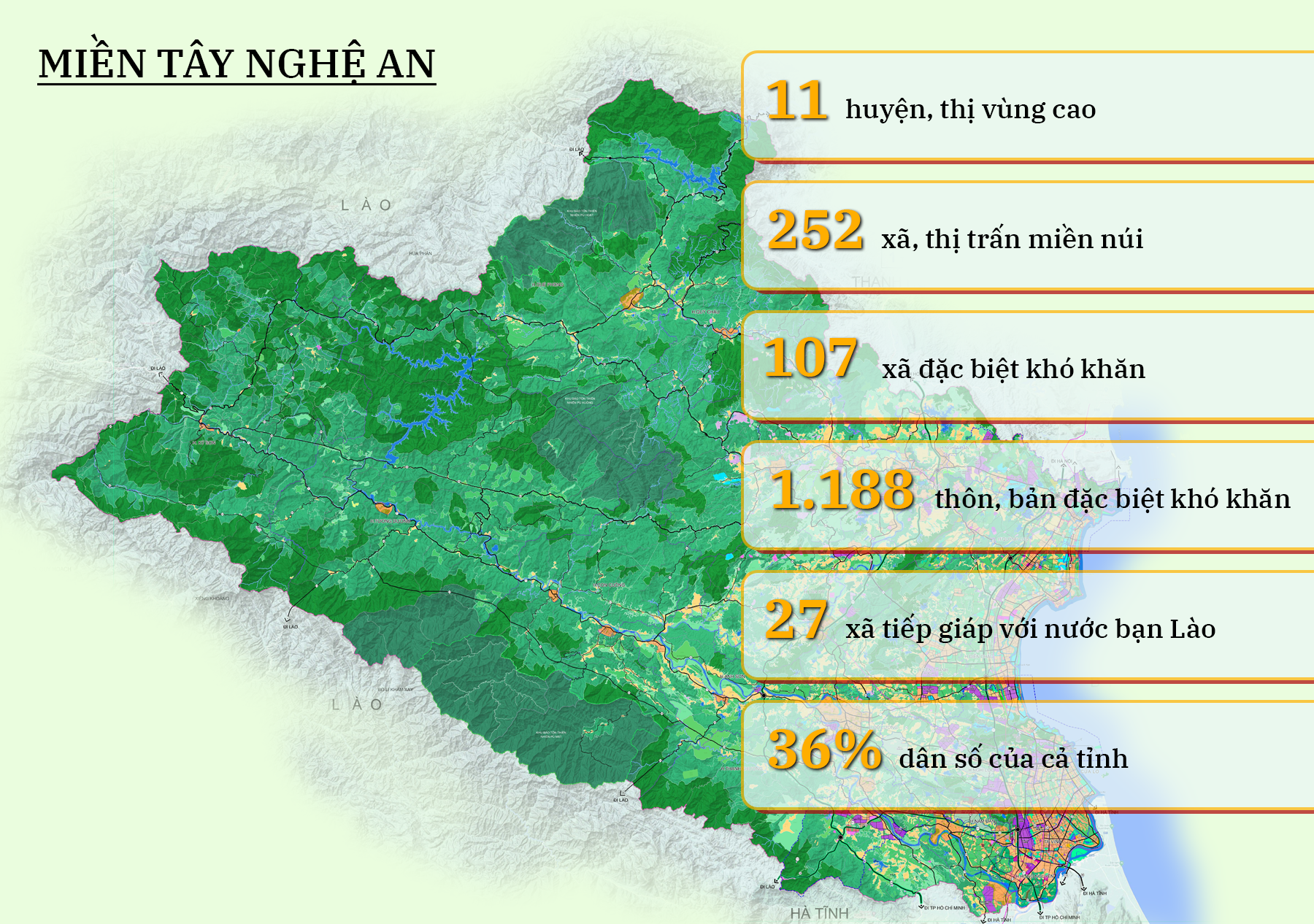
We, as journalists, with our profession and decades of experience and countless trips to the highlands, can clearly see this change. Western Nghe An has changed dramatically. Poverty still exists, but backwardness has gradually faded away. Nghe An has 21 districts and towns, with 11 of them being mountainous areas, comprising 252 communes and towns. Among these, 107 communes and 1,188 villages are classified as particularly disadvantaged; 27 communes border Laos with a border length of over 468 km; and the population accounts for 36% of the province, consisting of five main ethnic minority groups: Thai, Tho, Kho Mu, Mong, and O Du.
About 10 years ago, traveling to a remote village or hamlet in the highlands took 1-2 days, often by river or stream, navigating through fast-flowing rapids and waterfalls. To contact officials, the villagers had no choice but to "go door to door." Farmers who harvested pumpkins or bamboo shoots found it difficult to sell them for money due to the lack of markets and remote roads. Even raising black pigs or chickens was only for their own consumption; there was no one to sell them to, so poverty persisted.
But now, even from thousands of kilometers away, a simple phone call, or even a video call, allows you to connect with villagers working in the fields, in remote forests and mountains. The villagers have...agricultural productsWith just a simple action of taking photos or videos and posting them online, people place orders and products are sold. These miraculous changes, according to Mrs. Vi Thi Moong from Tam Thai commune, Tuong Duong border district, are "things that have never happened before."
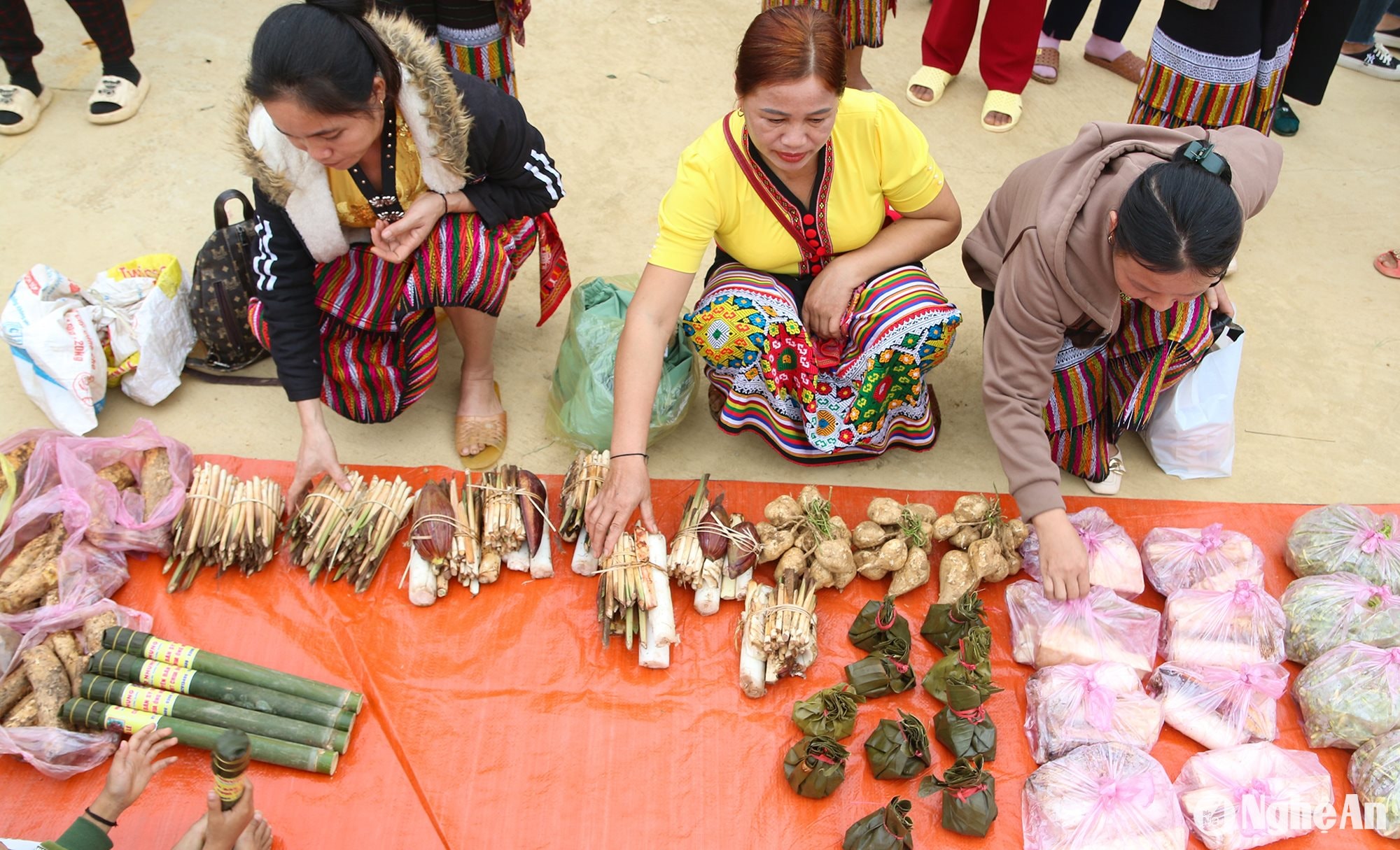
At Tam Thai market (Tuong Duong district), it's easy to spot vendors selling everything from pigs carried under their arms to bamboo shoots and taro, all with QR codes attached to their baskets, crates, and containers. After buying 2kg of taro for 80,000 VND, and only having a 500,000 VND note left to pay, Ms. Vi Thi Moong, a vendor at Tam Thai market, replied: "I didn't prepare any change, so I don't have any to give you back. Could you scan the QR code and transfer 80,000 VND to my account?" After a moment of surprise, I quickly opened my phone and scanned the code. A message arrived, and Ms. Moong happily smiled: "I received it!"
According to Ms. Moong, nowadays, when selling chickens, bamboo shoots, or potatoes, people accept payment by bank transfer or QR code scanning. Almost everyone has access to this service.QR codeTo scan the code, you get the account number to transfer money, and you receive a text message notifying you whether the money has been deposited into the account. “Some older people, who aren’t very tech-savvy, just scan the QR code here, and the money automatically flows into their wife’s or children’s cards at home. When the money arrives, a phone ‘ding’ announces that it has been received. It’s very convenient,” said Mr. Vi Văn Thắng.
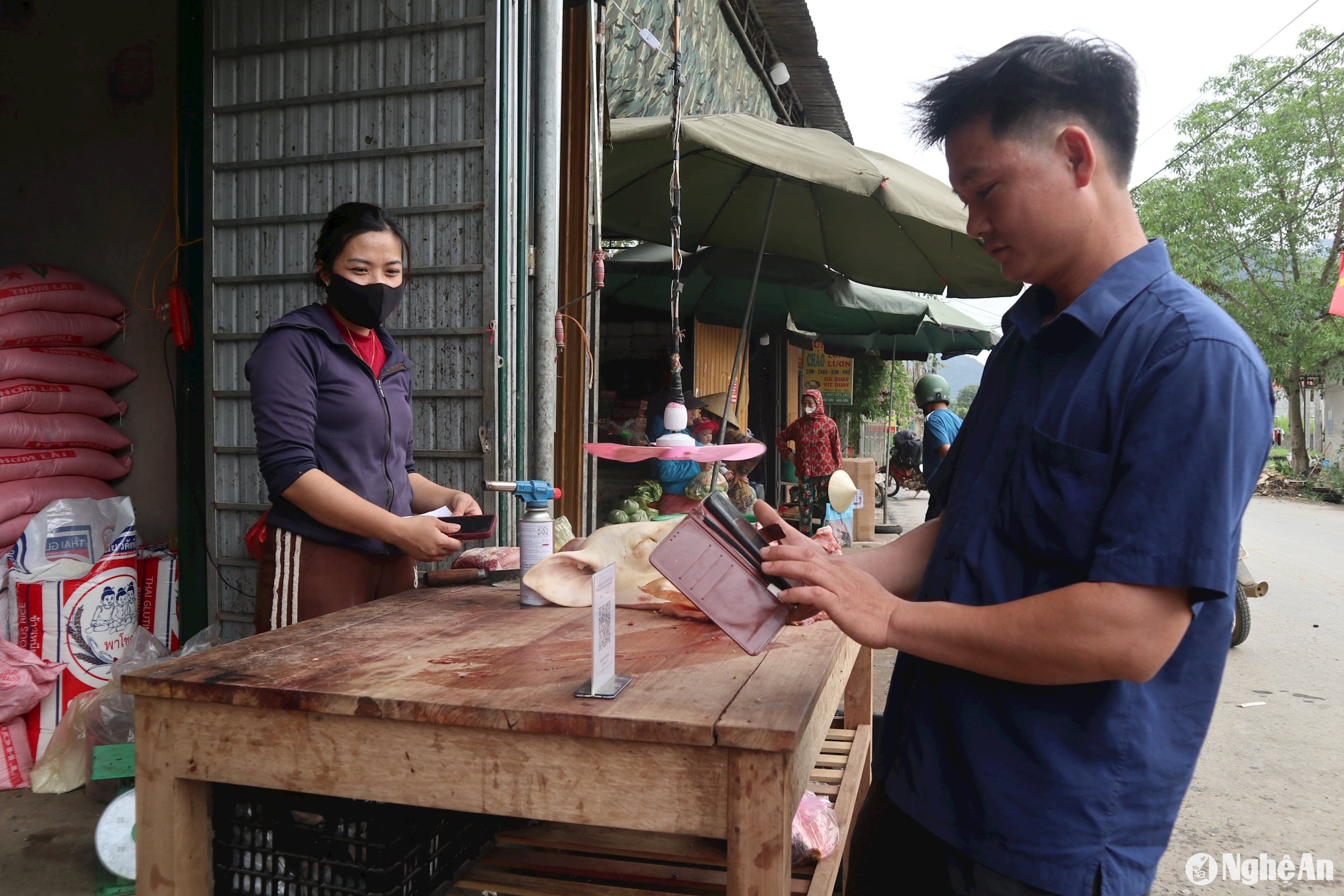
Nowadays, whether selling chickens, bamboo shoots, or potatoes, people accept payment via bank transfer or QR code scanning. Almost everyone has a QR code to scan, a bank account number to transfer money, and receives text messages notifying them when the money has been deposited.
Having a phone and internet access has helped Mrs. Moong "transfer money for bamboo shoots and local pigs into her account," while for Ms. Vu Y Mua (Muong Long commune, Ky Son district), the internet allows her to receive monthly payments from her husband, who works as a factory worker in the South. Previously, to spend money on anything, she had to go to the town to withdraw cash or transfer money to someone else, incurring fees. "My husband sends money to my bank account. To buy milk, diapers, or pay for electricity, taxes, funds, or school fees for my children, I have to go withdraw cash or transfer money to someone in the commune and then receive cash, but I have to pay fees," Ms. Mua shared.
Now, electricity bills, tuition fees, or even buying a carton of milk or a packet of instant noodles can all be paid via bank transfer to the service provider, instead of using cash like before.”
Ms. Vu Y Mua, Muong Long commune (Ky Son district)
For nearly a year now, the chain of stores selling food, groceries, gasoline, and agricultural supplies owned by Mr. Bui Cong Chung (Hamlet 2, Hoi Son Commune) has been accepting card payments, with a rate of 30-50%. According to Mr. Chung, card payments offer many advantages. Firstly, the correct and full amount is transferred, eliminating the need for change or extra payment; secondly, it's easier to monitor payments due to the transaction tracking function. Thanks to this, even with multiple business segments and a large customer base, the two of them (husband and wife) can still manage the cashiering effectively. In particular, they don't have to wait to receive change, thus saving time; and the transaction tracking prevents disputes over payment errors…

At nearly 80 years old, Mr. Luong Van Huan in Bong village (Thanh Son commune, Anh Son district) still diligently practices the traditional craft of weaving. What's special is that he livestreams the production of his products, such as rattan trays, rattan chairs, brooms, and baskets, on his personal Facebook page. He also takes photos and clearly displays the price of each item. After receiving an order, he asks his son to deliver the goods; if the customer is far away, he sends them via passenger bus. Thanks to this, even though he only produces on a small scale at home, he has a stable customer base, and many of his products are made to order.
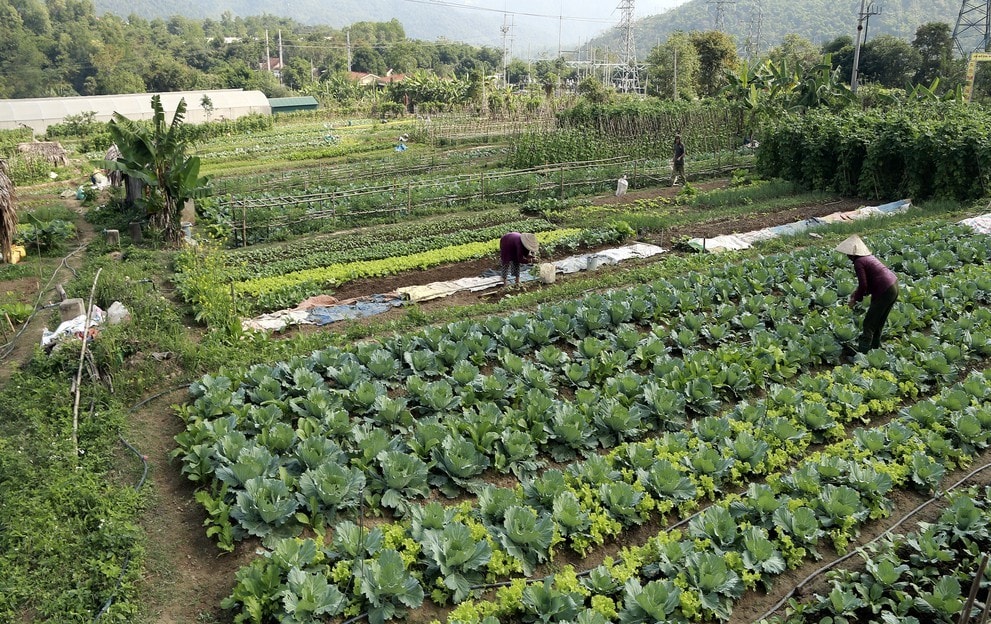
Previously, the Thai ethnic minority people in Thach Giam town, Tuong Duong border district, who grew sweet tomatoes and tomato slices, relied solely on traders for sales. However, with the development of social media, almost everyone now has Facebook, Zalo, and TikTok accounts, allowing people to utilize these platforms to livestream and sell their agricultural products online. Ms. Luong Thi Hien, Vice Chairman of the People's Committee of Thach Giam town, stated: “In Phong village, over 3 hectares with 25 households participate in growing clean vegetables, focusing on native crops such as tomato slices and sweet tomatoes… with a production volume reaching tens of tons per year. Production follows VietGAP standards, resulting in highly sought-after specialties. However, in the past, people only knew how to produce the products, leaving the output and sales to traders and local retailers. In recent years, with the development of social media and the support of the local government, people have changed their mindset and practices, learning to put their agricultural products online to find markets.”
Accordingly, the entire process, from planting and caring for the plants to harvesting, is filmed or live-streamed by many households on their personal pages, through groups, and by tagging friends. Thanks to this, the brand of clean vegetables from Phong village has become known to consumers, many people have connected with modern retail systems to sell their produce, and many orders from neighboring districts and Vinh City have reached the villagers. Therefore, during the harvest season, Phong village vegetables, especially tomato and sweet tomatoes, are carefully packaged and shipped everywhere in refrigerated trucks.
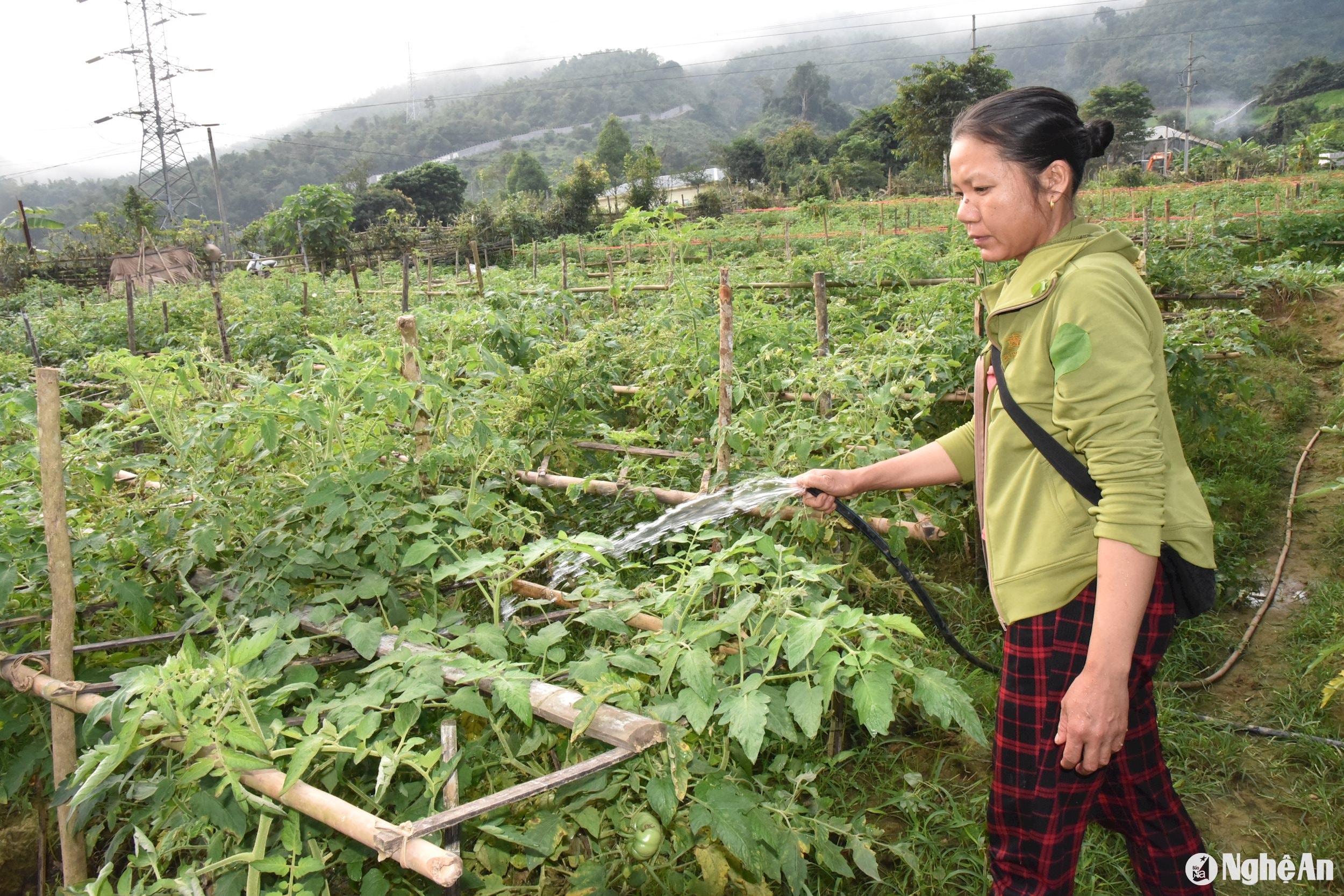
The entire process, from planting and caring for the plants to harvesting, is documented or live-streamed by many households on digital platforms, making the clean vegetable brand of Phong village known to consumers and leading to orders. During harvest season, Phong village vegetables, especially tomato and sweet tomato, are carefully packaged and shipped to various locations in refrigerated trucks.
“With more orders, we don't have to worry about unsold produce, and the selling price is higher than buying wholesale from traders, so the farmers are very happy. In the early seasons, when it was time for harvest, the Vice Chairman of the Town People's Committee, the Chairman of the Farmers' Association, the Youth Union, and the Women's Association came to the fields to guide the farmers on how to livestream, how to close orders, and how to interact with customers... Initially, only young households responded, but gradually, one household learned from another, and now, almost everyone knows how to sell agricultural products online,” shared Mr. Luong Van Toan, a clean vegetable producer in Phong village.

Nearly 6.5 million results appear in 0.30 seconds when typing "Hoa Tien brocade" on Google, demonstrating the widespread online reach of the traditional craft products of the Thai ethnic minority in Hoa Tien (Chau Tien commune, Quy Chau district). With her flexibility and keen market insight, Ms. Sam Thi Tinh, daughter of Ms. Sam Thi Bich, Director of the Hoa Tien Brocade Craft Village Cooperative, has successfully promoted products and developed the Hoa Tien brocade brand through digital platforms. This includes maximizing the benefits of social media to introduce and promote products, designing an eye-catching business website with diverse information content, and offering easy purchasing and payment methods. Simultaneously, she has built a professional and responsible sales approach focused on customer satisfaction. Delivery, packaging, and product preservation are also prioritized to ensure product quality upon arrival. Online sales have contributed significantly to the revenue of the craft village cooperative.
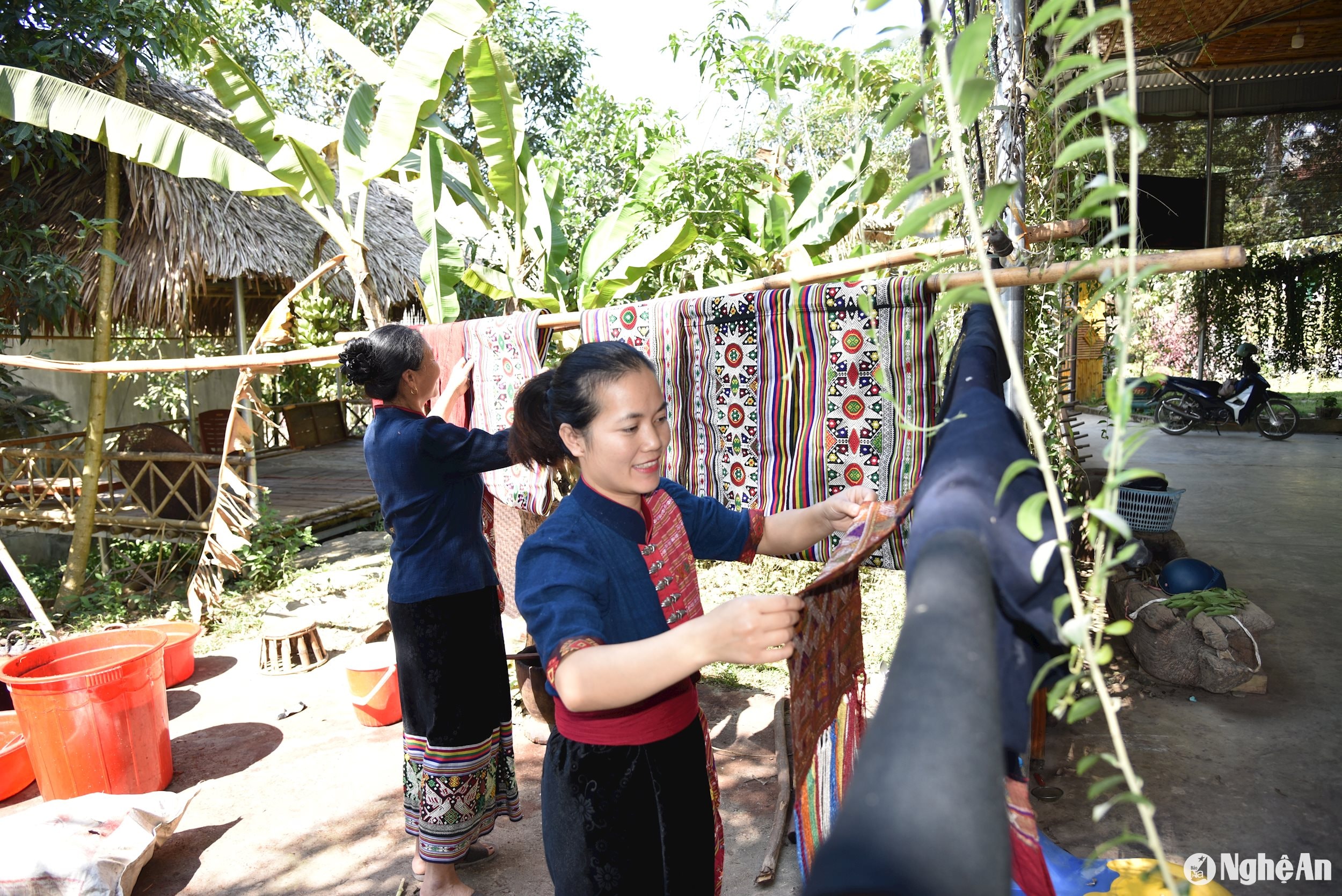
Hoa Tien brocade is not only popular in the domestic market but is also ordered by Vietnamese people abroad, exported to Laos and Thailand, and sold to foreign tourists, all thanks to promotion on digital platforms. Selling on 4.0 technology platforms has helped the cooperative sell more than 40% of its products. In addition, the products of Hoa Tien brocade cooperative have now been digitized under the program "Supporting the construction of OCOP product dossiers and data management, digitizing products and building a traceability system along the OCOP product value chain" of the Department of Science and Technology.
Accordingly, by using intelligent 3D/360 interactive exhibition software to digitize OCOP products with software features including: System Management Subsystem - Content Management Subsystem - Virtual Reality Tour Subsystem - Automatic Narration Subsystem - Automatic Tour Subsystem on all platforms, the products are built with digitized content including: Introduction of the unit producing the product, product origin (on-site space, production and display location); product information in Vietnamese and English; programmed interactive features on a 3D/360 digital map platform… With just one click on the link, all information about the OCOP products of Hoa Tien Brocade Craft Village Cooperative will be displayed with vivid images thanks to 3D technology, and engaging commentary that is very attractive to viewers. This helps create a positive impression on customers and provides the cooperative with data to present to foreign partners without having to bring cumbersome files, records, and paperwork as before.
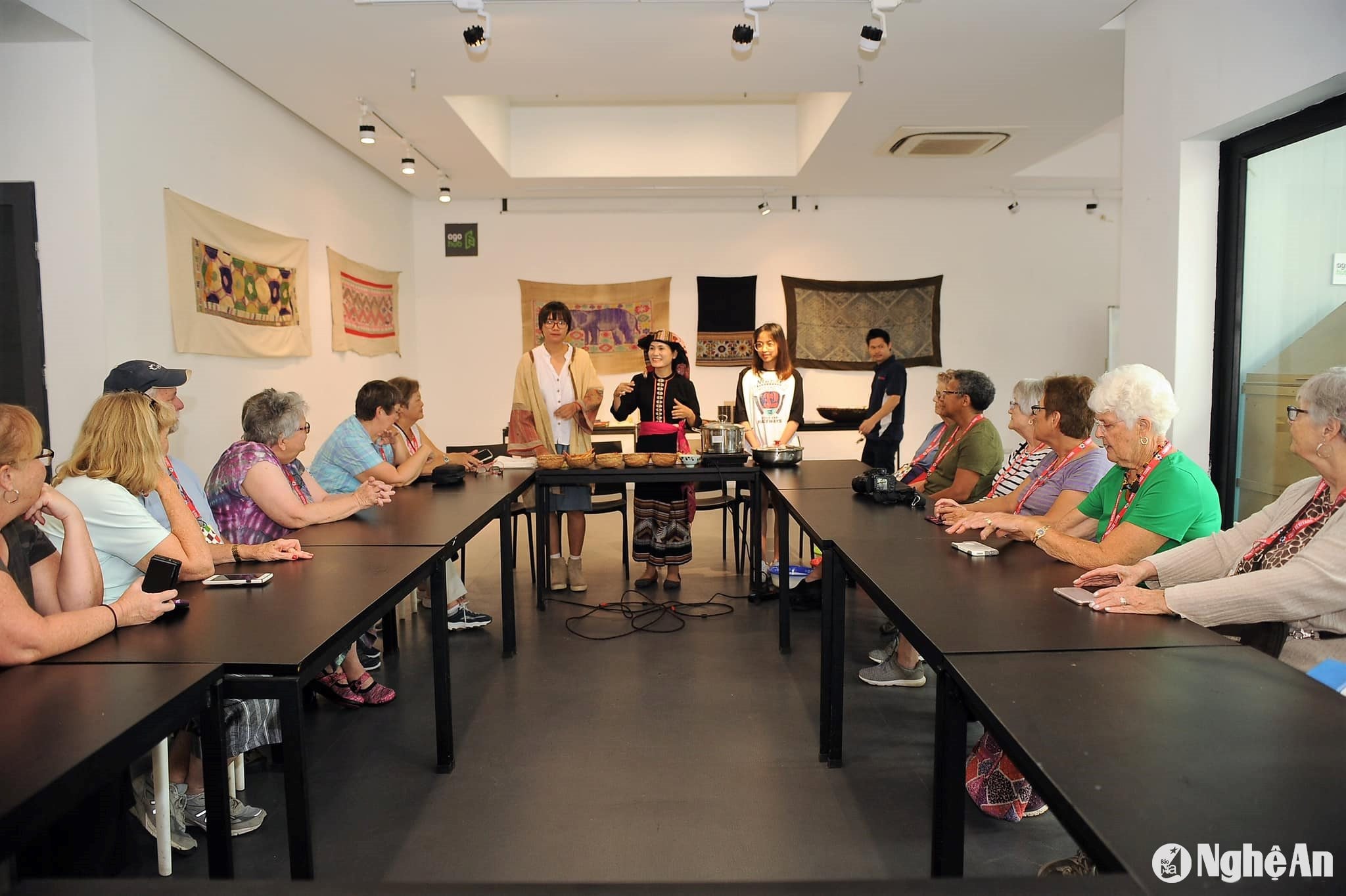
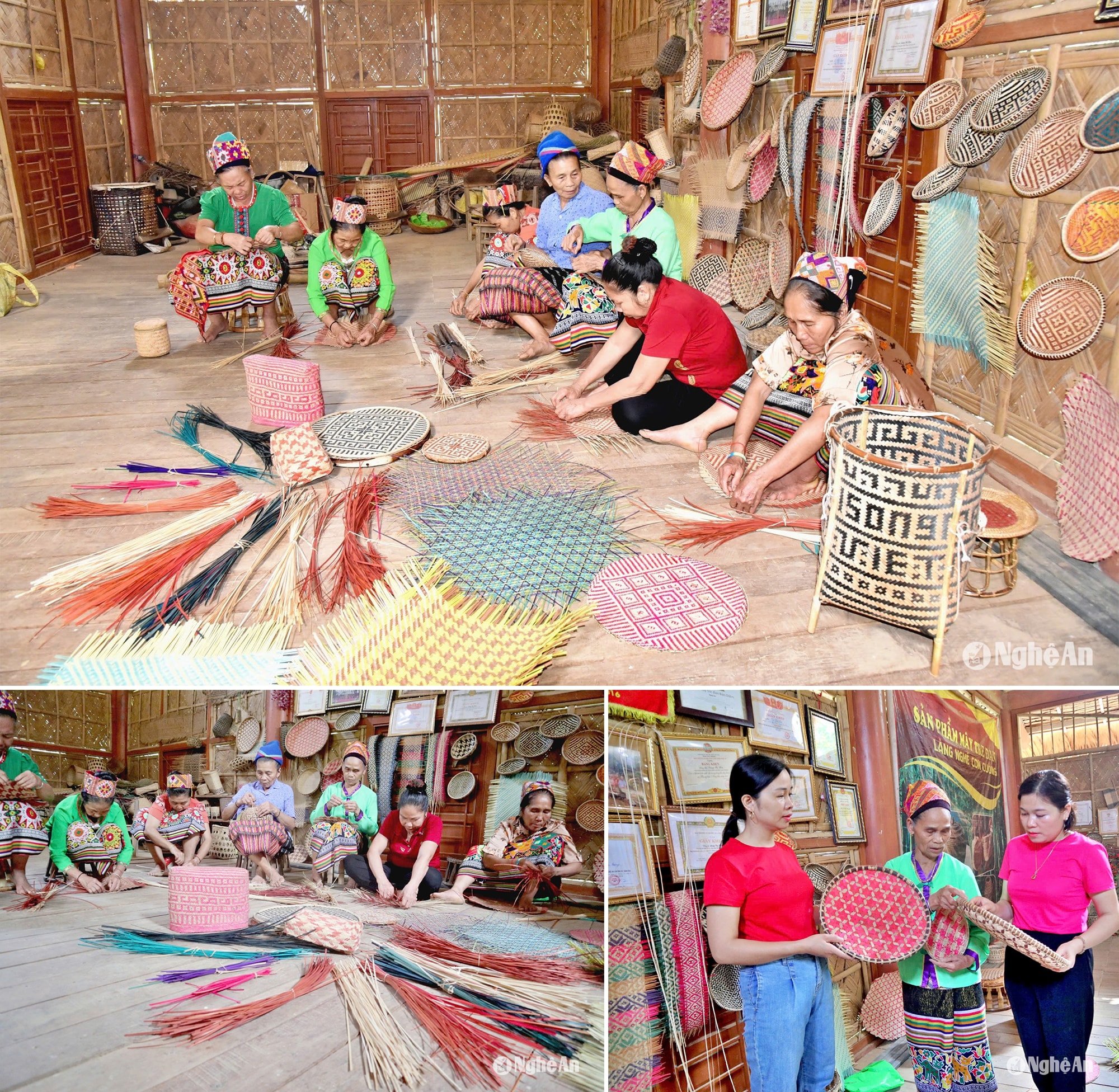
Many traditional craft products from mountainous districts of Nghe An province, such as Hoa Tien brocade (Quy Chau), Muong Long embroidery (Ky Son), Ban Diem rattan and bamboo weaving (Con Cuong), dried beef, sausages, and fermented meat, have benefited from effective promotion using digital platforms. This has enabled them to not only serve the domestic market but also gain recognition abroad, with many products being exported to other countries through informal channels. Most recently, the Ban Diem rattan and bamboo weaving cooperative received an order from Europe for thousands of rattan baskets and decorative containers. Securing this order, in addition to meticulous design, the use of local, environmentally friendly materials, and adherence to green consumption standards, is partly due to digital platforms. The products from the craft village are promoted on Facebook, listed on e-commerce sites, and featured in handicraft groups by experts. Furthermore, many Vietnamese people living abroad, upon learning about the rattan and bamboo products from Diem village, have also placed orders.
I currently live in Germany. When I saw the rattan and bamboo products from Ban Diem on a friend's Facebook page, I asked my friend to order some for me. When I brought them to Germany, my relatives and friends here found them convenient and beautiful, so many of them wanted to buy them as well…”
Ms. Hoang Thi Anh Duong, a Vietnamese woman living in Germany.
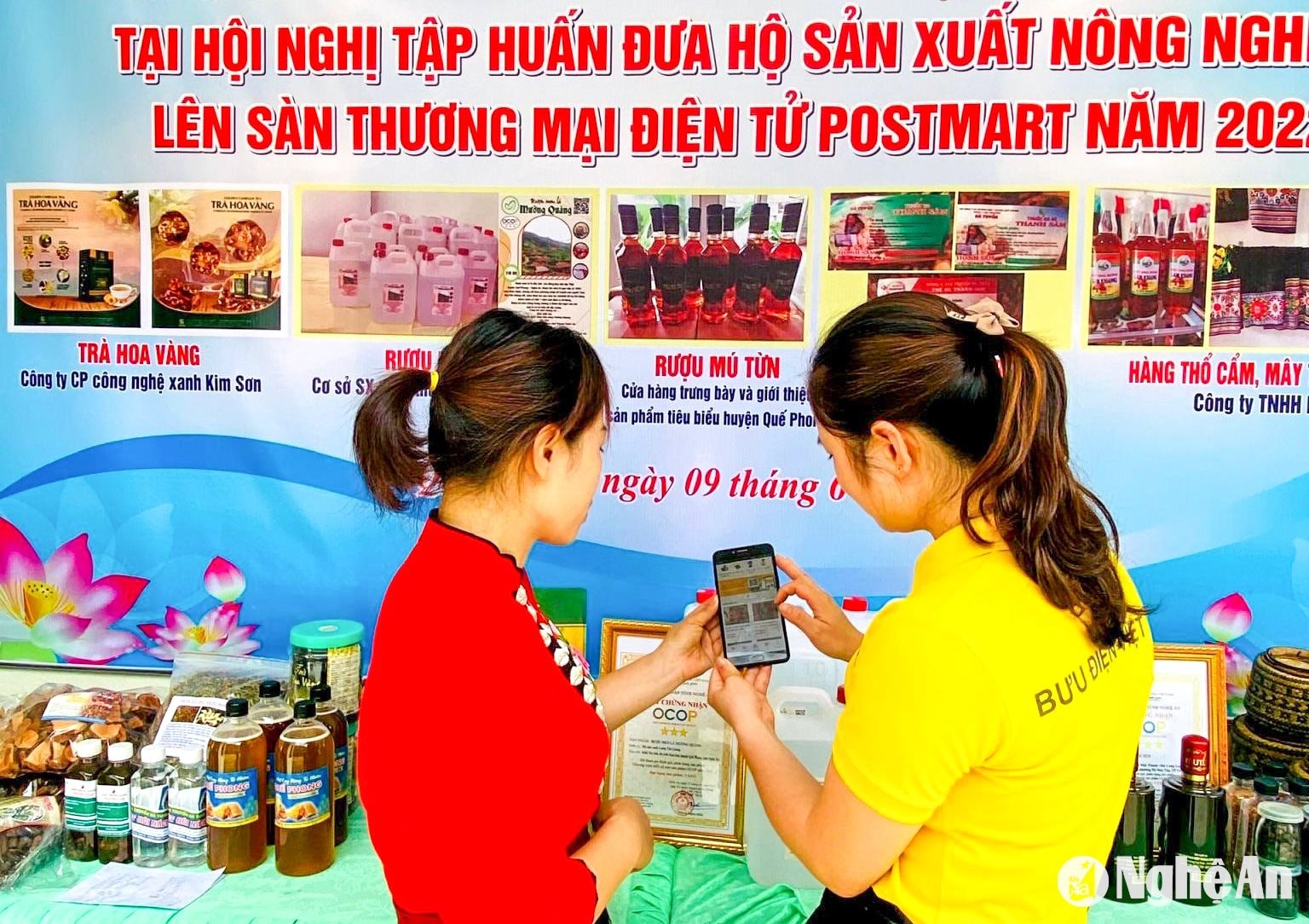
Recognizing the crucial role of digital transformation in promoting and selling agricultural products, the province has implemented numerous activities to boost this sector, aiming to innovate, enhance value, and improve the competitiveness of local agricultural products. This includes building an e-commerce platform to introduce and promote provincial products to consumers throughout Vietnam and the world.
Over the past two years, the Department of Industry and Trade has supported 21 districts, cities, and towns in opening district-level booths on the Nghe An e-commerce trading platform, with more than 266,373 households participating and a total of 8,836 products listed on the platform, ranking 5th nationwide in terms of the number of agricultural products listed. These include many products from ethnic minority communities in mountainous areas such as brocade fabrics, dried beef, sausages, and rattan and bamboo products.