
Finding ways to market agricultural specialties from the Ky Son highlands.
(Baonghean.vn) - Pumpkins, ginger, taro, Mong cucumbers, Tuyet Shan tea..., these delicious and clean specialty products can be grown in many communes of the high mountainous district of Ky Son. However, these agricultural specialties can face oversupply at any time.
Struggling and making efforts to find a way to sell the product.
Living in Trung Tam village, Nam Can commune, for over 10 years, the family of Mr. Tho Ba Phong has been cultivating 3 sao (approximately 0.3 hectares) of Shan Tuyet tea from the Youth Volunteer Brigade 8, which they care for, harvest, and sell to the brigade. With two harvests per month, Phong and his wife collect 11-12 quintals of fresh tea. “Because of the favorable climate and soil, the tea plants hardly need any fertilizer or care; it’s completely ‘clean’ tea, fragrant and delicious. Previously, the brigade bought it at 6,000 VND/kg, but since last year it has increased to 9,000 VND/kg. The harvested tea is sold immediately, so there’s no worry about it going unsold,” Tho Ba Phong said.
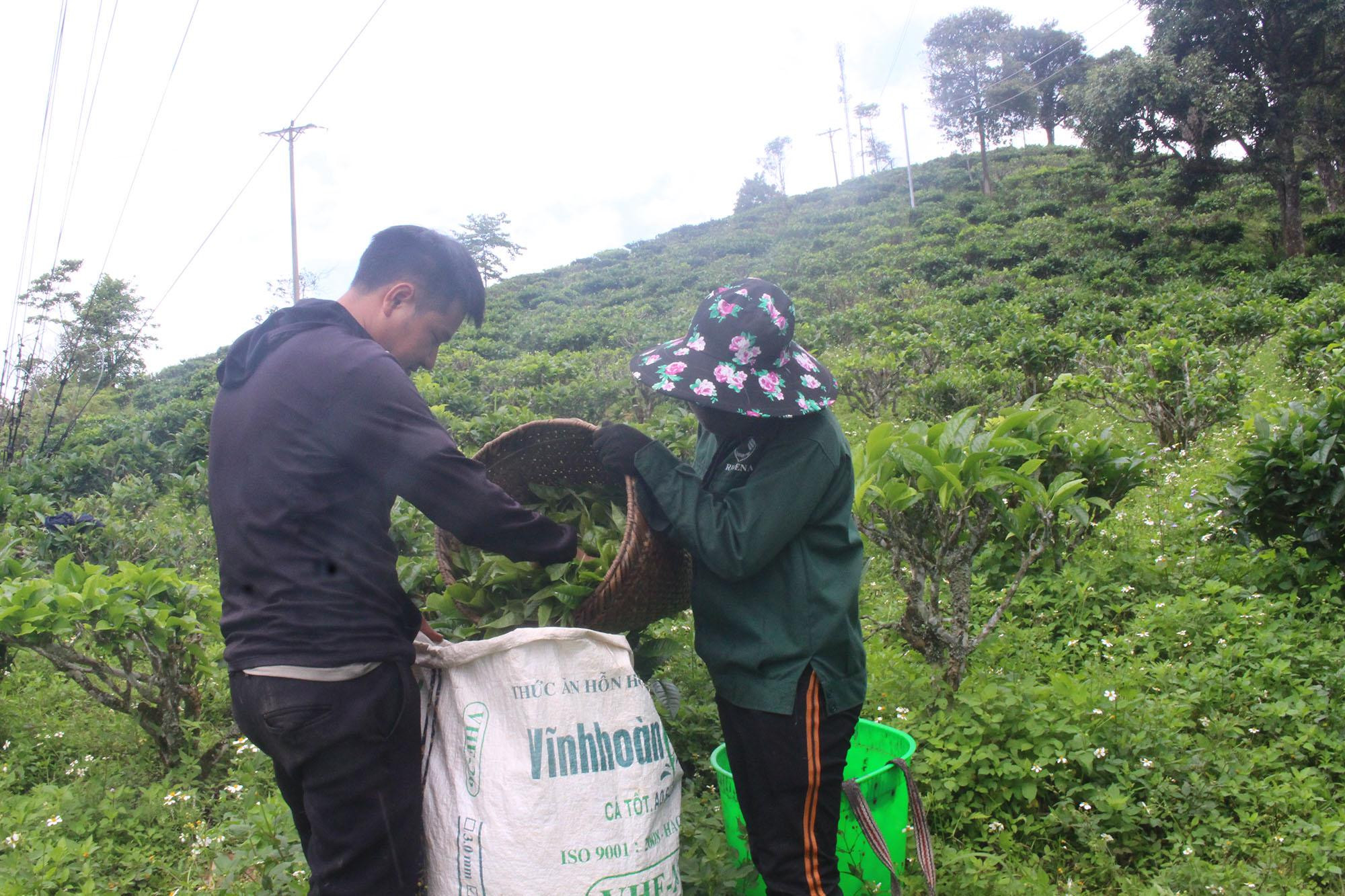 |
Each month, Thò Bá Phỏng and his wife harvest 11-12 quintals of Shan snow tea. Photo: Phú Hương |
Located in Huoi Tu commune, the 8th Youth Volunteer Brigade is currently responsible for purchasing the tea produced by over 230 hectares of Shan Snow Tea in the two communes of Huoi Tu and Muong Long. Mr. Vi Van Khanh, Head of the Organization and Administration Department, stated: The unit's tea plantation covers 30 hectares, and in recent years, it has encouraged local people to plant an additional 200 hectares, with an average of 20-30 hectares of new planting each year. Currently, 170 hectares of tea are being harvested, yielding hundreds of tons annually.
Hand-picked, never machine-picked, Ky Son snow shan tea is a plant that has been cultivated in this region for a long time, perfectly suited to the soil and climate conditions, and is the main source of livelihood for the local people.
Due to the difficulties in product development and promotion, and because the team is merely a socio-political organization tasked with disseminating information and encouraging people to grow tea, the unit has partnered with several businesses for support.product promotion and salesTo expand further, the Ky Son snow shan tea brand is being brought to consumers nationwide. “In addition, we also focus on market research, networking, and working with consumers to find stable sales channels and increase the value of the tea crop. Thanks to this, despite many difficulties, for many years, the unit has always ensured the purchase of all products from the people; plus, tea prices have increased from last year to the present, and some newly planted areas that were neglected are now being re-cared for and restored,” Mr. Vi Van Khanh shared.
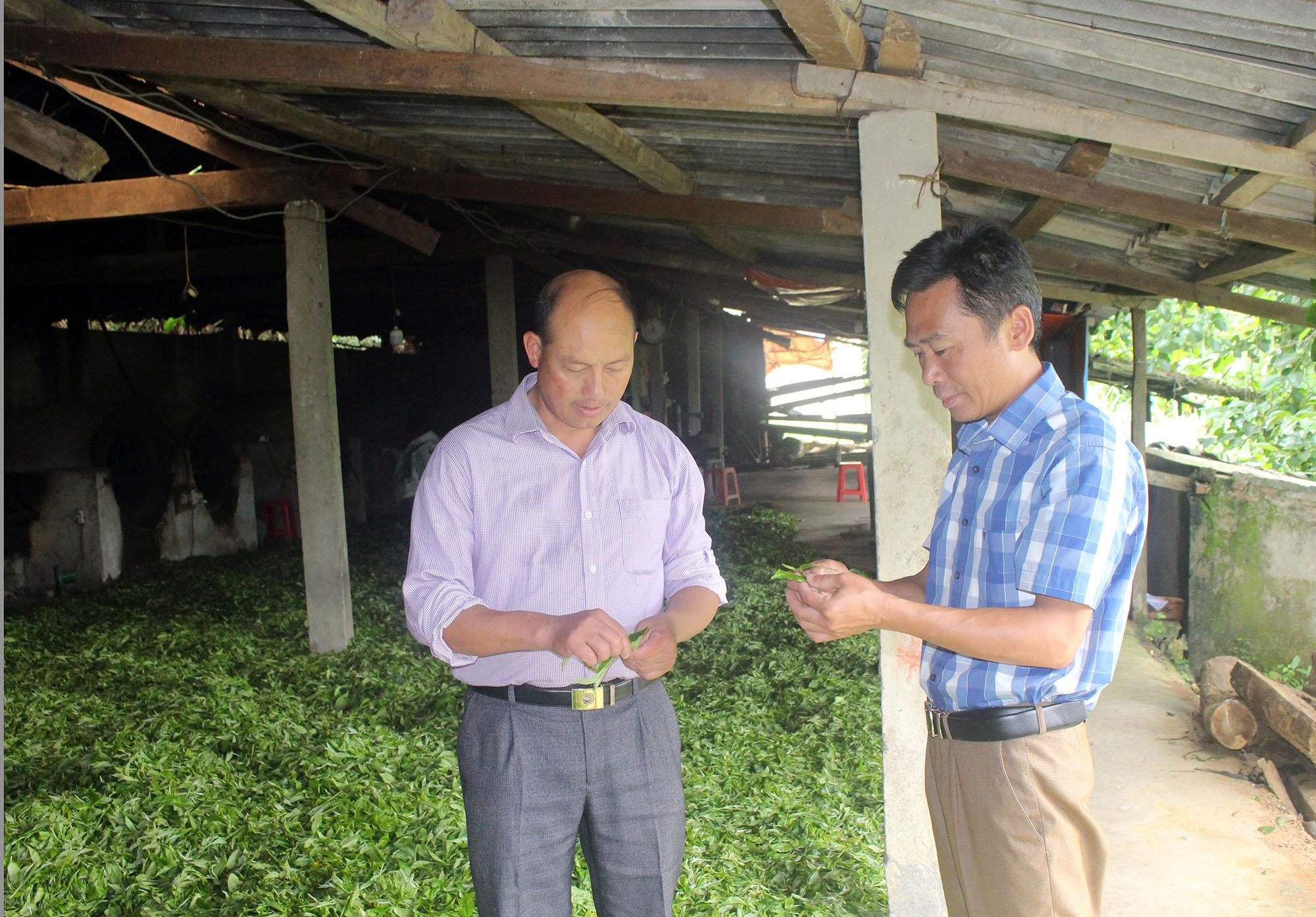 |
Officers from the 8th Youth Volunteer Brigade in Ky Son inspect the quality of tea before processing. Photo: Phu Huong. |
Besides selling raw tea, the unit also invested in a tea processing and packaging line, which was then labeled. The unit has participated in numerous tea production and packaging projects.agricultural fairThe aim is to introduce, promote, and expand the consumer market.
However, not all products enjoy the same stable sales as Shan snow tea. With over 50 plum trees in his family's orchard, Mr. Ho Chong Po in Muong Long 2 village, Muong Long commune (Ky Son district) can harvest tons of plums each year during the season, with traders coming directly to his orchard to buy them. However, sales aren't always smooth. Mr. Po says that in the past few years, he couldn't sell much, but this year, after the Covid-19 pandemic, he sold more, especially during the government-organized plum fair, which attracted many buyers. Even so, he only managed to sell a little over half. Many trees were left unsold, with all the fruit falling off.
Not only Mr. Pó's family, but the entire Mường Lống commune has 23 hectares of plum trees, yielding approximately hundreds of tons of fruit each year. However, according to Mr. Lầu Bá Chò, Vice Chairman of the Commune People's Committee, the villagers only manage to sell 30-50% of the production, leaving the rest to rot or spoil despite plum prices dropping very low in the middle and end of the season.
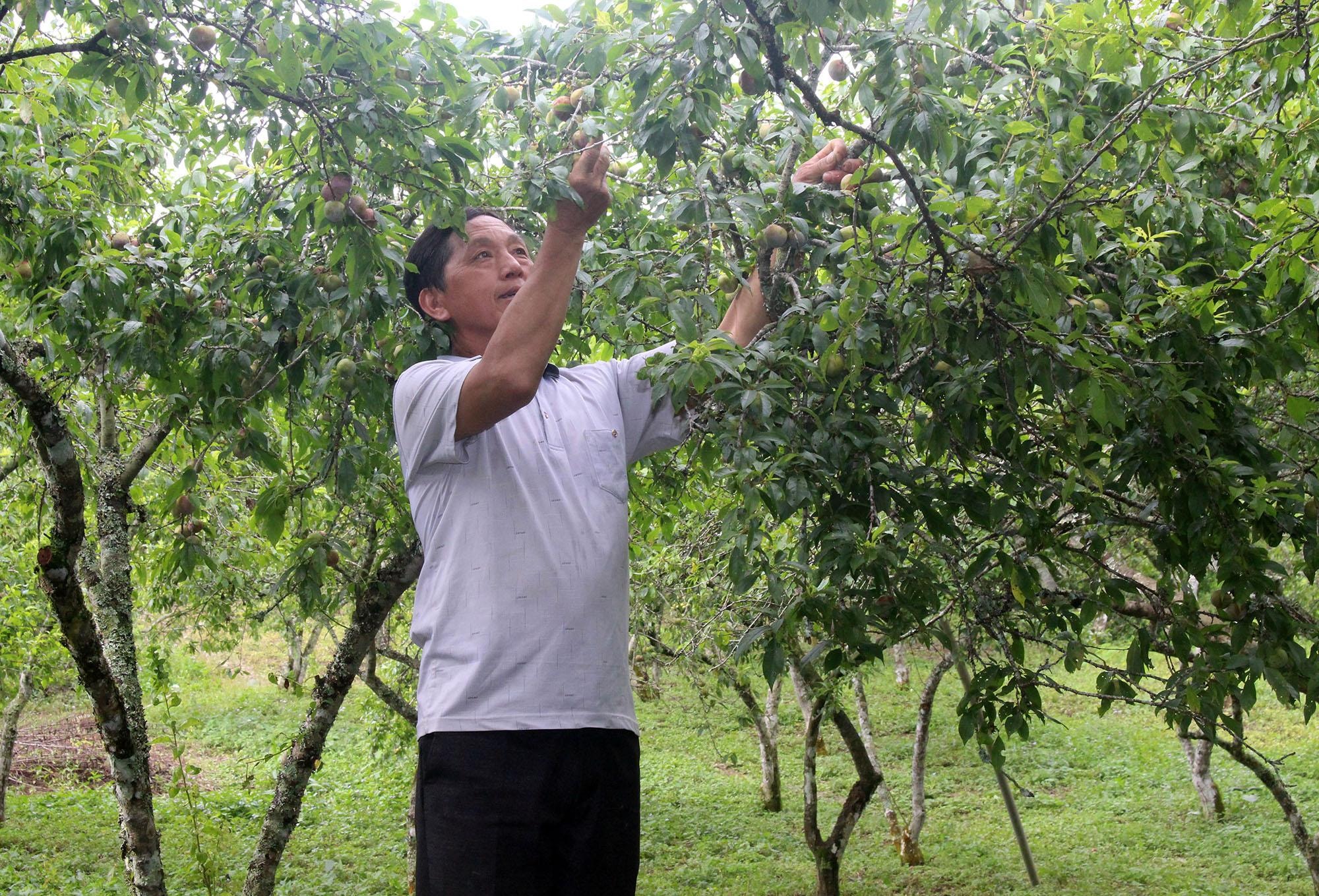 |
Mr. Hờ Chồng Pó said: Every year, his family's plum orchard only sells a little over half of its yield. Photo: Phú Hương |
Ms. Vo Thi Nhung, Deputy Director of the Department of Agriculture and Rural Development, shared: "This is very regrettable because finding a crop that is suitable for the climate, soil conditions, and farming practices of the local people, and that can yield high results like Tam Hoa plums, is very difficult. We have conducted surveys and assigned specialized units to investigate the relevant factors in order to plant new areas according to VietGAP standards, with proper investment and care; from these models, we will expand, helping farmers improve productivity and especially the quality of plums, making them larger, crispier, and sweeter, thereby facilitating stable consumption."
Not only the Tam Hoa plum, but many other agricultural specialties of Ky Son district, despite their high quality and food safety due to the characteristics of cultivation, soil, and climate, still face fluctuating consumption, with prices sometimes dropping very low or even resulting in surplus.
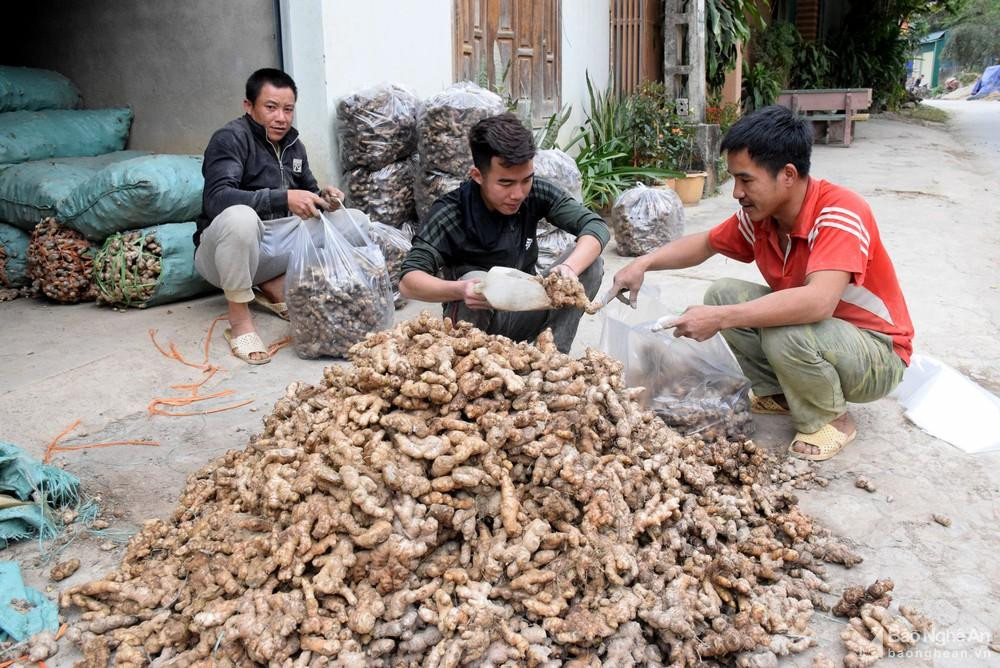 |
Ky Son ginger is fragrant, delicious, and mature, but its consumption is always "unstable". Photo: Xuan Hoang's archives. |
After two years of disruption due to the Covid-19 pandemic, agricultural product consumption has gradually returned to its normal trajectory this year, but it remains very challenging. Ginger prices have plummeted; previously, during the ginger season, 2-3 container trucks from Ky Son would transport ginger daily to various provinces, exporting it to China and the Middle East for processing. However, currently, the price is only 5,000 VND/kg, one-fifth of its previous price, and nearly 4 tons of ginger remain unsold in the area despite efforts to "rescue" the crop, mobilize businesses, and connect with social organizations and associations.support consumptionProducts for the local people.
A stable and lasting connection is needed.
According to Mr. Pham Van Manh, Chairman of the District Farmers' Association, the biggest challenge is transportation. Not only is the distance from major transportation routes and cities like Vinh City to Ky Son very far, but the distance from Muong Xen town to other communes is also very long, and the mountainous terrain makes traders hesitant to come and purchase due to transportation difficulties and increased costs. Even some businesses that surveyed Ky Son for potential purchasing and processing have abandoned the idea due to concerns about transportation difficulties.
Over the years, the district has implemented various solutions to attract businesses and find ways to market local products, but to date, no businesses have come to connect with, support, process, and market the products.
As a mountainous district of the province, with vast land, a temperate and cool climate, large temperature differences between day and night, and the farming practices of its people, Ky Son district has many types of clean, delicious, and highly sought-after specialty agricultural products. Besides Tam Hoa plums, grown on hundreds of hectares in the communes of Muong Long, Tay Son, Ta Ca, Na Ngoi, Nam Can, etc., Ky Son district also produces upland pumpkins, ginger, taro, Mong cucumbers, Shan snow tea, and more. Each year, the district produces approximately 100-120 tons of plums, 1,300-1,400 tons of taro, and over 5,000 tons of ginger and turmeric.
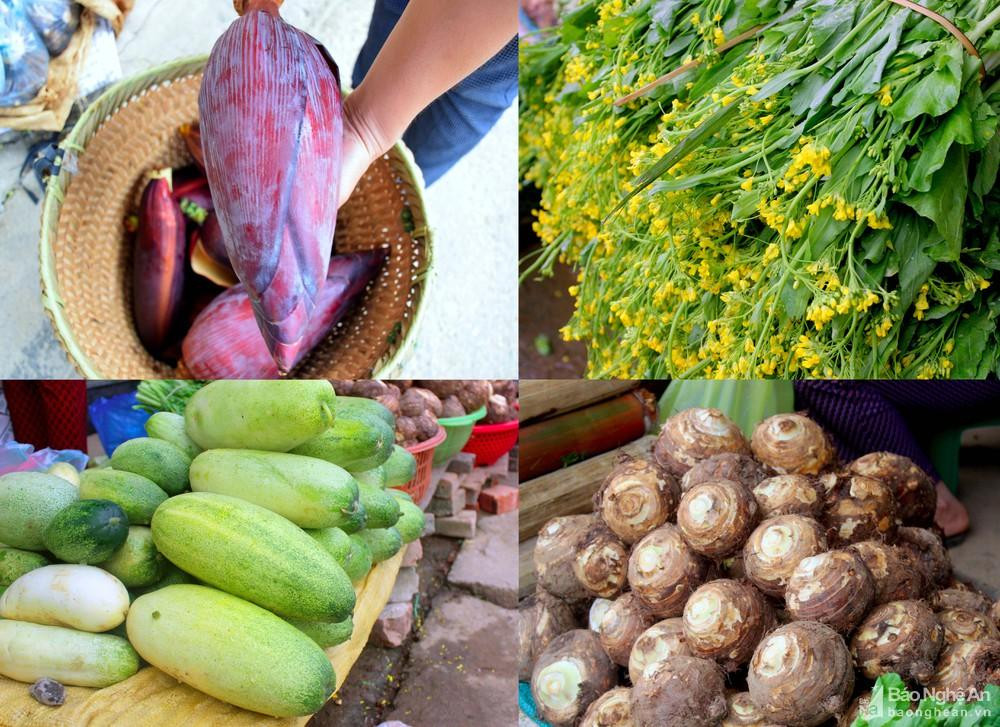 |
| Agricultural products of Ky Son district. Photo: Nghe An Newspaper archives. |
According to Mr. Pham Van Manh, if the products can be sold, Ky Son district could produce tens of thousands of tons of cucumbers, Tam Hoa plums, ginger, etc., each year. To increase the value of the products and create stable consumption, in addition to solutions like those implemented by the Youth Volunteer Brigade 8, linking production, processing, and consumption is still considered the most effective solution, both in the short and long term. In reality, at the current price, one ton of fresh ginger sells for 5-5.6 million VND before deducting costs. However, if processed and pressed to extract essential oil, one ton of ginger can yield 2.7-2.8 liters of essential oil, at a price of 4 million VND/liter, bringing the value to over 10 million VND. If dried, 7 tons of fresh ginger will yield one ton of dried ginger, selling for 47-48 million VND, without transportation costs.
Or, with taro products, taro flour is an ingredient used in making sausages and ham. If businesses invest in collaborative consumption or processing, it will both increase value and stabilize output; or, cucumbers sold in Muong Xen for only 5,000 - 12,000 VND/kg could be sold in supermarkets for 25,000 VND/kg...
Over the past period, Ky Son district has made efforts to connect, promote, and introduce its products to participate in agricultural product fairs; some products such as ginger have been recognized as OCOP products with geographical indications, and the district is continuing to develop OCOP products for other products such as plums, beef jerky, black chicken, etc.
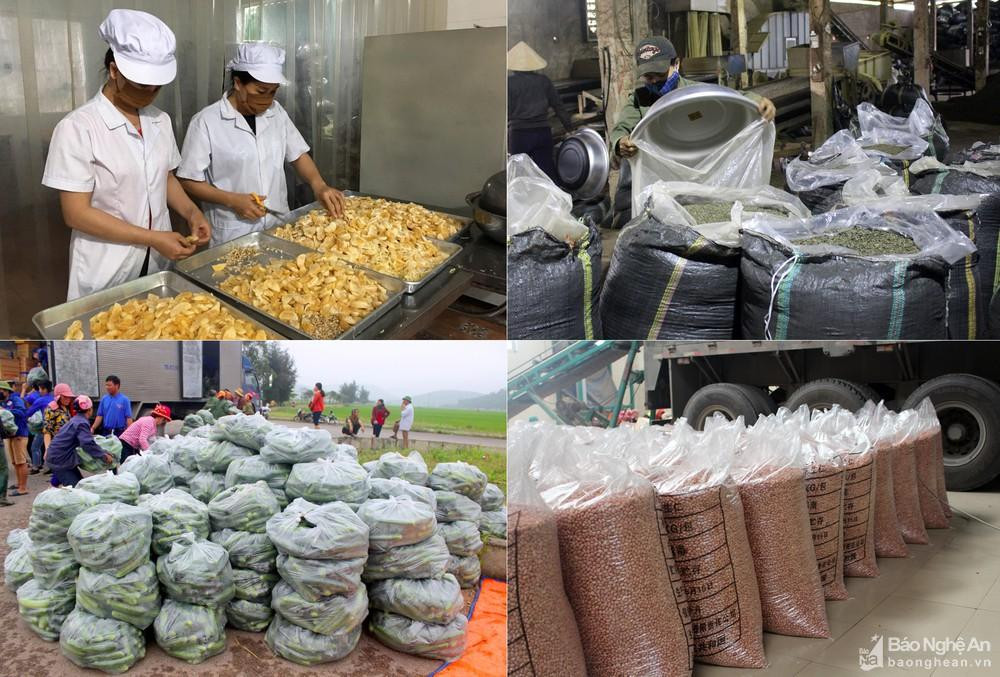 |
Linking production and consumption of agricultural products is a suitable approach to enhance the value of Ky Son's agricultural products. Photo: Nghe An Newspaper archives. |
However, according to Mr. Tho Ba Re, Vice Chairman of the Ky Son District People's Committee, in order for local specialty agricultural products to have a firm foothold, increase product value, and improve the income and living standards of people in the high mountainous region, more support from the State is needed, along with attracting businesses to cooperate with the locality.linkStability in product production and consumption; and especially, the efforts of the local community and people in applying advanced production processes, creating a concentrated source of high-quality products that meet market demands.


