The one who sows the red seeds
In the 1920s, Vietnam faced a severe crisis regarding its path to national salvation. Overcoming the limited vision of contemporary patriots, and after a long journey searching for a way to save the country, Nguyen Ai Quoc discovered the path of proletarian revolution to liberate the nation. He selected and nurtured the seeds of revolution – the first generation of communists for the Vietnamese revolution.


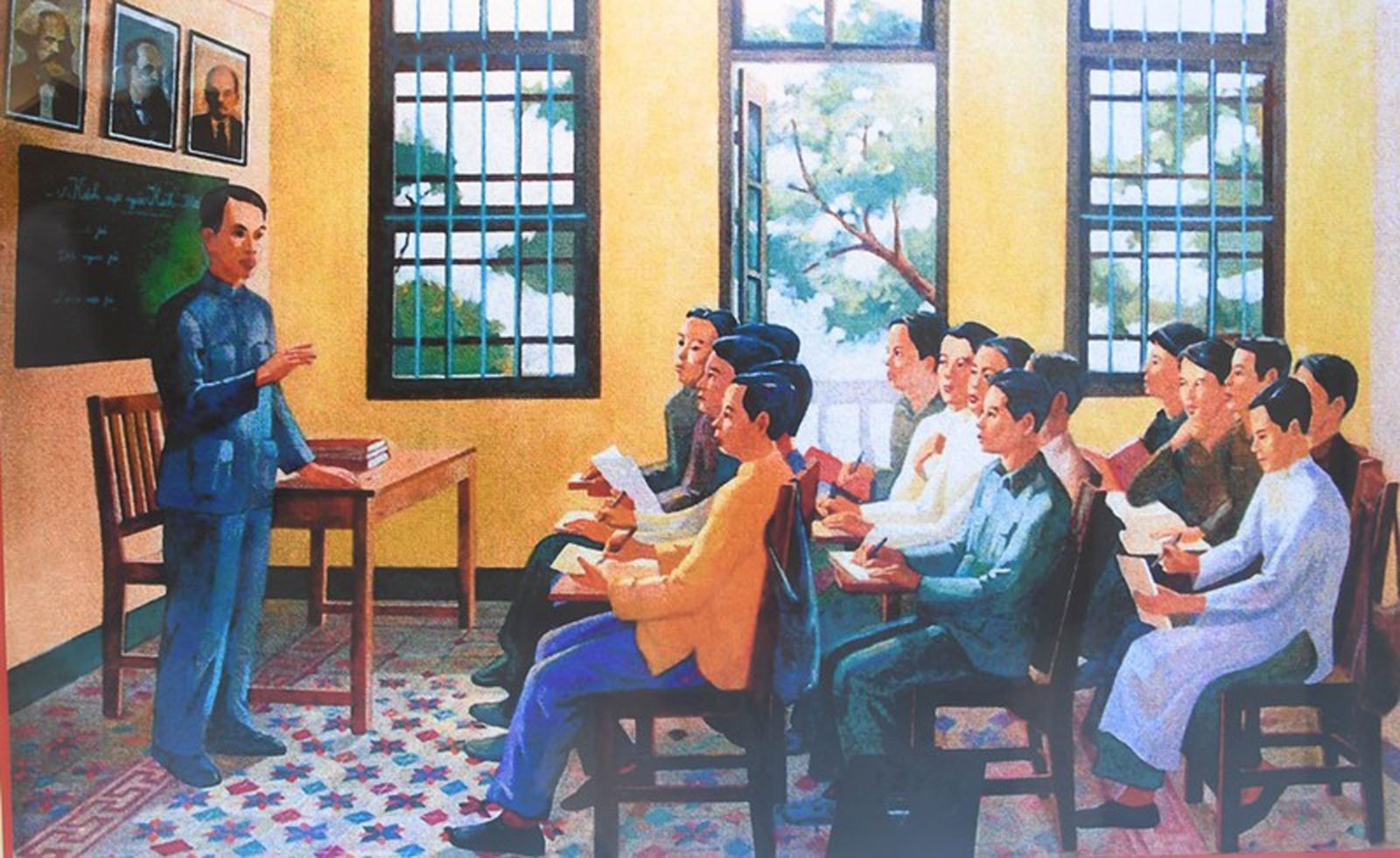
NIn 1925, in Guangzhou (China), leader Nguyen Ai Quoc selected a number of patriotic Vietnamese youths, founded the Vietnam Revolutionary Youth Association, and opened political training classes.(Photograph of a painting by artist Phi Hoanh), showing the enthusiastic youth the right path to take and what actions to take to save the people and the country.
His lectures at political training classes were compiled and published as the book "The Revolutionary Path." This was not only a bedside book and handbook for the first generation of revolutionaries, but also a guiding light for the Vietnamese revolution to its ultimate victory.
Among the key comrades who were always close to and assisted leader Nguyen Ai Quoc were comrades Le Hong Son and Ho Tung Mau, who served as assistant instructors for these political training courses.
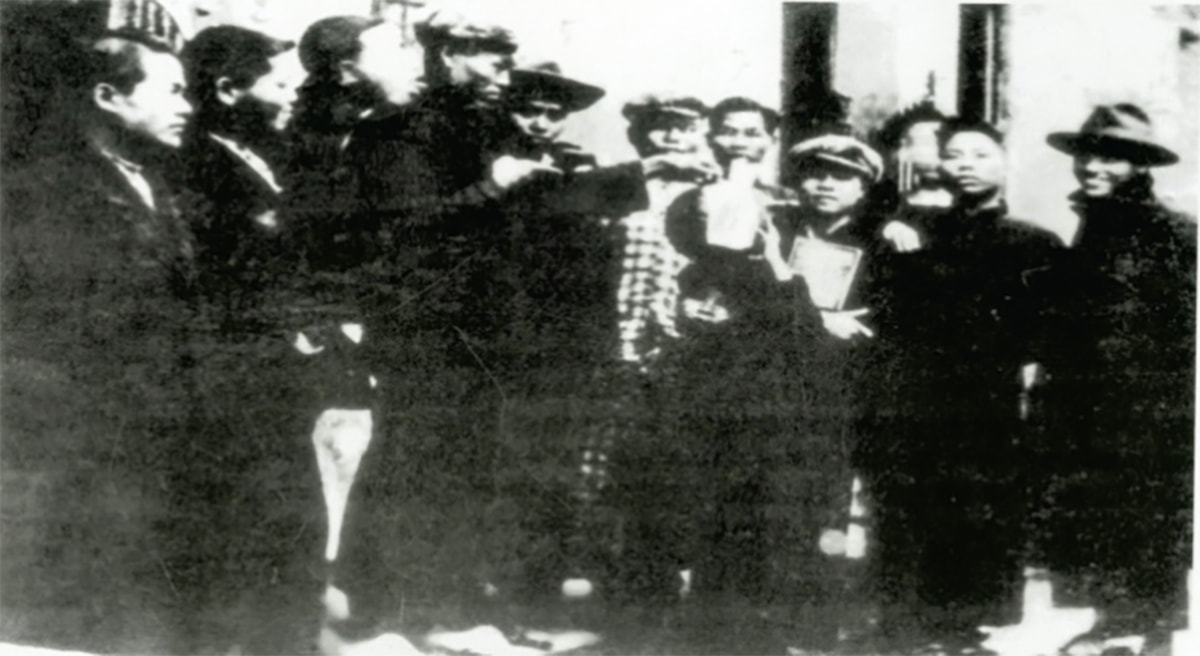
The photo shows young Vietnamese people attending a political training course in Guangzhou, directly taught by Nguyen Ai Quoc (Ho Chi Minh) from 1925-1926, including comrades Le Duy Diem, Ngo Thiem, etc. During this period, in Nghe Tinh, comrade Vo Trong An and his cousin Vo Trong Canh were the guides for young "Red" figures such as Le Hong Phong, Le Thiet Hung, and Pham Hong Thai, who went abroad to Siam (China) on their journey to meet leader Nguyen Ai Quoc in Guangzhou (China).
Comrades Vo Mai and Tran Van Cung were outstanding sons of Nghe Tinh province who were directly trained and educated by Nguyen Ai Quoc in Guangzhou before being sent back to Vietnam to establish an operational base.
The activities of leader Nguyen Ai Quoc and the Red seeds were closely monitored by French secret agents. These are some French-language documents and letters from leader Nguyen Ai Quoc to the Communist International and the University of the East during the period of 1924-1926. In addition, the newspaper "Thanh Nien" (Youth), founded by him, was secretly smuggled into Vietnam, making a significant contribution to the dissemination of Marxism-Leninism, the ideology and path to national liberation.
In 1926, in Guangzhou (China), Comrade Nguyen Ai Quoc selected and trained eight patriotic teenagers to prepare successor cadres for the Vietnamese revolution. Besides studying, the group of teenagers were assigned to act as liaisons and provide logistical support, transporting young people from Vietnam to Guangzhou for political training. Among them was Comrade Ly Tu Trong, famous for his quote:The only path for young people is the path of revolution; there can be no other path.”He has gone down in history as an inspiration to all generations of Vietnamese youth.
The active efforts of leader Nguyen Ai Quoc and his outstanding disciples quickly spread Marxism-Leninism throughout Vietnam, contributing to the formation of revolutionary organizations and the organizational system of the Vietnam Revolutionary Youth Association, which covered the entire country from the General Headquarters down to the Provincial Headquarters and to the grassroots branches.
Comrade Nguyen Luong Bang, from Hai Duong, was the one who brought the work "The Revolutionary Path" to Hai Phong and then distributed it to other localities in the country between 1927 and 1929; Comrade Nguyen Xuan Bach, from Dien Chau - Nghe An, used a wooden box to transport documents from China back to Vietnam; Comrade Vo Quoc Thu, from Can Loc - Ha Tinh, used a suitcase to hide documents at Trai Cay - Thailand, including the work "Diary of a Shipwreck" by leader Nguyen Ai Quoc.
From the first generations of young people – the red seeds personally selected and vigorously developed by leader Nguyen Ai Quoc of the Vietnam Revolutionary Youth Association and the "Proletarianization" movement of 1928-1929 – led to the birth of three communist organizations in Vietnam: the Indochinese Communist Party, the Annam Communist Party, and the Indochinese Communist League. These were the precursor organizations of the Communist Party of Vietnam, founded by leader Nguyen Ai Quoc in the spring of 1930.
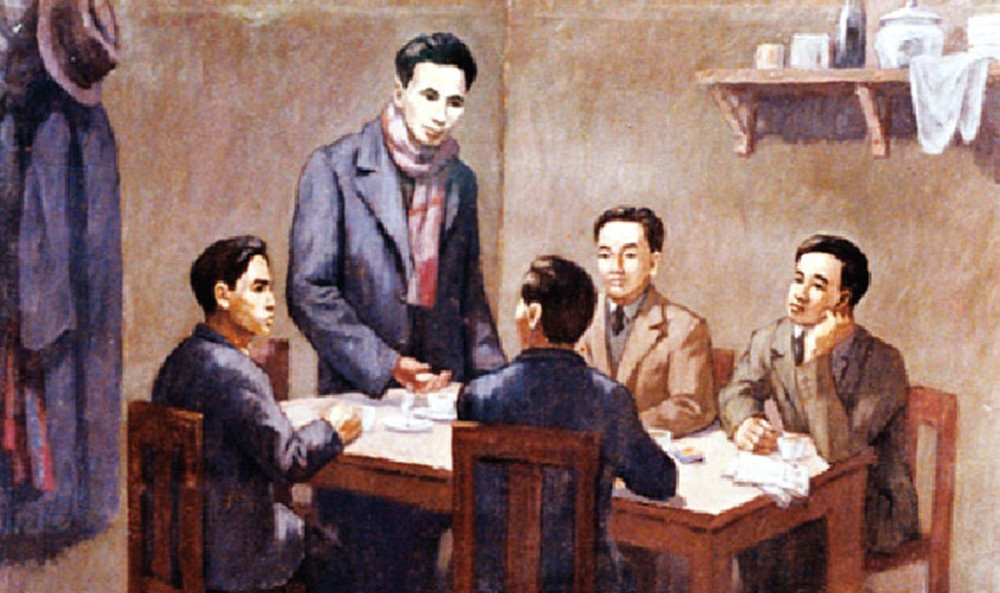
Khi những điều kiện cho sự ra đời của một Đảng vô sản ở Việt Nam đã chín muồi. Ngày 3/2/1930, lãnh tụ Nguyễn Ái Quốc đã chủ trì Hội nghị hợp nhất 3 tổ chức cộng sản thành 1 chính đảng duy nhất - Đảng Cộng sản Việt Nam. Đây là mốc son chói lọi trong lịch sử cách mạng Việt Nam. Người đã khẳng định “Việc thành lập Đảng là một bước ngoặt vô cùng quan trọng trong lịch sử cách mạng Việt Nam ta, nó chứng tỏ giai cấp vô sản đã trưởng thành và đủ sức lãnh đạo cách mạng...”
Hội nghị thành lập Đảng cũng đã thông qua nhiều văn kiện quan trọng, trong đó có Chánh cương vắn tắt của Đảng và sách lược vắn tắt của Đảng đã phản ánh nội dung Cương lĩnh chính trị đầu tiên của Đảng Cộng sản Việt Nam. Những văn bản này hiện đang được lưu giữ tại Cục Lưu trữ VPTWĐ.
Sơ đồ tổ chức của Đảng và các hội quần chúng năm 1930.
16 chân dung những hạt giống Đỏ đã có nhiều đóng góp to lớn cho cách mạng Việt Nam. Và một điều đặc biệt đó là trong lớp thế hệ học trò đầu tiên của lãnh tụ Nguyễn Ái Quốc, nhiều đồng chí đã trở thành những cán bộ chủ chốt của Đảng Cộng sản Việt Nam quê ở Nghệ Tĩnh tiêu biểu như đồng chí Trần Phú, Lê Hồng Phong, Hà Huy Tập, Phan Đăng Lưu, Nguyễn Thị Minh Khai, Phùng Chí Kiên, Trương Vân Lĩnh…
Cùng sinh ra trên mảnh đất đói nghèo, cằn cỗi nhưng giàu truyền thống yêu nước, với bầu nhiệt huyết của tuổi trẻ, những thanh niên này đã sớm giác ngộ lý tưởng cách mạng, băng rừng, vượt núi tìm đến lý tưởng cách mạng của lãnh tụ Nguyễn Ái Quốc và được Người đào tạo trở thành những hạt giống Đỏ của cách mạng Việt Nam, trở thành những cán bộ chủ chốt, bộ phận quan trọng không thể thiếu trong tổ chức cốt lõi của Đảng Cộng sản Việt Nam ra đời năm 1930, tiêu biểu như đồng chí Trần Phú, Lê Hồng Phong, Hà Huy Tập, Nguyễn Thị Minh Khai…
Các đồng chí Nguyễn Phong Sắc, Nguyễn Tiềm, Lê Mao là những hạt giống Đỏ đã lãnh đạo phong trào Xô viết Nghệ Tĩnh đỉnh cao của cao trào cách mạng 1930-1931 trên quê hương Nghệ Tĩnh.
Xin trân trọng giới thiệu bộ sưu tập Sách về thế hệ những chiến sĩ cộng sản đầu tiên - những hạt giống đỏ của cách mạng Việt Nam. Sách do Nhà Xuất bản Chính trị Quốc gia xuất bản.






BTXVNT