
The Soviets were established in Nghe Tinh.
Immediately after the three communist organizations were unified, on March 18, 1930, the Central Branch of the Communist Party of Vietnam in Central Vietnam was established, launching a widespread propaganda campaign, urging the masses to rise up and fight for practical rights such as tax reductions, resistance to forced purchase of alcohol and opium, resistance to beatings of workers, and demands for higher wages...
On May 1, 1930, responding to the Party's call and joining the nationwide struggle, the Central Vietnam Regional Party Committee organized a demonstration of workers and peasants from Nghe An in Vinh, with the participation of approximately 1,200 farmers who came from suburban villages, coordinating with hundreds of workers from the inner city.
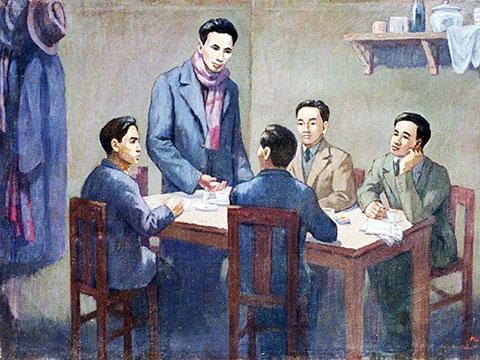
The protesters marched through the city, waving red flags with the hammer and sickle, singing the Internationale, and chanting slogans demanding reduced taxes, higher wages, and shorter working hours. From Vinh, the protesters marched towards Ben Thuy, aiming to attract more workers there. The colonial authorities immediately ordered the police and secret agents to use force to disperse the demonstration. They fired directly at the crowd, killing 6 people and injuring 18 others. Thus, in the very first struggle in Nghe Tinh, a bloody conflict erupted between the revolutionary masses and the colonial police.
Also on that day, over 100 students from Thanh Chuong French-Vietnamese Primary School organized a rally and march to commemorate International Labor Day in the district town. At the same time, a large demonstration of over 3,000 farmers from the villages of Hanh Lam, La Mac, and Duc Nhuan took place demanding the return of land that the French colonialists had allowed Nguyen Truong Vien (Ky Vien) to seize. Terrified by the mass struggle, Ky Vien went into hiding. The farmers immediately stormed and burned down his entire plantation and houses. Two days later, the colonial authorities sent a contingent of French colonial soldiers to Hanh Lam to investigate and "suppress the communist rebellion." Over 1,500 farmers again surrounded the soldiers, protesting the repressive measures of the colonial government. The soldiers opened fire on the demonstrators, killing 18 people and injuring 17 others.
The struggles on International Workers' Day, which ended in bloody conflict, fueled the fervent fighting spirit of the masses in Nghe Tinh. The Central Committee of the Central Region decided to take advantage of this momentum to escalate the movement. The newspaper "The Suffering Worker," the propaganda organ of the Central Committee of the Central Region, in its May 2nd, 1930 issue, stated: "The struggle in Annam has reached a decisive day" and called on workers, peasants, and all strata of the population to follow the example of the struggles in Ben Thuy and Thanh Chuong and continue to rise up and fight. In the remaining weeks of May 1930, workers in match factories, sawmills, the SIFA company, the Truong Thi railway repair factory, and other factories in Vinh and Ben Thuy continuously went on strike. On June 27th, 1930, the Red Workers' Union in Vinh organized a general strike involving over 1,000 workers from various factories in Vinh demanding higher wages and shorter working hours.
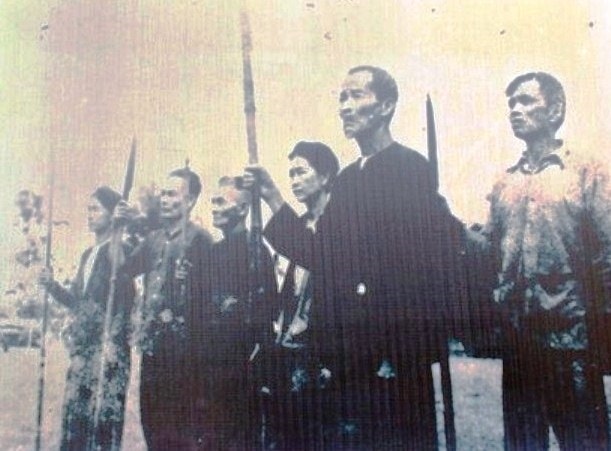
In order to further advance the peasant struggle movement, the Central Vietnam Regional Party Committee decided to send a series of Party cadres and Red Trade Union cadres to strengthen the Party and Red Peasant Union bases in the districts, mobilizing the masses to rise up and fight. On June 1, 1930, more than 3,000 peasants in Thanh Chuong again demonstrated demanding a postponement of taxes, the abolition of the weekly patrol duty, and compensation for those who died and were injured in May...
The protesters marched past the district headquarters and then held a rally at Rộ Market. Fearing the power of the masses, the District Chief of Thanh Chương had to go to Rộ Market to receive the demands and promised to submit them to higher authorities. The next day, more than 2,000 farmers from Anh Sơn and Nghi Lộc also protested in front of the district headquarters demanding a tax postponement, forcing the district chiefs there to concede. On June 18th, about 600 farmers from Nam Đàn protested and held a rally at Đồn Market. The District Chief of Nam Đàn attempted to flee but was caught by the people, forcing him to accept the demands of the masses.
The Central Vietnam Party Committee and provincial Party branches vigorously directed local Party, trade union, and peasant association branches to mobilize the masses and prepare for a new, more intense struggle. On August 30, 1930, under the leadership of local Party cadres, more than 3,000 peasants from Nam Dan demonstrated, organized rallies at various locations, and then marched to Sa Nam town, destroying the Fontaine liquor agency, storming the district office, burning all files and documents, destroying the prison, and freeing the prisoners. The district chief of Nam Dan, Le Khac Tuong, was forced to meet with the masses and sign and seal a petition with the promise: "From now on, the district chief of Nam Dan must not harass the people." Afterwards, the demonstrators dispersed to the communes and villages, burning guard posts and suppressing local officials and village heads.
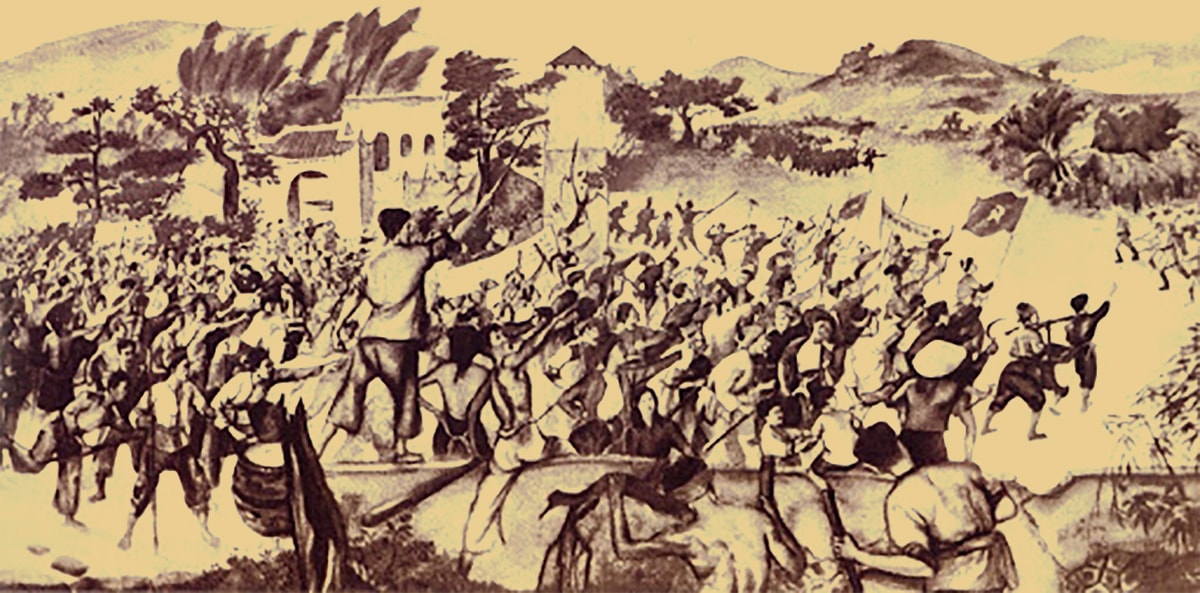
On September 1, 1930, a massive peasant demonstration erupted in Thanh Chuong district with approximately 20,000 participants. To stop the demonstration, the district chief, Phan Sy Bang, ordered his soldiers to fire on the crowd, killing one person. Immediately, the masses surged forward like a flood, forcing the district chief and his soldiers to flee. The crowd stormed and occupied the district office, completely burning down the office and Phan Sy Bang's private residence.
Following the protests of August 30th and September 1st, the colonial administration in the two districts of Nam Dan and Thanh Chuong completely collapsed or became paralyzed. In a special issue dated September 6th, 1930, the newspaper "The Suffering Worker" reported: "In Thanh Chuong and Nam Dan, no one pays market taxes, and no one dares to collect them. No one patrols, and the soldiers do not return to guard duty. Imperialism orders suppression, but no one carries it out. The brothers themselves pardon national criminals, and they themselves distribute the Ky Vien plantation and the landlord class's farmland to the poor farmers. They freely form associations and freely protest. Thus, the imperialist laws are shattered."
In the context of the collapse of the colonial administration in rural Nghe An, despite no prior preparation, the Red Peasant Association Executive Committees in villages and communes (known as the Commune Peasant Committees) had to take on administrative and self-governing functions in the countryside. This marked the birth of the first revolutionary government in Vietnam.
In coordination with the peasant movement, on September 1, 1930, the General Red Trade Union of Vinh City launched a general strike with the participation of thousands of workers from several factories. Leaflets from the Central Committee of the Central Vietnam Party and the Nghe An Provincial Party Committee appeared everywhere, calling on the people to rise up and follow the example of the peasants of Thanh Chuong and Nam Dan. As a chain reaction, the powerful struggle of the masses completely dismantled the colonial-feudal local government in most districts along both banks of the Ca River (Anh Son, Do Luong, Nghi Loc, Hung Nguyen), spreading to the high mountainous areas (Mon Son, Luc Da in Con Cuong district).
On September 8, 1930, over 7,000 farmers from Anh Son district protested and marched to the district headquarters to present their demands. The French colonial authorities bombed the protest twice, killing 9 people and injuring many others. Soldiers from the Do Luong outpost were also ordered to fire on the protesters, killing several more. The protest was forced to disperse, but on the evening of September 10, after holding a memorial service for those killed, the people went out to punish the local chief and village officials. The colonial administration in the villages throughout Anh Son district was paralyzed and disintegrated piece by piece.
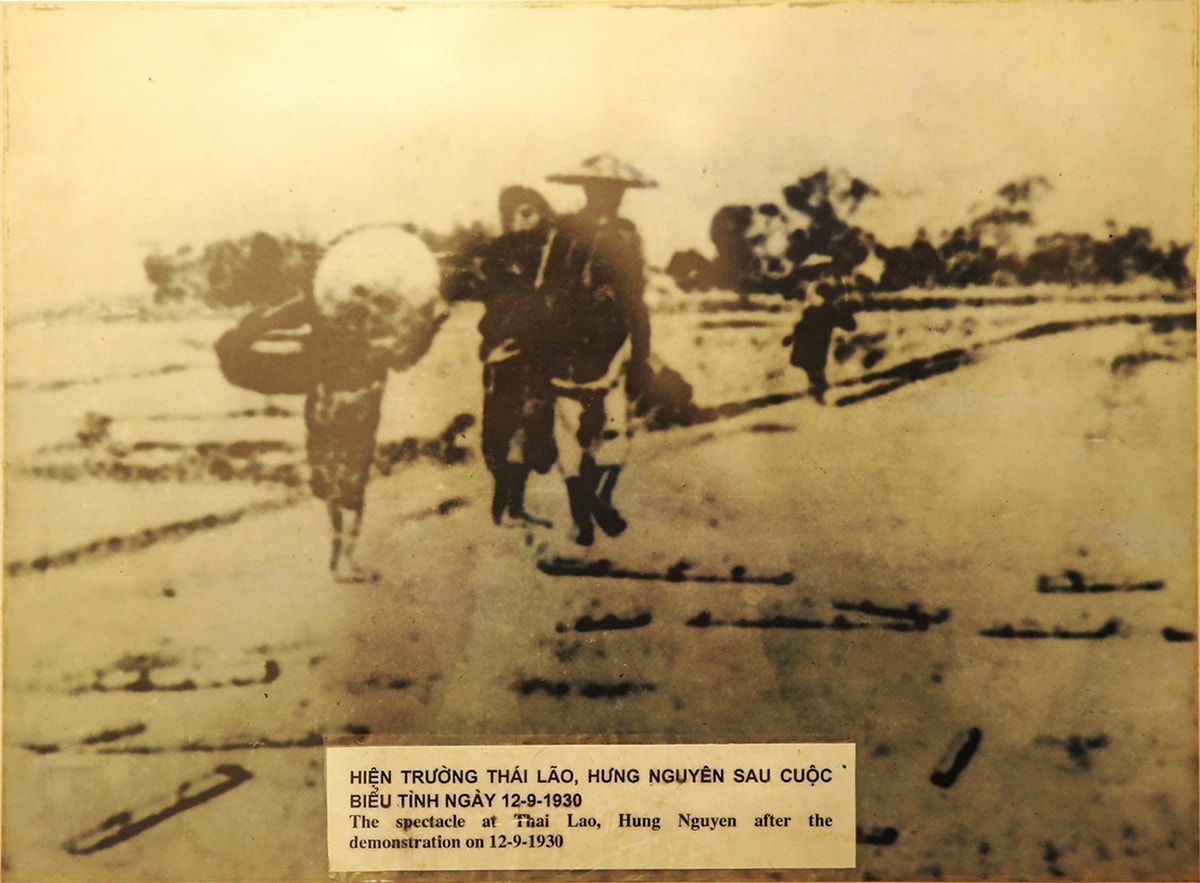
In Hung Nguyen district, on September 12, 1930, more than 8,000 farmers gathered under the Party flag, armed with sticks, sickles, carrying poles, and machetes, beating drums as they marched to occupy Yen Xuan train station, blocking trains, holding rallies and speeches, before marching to the district capital. When the protesters reached Thai Lao, the French colonialists sent two planes to bomb and fire machine guns at the people, while simultaneously ordering soldiers to rush out and use weapons to disperse the demonstration. In the afternoon, when the people came to bury the dead, the French colonialists sent planes to bomb again, killing many more people, bringing the total number of people killed on September 12 in Hung Nguyen to 217. 125 others were wounded, many more were arrested, 277 houses were burned down, and the two villages of Loc Chau and Loc Hai were completely destroyed. This was the most brutally suppressed mass protest by the French colonialists in their entire history of colonialism in Asia and Africa.
The more brutally the French colonialists suppressed the resistance, the stronger the people's struggle in Nghe An province became. Throughout September and October 1930, the entire province was shaken daily by dozens of rallies and mass demonstrations. From the beginning of September, the mass demonstration movement spread to Ha Tinh province. On September 7th, over 1,000 farmers from Can Loc, armed with sticks, spears, drums, trumpets, and gongs, protested and attacked the district headquarters, burning all the documents and freeing political prisoners. The following day, mass demonstrations broke out in all the districts of Ha Tinh. Although the movement there started later, it was fierce from the beginning. Everywhere, people protested, occupying district centers, punishing local officials, and driving out soldiers. Within just a few weeks, the colonial-feudal government in rural Ha Tinh seemed to completely collapse.
The newspaper Cong Luan described the situation in Nghe Tinh at the end of September 1930 as follows: "In the villages, the village chiefs and district heads no longer had any authority, no longer controlling the lives and property of their people." In a report sent to France, the Governor-General of Indochina, Robin, further detailed: "They were completely powerless, unable to do anything to stop the expansion of the movement. The local authorities at all levels in the province were paralyzed, unable to name any leader, unable to rely on any assistance from the district and commune-level officials, giving the feeling that they had lost all authority over the people they governed. Fear paralyzed the officials; they locked their gates, hid inside their houses, and only worried about defending themselves. Whenever the district and county magistrates went on patrol with the army or local soldiers, their bodies trembled uncontrollably."
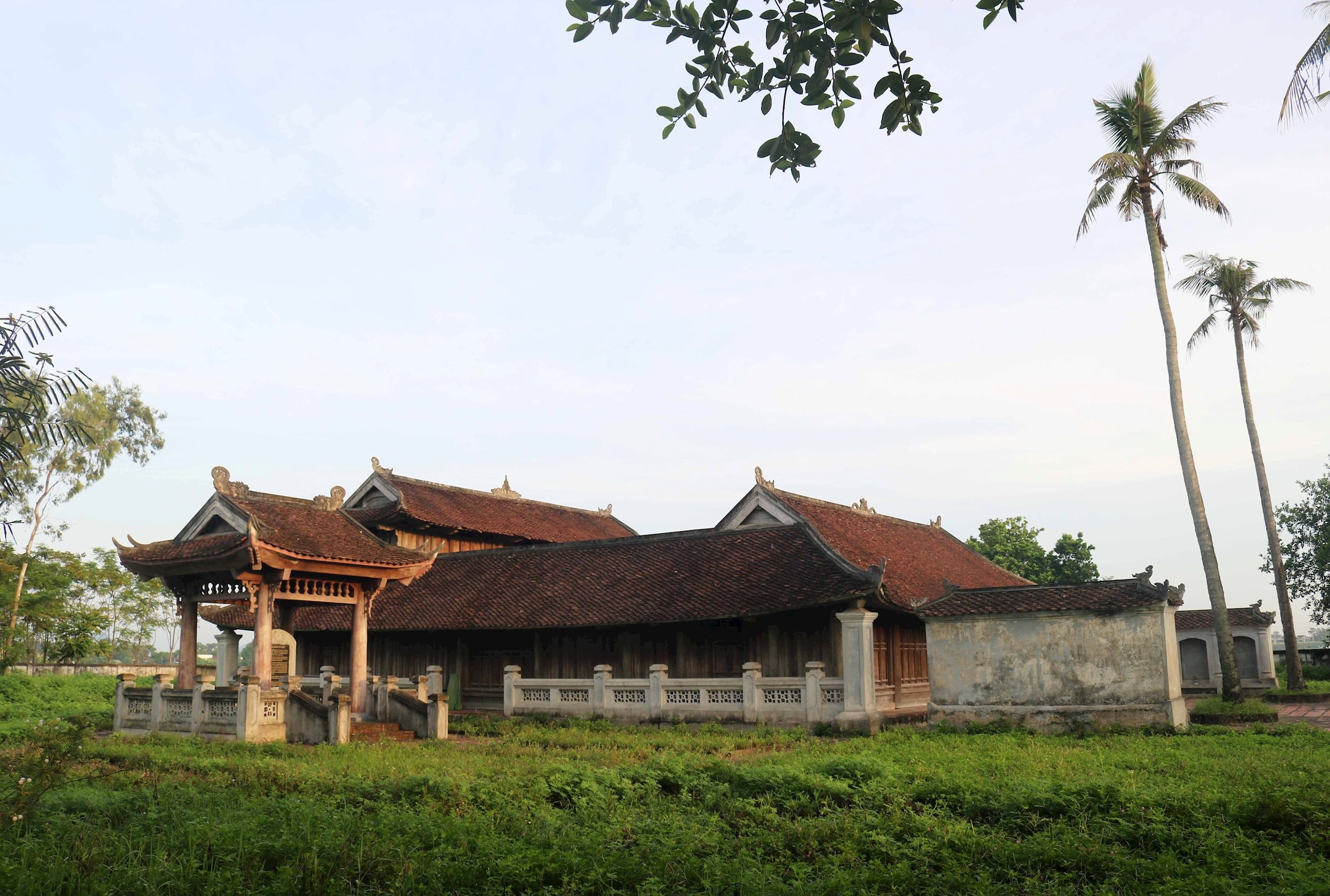
Although there was no plan or preparation for seizing power, when the colonial-feudal government in rural Nghe Tinh disintegrated and became paralyzed by the strong pressure of the masses, the Red Peasant Associations in the villages (Commune Peasant Committees, sometimes called Social Committees) stepped up to assume the functions of management and administration as a true revolutionary government.
Economically, the village agricultural committee redistributed communal land, money, and rice to farmers, ending the payment of taxes to the colonial government. Thousands of acres of communal land illegally occupied by local officials were confiscated and redistributed to the villagers. The commune agricultural committee also forced local officials to return the taxes they had collected, compelled creditors to postpone payments, and reduced land rent by 25% to 30%. The revolutionary government also paid close attention to strengthening the irrigation system, organizing the construction of dams, digging canals, and pumping water to combat drought. In some "red villages," such as Thuong Tho (Thanh Chuong, Nghe An) and Phu Viet (Cam Xuyen, Ha Tinh), the commune agricultural committee used communal land to organize collective production for farmers in the form of cooperatives: joint plowing, harvesting, and distribution based on daily labor, with a public fund allocated for common purposes. In other places, they strengthened and established additional plowing, planting, and roofing groups to support each other in daily life.
Politically, the colonial-feudal government had collapsed. The village peasant committee declared the abolition of not only the laws of the colonial state and the Southern Dynasty, but also the elimination of outdated customs and traditions in the villages. For the first time in history, the entire traditional political system, along with the hierarchical structure and all forms of discrimination, was abolished and replaced by a new socio-political order created and wholeheartedly supported by the people. The revolutionary government implemented measures to ensure freedom, democracy, and equality for villagers, such as freedom of education, gender equality in marriage and in all social and family matters. Red self-defense teams were established to suppress counter-revolutionaries and maintain peace and order in the villages. At the same time, the village peasant committee also mediated or adjudicated disputes and lawsuits within the villages.
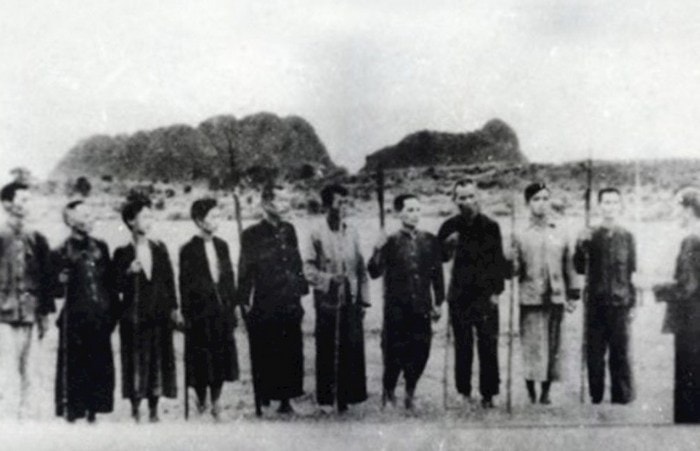
The area of work that the rural Party committees and Party branches in Nghe Tinh province focused on was strengthening propaganda, raising political awareness among the masses, and developing revolutionary forces. During the day, in addition to reorganizing production activities, the peasant masses were mobilized to participate in dozens of rallies and demonstrations. In the evening, villagers gathered at the village communal house to listen to Party and rural Party committee officials read newspapers and explain the policies of the new government, now called the Soviet or Socialist government. The vast majority of villagers were encouraged to join revolutionary organizations and associations such as the Red Peasant Association, the Women's Liberation Association, the Communist Youth Union, etc. The Red Peasant Association was the organization with the largest number of voluntary villagers. According to one source: "To organize a farmers' association, all you have to do is beat the drums in the village hall to invite the villagers to attend. The organizing committee reads and explains the regulations. Villagers who agree simply raise their hands to join. In no time, the farmers' association is formed and the executive committee begins its work."
Under favorable conditions, when the revolutionary movement reached its peak, the revolutionary forces also developed very rapidly. At the beginning of 1930, in Nghe Tinh, the Communist Party of Vietnam had only about 300 members and over 1,000 people organized into Red Workers' Unions and Red Peasants' Unions. By the end of 1930, the Nghe An Party Committee alone had 188 branches with 2,011 members. The Red Peasants' Union alone attracted 48,484 members, and the Red Workers' Union had 399 members. In addition, the Communist Youth Union had 2,356 members, and the Women's Liberation Association had 8,648 members.
Culturally, the revolution truly brought about a healthier and more progressive new life in the "red villages." Many outdated customs that had existed for thousands of years were eradicated. Even social ills such as theft, opium addiction, gambling, fortune-telling, witchcraft, extravagant feasts, and lavish celebrations were eliminated or disappeared on their own. Weddings, funerals, and even the Lunar New Year were organized in a new, simpler, less expensive, and less troublesome way. Women's associations established maternity groups to help each other during childbirth. Especially in the "red villages," the village agricultural committee organized many free literacy classes for villagers. The atmosphere in villages under revolutionary government was enthusiastic, fervent, joyful, and filled with a romantic sense of confidence: "A common term at that time was 'society.' Many people forgot about work, believing that the revolution was about to succeed, and that everything belonged to society..."
BNA