

The origins of the custom of worshipping snakes at some temples in Nghe An.
The worship of snakes is one of the primitive beliefs of the ancient Vietnamese people, passed down to the present day.
Originating from a natural environment closely associated with rivers, lagoons, ponds, lakes, streams, and springs, agricultural communities, driven by the need for irrigation, revered water and formed a belief in a power that controlled water resources. Snakes, symbolizing the water god, likely arose from this very religious need.
Throughout history, the belief in snake worship has gradually been enriched with various cultural layers, changing to suit different regions and periods. Not only is the snake considered a deity, but it has also been chosen by the Vietnamese as a totem animal.
Folklorist Ninh Viet GiaoHe pointed out that in legends, the image of the snake strongly embodies both totemistic beliefs and is representative of Vietnam's early rice-farming civilization. He stated: "Snakes are worshipped in many places and incorporated as a motif in stories, because snakes symbolize the water god before the myth of the dragon" (a mythical creature).
Professor Dinh Gia Khanh also mentioned the Vietnamese custom of totem worship through familiar details in folklore, such as the story of "Lac Long Quan belonging to the dragon lineage," or legends about the interbreeding between humans and snakes. For example, parents giving birth to a child who is a snake, a snake transforming into a human to marry a scholar, or the story of Lac Long Quan and Au Co giving birth to a bundle of eggs that hatched into a hundred children. These legends reflect the deep connection between the Vietnamese people and snakes, making snakes sacred totems.
Over time, the belief in snake worship developed into the foundation for the formation of sacred symbols and even symbols of royal power. By the Ly Dynasty (1010-1255), the image of the "Ly Dynasty dragon" appeared on architectural details, representing the power of the dynasty. During the Tran and Le Dynasties, snakes were elevated to divine status, becoming the tutelary deity of villages and were widely worshipped throughout villages from North to South.
The worship of snakes is prevalent in the Northern Delta region, especially along major rivers such as the Red River, Duong River, and Cau River. According to Dong Duc Khiem and Nguyen Huu Binh, there are as many as 316 temples along the Cau River dedicated to the pair of snakes "Ong Dai and Ong Cut". Village festivals in Linh Dam, Thu Le, Nhat Tan, and some other villages in Bac Ninh are also associated with legends about snake deities.
In the South Central and Southwestern regions of Vietnam, the Cham people in Ninh Thuan and Binh Thuan worship the Naga serpent god, a symbol of the power of the god Shiva. The Khmer people of Southern Vietnam also worship the Naga serpent god, believing that the god is the guardian of water resources, bringing favorable weather and abundant harvests for rice-farming communities.
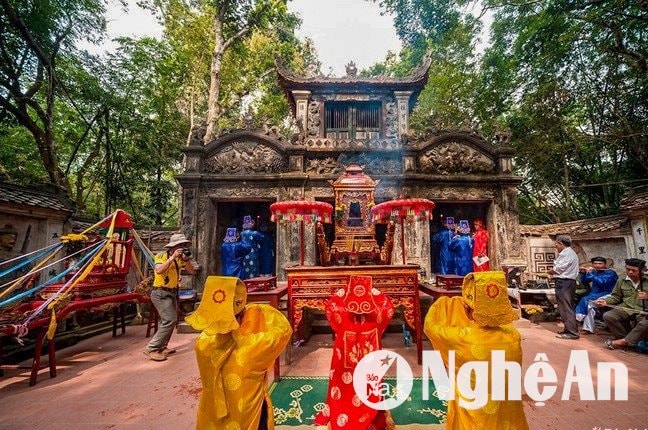
In Central Vietnam, the worship of snake deities is also practiced by many ethnic groups, who consider them extremely sacred creatures capable of controlling the weather. The Muong people in Thanh Hoa province worship snake deities at the temple in Luong Ngoc village (Cam Luong commune, Cam Thuy district). Here, the Sacred Fish Stream is believed to be protected by the snake deity. The communal temple in Phu Bai village (Thua Thien - Hue province) worships "Ong Dai and Ong Cut," two snakes that are said to have manifested themselves to help the villagers have favorable weather.
In Nghe An province, the custom of worshipping snake gods is deeply intertwined with the lives of agricultural communities. In the two districts of Dien Chau and Yen Thanh alone, there are as many as nine temples dedicated to snake gods, most notably: Canh Temple (Duc Thanh commune, Yen Thanh district), So Temple (Dien Chau town), Duc Thanh Ca Temple (Dien Loc commune, Dien Chau district), etc.Emperor Duc Hoang(Phuc Thanh commune, Yen Thanh district).
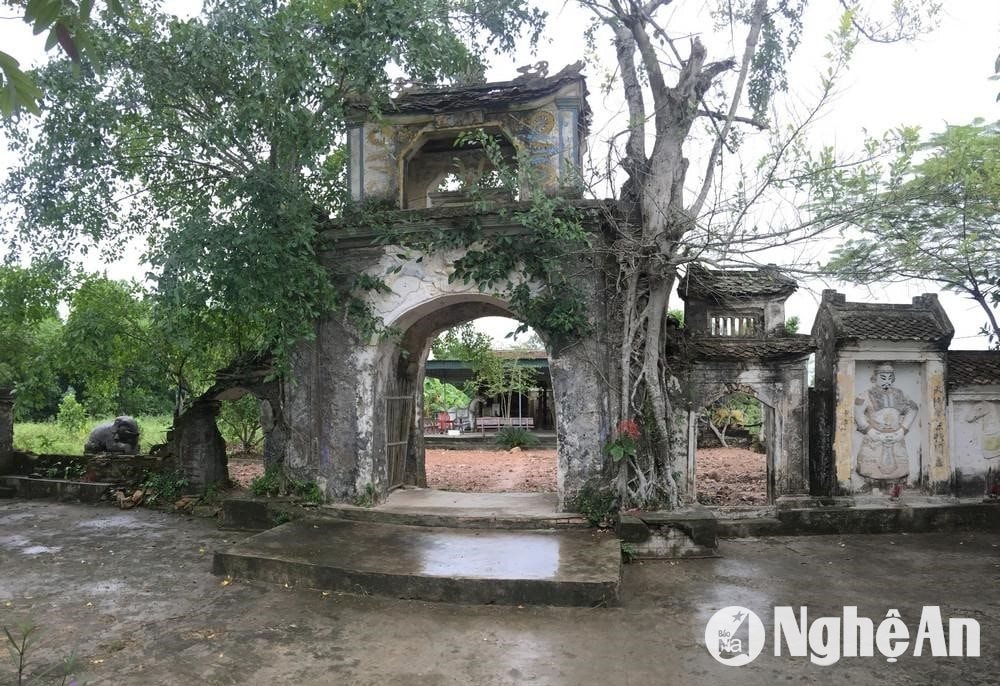
In particular, the snake god temple in Nho Lam village (Dien Loc commune) is associated with the legend of the couple Hoang Phuc Huu and Vo Thi Quyen. The story tells that although the couple were kind, they had no children. After the wife bathed in the river and became pregnant, she gave birth to two egg sacs, from which two snakes hatched – one with a severed tail due to an accident while the old man was digging the land. The two snakes were then elevated to godhood and departed, promising to help the villagers pray for rain when needed. The villagers of Xuan Khanh (now Ke Tan village) built a temple to the snake god on Hac Linh Son mountain, and from then on, the tradition of worshipping snakes has existed to this day.
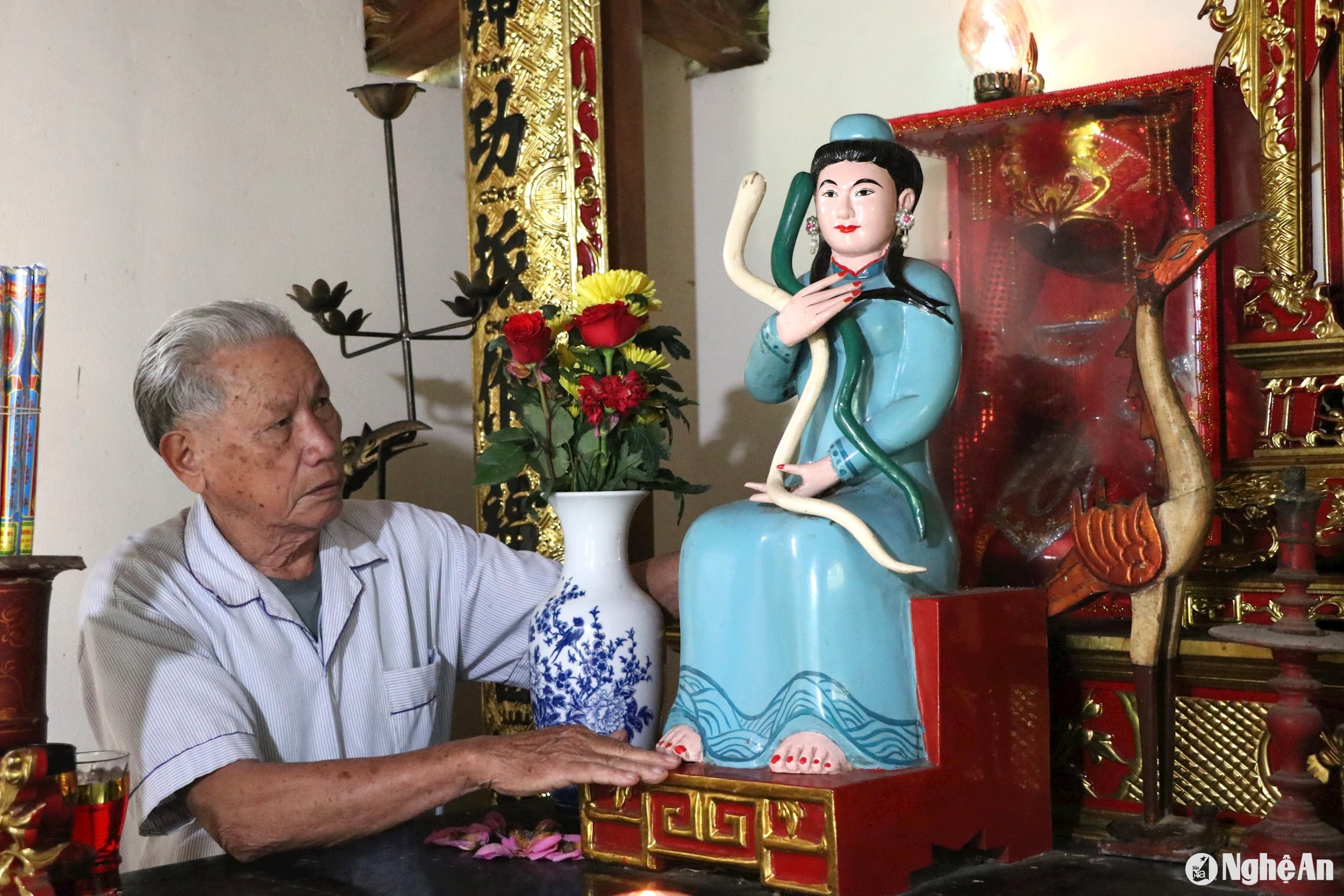
The worship of snakes is a natural belief, reflecting the close relationship between humans and the agricultural environment. For the people of Nghe An, this belief has existed for thousands of years, evidenced by archaeological sites such as the image of a snake-shaped dagger biting an elephant's foot in Vac village, along with the legends and royal decrees that are still preserved. The worship of the snake god expresses belief in the power of water, the wish for favorable weather, and a bountiful harvest – a sacred symbol closely associated with the lives of agricultural communities.