

The National Assembly has passed the Law on Government Organization (amended).
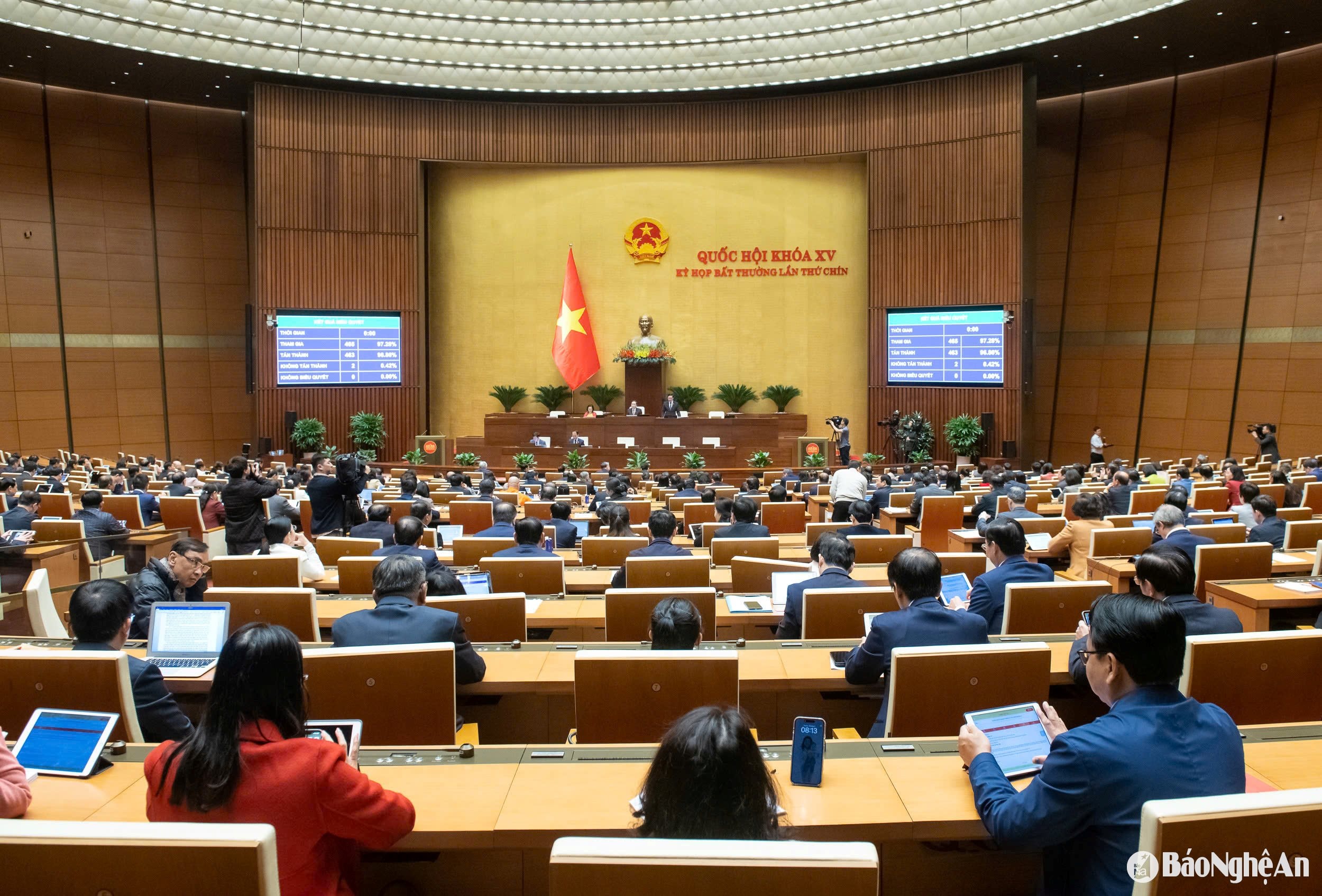
On the morning of February 18th, the National Assembly voted to approve the amended Law on Government Organization.
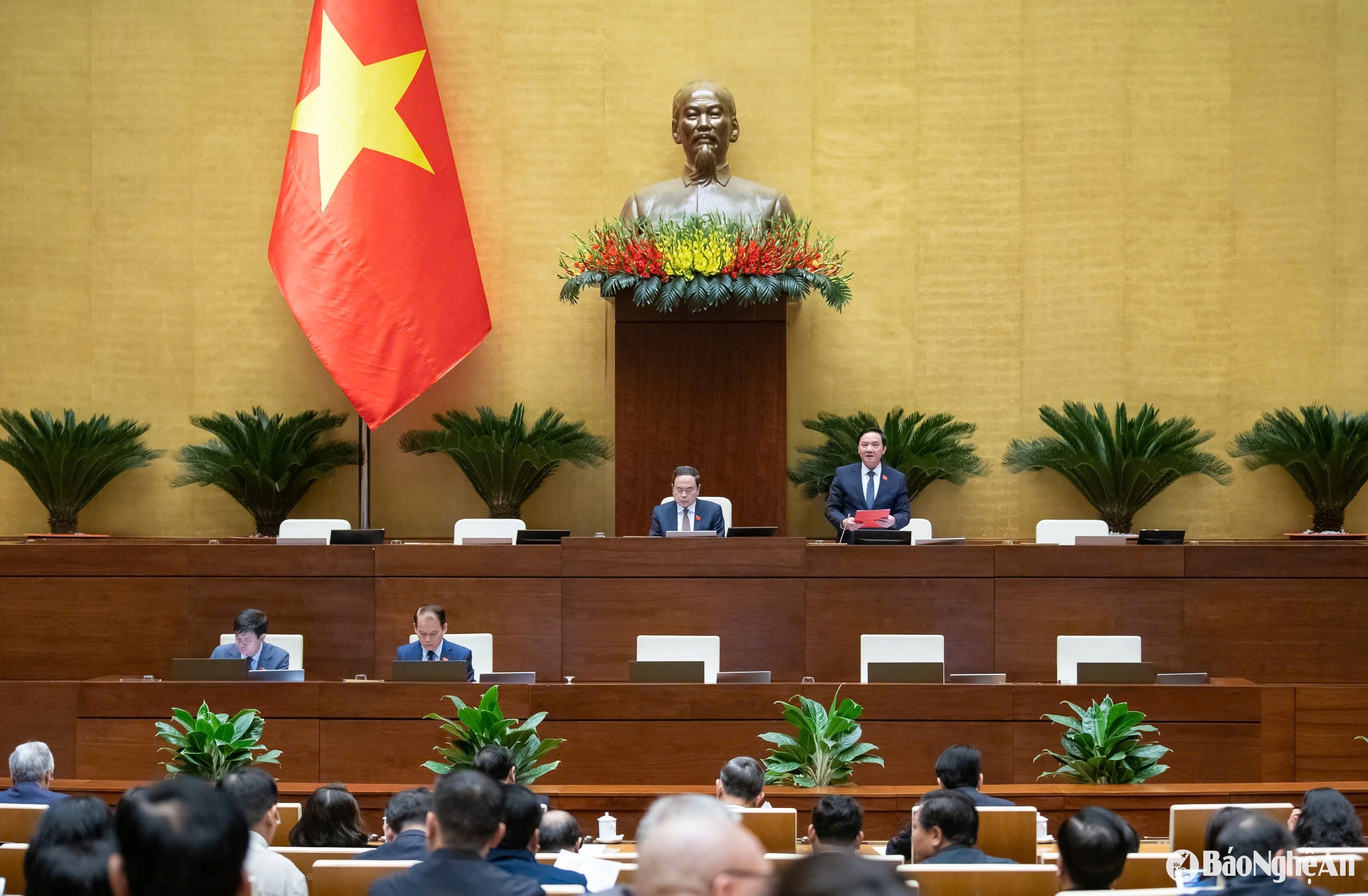
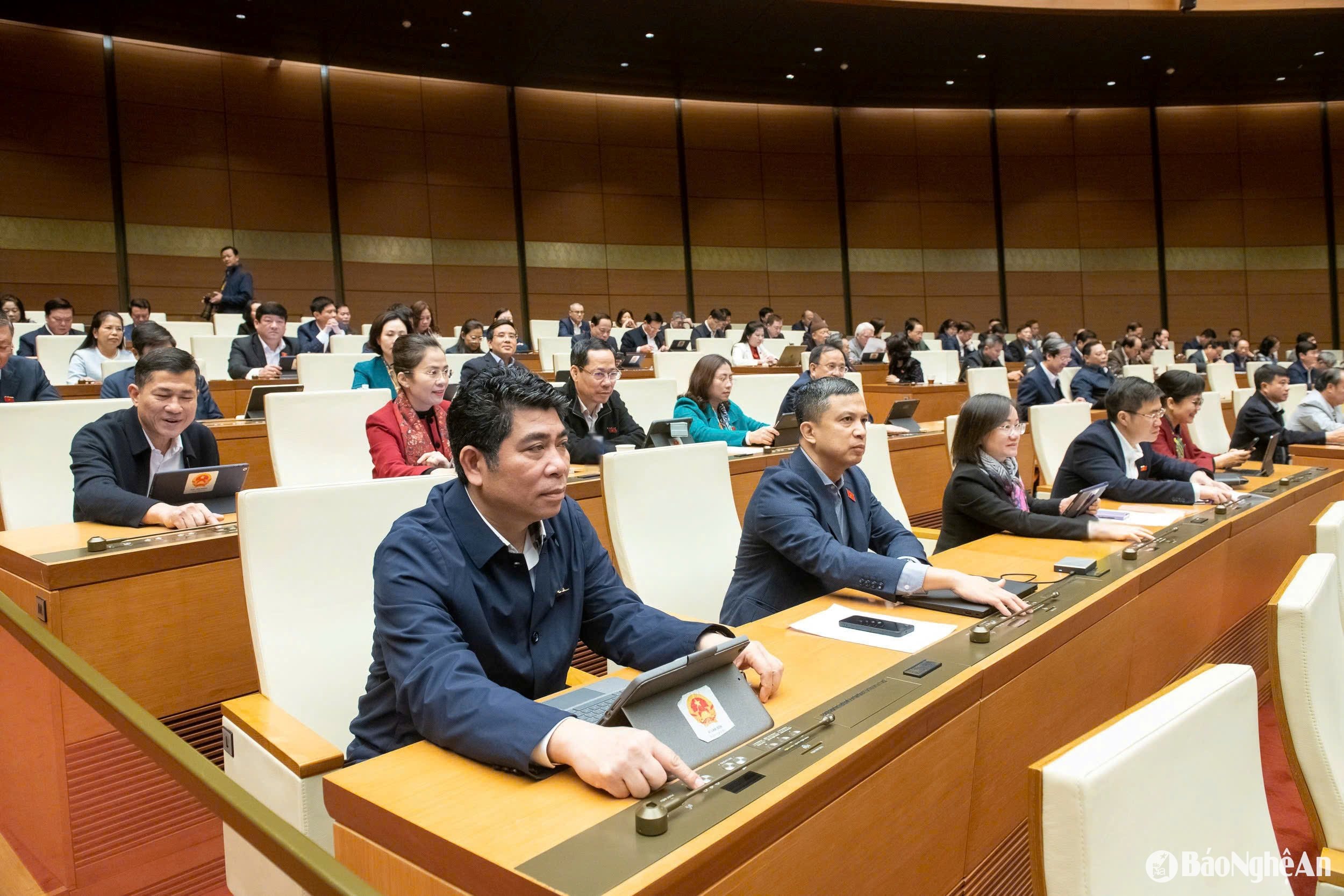
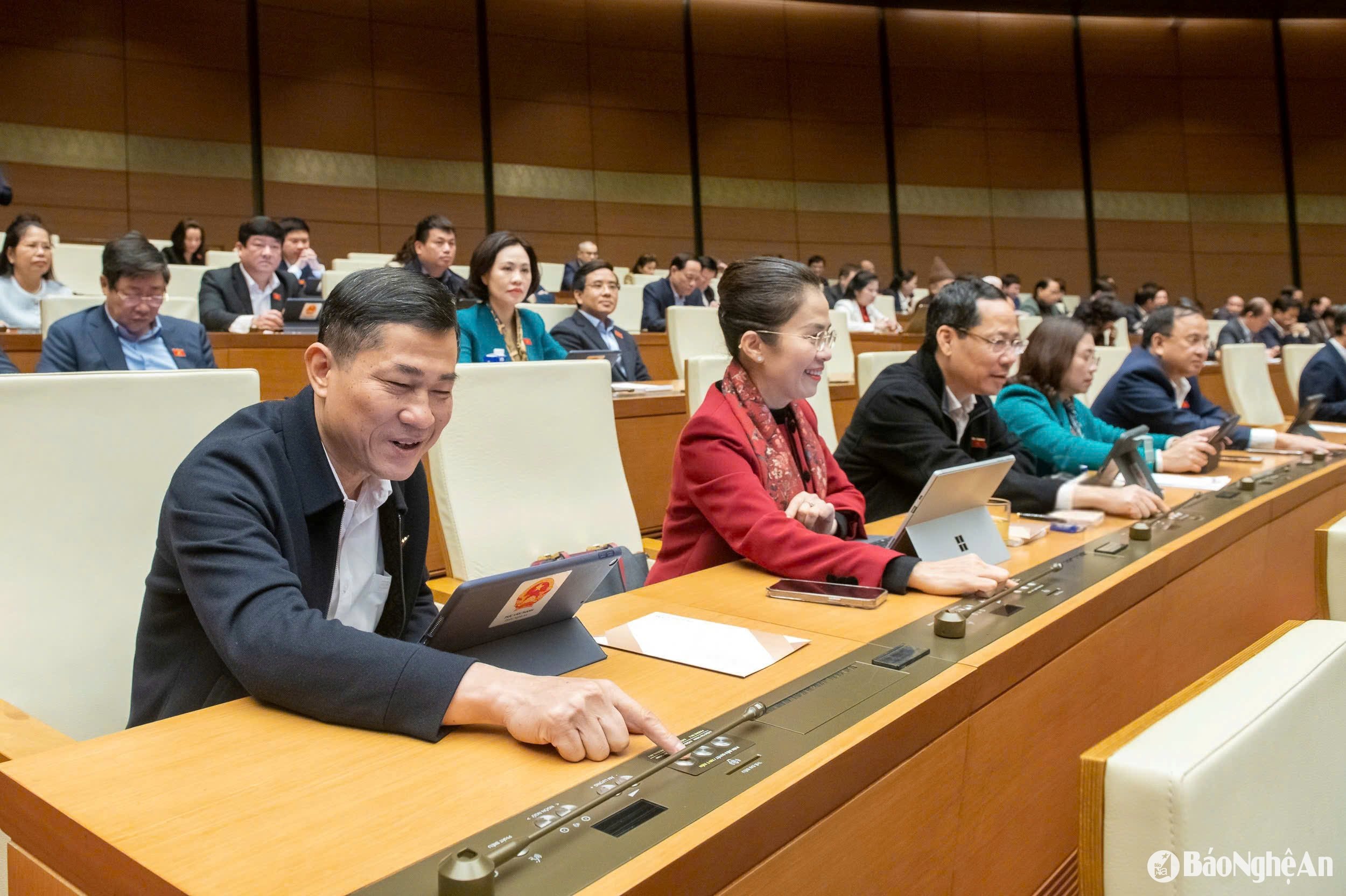
With 463 out of 465 National Assembly deputies present voting in favor, achieving a rate of 99.56% (equivalent to 96.86% of the total number of National Assembly deputies), the Law on Government Organization (amended) was passed by the National Assembly. Comprising 5 Chapters and 32 Articles, it will take effect from March 1, 2025.
The law stipulates: The Government is the highest state administrative body of the Socialist Republic of Vietnam, exercising executive power and acting as the executive body of the National Assembly. The Government is accountable to the National Assembly and reports on its work to the National Assembly, the Standing Committee of the National Assembly, and the President.
The government consists of the Prime Minister, Deputy Prime Ministers, Ministers, and heads of ministerial-level agencies.
The structure and number of members of the Government are decided by the National Assembly based on a proposal from the Prime Minister. The organizational structure of the Government includes Ministries and ministerial-level agencies.
The establishment and abolition of ministries and ministerial-level agencies are decided by the National Assembly upon submission by the Government. The term of the Government coincides with the term of the National Assembly. When the National Assembly's term ends, the Government continues to perform its duties until a new National Assembly forms a new Government.
Regarding the principles of government organization and operation, the Law stipulates adherence to the Constitution and laws, governance of society by the Constitution and laws, implementation of the principle of democratic centralism, and assurance of gender equality. The administrative apparatus is organized to manage multiple sectors and fields, be streamlined, efficient, effective, and effective; and ensure the principle of subordinate agencies submitting to the leadership and direction of superior agencies and strictly complying with their decisions.
Clearly define the tasks, powers, and responsibilities between the Government, the Prime Minister, and Ministers and heads of ministerial-level agencies, as well as the functions and scope of management between ministries and ministerial-level agencies; ensure the principle of collective leadership and individual responsibility, and emphasize the personal accountability of the head of each agency.
The rational distribution of power and authority between the central government and local governments ensures unified government control while promoting the initiative, creativity, and accountability of local governments.
Implement national governance in a modern, effective, and efficient manner; build a unified, seamless, continuous, democratic, rule-of-law, professional, modern, scientific, clean, open, transparent, disciplined, and orderly administrative system, creating a favorable environment for citizens and businesses; serving the people and subject to their inspection and supervision. Actively participate in and closely coordinate with the Government, strengthening its control over the national administration and the exercise of legislative and judicial powers.
Regarding the working regime of the Government and each member of the Government, the Law stipulates: The working regime of the Government and its members is implemented on the basis of clearly defined functions, tasks, powers, and emphasizes the responsibility of the Prime Minister and each member of the Government as prescribed by law. The Government works collectively and makes decisions by majority vote. The Government promulgates its own working regulations.
Regarding the operational structure of the Government, the Law stipulates that: The Government holds regular meetings once a month; it also holds thematic meetings and meetings to address unforeseen issues as decided by the Prime Minister, at the request of the President, or by at least one-third of the total number of Government members.
In the absence of a government meeting, the Prime Minister decides to solicit opinions from government members in writing. The government convenes at the request of the President to discuss issues that the President deems necessary to fulfill his duties and powers. When issuing regulations implementing ethnic policies, the government must seek the opinion of the National Assembly's Ethnic Council. Reforming the government's operational methods is linked to accelerating administrative procedure reforms, ensuring flexibility and efficiency, and building an e-government and a digital government.
On the same day, the National Assembly voted to approve Resolution No. 176/2025/QH15 on the organizational structure of the Government for the 15th National Assembly term and Resolution No. 177/2025/QH15 on the structure and number of Government members for the 15th National Assembly term.
According to Resolution No. 176, the organizational structure of the Government for the 15th National Assembly term consists of 14 Ministries and 3 ministerial-level agencies. Specifically: Ministry of National Defence; Ministry of Public Security; Ministry of Foreign Affairs; Ministry of Interior; Ministry of Justice; Ministry of Finance; Ministry of Industry and Trade; Ministry of Agriculture and Environment; Ministry of Construction; Ministry of Culture, Sports and Tourism; Ministry of Science and Technology; Ministry of Education and Training; Ministry of Health; Ministry of Ethnic Minorities and Religion; State Bank of Vietnam; Government Inspectorate and Government Office.
This Resolution takes effect from the date of its adoption by the National Assembly and replaces Resolution No. 08/2021/QH15 dated July 23, 2021, of the National Assembly on the organizational structure of the Government for the 15th National Assembly term. The Ministries and ministerial-level agencies stipulated in Article 1 of this Resolution shall officially commence operations from March 1, 2025.
Ministries and ministerial-level agencies within the organizational structure of the Government during the 15th National Assembly term, as stipulated in Resolution No. 08/2021/QH15 of the National Assembly, will continue to operate until February 28, 2025.
According to Resolution No. 177/2025/QH15, the structure of the Government for the 15th National Assembly term consists of 25 members: the Prime Minister; 7 Deputy Prime Ministers; 14 Ministers of the following Ministries: National Defense; Public Security; Foreign Affairs; Interior; Justice; Finance; Industry and Trade; Agriculture and Environment; Construction; Culture, Sports and Tourism; Science and Technology; Education and Training; Health; and Ethnic Minorities and Religion. 3 Heads of ministerial-level agencies: the Governor of the State Bank of Vietnam; the Inspector General of the Government; and the Minister and Head of the Government Office.
Resolution No. 177/2025/QH15 takes effect from the date of its adoption by the National Assembly.