

Would NATO exist without the United States?
Europe is facing a harsh new reality, where the pivotal role of NATO – the alliance that has guaranteed the continent's security for nearly 80 years – is no longer a given.
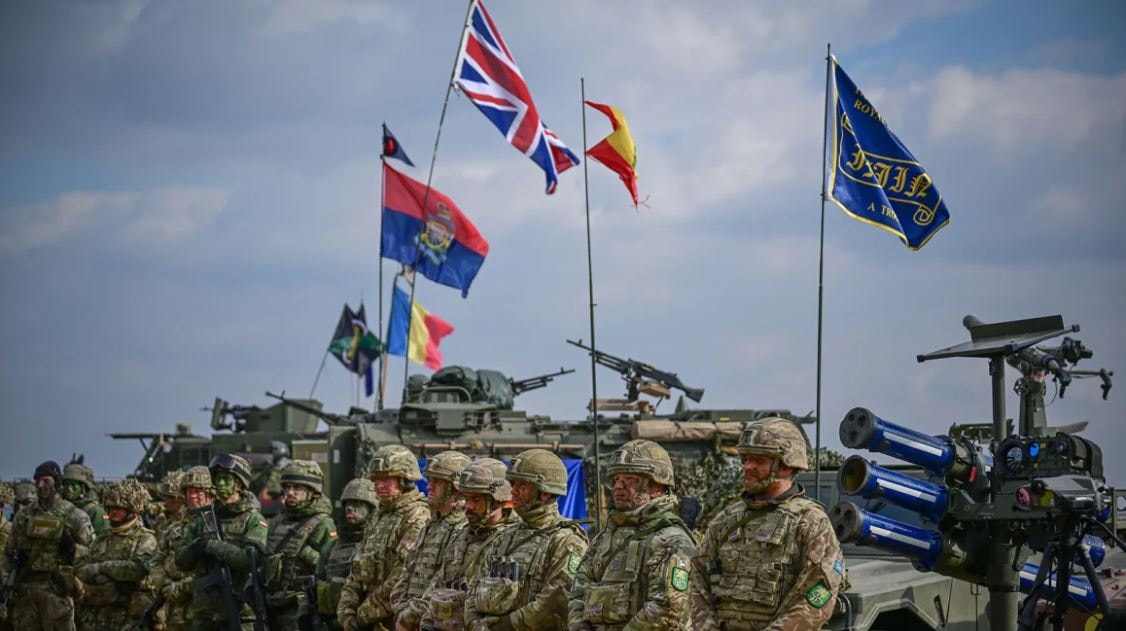
According to CNN, U.S. President Donald Trump's open hostility toward Ukrainian President Volodymyr Zelensky, and his recent comments, raise doubts about whether the White House will protect NATO allies "if they don't pay." Trump has forced European leaders to begin considering something previously unthinkable – whether the U.S. is a reliable security partner at a time when the continent is being rocked by the biggest war since the 1940s.
But NATO is not powerless without the US, as the alliance has over a million troops and modern weapons available from its 31 other member states. Analysts say NATO also possesses the wealth and technological expertise to defend itself without relying on the US.
According to NATO data, the US and Germany are the largest contributors to NATO's military, civilian, and security investment budgets, each contributing nearly 16%. This is followed by the UK with 11% and France with 10%. Analysts say it won't take long for Europe to make up for the shortfall in contributions from Washington.
Ben Schreer, executive director for Europe at the International Institute for Strategic Studies, told CNN that if European countries unite and buy the right equipment, Europe "could create a serious conventional and nuclear deterrent" against Russia.
The expert stated: "Europe alone has the capacity to muster the necessary resources to defend itself; the question is simply whether Europe is ready to do so."
And that's the crucial question. For over 75 years and through 14 U.S. presidencies, including the first Trump administration, the U.S. has been the backbone keeping this alliance together.
Analysts say decades of transatlantic solidarity may have come to an end in recent days. Dan Fried, a senior fellow at the Atlantic Council and former US Assistant Secretary of State for Europe, said: “The ‘explosion’ in the Oval Office between President Trump and his Ukrainian counterpart Zelensky, and the subsequent halt of US aid to Kyiv, further deepened the rift, not only with Ukraine, but also with America’s ‘free world’ strategy from the Truman to Reagan administrations.”
John Lough, a former NATO official and associate fellow at the Chatham House Institute in London, sees an even deeper divide within the alliance. He argues that “the U.S. views Europe more as a competitor than an ally,” adding that this is why Washington’s commitment to defending NATO allies is being questioned. This is a crack that is considered irreparable.
However, some analysts argue that a NATO without the US wouldn't be a bad idea either.
Moritz Graefrath, a postdoctoral researcher in security and foreign policy at the William & Mary Institute for Global Studies, stated: “As soon as America’s allies believe they can no longer count on America to provide the necessary defense when needed, that’s when America’s allies begin to believe they can no longer rely on America to protect them when necessary.”,They will quickly assume responsibility and strive to develop their own capabilities.” In this sense, the withdrawal of US troops will create an even stronger, not a weaker, Europe.
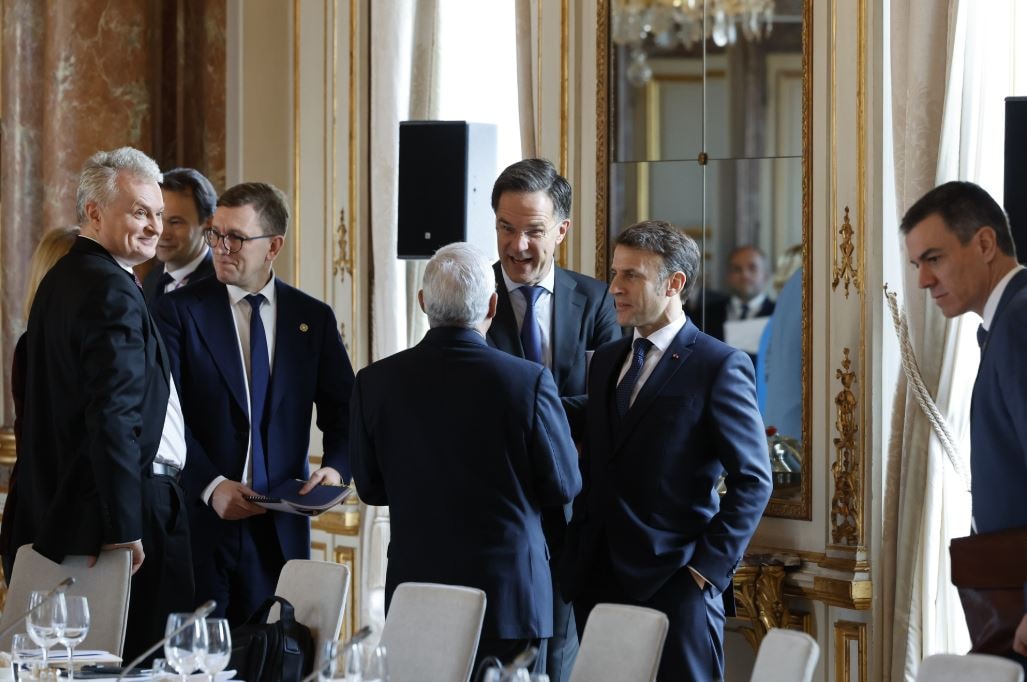
Polish Prime Minister Donald Tusk believes this process has already begun. At this week's EU summit, Prime Minister Tusk stated: “Europe as a whole is truly capable of winning any military, financial, or economic confrontation with Russia – we are simply stronger. We just need to start believing in it. And it seems that is happening.”
What does Europe have to offer?
In theory, European armies could be formidable. According to the International Institute for Strategic Studies, Türkiye has the largest armed forces in NATO after the US, with 355,200 active-duty personnel. This is followed by France - 202,200 troops, Germany - 179,850 troops, Poland - 164,100 troops, Italy - 161,850, the United Kingdom - 141,100…
Several major NATO countries also possess weapons that are on par with or far superior to those of Russia. Besides the US, France and the UK also maintain nuclear forces, and both deploy ballistic missile submarines.
NATO allies outside the US have approximately 2,000 fighter and ground attack aircraft, including dozens of the new F-35 stealth fighters.
Ground forces include modern tanks, including Germany's Leopards and Britain's Challengers. NATO member states in Europe can deploy powerful cruise missiles, such as the Franco-British joint SCALP/Storm Shadow.
The Military Balance 2025 report notes that Europe is taking steps to improve its military forces without US assistance. In 2024, six European nations agreed on a project to develop ground-launched cruise missiles, making moves to increase their munitions production capacity and diversify their supply bases, targeting countries like Brazil, Israel, and South Korea as new sources of military hardware.
Analysts believe that even if the US completely withdraws from Europe, it will still leave behind critical infrastructure.
According to the Congressional Research Service, the United States has 31 permanent bases in Europe – naval, air, ground, and command facilities that would be provided to the countries where these bases are located should the U.S. withdraw its troops.
Observers believe that the U.S. military infrastructure will largely remain in place for an extended period, so that the U.S. will still have the capability to return to these bases in Europe.