

Heritage tourism in Nghe An: A perspective from the Sen Village Festival.
The appeal of the Lotus Village Festival shows that heritage tourism in Nghe An has a great opportunity to become a distinctive product line. However, for these trips to be more than just a few hours of sightseeing or souvenir photos, what is needed most is a deep enough experience to touch the emotions of tourists.
A journey to rediscover spiritual values.
Every May, long lines of people travel along the roads to Kim Lien to visit the birthplace of President Ho Chi Minh. Among these groups are elderly veterans, schoolchildren hearing about President Ho Chi Minh's childhood for the first time, and young families bringing their children to his hometown as a way to educate them about history through firsthand experience.
Unlike the bustling atmosphere of resort destinations, heritage tourism in Nghe An has its own unique character. Visitors come not only to sightsee, but also to seek emotions and connections with history, culture, and enduring spiritual values.
.jpg)
Previously, heritage tourism was primarily associated with trips organized by organizations, schools, or traditional pilgrimage groups. Now, the target audience has expanded significantly. Many young families are choosing historical and cultural itineraries over simple vacations. Many young people are also beginning to seek out authentic local cultural experiences, preferring "slow-paced" trips and exploring the depths of the regions they visit.
In that flow,Lotus Village FestivalThe Lotus Village Festival is becoming a special highlight of Nghe An tourism every May. From a festival with commemorative and grateful meanings, it has now expanded into a large-scale series of cultural, artistic, and community tourism activities. Beyond the solemn ceremonies, the festival also creates an experiential space rich in the unique identity of Nghe An.
It's easy to see that the number of tourists visiting Nghe An during this period isn't limited to just President Ho Chi Minh's birthplace. Many tour groups combine their visit with trips to the Truong Bon historical site, the Phan Boi Chau Memorial Area, traditional craft villages, or experiencing the Vi and Giam folk songs. This shows that the current demand for "returning to the roots" is no longer just about visiting historical sites, but is expanding to include exploring the depth of history, culture, and community life.
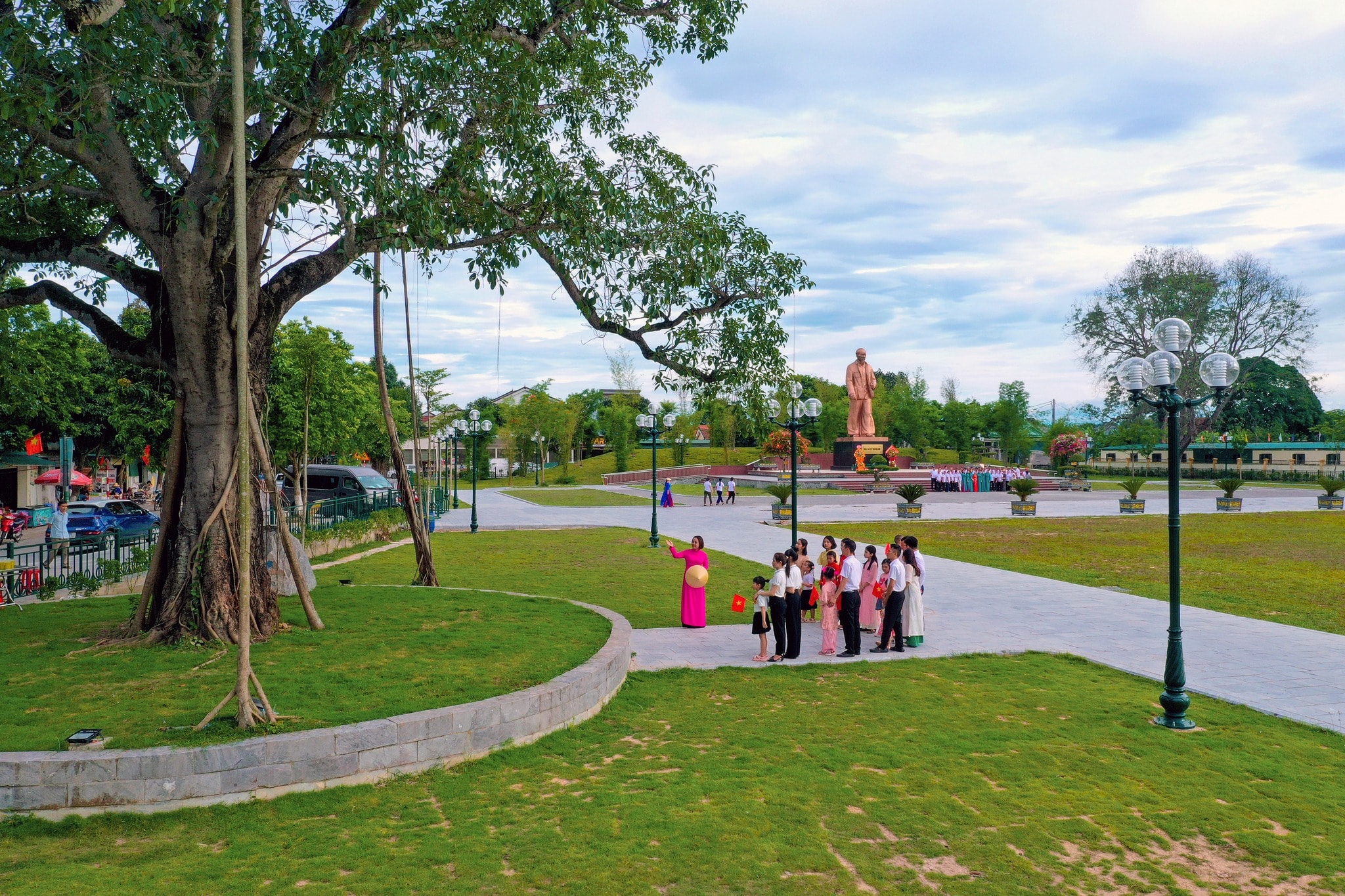
Mr. Nguyen Duc Hien, Chairman of the Nghe An Tourism Association, believes that current tourism trends are changing dramatically. While previously tourists were primarily interested in scenery or relaxation, now many seek deeper spiritual values and cultural experiences. "Nghe An has unique advantages in terms of history, culture, and traditional depth. This is something not every locality possesses," Mr. Hien shared.
Nghe An possesses resources very suitable for developing heritage tourism. The province currently has more than 2,600 historical relics, including 7 special national relics, 138 national relics, and hundreds of provincial relics. In addition, there is a unique cultural space associated with the folk songs of Nghe Tinh, traditional festivals, craft villages, and community life that still retains many original features.
Ms. Dinh Thi Bang Tam, a tourist from Ho Chi Minh City, said that what impressed her most after the trip was not the grand structures, but the peaceful feeling of walking through Sen Village in the afternoon, listening to folk songs echoing in the festival atmosphere, and feeling the closeness of the local people. "Those are feelings that are very difficult to experience at modern tourist destinations," Ms. Tam shared.
From “historical destination” to “experiential journey”
Despite its many advantages, heritage tourism in Nghe An has not yet fully exploited its inherent potential. The most noticeable issue is that most current tours are quite short and monotonous.
Many tour groups arrive at President Ho Chi Minh's birthplace in the morning, visit a few historical sites, and then return to the Vinh urban area or continue on to other locations. Many tourists feel that, beyond sightseeing, taking photos, and listening to explanations, they haven't had enough in-depth experiences to justify staying longer.
The issue isn't the number of historical sites or tourist resources. What's missing is a way to connect historical, cultural, and community values into a complete emotional journey.
.jpg)
Currently, many tourist destinations in Nghe An are still developing in isolation. Tourists visit historical sites to listen to explanations, go to craft villages to buy products, attend festivals to watch performances, etc., but there is a lack of seamless connection between destinations. Meanwhile, modern tourism trends demand a high level of experiential and interactive tourism.
Today's tourists don't just want to "pass by" a historical site. They want to participate in community activities, enjoy local cuisine, listen to folk songs in a suitable setting, experience village life, and feel the local culture through multiple senses. Therefore, heritage tourism in Nghe An needs to shift from a "visiting historical sites" mindset to a "cultural experience journey."
From a practical perspective, incorporating the "Mo Te Show - Stories of Lang Sen Village" night tour into this year's Lang Sen Festival is seen as a positive sign. Although still in its early stages, this activity demonstrates an effort to integrate local culture into tourism products in a way that is more accessible to modern tourists. Instead of simply watching a performance, viewers are transported into a storytelling space filled with music, light, and the cultural memories of Nghe An province.
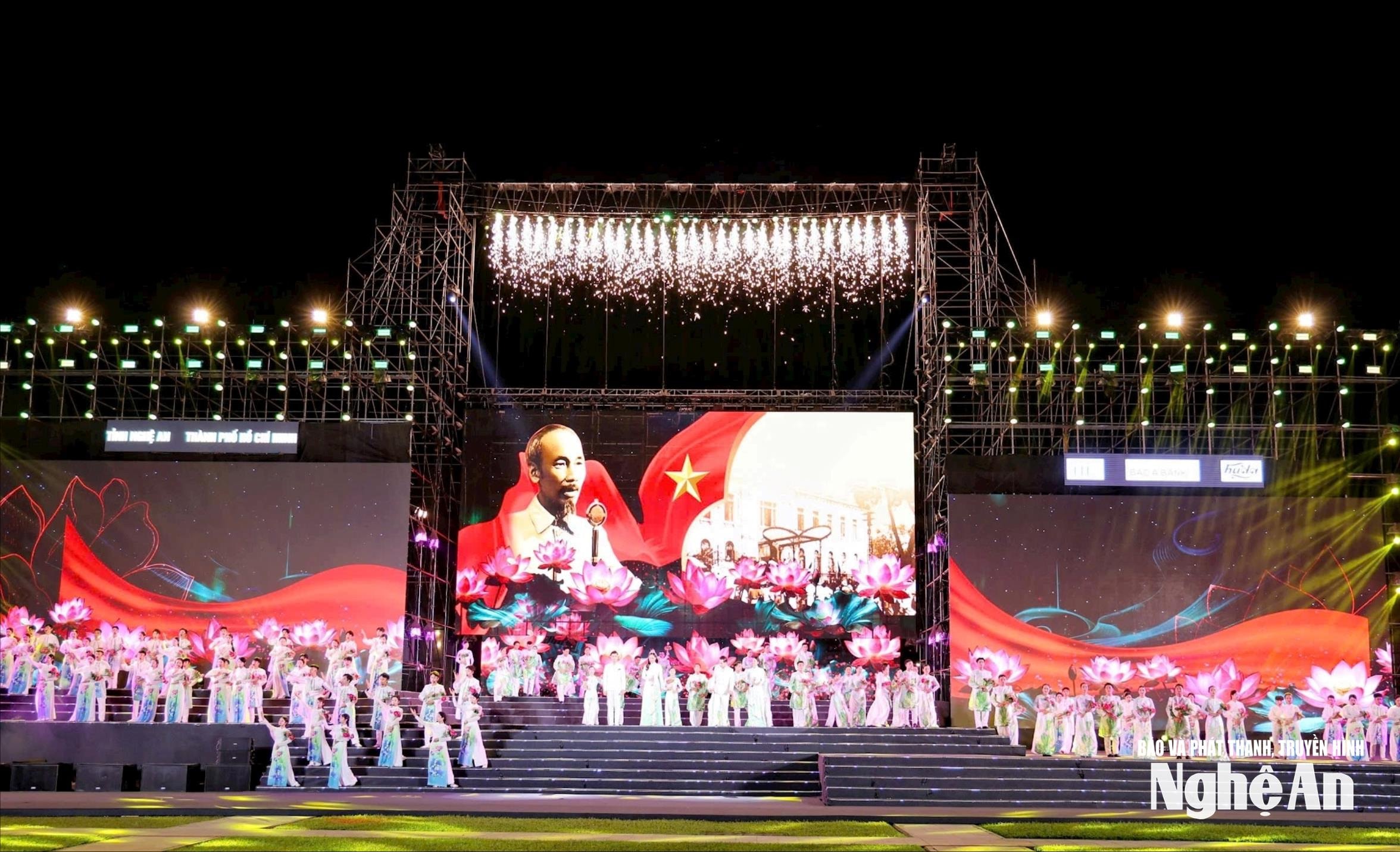
However, for such products to truly become a highlight, Nghe An still needs to take more bold steps. Some programs are still experimental and lack regularity; experiential activities are not diverse enough; and supporting services around heritage tourism destinations are quite limited. Many tourists, after visiting, still lack options for accommodation, nightlife experiences, or community activities.
Mr. Tran Xuan Cuong, Deputy Director of the Department of Culture, Sports and Tourism, said that the province is aiming to develop more tourism products associated with cultural experiences, community tourism, and night tourism to increase the attractiveness for visitors returning to their roots. However, to achieve this, the synchronized participation of the cultural sector, tourism businesses, and local communities is needed.
Many travel businesses also believe that Nghe An needs to develop more interconnected experiential routes. Instead of isolated tours, itineraries could be formed connecting President Ho Chi Minh's birthplace with Truong Bon, the cultural space along the Lam River, traditional craft villages, western Nghe An, and the experience of folk songs and melodies. In this way, tourists would not just "visit one place," but truly immerse themselves in the multifaceted cultural space of Nghe An.
Mr. Tran Xuan Cuong - Deputy Director of the Department of Culture, Sports and Tourism.
Another issue that arises is the storytelling approach in heritage tourism. Historical sites will struggle to attract young tourists if they rely solely on dry, rigid explanations. What's needed are emotionally rich stories, interactive experiences, and a way of conveying information that resonates with modern life.