
Nghe An innovates grassroots propaganda.
From theatrical performances and mobile film screenings to digital platforms, grassroots propaganda work in Nghe An is innovating in both content and approach. Within the two-tiered local government model, the requirement is to reorganize operational methods and increase connectivity to deliver information to the people more effectively.
Bringing information closer to the people.
In July 2026, the Mobile Propaganda Team of the Nghe An Provincial Cultural Center developed a program of songs, dances, music, and drama with two parts, "Peace by the Rooftop" and "Unforgettable Songs," to perform for local communities. Content about family, traditions, and gratitude to those who have contributed to the nation was transformed into artistic performances instead of primarily being conveyed through words.
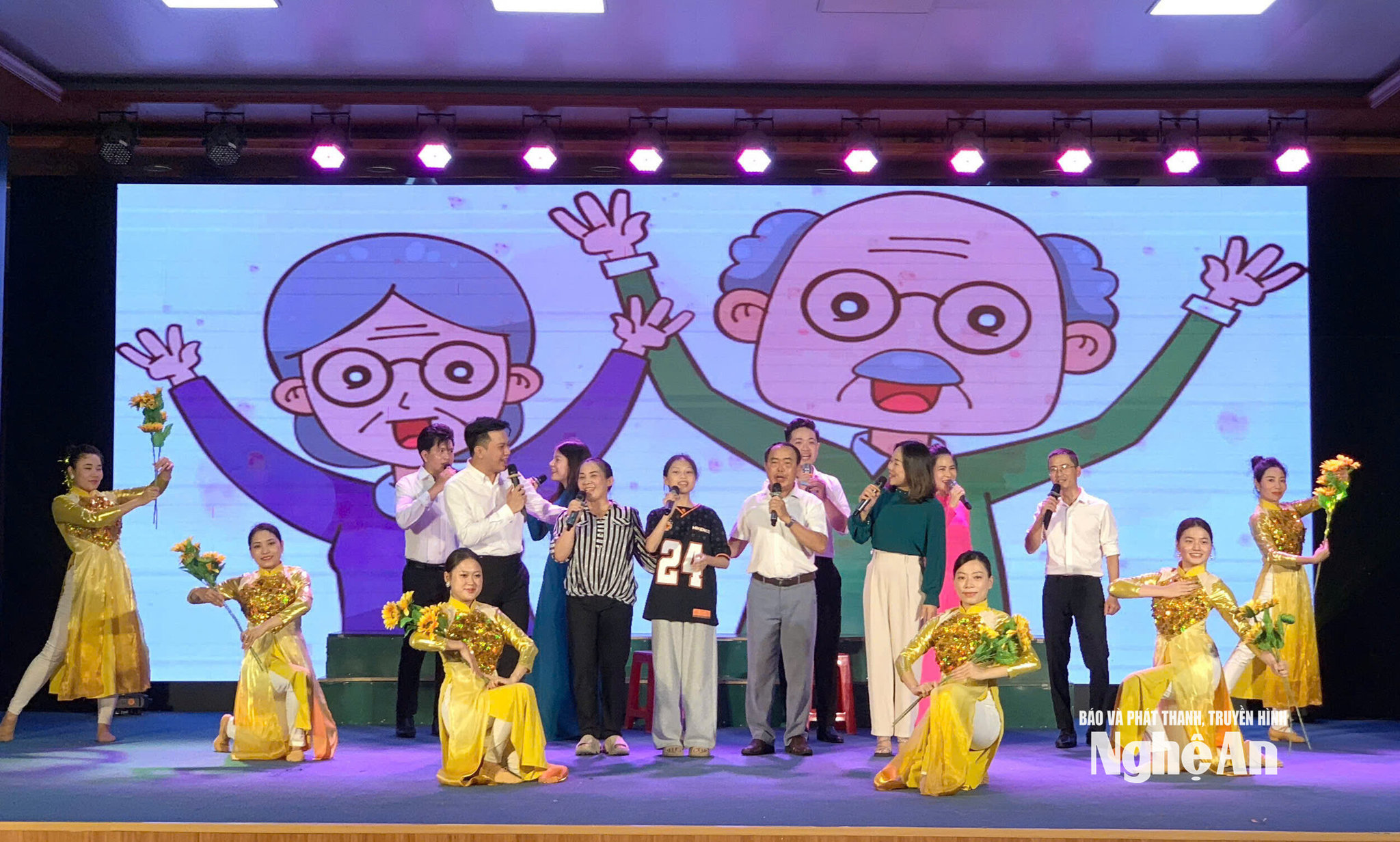
This is also a noticeable trend in current propaganda activities: Content is increasingly being transformed into stories, images, and situations closer to real life so that people can understand it more easily.
At the grassroots level, theatrical performances are being used even for content that is typically considered dry and difficult to convey. In mid-May 2026, at the Vinh Phu Ward Cultural Center, four teams from Nghi Duc, Nghi An, Nghi Phu, and Ha Huy Tap participated in the "Excellent Local Security and Order Protection Force" competition.
Situations such as conflict resolution, land disputes, public disorder, traffic accidents, or fire prevention and control are brought to the stage. Instead of hearing explanations of legal provisions, viewers are exposed to relatable situations that could occur right in their own neighborhoods.
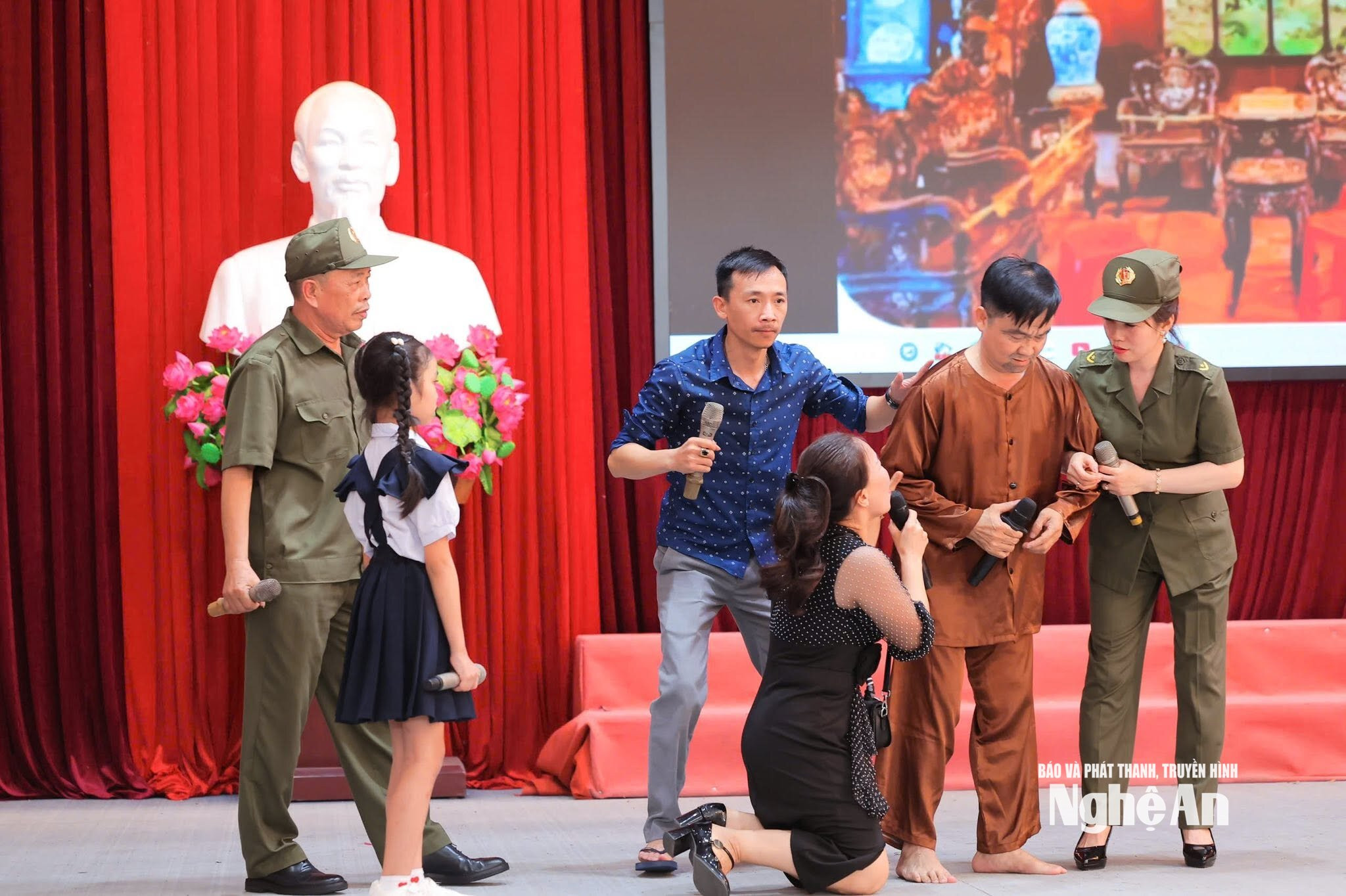
Lieutenant Colonel Dang Thanh Tuan, Deputy Head of Vinh Phu Ward Police, believes that when legal situations are placed in a specific context, both contestants and viewers find them easier to understand. Therefore, dramatization helps make relatively dry content more relatable to the community.
Over nearly two months of organizing the competition at the grassroots level, all 130 communes and wards of Nghe An participated with 530 teams, approximately 5,300 members of the security and order protection force, and more than 500 amateur performers. Many teams incorporated folk songs, traditional culture, and unique local characteristics into their performances.
Besides theatrical performances,mobile film screeningsThis is still being maintained, mainly in remote, mountainous, and border areas. In the first six months of 2026, the Nghe An Department of Culture organized 58 mobile film screenings. The Provincial Cultural Center currently maintains two teams, organizing approximately 60-70 screenings each year; in 2025 alone, it attracted about 20,000 viewers.
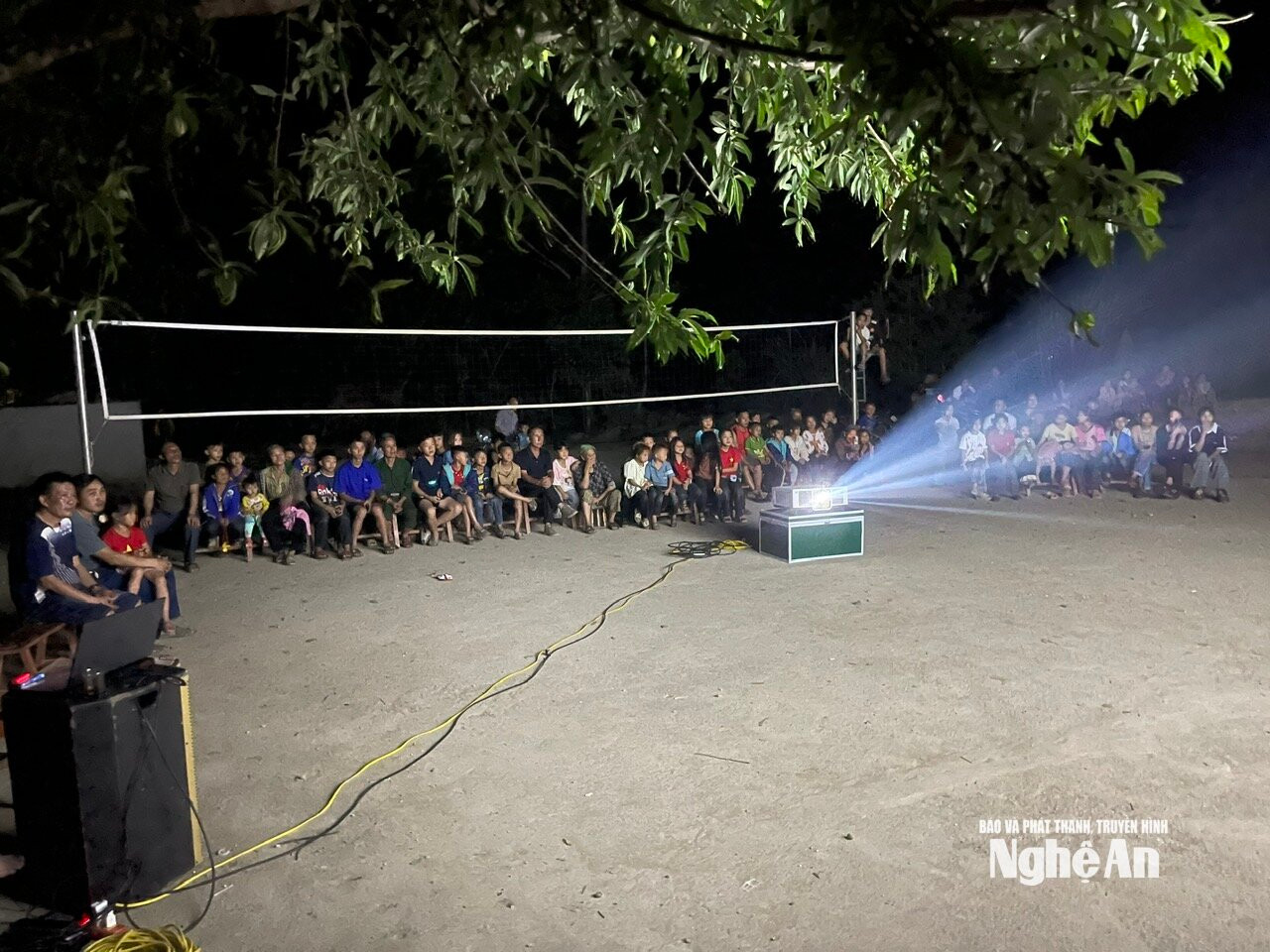
In many mountainous areas, film screenings are not only an entertainment activity but also an opportunity for children and adults to gather at the community center, creating a sense of community.
Mr. Cao Van Xich, Director of the Nghe An Provincial Cultural Center, believes that smartphones and social media have dramatically changed how people receive information, so mobile propaganda must also change.
"For a program to be effective, it needs to have content relevant to the local area, a reasonable duration, and a lively presentation. In mountainous, remote, and isolated areas, mobile activities also serve as a form of community cultural program," Mr. Xich said.
The trend of bringing activities closer to the public is also evident in museums and libraries. In the first six months of 2026, the Nghe An - Soviet Nghe Tinh Museum organized 10 mobile exhibitions, 6 traditional talks, 6 "Golden Bell" quiz programs, and other experiential activities; the Provincial Library provided mobile services at 27 locations.
The common thread among these approaches is bringing information and cultural products closer to where people study and live, instead of waiting for the public to find them.
Reorganize the grassroots propaganda network.
Along with content innovation, grassroots propaganda work in Nghe An is facing the need for reorganization as the two-tiered local government model comes into operation.
Previously, according to Decision No. 71/2016/QD-UBND, mobile propaganda teams were organized at the provincial and district levels; there were no dedicated forces at the commune level.
Currently, at the commune and ward levels, the local People's Committee directs the Department of Culture and Social Affairs and the Public Service Center to carry out visual and radio propaganda and other cultural tasks at the grassroots level. Participation also includes propagandists, performing arts groups, clubs, and cultural key figures in the community.
This necessitates a reorganization of coordination between provincial-level specialized forces and the grassroots network, rather than simply transferring the previous model down to the commune level.
Each locality also has different conditions. A central ward can strongly leverage digital platforms, while in mountainous communes and border areas, radio broadcasting, direct propaganda, and community cultural activities still play a significant role.
According to the Department of Culture, Sports and Tourism, all communes and wards now have electronic information portals and radio stations. Zalo OA channels, Facebook, and fanpages of the government and organizations are increasingly being used. The province also has nearly 4,000 recognized grassroots propagandists.

This provides a platform for combining direct communication with the digital environment. A program at a cultural center can continue to spread on social media; conversely, issues of public concern in the digital environment can be transformed into relatable, grassroots-level communication content.
However, some online portals are not updated regularly; some broadcasting systems are outdated and degraded, and the content is monotonous. The team of propagandists mainly holds multiple positions, and their communication skills and digital technology application are uneven.
According to Mr. Tran Anh Tuan, Head of the Information, Press, and Publishing Department of the Nghe An Department of Culture, Sports and Tourism, in the two-tiered local government model, grassroots information not only needs to maintain existing means but also must organize its operation in a way that suits each locality.
“Along with investing in and upgrading equipment, it is necessary to clearly identify the operational focal point and improve the skills of the team directly involved. Officials and communicators at the grassroots level need to be better equipped in content creation and digital communication,” Mr. Tran Anh Tuan shared.
Besides ensuring the smooth operation of the information system, another important requirement is to make the content relatable and appealing to the audience. With the absence of mobile propaganda systems at the district level, the role of grassroots performing arts groups, folk song and dance clubs, and local cultural figures becomes even more significant.
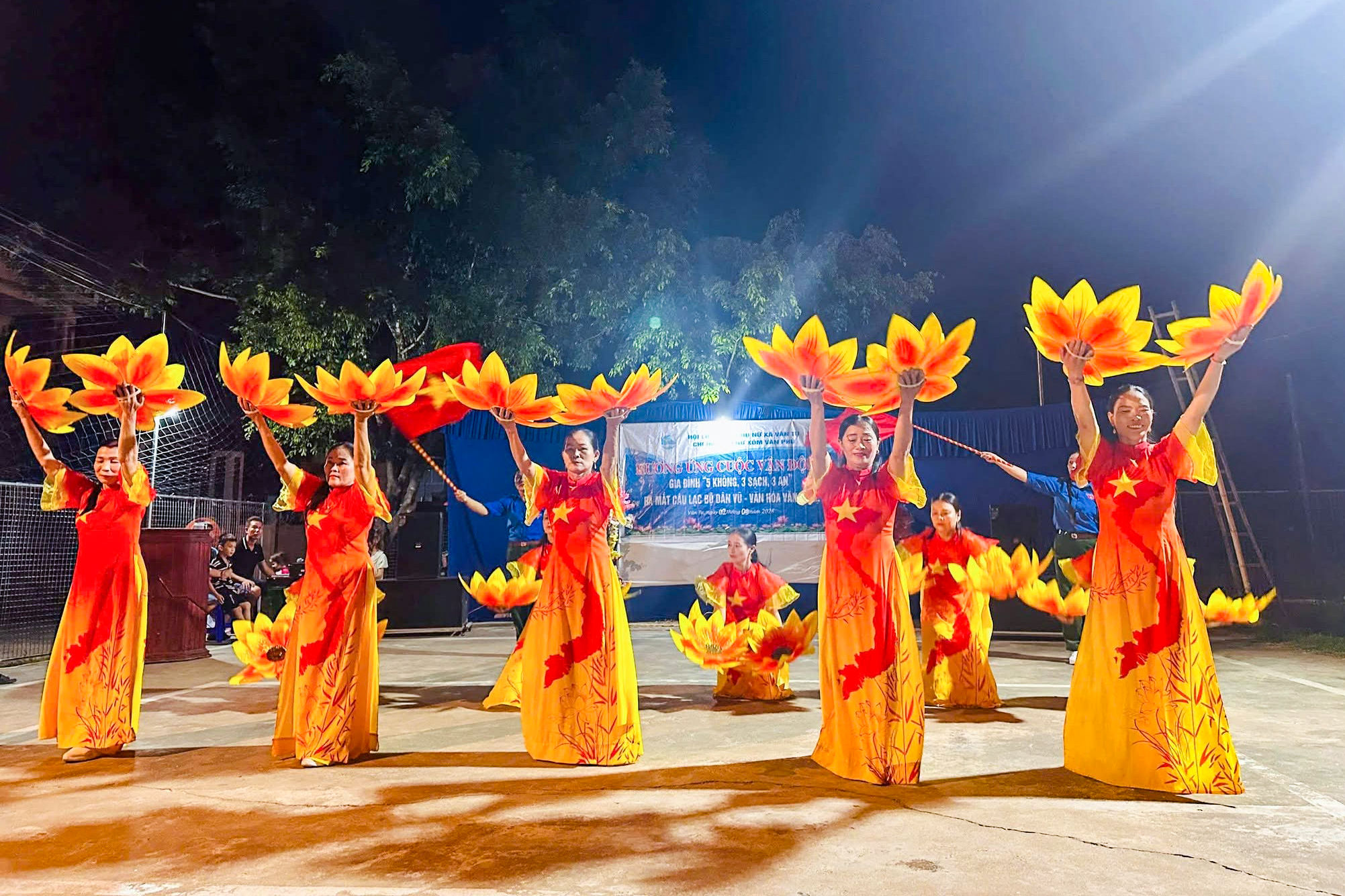
According to Ms. Quach Thi Cuong, Deputy Director of the Department of Culture, Sports and Tourism of Nghe An province, localities need to proactively utilize local resources in addition to programs organized by the province's specialized forces.
To effectively engage the public, propaganda content must be relevant to issues they care about, and the presentation must be appropriate for each locality. Nghe An has an advantage in folk songs, dances, and diverse cultural life; if these elements are incorporated into short plays, art programs, or interactive formats, content that is otherwise dry will become more relatable.
Ms. Quach Thi Cuong - Deputy Director of the Department of Culture, Sports and Tourism of Nghe An Province
Modern media allows information to travel faster and farther, but its effectiveness still depends on the content and how it is conveyed. A short skit in a residential area, a film screening in a village, or a story told by local people themselves therefore still have a place in an increasingly diverse media environment.
Minh Quan