
Cool and sweet pounded tea, rich in the flavor of the Muong people.
From green tea leaves harvested at dawn, the Thai people in the former Quy Hop district have created a jade-green, mildly astringent, and sweet-aftertaste beverage: pounded tea. Through generations, this simple bowl of pounded tea, imbued with the flavors of the mountains and hills, has not only been present in every home and on the tea table for guests, but has also become a cultural feature preserving the taste of the homeland, the way of life, and the human connection in the villages of western Nghe An province.
-09931bd1d4ae4b3c7432273fcb8890fa.png)
Khanh Ly - Thanh Phuc/Present: Hong Toai •3/10/2026
*****
From green tea leaves harvested at dawn, the Thai people in the former Quy Hop district have created a jade-green, mildly astringent, and sweet-aftertaste beverage: pounded tea. Through generations, this simple bowl of pounded tea, imbued with the flavors of the mountains and hills, has not only been present in every home and on the tea table for guests, but has also become a cultural symbol preserving the taste of the homeland, the way of life, and the human connection in the villages of western Nghe An province.
.png)
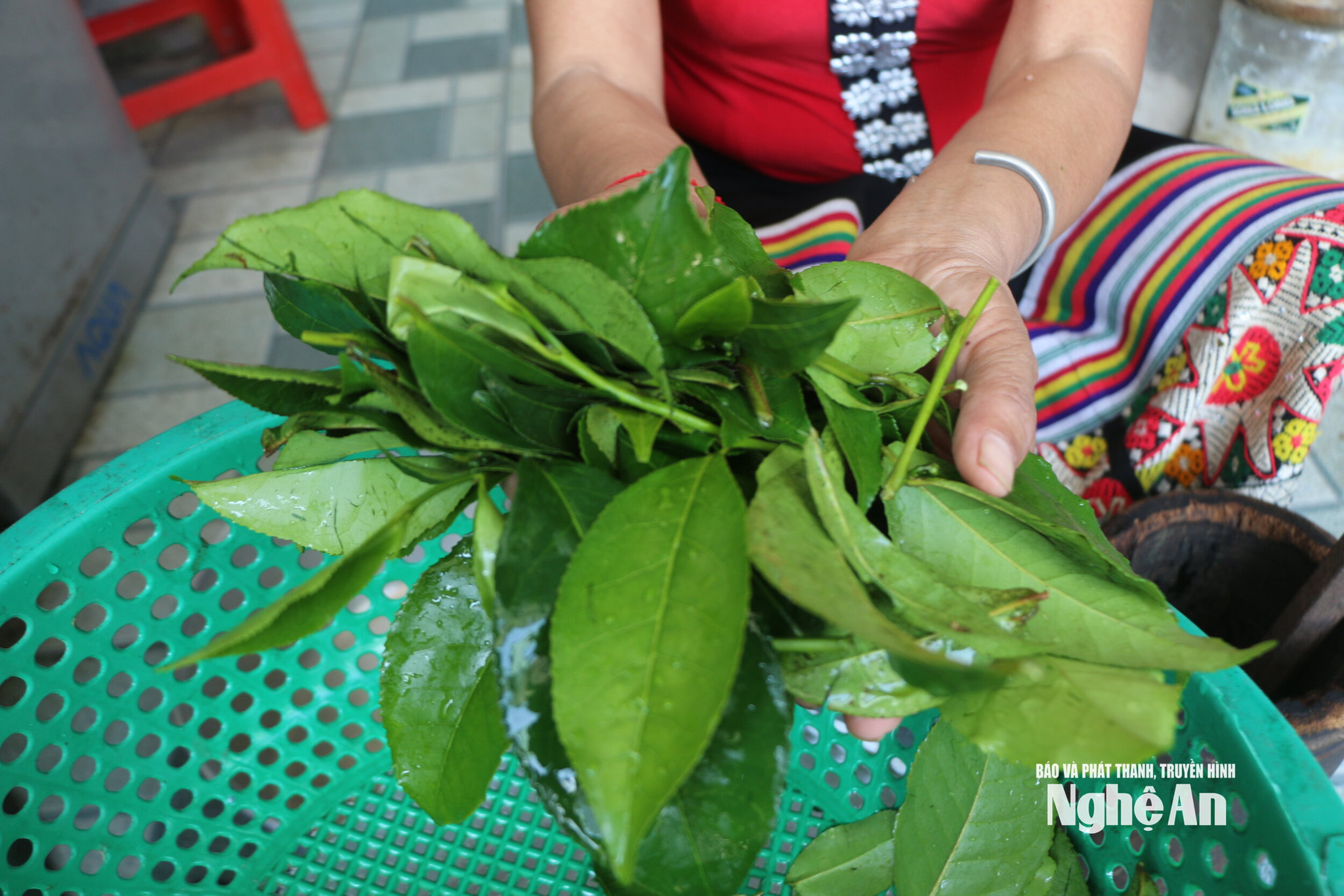
Early in the morning, while dew still clings to the leaves, Mrs. Vi Thi Minh (60 years old), from Dai Cuong hamlet, Muong Ham commune, goes to her garden to pick fresh tea branches to make pounded tea. This work has become a habit for many years, a familiar part of the daily life of the Thai family here.
Ms. Minh said that since she was a child, her mother and grandmother had taught her how to make pounded tea. In the past, almost every family in the neighborhood had a measuring tube, a wooden pestle, and a mortar and pestle – tools used for pounding and filtering tea. Whenever guests came over, there was no need for elaborate feasts; the host simply poured out bowls of refreshing green tea, and the conversation could begin.
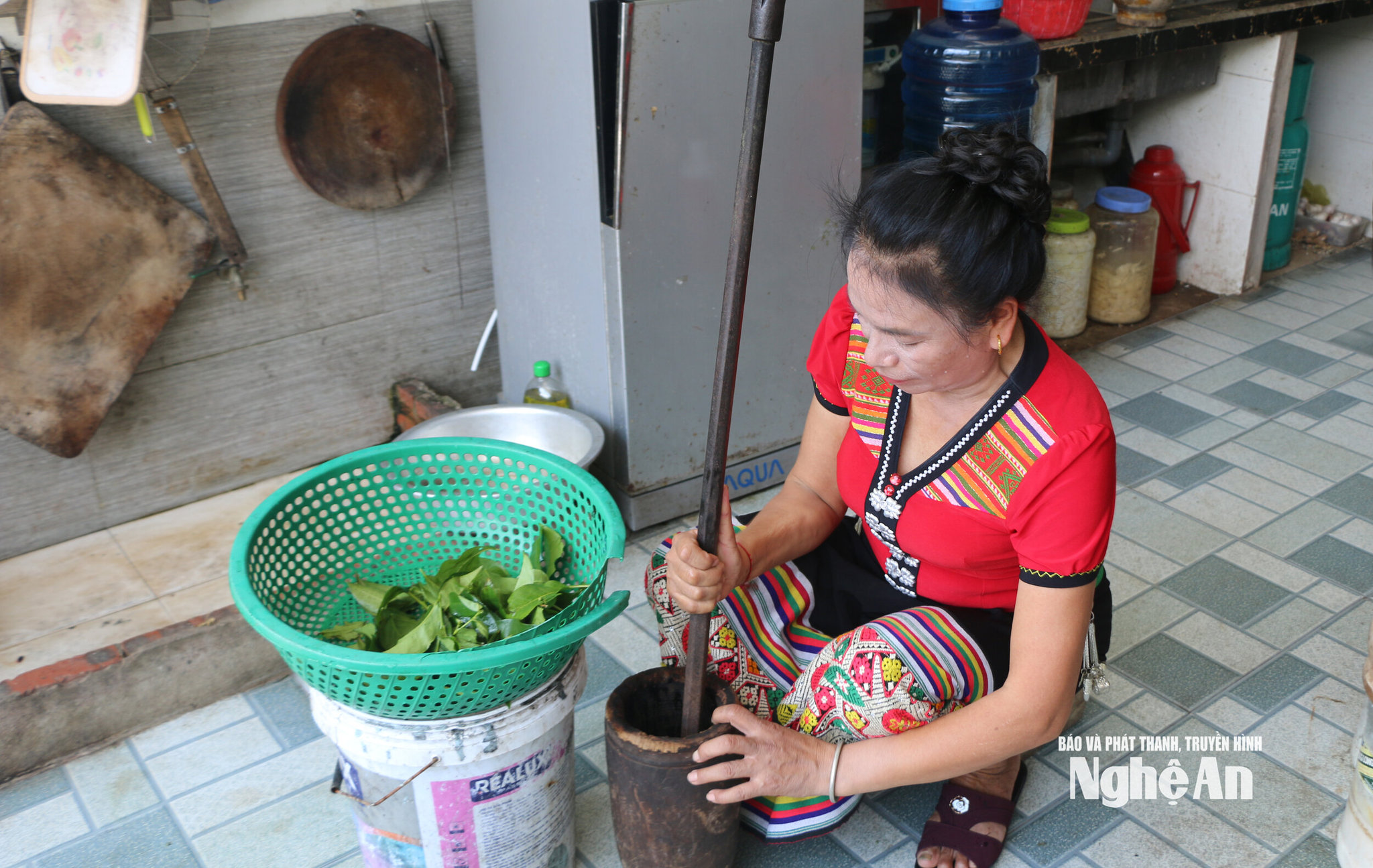
To make a delicious bowl of "che dam" (a type of Vietnamese tea), the selection of ingredients is crucial. The tea branches must be from mature, native tea plants with thick, green leaves that are just right – not too old, not too young. The plants are grown in a well-ventilated, sunny location and without the use of chemical fertilizers or pesticides. After harvesting, the tea leaves are washed gently to prevent bruising.
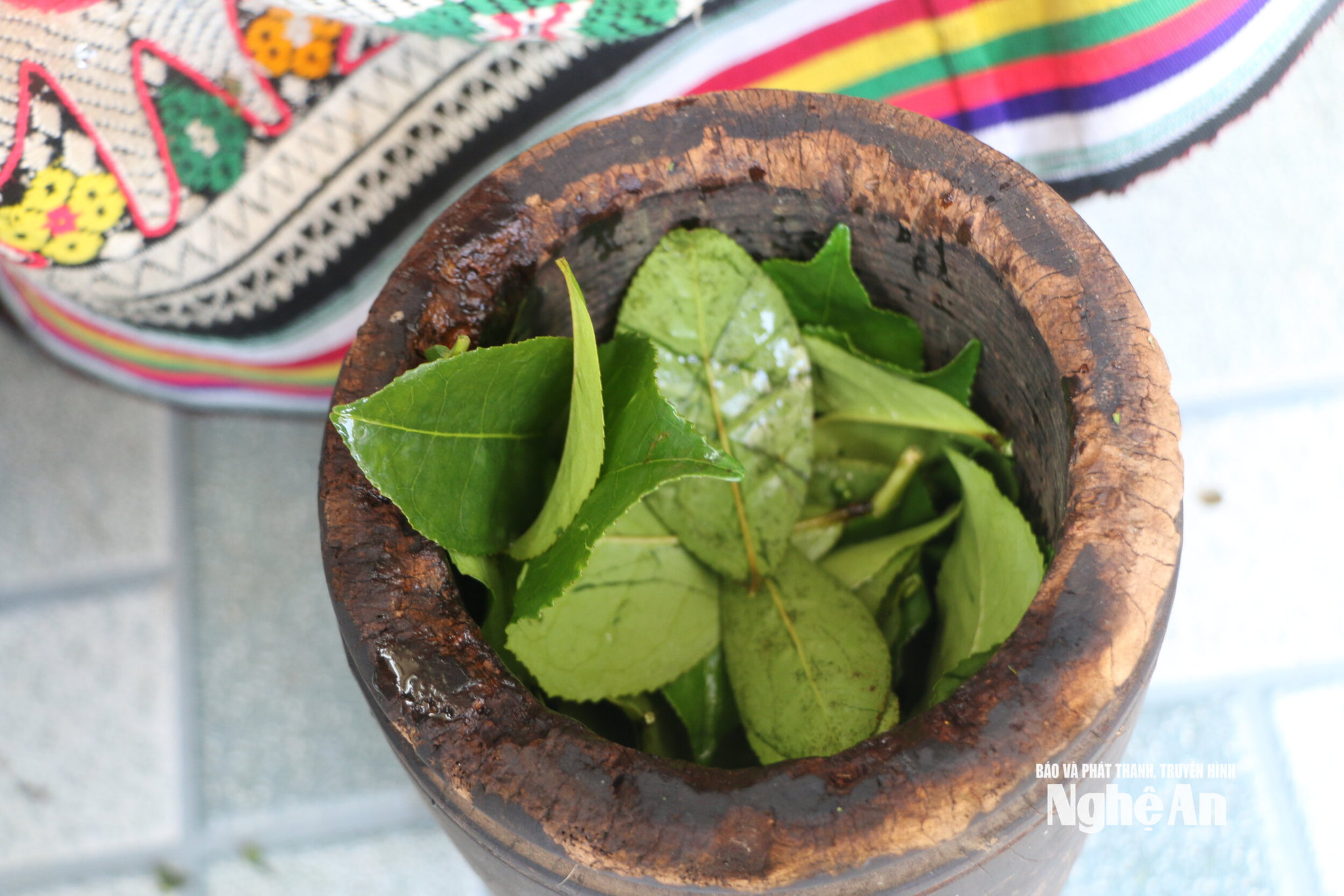
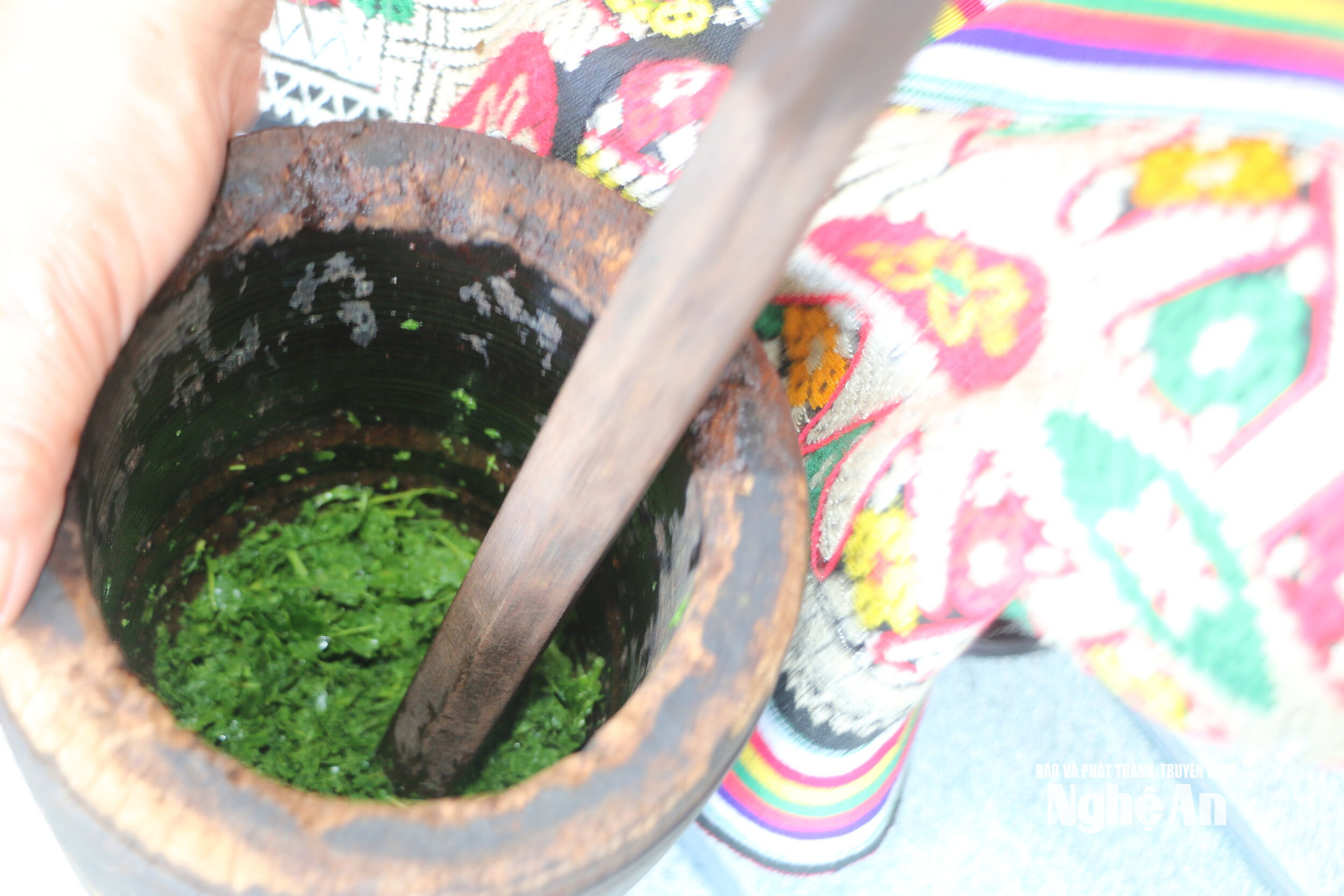
The tea branches and leaves are then placed in a mortar made from an old bamboo tube, a wooden mortar, or a stone mortar. The worker uses a wooden pestle to pound and grind them evenly until the tea leaves are finely crushed, releasing a dark green juice. A small amount of clean water, preferably boiled and cooled rainwater or spring water, is added to the mortar. The mixture is then pounded and ground again, then strained through a sieve to separate the liquid from the pulp.
It sounds simple, but making a bowl of clear, beautifully colored, and fragrant green tea requires skill. The pestle must be used quickly, decisively, and evenly. Those unfamiliar with the process can easily cause the tea leaves to fly out of the mortar or the water to splash everywhere.
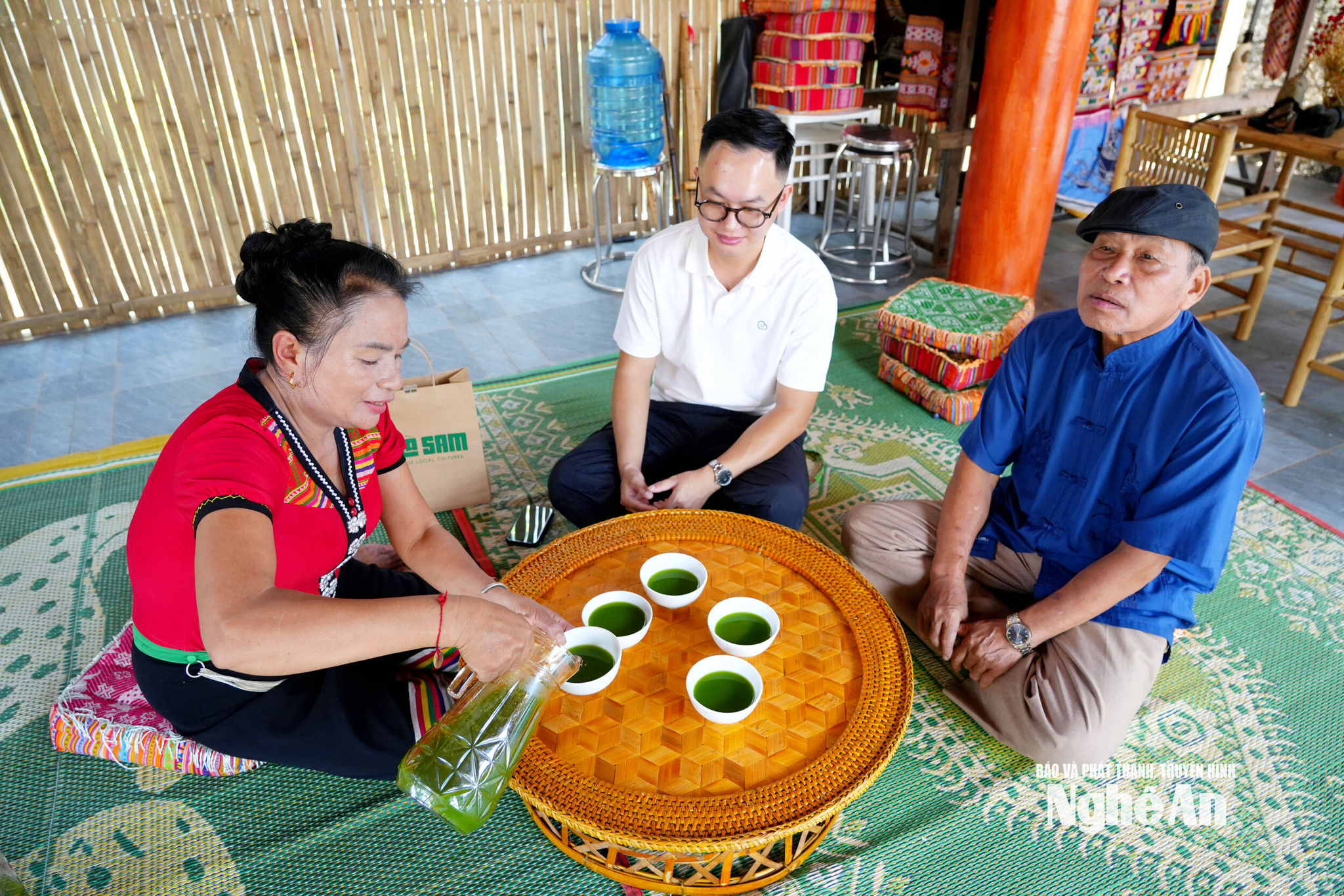
"Pounded tea can be drunk hot or cold, but it tastes better cold, especially on hot days. A bowl of cool tea, with a mild astringency that gradually turns sweet on the tongue, leaves you feeling refreshed," Mrs. Minh said as she poured freshly pounded tea for her guests.
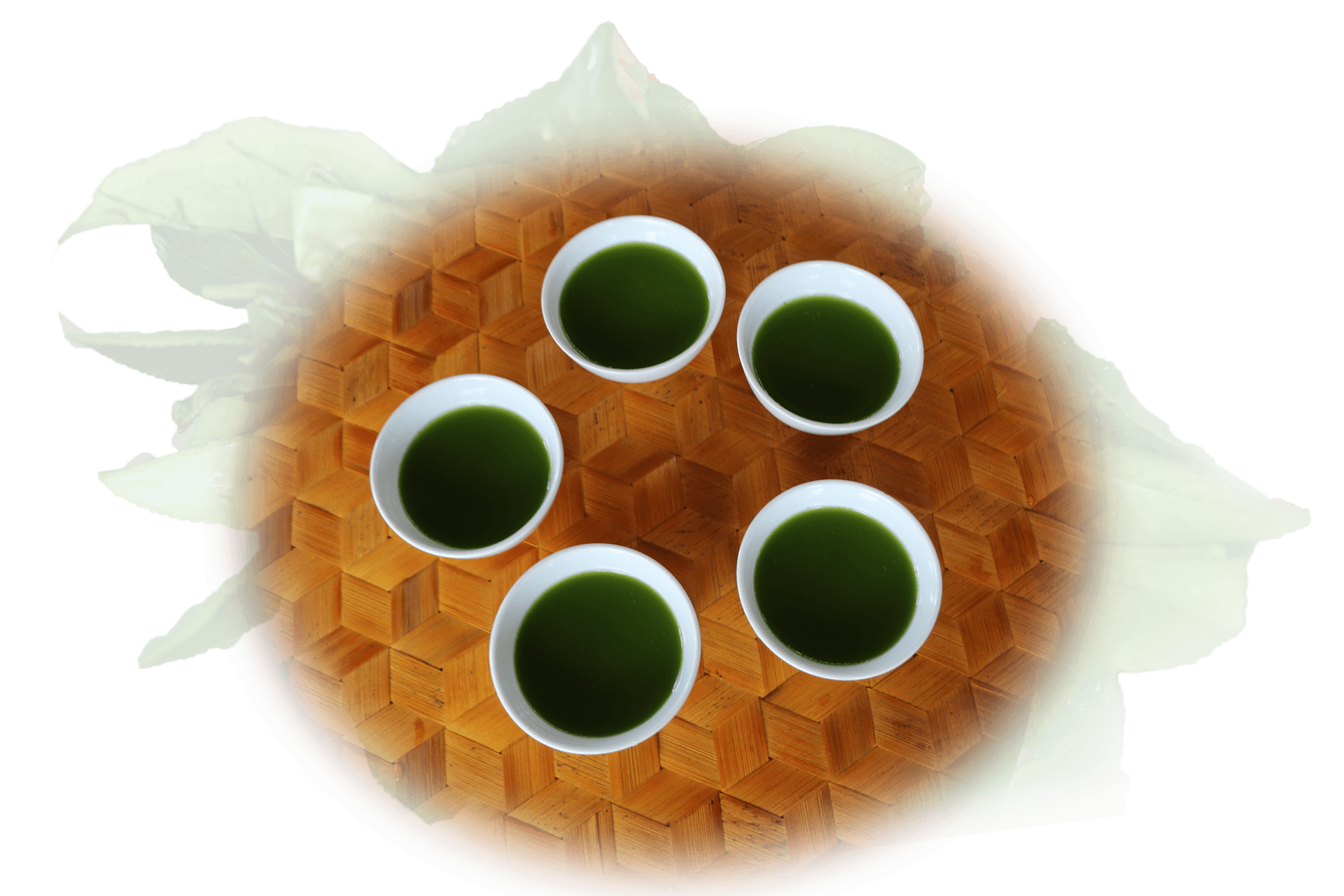
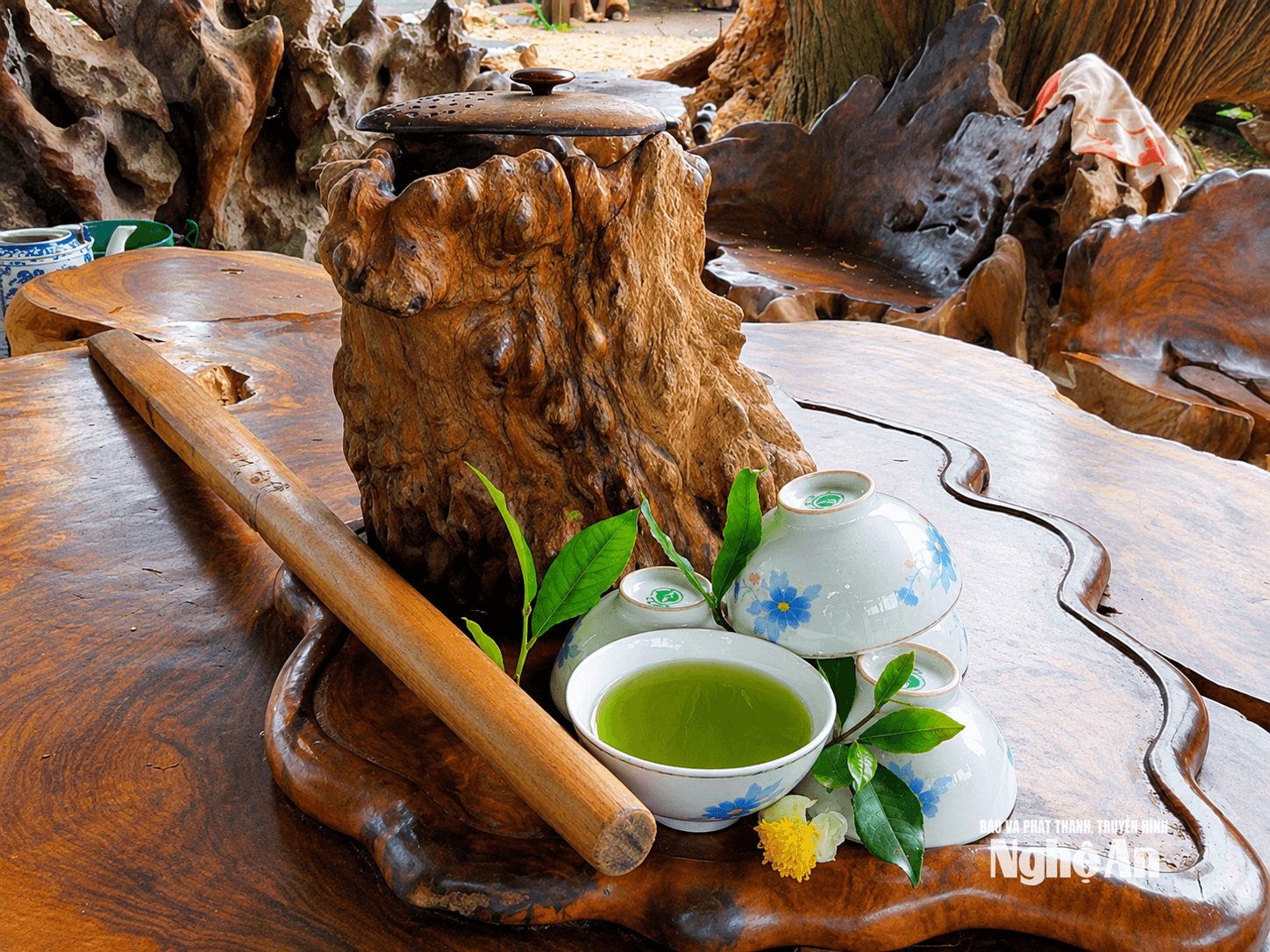
The emerald green tea stands out against the white porcelain bowl. Taking a sip, a slight bitterness spreads, gradually transforming into a refreshing sweetness, followed by the delicate aroma of tea leaves from the hills.
Ms. Sam Thi Nhat, from Dai Cuong hamlet, who has also been involved with tea cultivation for many years, recounts that her family used to own a large tea garden. They grew tea for daily consumption and also shared it with neighbors in the village. Later, when the family built a house and switched to other crops, most of the tea plants were removed. She still kept five rows of tea plants to provide raw materials for making pounded tea.
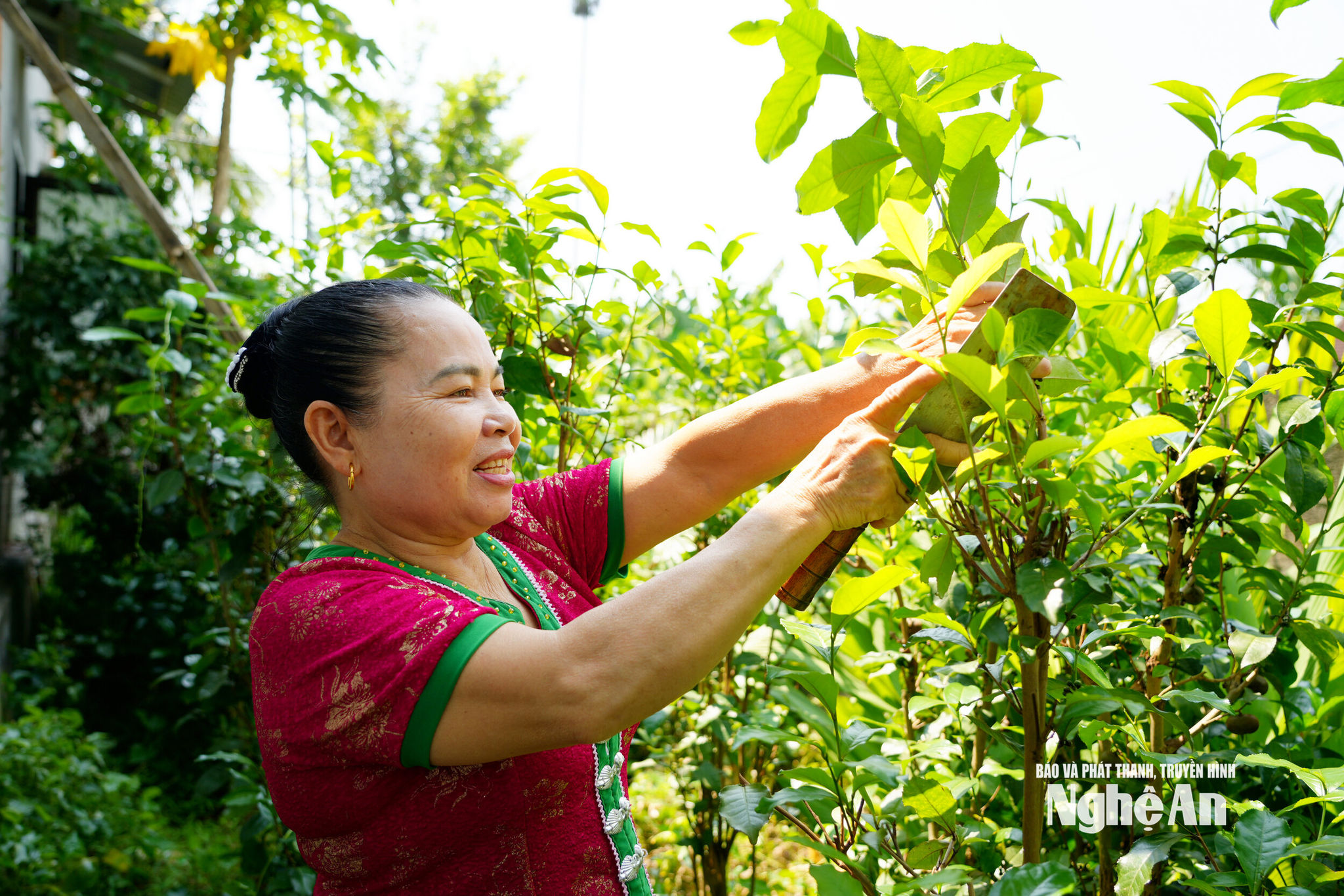
"Every household, even if they don't grow much tea anymore, tries to keep a few rows of tea plants in their garden. Having tea means having something to drink, and having something to offer guests," Mrs. Nhat said.
According to Ms. Nhat, the tea leaves used for making pounded tea must be of just the right age, neither too old nor too young. Old tea leaves produce a dark color, while young tea leaves lack sufficient aroma. The crisp, fresh tea leaves, after being washed clean, are drained and then pounded into a fine paste in a mortar.
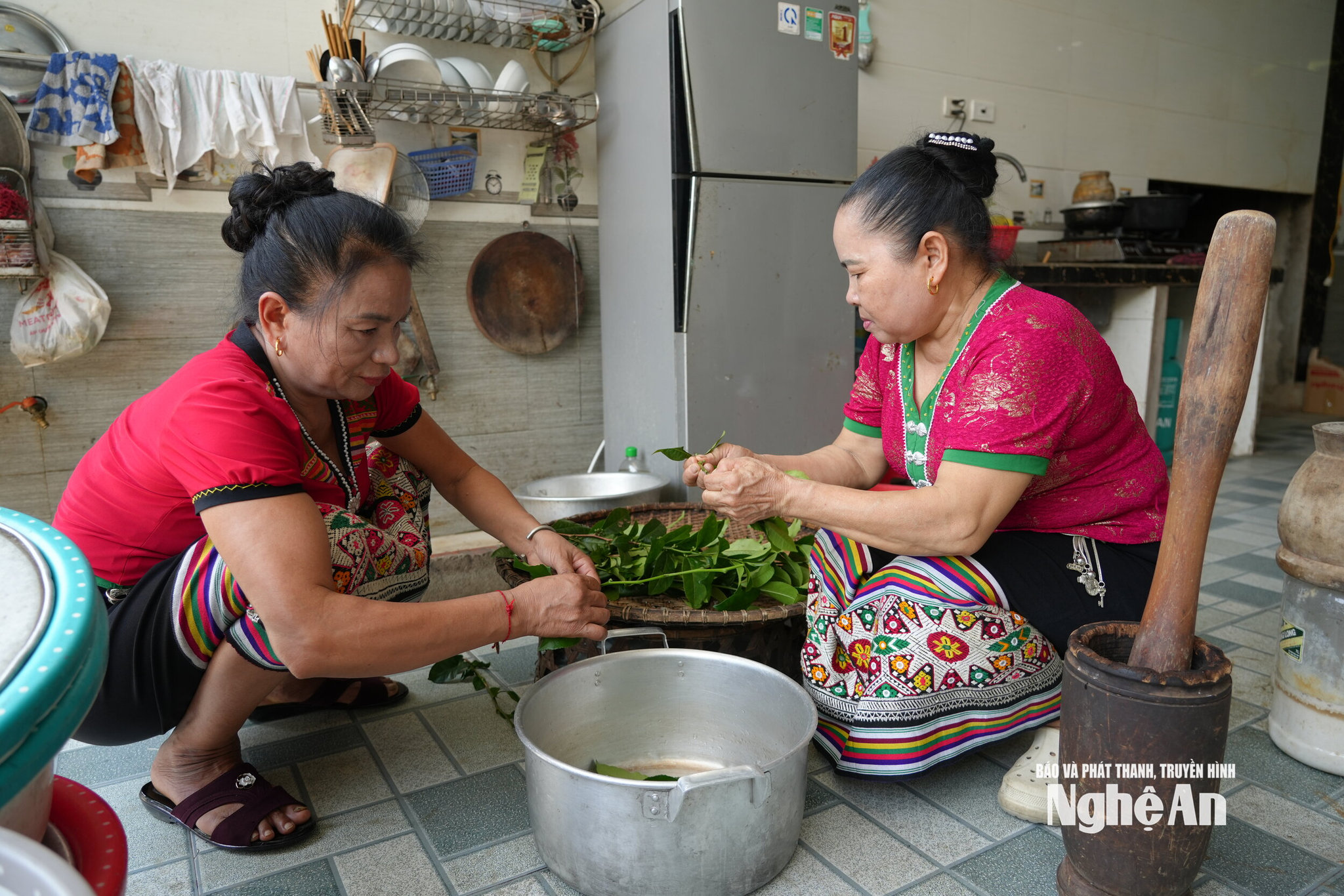
Nowadays, blenders can shorten the process, but for those who appreciate traditional Vietnamese tea, the mortar and pestle still hold their own special meaning.
Grinding with a machine is faster, but the tea doesn't have the same aroma and taste as when pounded with a mortar and pestle."
Ms. Nhat shared
Ms. Luong Thi Xanh, head chef of Nha Sam Homestay in Dai Cuong hamlet, said that pounded tea has long been associated with the lives of the Thai people. In the past, when life was closer to the mountains and forests, people would often pick leaves and bark, pound them, and boil them to make a drink. When green tea became more common, people started pounding and crushing the leaves to extract the juice, gradually creating a unique beverage for the community.
Nghe An province has many green tea-growing regions, but the traditional method of brewing tea by pounding, crushing, and filtering the leaves, as practiced in the old Quy Hop area, still holds a unique appeal. Among these, the tea from Thai Hoc hamlet, now part of Muong Ham commune, is considered by many to have a particularly special flavor.
Village head Vi Van Kien (born in 1984) said that Thai Hoc village currently has about 320 households. Previously, tea was widely grown, but in recent years people have switched to planting acacia trees, causing the tea growing area to shrink to just over 1 hectare. Even so, almost every family still keeps a few rows of tea plants in their garden.
In the early mornings or on leisurely afternoons, people gather around a bowl of pounded tea, chatting after a day's work. Visitors from the village are offered tea. Guests from afar are also given a bowl by the host, sometimes even a few bottles to take home.
A simple drink thus became a part of daily life, a way for people to show hospitality to one another.

What makes crushed tea memorable is not only its beautiful emerald green color or its mild, fragrant astringency, but also its unique aftertaste. With each sip, the flavor doesn't rush in but slowly spreads in the mouth, leaving a refreshing coolness behind.
According to folk tradition, pounded tea is often used by people to quench their thirst, especially on hot days. Some people drink a few bowls in the morning before starting work; others add a little molasses or honey after a day of labor to enjoy it. But for tea lovers, drinking it pure is still the most preferred way, because then the flavor of the tea leaves is fully preserved.
Ms. Luong Thi Xanh said that tea leaves should be consumed on the same day they are harvested. Leaving them overnight will significantly reduce their flavor. The way they are enjoyed also contributes to the pleasure of pounded tea. A small porcelain or ceramic bowl makes the green color of the tea stand out, creating a visually appealing and rustic feeling.
From a familiar drink in every family, pounded tea has now been included in Thai culinary menus to serve tourists experiencing community tourism. Tourists can not only enjoy the tea but also try their hand at picking tea leaves, washing them, pounding them, filtering the water, and then taking home bottles of refreshing green tea as souvenirs.
Tea made with crushed ice has also made its way out of the village kitchens to the tea shops around Thung May Lake. Along the road bordering the lake, it's not difficult to find shops selling this distinctive emerald green tea. At wooden tables, people leisurely sip their tea, chat, and admire the lake.
Busier customers can order tea to take away. Each bottle of brewed tea costs around 10,000-15,000 VND, serving as both a refreshing drink and a small side product that adds to the local income.
Ms. Phan Thi Giang, originally from the coastal area of Quynh Luu (formerly), has been working and living in Quy Hop for nearly 17 years. From someone who had never tasted pounded tea before, she gradually became "addicted" to this drink.
Drinking crushed tea with peanut candy and "cu đơ" (a type of Vietnamese candy) is incomparably delicious. The sweetness of the sugarcane sugar, the spicy kick of the ginger in the candy, and the refreshing astringency of the tea blend perfectly; savoring each sip allows you to fully appreciate the taste.
Ms. Phan Thi Giang shared
Tea made from tea leaves, brought by Thai people leaving their homeland, can be found in many cities. Modern life brings more and more new types of drinks, but in the memories of those far from home, a bowl of emerald green tea still holds a very special allure. Because it's not just the taste of tea leaves picked on the hillside.
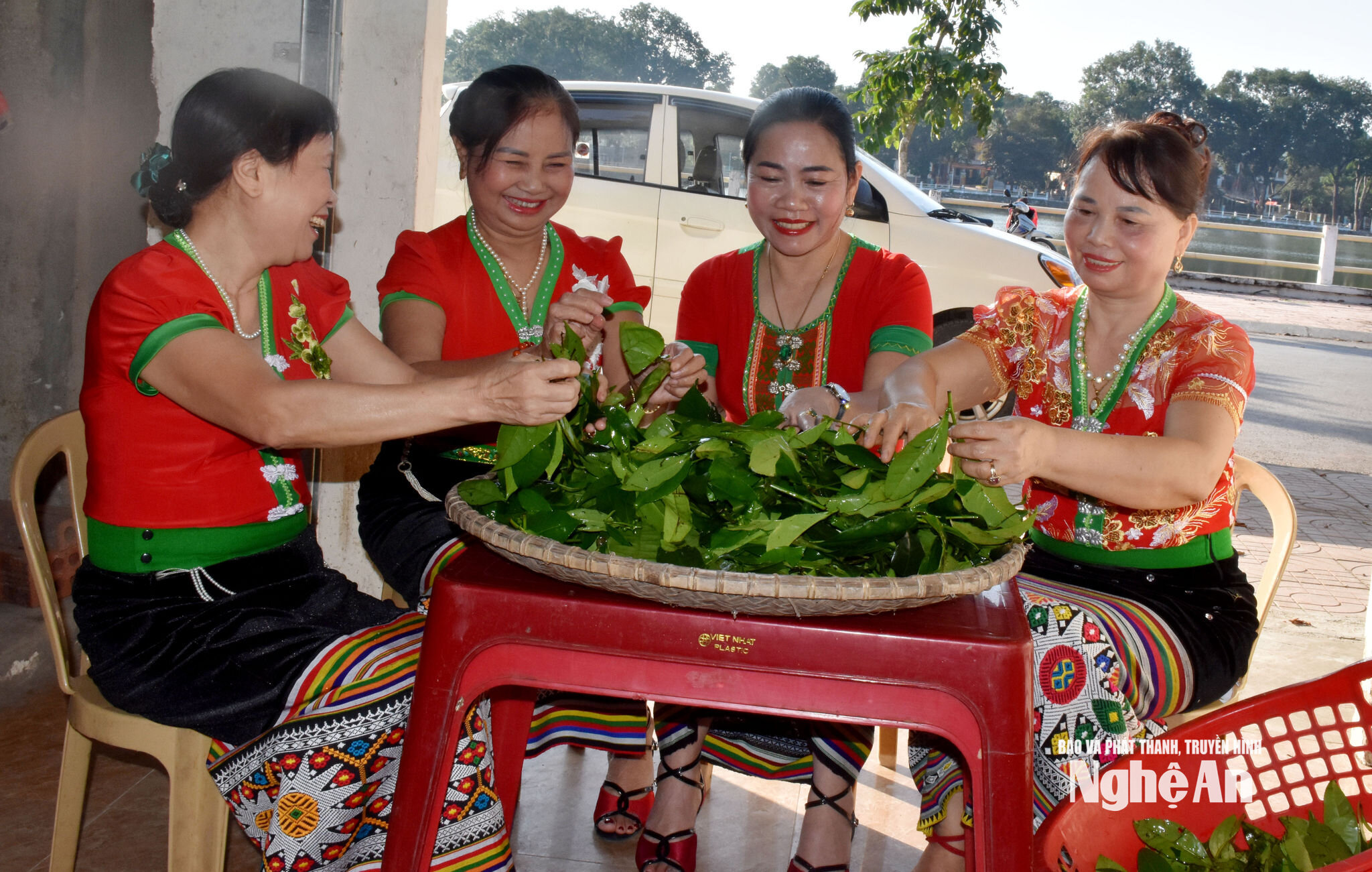
It also evokes the feeling of a crisp morning, of the wooden mortar and pestle, of the rhythmic pounding; of the bowl of tea the host pours for guests, of stories shared on the porch, and of afternoons spent together in the villages.
And perhaps, it is from these simple things that pounded tea has transcended being just a refreshing drink to become a part of the memories and cultural aspects of the lives of the Thai ethnic people in the former Quy Hop region.
Khanh Ly - Thanh Phuc